
主管:中国科学院
主办:中国优选法统筹法与经济数学研究会
中国科学院科技战略咨询研究院
主办:中国优选法统筹法与经济数学研究会
中国科学院科技战略咨询研究院

Chinese Journal of Management Science ›› 2026, Vol. 34 ›› Issue (9): 142-152.doi: 10.16381/j.cnki.issn1003-207x.2024.0663
Previous Articles Next Articles
Huali Sun( ), Yixiang Zhang, Shuo Liu
Received:2024-05-03
Revised:2024-07-02
Online:2026-09-25
Published:2026-09-01
Contact:
Huali Sun
E-mail:sun_huali@163.com
CLC Number:
Huali Sun,Yixiang Zhang,Shuo Liu. Affine Adjustable Robust Optimization Strategy of Emergency Facility Location and Multi-period Allocation for Supplies[J]. Chinese Journal of Management Science, 2026, 34(9): 142-152.
"
"

"
| 参数 | 模型 | 0.05 | 0.1 | 0.15 | 0.2 | 0.25 | 0.3 |
|---|---|---|---|---|---|---|---|
| 物资满足量 | DLP | 1093 | 1093 | 1093 | 1093 | 1093 | 1093 |
| SSP | 1077.9 | 1092.3 | 1095.1 | 1087.9 | 1077.4 | 1085.9 | |
| AARC | 1086.7 | 1054.3 | 1012.4 | 966.1 | 917.6 | 869.1 | |
| 物资满足量均值 | DLP | 1095.3 | 1101.5 | 1099.2 | 1103.1 | 1098.3 | 1110.6 |
| SSP | 1077.9 | 1092.3 | 1095.1 | 1087.9 | 1077.4 | 1085.9 | |
| AARC | 1102.3 | 1078.8 | 1050 | 1017.4 | 983.5 | 947.9 | |
| 可行解数量 | DLP | 50 | 50 | 49 | 40 | 36 | 22 |
| SSP | 50 | 49 | 44 | 28 | 25 | 16 | |
| AARC | 50 | 50 | 50 | 50 | 50 | 50 | |
| 平均运算时间(秒) | DLP | 1.6 | 1.5 | 1.4 | 1.4 | 1.5 | 1.6 |
| SSP | 1.7 | 1.9 | 1.9 | 1.8 | 2.1 | 2.2 | |
| AARC | 132 | 129.2 | 115.1 | 124.3 | 121.6 | 118.1 |
"
| θ | 参数 | 周期 | ||||
|---|---|---|---|---|---|---|
| 4 | 6 | 8 | 10 | 12 | ||
| 0 | 物资满足量 | 1037.3 | 1040.1 | 1093.2 | 1111.8 | 1130.0 |
| 物资供应中心选址 | 1,2,3 | 1,2,3 | 1,2,3 | 1,2,3 | 1,2,3 | |
| 临时分发中心选址 | 1,4,5 | 1,5 | 1,2,5 | 1,5 | 1,5 | |
| 运算时间(秒) | 4.1 | 12.5 | 21.4 | 32.9 | 53.5 | |
| 0.1 | 物资满足量 | 1025.3 | 1031.7 | 1045.9 | 1042.1 | 1054.3 |
| 物资供应中心选址 | 1,2,3 | 1,2,3 | 1,2,3 | 1,2,3 | 1,2,3 | |
| 临时分发中心选址 | 1,4,5 | 1,2,5 | 1,5,6 | 1,3 | 1,5 | |
| 运算时间(秒) | 6.2 | 14.2 | 22.3 | 59.7 | 110.4 | |
| 0.2 | 物资满足量 | 923.1 | 927.3 | 945.4 | 956.5 | 966.1 |
| 物资供应中心选址 | 1,2,3 | 1,2,3 | 1,2,3 | 1,2,3 | 1,2,3 | |
| 临时分发中心选址 | 1,4,5 | 1,5 | 1,3 | 2,3,4 | 1,5 | |
| 运算时间(秒) | 12.7 | 18.6 | 32.1 | 66.0 | 113.4 | |
| 0.3 | 物资满足量 | 852.1 | 855.4 | 858.0 | 857.2 | 869.0 |
| 物资供应中心选址 | 1,2,3 | 1,2,3 | 1,2,3 | 1,2,3 | 1,2,3 | |
| 临时分发中心选址 | 1,6 | 1,5,6 | 1,5,6 | 1,5,6 | 1,5 | |
| 运算时间(秒) | 10.6 | 26.5 | 33.9 | 70.8 | 121.0 | |
"
"
| 224000 | — | — | — |
| 256000 | 855.4 | 1,2,3 | 5 |
| 288000 | 915.3 | 1,2,3 | 4,5 |
| 320000 | 988.0 | 1,2,3 | 1,5 |
| 352000 | 1009.8 | 1,2,3 | 1,4,5 |
| 384000 | 1024.8 | 1,2,3 | 1,3,5 |
| 416000 | 1025.4 | 1,2,3 | 1,3,4,5 |
"
"
"
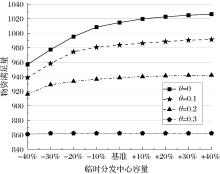
"
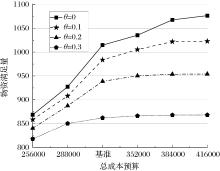
"
"
| 参数 | 模型 | 0.05 | 0.1 | 0.15 | 0.2 | 0.25 | 0.3 |
|---|---|---|---|---|---|---|---|
| 物资满足量 | DLP2 | 2036.9 | 2036.9 | 2036.9 | 2036.9 | 2036.9 | 2036.9 |
| SSP2 | 2031.6 | 2028.6 | 2045.1 | 2031.9 | 2039l6 | 2051.4 | |
| AARC12 | 2031.4 | 1920.7 | 1821.1 | 1739.7 | 1626 | 1531.9 | |
| DLP3 | 3386.7 | 3386.7 | 3386.7 | 3386.7 | 3386.7 | 3386.7 | |
| SSP3 | 3390.5 | 3372.6 | 3382.1 | 3359.4 | 3400.6 | 3361.7 | |
| AARC13 | 3376.7 | 3206.8 | 3099.5 | 2939.1 | 2789 | 2639.5 | |
| 物资满足量均值 | DLP2 | 2037.1 | 2046.2 | 2055.9 | 2046.3 | 2038.2 | 2061.8 |
| SSP2 | 2031.6 | 2028.6 | 2045.1 | 2031.9 | 2039l6 | 2051.4 | |
| AARC12 | 2035.4 | 2022.1 | 1999.6 | 1943.4 | 1879 | 1832.6 | |
| DLP3 | 3401.7 | 3391.5 | 3378.2 | 3393.5 | 3371.6 | 3397 | |
| SSP3 | 3390.5 | 3372.6 | 3382.1 | 3359.4 | 3400.6 | 3361.7 | |
| AARC13 | 3392.1 | 3359.2 | 3331.7 | 3229.4 | 3169.3 | 3055.5 | |
| 可行解数量 | DLP2 | 50 | 50 | 50 | 44 | 34 | 23 |
| SSP2 | 50 | 48 | 41 | 28 | 21 | 12 | |
| AARC12 | 50 | 50 | 50 | 50 | 50 | 50 | |
| DLP3 | 50 | 50 | 46 | 35 | 22 | 15 | |
| SSP3 | 50 | 46 | 37 | 26 | 17 | 10 | |
| AARC13 | 50 | 50 | 50 | 50 | 50 | 50 |
| [1] | 章可怡, 石咏, 郭海湘, 等. 基于卡车-无人机协同的山区自然灾害应急物资调度优化决策研究[J]. 中国管理科学, 2025, 33(2): 150-160. |
| Zhang K Y, Shi Y, Guo H X, et al. Optimal decision-making for dispatching emergency supplies for natural disasters in mountainous areas based on truck-drone collaboration[J]. Chinese Journal of Management Science, 2025, 33(2): 150-160. | |
| [2] | Yang Y, Yin Y, Wang D, et al. Distributionally robust multi-period location-allocation with multiple resources and capacity levels in humanitarian logistics[J]. European Journal of Operational Research, 2023, 305(3): 1042-1062. |
| [3] | Wang W, Yang K, Yang L, et al. Two-stage distributionally robust programming based on worst-case mean-CVaR criterion and application to disaster relief management[J]. Transportation Research Part E: Logistics and Transportation Review, 2021, 149: 102332. |
| [4] | 曲冲冲, 王晶, 黄钧, 等. 考虑时效与公平性的震后应急物资动态配送优化研究[J]. 中国管理科学, 2018, 26(6): 178-187. |
| Qu C C, Wang J, Huang J, et al. Dynamic emergency materials distribution optimization with timeliness and fairness objective for post-earthquake emergency rescue[J]. Chinese Journal of Management Science, 2018, 26(6): 178-187. | |
| [5] | 王妍妍, 孙佰清. 模糊信息下多种类应急物资多周期分配优化模型[J]. 中国管理科学, 2020, 28(3): 40-51. |
| Wang Y Y, Sun B Q. Multi-period optimization model of multi-type emergency materials allocation based on fuzzy information[J]. Chinese Journal of Management Science, 2020, 28(3): 40-51. | |
| [6] | 刘星. 不确定环境下应急救援供应链鲁棒优化模型[J]. 运筹与管理, 2020, 29(12): 23-29. |
| Liu X. Robust optimization model of emergency relief supply chain under uncertain environment[J]. Operations Research and Management Science, 2020, 29(12): 23-29. | |
| [7] | 李艳, 叶春明, 曹磊. 考虑伤情随机恶化的应急物资调度问题[J]. 系统工程学报, 2020, 35(6): 824-837. |
| Li Y, Ye C M, Cao L. Scheduling problem for emergency materials considering random deterioration of injury[J]. Journal of Systems Engineering, 2020, 35(6): 824-837. | |
| [8] | Maharjan R, Hanaoka S. A credibility-based multi-objective temporary logistics hub location-allocation model for relief supply and distribution under uncertainty[J]. Socio-Economic Planning Sciences, 2020, 70: 100727. |
| [9] | Akbarpour M, Ali Torabi S, Ghavamifar A. Designing an integrated pharmaceutical relief chain network under demand uncertainty[J]. Transportation Research Part E: Logistics and Transportation Review, 2020, 136: 101867. |
| [10] | Safaei A S, Farsad S, Paydar M M. Emergency logistics planning under supply risk and demand uncertainty[J]. Operational Research, 2020, 20(3): 1437-1460. |
| [11] | Ghasemi P, Khalili-Damghani K. A robust simulation-optimization approach for pre-disaster multi-period location-allocation-inventory planning[J]. Mathematics and Computers in Simulation, 2021, 179: 69-95. |
| [12] | 董海, 高秀秀, 魏铭琦. 不确定环境下两阶段应急供应链网络建模与优化求解[J]. 中国管理科学, 2023, 31(12): 107-116. |
| Dong H, Gao X X, Wei M Q. Modeling and optimization solution of two-stage emergency supply chain network under uncertain environment[J]. Chinese Journal of Management Science, 2023, 31(12): 107-116. | |
| [13] | Ardestani-Jaafari A, Delage E. The value of flexibility in robust location-transportation problems[J]. Transportation Science, 2018, 52(1): 189-209. |
| [14] | Yanıkoğlu İ, Gorissen B L, den Hertog D. A survey of adjustable robust optimization[J]. European Journal of Operational Research, 2019, 277(3): 799-813. |
| [15] | Ben-Tal A, Goryashko A, Guslitzer E, et al. Adjustable robust solutions of uncertain linear programs[J]. Mathematical Programming, 2004, 99(2): 351-376. |
| [16] | Ben-Tal A, Chung B D, Mandala S R, et al. Robust optimization for emergency logistics planning: Risk mitigation in humanitarian relief supply chains[J]. Transportation Research Part B: Methodological, 2011, 45(8): 1177-1189. |
| [17] | 孙华丽, 项美康, 薛耀锋. 不确定信息下应急设施选址-路径鲁棒优化[J]. 系统管理学报, 2019, 28(6): 1126-1133. |
| Sun H L, Xiang M K, Xue Y F. Robust optimization for emergency location-routing problem with uncertainty[J]. Journal of Systems & Management, 2019, 28(6): 1126-1133. | |
| [18] | 郑斌, 马祖军, 周愉峰. 震后应急物流动态选址-联运问题的双层规划模型[J]. 系统管理学报, 2017, 26(2): 326-337. |
| Zheng B, Ma Z J, Zhou Y F. Bi-level model for dynamic location-transportation problem for post-earthquake relief distribution[J]. Journal of Systems & Management, 2017, 26(2): 326-337. | |
| [19] | Shapiro A. Monte Carlo sampling methods[J]. Handbooks in Operations Research and Management Science, 2003, 10: 353-425. |
| [1] | Ling Zhang, Xiaojin Zhuo, Jing Wang. P-robust Optimization of Emergency Location-allocation Problem Considering Deprivation Cost [J]. Chinese Journal of Management Science, 2026, 34(9): 120-132. |
| [2] | Tianci Pang, Tong Shao, Yu Cao. Research on the Impact of Supplier Demand Information Acquisition on Encroachment Strategies [J]. Chinese Journal of Management Science, 2026, 34(8): 305-316. |
| [3] | Ru Yu, Xiaoli Wang, Xiaojun Xu, Lu Wang. Research on the Development Path of BEVs in China Based on Multi-objective Optimization [J]. Chinese Journal of Management Science, 2026, 34(8): 345-355. |
| [4] | Yamin Ji, Feng Gao, Mingliang Qi, Hong Chi. Optimizing Tourism Development Scale around Nuclear Power Plants: A Trade-off between Safety Margin and Comprehensive Benefits [J]. Chinese Journal of Management Science, 2026, 34(8): 104-114. |
| [5] | Wenfang Shang, Xintao Gu, Tao Li. Study on the Influence of Carbon Option Purchase Quota Based on Demand Uncertainty on Supply Chain Decision-making and Coordination Mechanism [J]. Chinese Journal of Management Science, 2026, 34(8): 329-344. |
| [6] | Liping Liu, Rui Wang, Shilei Sun, Xiaofeng Gan, Tijun Fan. Transportation Network Optimization of Hazardous Chemicals Considering Risk Equity under Depot Disruptions [J]. Chinese Journal of Management Science, 2026, 34(6): 66-76. |
| [7] | Xudong Deng, Ting Li, Yunfeng Ma, Xijie Yang. Allocation Strategy Based on Uncertain Demand [J]. Chinese Journal of Management Science, 2026, 34(5): 166-174. |
| [8] | Yu Fan, Xihui Wang. Construction and Analysis of Emergency Logistics Decision-Making Models Based on Deprivation Theory in Different Scenarios of Disasters [J]. Chinese Journal of Management Science, 2026, 34(3): 114-121. |
| [9] | Lifang Peng, Nannan Zhao. Location-routing Problem Considering Psychological Cost in Emergency Logistics [J]. Chinese Journal of Management Science, 2026, 34(1): 234-243. |
| [10] | Jianfang Shao, Yu Fan, Xihui Wang, Liang Liang. The Impact of Emergency Supplies Quantitative Differences and Social Factors on the Fair Perceptions of Victims: An Empirical Study [J]. Chinese Journal of Management Science, 2025, 33(8): 189-197. |
| [11] | Yanqiu Liu, Jihui Hu. Research on Emergency Logistics Path Optimization Based on Hybrid Artificial Fish Swarm Algorithm [J]. Chinese Journal of Management Science, 2025, 33(8): 198-208. |
| [12] | Song Xue, Xu Chen, Chao Li, Jingchun Feng. Research on Miniature Multi-Project Scheduling of Service Project Enterprises Considering the Evolution of Human Resources Skills [J]. Chinese Journal of Management Science, 2025, 33(6): 96-104. |
| [13] | Guobin Wu, Yaqing Sun, Yulong Li. Research on Optimization of Tunnel Spoil Comprehensive Utilization of Mega Project Based on ESG Framework [J]. Chinese Journal of Management Science, 2025, 33(3): 174-185. |
| [14] | Tieke Li,Yixuan Su,Wenxin Zhang,Bailin Wang. Interval Multi-objective Optimal Scheduling for Steelmaking-continuous Casting with Processing Time Uncertainty [J]. Chinese Journal of Management Science, 2024, 32(8): 95-106. |
| [15] | Guangyu Wan,Feiyan Pu,Zichun Li,Yu Cao. Impact of Marketing Capability and Production Operation Capability on Firms' Financial Performance [J]. Chinese Journal of Management Science, 2024, 32(5): 275-285. |
| Viewed | ||||||
|
Full text |
|
|||||
|
Abstract |
|
|||||
|
||
