
主管:中国科学院
主办:中国优选法统筹法与经济数学研究会
中国科学院科技战略咨询研究院
主办:中国优选法统筹法与经济数学研究会
中国科学院科技战略咨询研究院

Chinese Journal of Management Science ›› 2026, Vol. 34 ›› Issue (2): 336-347.doi: 10.16381/j.cnki.issn1003-207x.2023.0496
Previous Articles Next Articles
Hongping Yuan, Li Zhang, Bingbing Cao( )
)
Received:2023-03-29
Revised:2023-06-12
Online:2026-02-25
Published:2026-02-04
Contact:
Bingbing Cao
E-mail:bbcao@gzhu.edu.cn
CLC Number:
Hongping Yuan,Li Zhang,Bingbing Cao. Research on Privacy Protection and Reputation Maintenance Decision of Gift Product Supply Chain Enabled by Blockchain Technology[J]. Chinese Journal of Management Science, 2026, 34(2): 336-347.
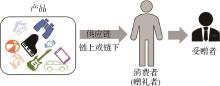
"


"


"


"
| 符号 | 说明 |
|---|---|
| 产品的零售价格 | |
| 消费者私人信息泄漏后的厌恶成本, | |
| 消费者购买到赝品的后悔成本, | |
| 消费者对链上零售商的隐私保护水平的敏感系数 | |
| 消费者对链下零售商的信誉维护水平的敏感系数 | |
| 单位匹配成本 | |
| 市场占有率, | |
| 消费者效用, | |
| 局中人的利润, | |
| 受赠者不满意度, | |
| 消费者对链上产品价格的敏感系数 | |
| 消费者对链下产品价格的敏感系数 | |
| 上标 | |
| 链上无信息泄漏,链下无赝品 | |
| 链上有信息泄漏,链下无赝品 | |
| 链上无信息泄漏,链下有赝品 | |
| 链上有信息泄漏,链下有赝品 | |
| 下标 | |
| 表示该供应链上采用区块链 | |
| 表示该供应链未采用区块链 | |
| 供应链 | |
| 供应链 | |
| 表示集中决策下的供应链, | |
| 决策变量 | |
| 批发价格, | |
| 隐私保护水平(集中决策下的隐私保护水平), | |
| 信誉维护水平(集中决策下的信誉维护水平), |
"
| 模型 | ||||
|---|---|---|---|---|
| I | ||||
| F | ||||
| L | ||||
| LF |
"
| 模型 | ||
|---|---|---|
| I | ||
| F | ||
| L | ||
| LF |
"
| 模型 | ||
|---|---|---|
| I | ||
| F | ||
| L | ||
| LF |
"
| 模型 | ||
|---|---|---|
| I | ||
| F | ||
| L | ||
| LF |
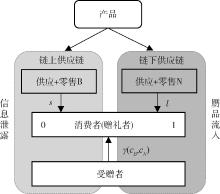
"

"
| 参数 | ||||||||
|---|---|---|---|---|---|---|---|---|
| 取值 | 7 | 3.7 | 3.4 | 4.6 | 4.2 | 2.8 | 2.4 | 5 |
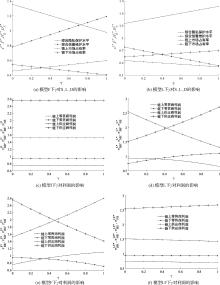
"

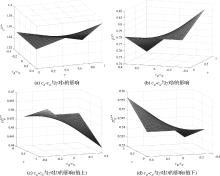
"


"

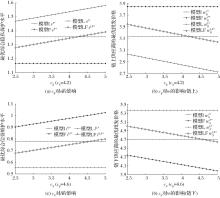
"

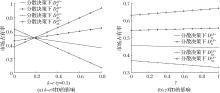
"

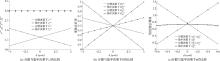
"

| [1] | 柯兰君, 孙瑜, 刘亚平. 送礼与腐败——中国送礼形式和功能的转变[J]. 社会学研究, 1993, 8(6): 6-12. |
| Ke L J, Sun Y, Liu Y P. Gift-giving and corruption—The transformation of gift-giving form and function in China[J]. Sociological Research, 1993, 8(6): 6-12. | |
| [2] | 王为径. 关系学的温柔一掌——解读《礼物、关系学与国家》[J]. 中国农业大学学报(社会科学版), 2008, 25(2): 196-199. |
| Wang W J. The gentle palm of relationship studies—An interpretation of gifts, relationship studies and the state[J]. Journal of China Agricultural University;Social Sciences, 2008, 25(2): 196-199. | |
| [3] | 何小洲, 彭露. 礼品消费购买意向研究——基于Fishbein理性行为修正模型的探讨[J]. 江西社会科学, 2014, 34(10): 216-221. |
| He X Z, Peng L. Study on the Intention of Gift Consumption—Based on the revised model of Fishbein’s rational behavior[J]. Jiangxi Social Sciences, 2014, 34(10): 216-221. | |
| [4] | 孙邦金, 陈安金. 论儒家的礼物观[J]. 哲学研究, 2013(10): 34-41+127. |
| Sun B J, Chen A J. On the Confucian philosophy of gift[J].Philosophical Researches, 2013(10): 34-41+127. | |
| [5] | Gaur V, Gaiha A. Building a transparent supply chain blockchain can enhance trust, efficiency, and speed[J]. Harvard Business Review, 2020, 98(3): 94-103. |
| [6] | Feng Q, He D B, Zeadally S, et al. A survey on privacy protection in blockchain system[J]. Journal of Network and Computer Applications, 2019, 126: 45-58. |
| [7] | Cagnazzo M, Wojzechowski C. Security and privacy in blockchain environments[EB/OL].(2017-06-30) [2022-11-02]. |
| [8] | Babich V, Hilary G. Distributed ledgers and operations: What operations management researchers should know about blockchain technology[J]. Manufacturing & Service Operations Management, 2020, 22(2): 223-240. |
| [9] | 曹雪莲, 张建辉, 刘波.区块链安全、隐私与性能问题研究综述[J].计算机集成制造系统,2021,27(7): 2078-2094. |
| Cao X L, Zhang J H, Liu B. Review on security, privacy, and performance issues of blockchain[J]. Computer Integrated Manufacturing Systems, 2021, 27(7): 2078-2094. | |
| [10] | Pun H, Swaminathan J M, Hou P. Blockchain adoption for combating deceptive counterfeits[J].Production and Operations Management,2021,30(4): 864-882. |
| [11] | 阮极. 人情对贿赂及其“道德化”的影响——基于找关系入学的民族志研究[J]. 社会学研究, 2018, 33(2): 189-213+246. |
| Ruan J. The role played by renqing in bribery and its “moralizing”: An ethnographic study on school choosing in China[J]. Sociological Studies, 2018, 33(2): 189-213+246. | |
| [12] | Fan Z P, Wu X Y, Cao B B. Considering the traceability awareness of consumers: Should the supply chain adopt the blockchain technology?[J]. Annals of Operations Research, 2022, 309(2): 837-860. |
| [13] | 张新安. 中国消费者的顾客价值形成机制: 以手机为对象的实证研究[J]. 管理世界, 2010, 26(1): 107-121+188. |
| Zhang X A. The formation mechanism of the value of the customers of China’s consumers: A case study based on users of mobile phones[J].Journal of Management World, 2010, 26(1): 107-121+188. | |
| [14] | 陈远高, 刘南. 存在差异性产品的双渠道供应链协调研究[J]. 管理工程学报, 2011, 25(2): 239-244. |
| Chen Y G, Liu N. Coordination of dual-channel supply chain under product differentiation[J]. Journal of Industrial Engineering and Engineering Management, 2011, 25(2): 239-244. | |
| [15] | 李锋, 魏莹. 异质消费者行为模式下的双渠道供应链系统协调与优化[J]. 系统管理学报, 2015, 24(5): 762-768. |
| Li F, Wei Y. Dual-channel supply chain coordination and optimization with heterogeneous consumer behavior[J]. Journal of Systems & Management, 2015, 24(5): 762-768. | |
| [16] | 范辰, 刘咏梅, 陈晓红, 考虑渠道竞争和消费者行为的BOPS定价与服务合作 [J]. 系统工程学报, 2018, 33(3): 387-397. |
| Fan C, Liu Y M, Chen X H. Pricing and service cooperation in BOPS implementation: considering channel competition and consumer behavior[J]. Journal of System Engineering,2018,33(3): 387-397. | |
| [17] | Zhu W E, He Y J. Green product design in supply chains under competition[J]. European JoEurnal of Operational Research, 2017, 258(1): 165-180. |
| [18] | Chen J X, Liang L, Yao D Q, et al. Price and quality decisions in dual-channel supply chains[J]. European Journal of Operational Research, 2017, 259(3): 935-948. |
| [19] | Ji J N, Zhang Z Y, Yang L. Carbon emission reduction decisions in the retail-/dual-channel supply chain with consumers' preference[J]. Journal of Cleaner Production, 2017, 141: 852-867. |
| [20] | Chen J M, Zhang W, Liu Z Y. Joint pricing, services and quality decisions in a dual-channel supply chain[J]. RAIRO-Operations Research, 2020, 54(4): 1041-1056. |
| [21] | 杨浩雄, 顾子跃, 王浩, 等. 考虑跨渠道退货的双渠道供应链最优策略[J]. 中国管理科学, 2022, 30(6): 116-126. |
| Yang H X, Gu Z Y, Wang H, et al. Optimal strategy of dual-channel supply chain considering cross-channel returns[J]. Chinese Journal of Management Science, 2022, 30(6): 116-126. | |
| [22] | 申强, 徐莉莉, 杨为民, 等. 需求不确定下双渠道供应链产品质量控制研究[J]. 中国管理科学, 2019, 27(3): 128-136. |
| Shen Q, Xu L L, Yang W M, et al. Research on product quality control of dual-channel supply chain under uncertain demand[J]. Chinese Journal of Management Science, 2019, 27(3): 128-136. | |
| [23] | Li B, Hou P W, Chen P, et al. Pricing strategy and coordination in a dual channel supply chain with a risk-averse retailer[J]. International Journal of Production Economics, 2016, 178: 154-168. |
| [24] | Hafezalkotob A. Competition, cooperation, and coopetition of green supply chains under regulations on energy saving levels[J].Transportation Research Part E: Logistics and Transportation Review,2017,97: 228-250. |
| [25] | Ranjan A, Jha J K. Pricing and coordination strategies of a dual-channel supply chain considering green quality and sales effort[J]. Journal of Cleaner Production, 2019, 218: 409-424. |
| [26] | 吉清凯, 张凤麟, 方刚, 等. 零售供应链中的区块链参与决策与产品定价博弈模型[J]. 中国管理科学, 2023, 31(3): 102-112. |
| Ji Q K, Zhang F L, Fang G, et al. Game model of blockchain participation decision-making and product pricing in retail supply chain[J]. Chinese Journal of Management Science, 2023, 31(3): 102-112. | |
| [27] | Niu R H, Zhao X, Castillo I, et al. Pricing and inventory strategies for a two-stage dual-channel supply chain[J].Asia-Pacific Journal of Operational Research (APJOR), 2012, 29(1): 1-38. |
| [28] | Kong L C, Liu Z Y, Pan Y F, et al. Pricing and service decision of dual-channel operations in an O2O closed-loop supply chain[J]. Industrial Management & Data Systems, 2017, 117(8): 1567-1588. |
| Viewed | ||||||
|
Full text |
|
|||||
|
Abstract |
|
|||||
|
||
