
主管:中国科学院
主办:中国优选法统筹法与经济数学研究会
中国科学院科技战略咨询研究院
主办:中国优选法统筹法与经济数学研究会
中国科学院科技战略咨询研究院

Chinese Journal of Management Science ›› 2026, Vol. 34 ›› Issue (9): 209-224.doi: 10.16381/j.cnki.issn1003-207x.2024.2209
Previous Articles Next Articles
Hao Xiong1, Xiaodie Chen1( ), Huili Yan2
Received:2024-12-07
Revised:2025-04-30
Online:2026-09-25
Published:2026-09-01
Contact:
Xiaodie Chen
E-mail:x_d_chen2002@163.com
CLC Number:
Hao Xiong,Xiaodie Chen,Huili Yan. Multi-Objective Routing Optimization of Takeout Delivery Considering Rider Rewards and Penalties of Distribution Timeliness[J]. Chinese Journal of Management Science, 2026, 34(9): 209-224.
"

"
| 符号 | 定义 | 符号 | 定义 |
|---|---|---|---|
| R | 订单集合 | 骑手单位行驶成本 | |
| 订单编号 | 骑手单位等待成本 | ||
| S | 商家坐标集合,可以表示为 | 节点坐标的合集,可表示为 | |
| C | 顾客集合,可以表示为 | 0-1变量,若为1表示订单r分配给骑手k,否则为0 | |
| O | 配送中心 | 平台佣金比例 | |
| 骑手配送收入, | 平台保底佣金 | ||
| 骑手集合 | 顾客满意度奖励标准 | ||
| 骑手编号 | 允许超时订单数量 | ||
| 订单r对应的商家 | 超时惩罚成本 | ||
| 订单r对应的顾客 | 订单r的餐饮金额 | ||
| 骑手k配送订单的平均满意度 | 骑手k超时订单数量, | ||
| 电瓶车最大可承载容量 | 骑手k激励补贴额 | ||
| 电瓶车最长可行驶公里数 | 订单r商家出餐时间 | ||
| 由节点i到节点j所需行驶的距离, | 订单r允许车辆到达的最早时间 | ||
| 0-1变量,若为1表示骑手k选择从商家点i至顾客点j,否则为0 | 0-1变量,若为1表示骑手k从顾客点j至商家点i,否则为0 | ||
| 订单r满意的最早到达时间 | 订单r允许车辆到达的最晚时间 | ||
| 平台赚取的订单r收入 | 订单r满意的最晚到达时间 | ||
| 订单r配送收入, | 骑手从节点i到节点j的行驶时间 | ||
| 骑手绩效奖励 | 骑手k到达节点i的时间 | ||
| 骑手k配送订单r时到达商家节点的时间 | 骑手超时单位时间惩罚成本, |
"

"

"
"
"
"
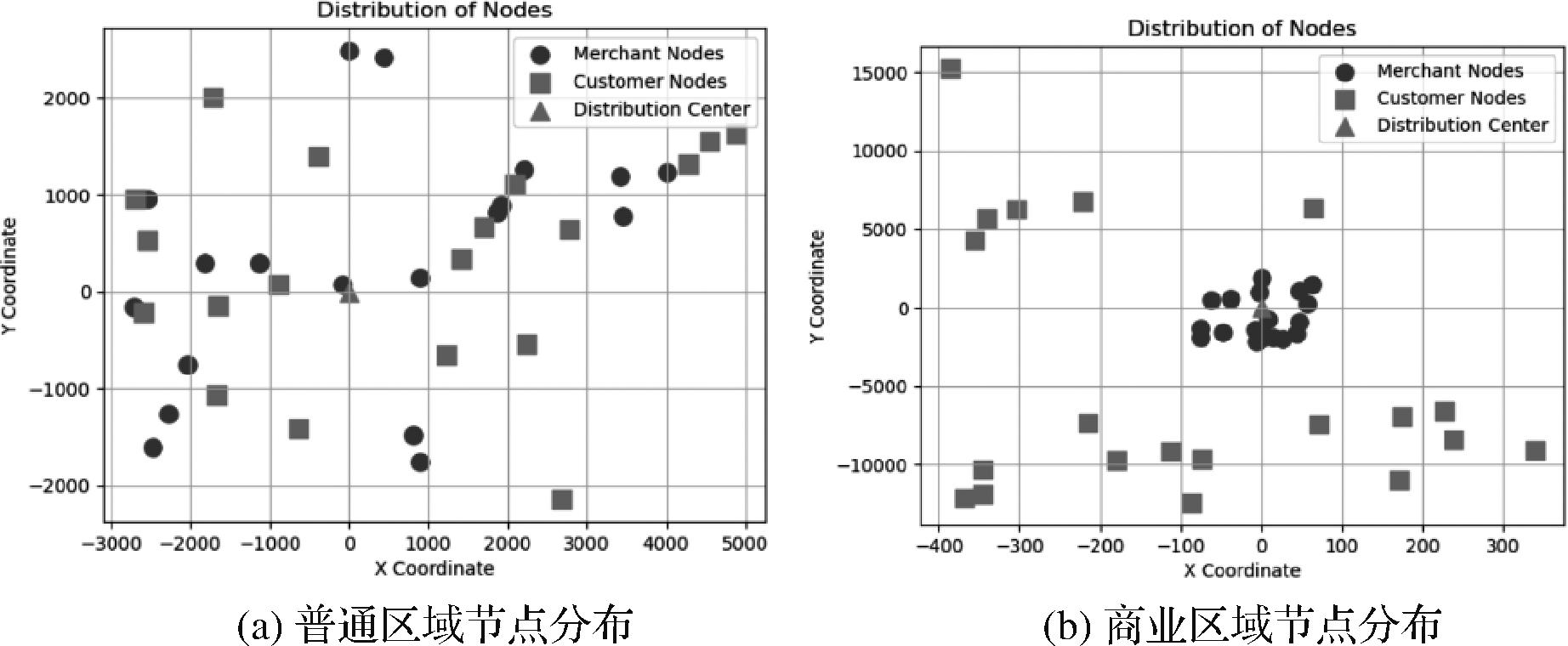
"
"
| β | |||||||||||||
|---|---|---|---|---|---|---|---|---|---|---|---|---|---|
| 0.3元/km | 0.35元/min | 2元/单 | 8元/单 | 10元/单 | 12元/单 | 21% | 25元 | 12元 | 85% | 1 | 0.1元/分钟 | 0.2元/分钟 | 0.1 |
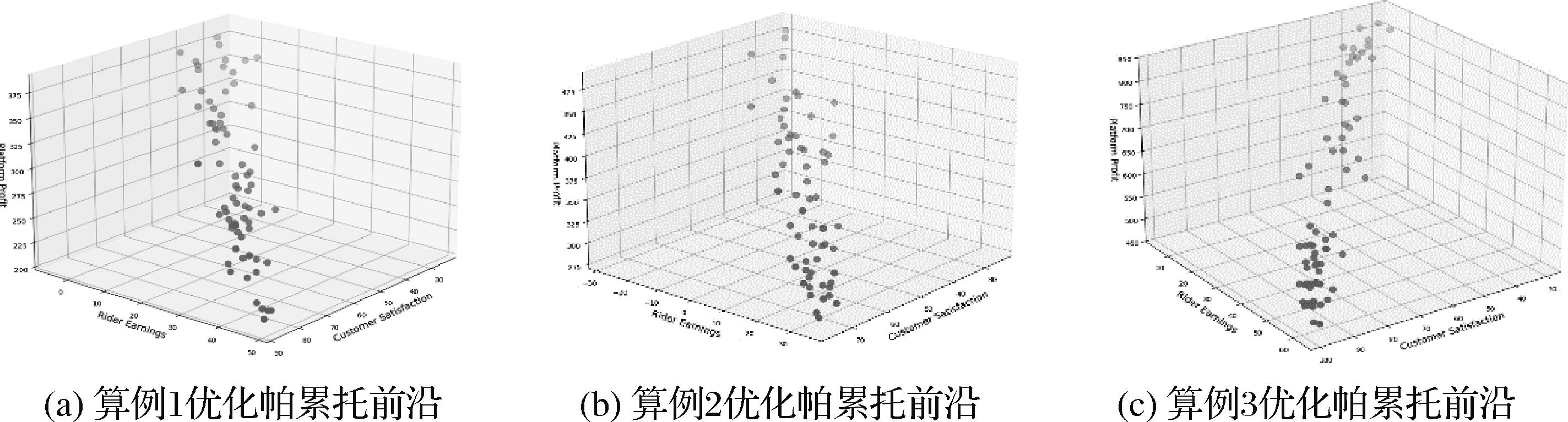
"
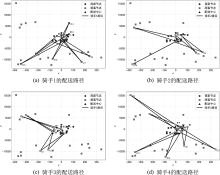
"

"
| 算例 | 测试次数 | 算法类型 | 顾客满意度(%) | 骑手收益(元) | 平台利润(元) | 测试次数 | 算法类型 | 顾客满意度(%) | 骑手收益(元) | 平台利润(元) |
|---|---|---|---|---|---|---|---|---|---|---|
| 算例1 | 1 | KNN-NSGA-II | 82.38 | 41.75 | 352.10 | 4 | KNN-NSGA-II | 81.28 | 37.01 | 350.27 |
| NSGA-II | 69.35 | 28.50 | 338.14 | NSGA-II | 72.96 | 32.88 | 331.47 | |||
| MOPSO | 72.30 | 27.5 | 327.50 | MOPSO | 68.51 | 20.87 | 337.01 | |||
| 2 | KNN-NSGA-II | 83.33 | 39.28 | 354.05 | 5 | KNN-NSGA-II | 82.10 | 41.04 | 348.80 | |
| NSGA-II | 75.07 | 32.46 | 343.63 | NSGA-II | 75.32 | 32.81 | 332.61 | |||
| MOPSO | 75.00 | 29.73 | 324.19 | MOPSO | 75.74 | 37.13 | 302.08 | |||
| 3 | KNN-NSGA-II | 81.65 | 40.16 | 353.08 | 6 | KNN-NSGA-II | 83.25 | 40.89 | 356.90 | |
| NSGA-II | 73.67 | 34.63 | 344.15 | NSGA-II | 73.08 | 31.03 | 334.11 | |||
| MOPSO | 69.89 | 21.72 | 334.60 | MOPSO | 65.18 | 21.34 | 333.68 | |||
| 算例2 | 1 | KNN-NSGA-II | 72.64 | 31.94 | 444.89 | 4 | KNN-NSGA-II | 72.10 | 31.95 | 439.45 |
| NSGA-II | 64.23 | 20.42 | 422.13 | NSGA-II | 62.37 | 17.18 | 421.94 | |||
| MOPSO | 65.00 | 22.56 | 423.25 | MOPSO | 65.48 | 19.84 | 428.84 | |||
| 2 | KNN-NSGA-II | 72.63 | 31.97 | 458.64 | 5 | KNN-NSGA-II | 72.43 | 30.14 | 439.71 | |
| NSGA-II | 61.22 | 18.97 | 420.24 | NSGA-II | 62.37 | 17.82 | 409.61 | |||
| MOPSO | 66.22 | 19.83 | 421.32 | MOPSO | 66.90 | 20.41 | 429.91 | |||
| 3 | KNN-NSGA-II | 72.61 | 30.65 | 437.71 | 6 | KNN-NSGA-II | 71.53 | 31.03 | 436.70 | |
| NSGA-II | 62.85 | 19.51 | 403.11 | NSGA-II | 61.39 | 18.08 | 413.11 | |||
| MOPSO | 62.87 | 19.10 | 419.12 | MOPSO | 67.55 | 22.32 | 429.61 | |||
| 算例3 | 1 | KNN-NSGA-II | 79.50 | 38.87 | 803.83 | 4 | KNN-NSGA-II | 78.37 | 37.95 | 802.00 |
| NSGA-II | 61.25 | 30.97 | 786.90 | NSGA-II | 66.39 | 30.89 | 789.75 | |||
| MOPSO | 64.67 | 34.93 | 787.34 | MOPSO | 66.53 | 30.92 | 790.35 | |||
| 2 | KNN-NSGA-II | 81.15 | 40.81 | 806.75 | 5 | KNN-NSGA-II | 80.13 | 39.87 | 804.41 | |
| NSGA-II | 62.74 | 31.52 | 786.77 | NSGA-II | 63.14 | 28.83 | 784.19 | |||
| MOPSO | 62.03 | 30.01 | 774.40 | MOPSO | 62.00 | 31.31 | 783.55 | |||
| 3 | KNN-NSGA-II | 80.79 | 41.23 | 805.51 | 6 | KNN-NSGA-II | 82.28 | 42.74 | 809.71 | |
| NSGA-II | 64.34 | 28.48 | 785.22 | NSGA-II | 68.36 | 30.88 | 784.15 | |||
| MOPSO | 63.28 | 28.43 | 783.75 | MOPSO | 69.55 | 33.79 | 780.25 |
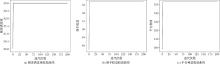
"
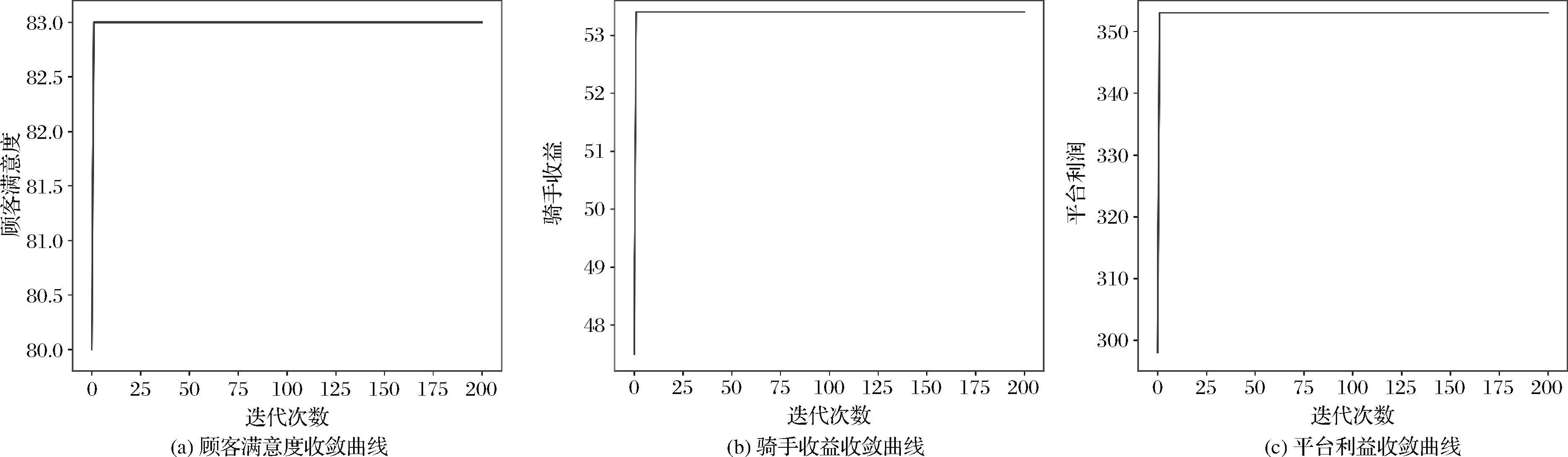
"
| 算例 | 指标 | 测试1 | 测试2 | 测试3 | 测试4 | 测试5 | 测试6 |
|---|---|---|---|---|---|---|---|
| 算例1 | MS | 1.5781 | 1.3764 | 1.3377 | 1.5338 | 1.4379 | 1.3984 |
| Spacing | 0.5821 | 0.6022 | 0.5921 | 0.6234 | 0.6102 | 0.6491 | |
| 算例2 | MS | 1.3518 | 1.3103 | 1.3061 | 1.3710 | 1.4881 | 1.4341 |
| Spacing | 0.6595 | 0.6009 | 0.6464 | 0.5868 | 0.5357 | 0.6250 | |
| 算例3 | MS | 1.4344 | 1.4614 | 1.4194 | 1.4181 | 1.4118 | 1.3649 |
| Spacing | 0.6013 | 0.6146 | 0.5693 | 0.6115 | 0.6213 | 0.6129 |
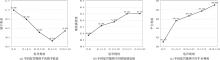
"
"
"
| [1] | 中国互联网络信息中心. 第54 次中国互联网络发展状况统计报告[EB/OL].(2024-08-29)[2025-04-28]. . |
| China Internet Network Information Center. The 54th statistical report on China’s internet development[EB/OL].(2024-08-29)[2025-04-28].. | |
| [2] | 美团新闻中心. 美团2024年第二季度财务报告[EB/OL].(2024-08-28)[2025-04-22].. |
| Meituan News Center. Meituan 2024 second quarter financial report[EB/OL].(2024-08-28)[2025-04-22].. | |
| [3] | 阿里巴巴集团. 阿里巴巴2024年第二季度财务报告[EB/OL].(2024-08-15)[2025-04-19].. |
| Group Alibaba. Alibaba 2024 second quarter financial report[EB/OL].(2024-08-15)[2025-04-19]. . | |
| [4] | 张力娅, 张锦, 肖斌. 考虑顾客优先级的多目标O2O外卖即时配送路径优化研究[J]. 工业工程与管理, 2021, 26(2): 196-204. |
| Zhang L Y, Zhang J, Xiao B. Multi-objective O2O take-out instant delivery routing optimization considering customer priority[J]. Industrial Engineering and Management, 2021, 26(2): 196-204. | |
| [5] | 熊浩, 郭昊颖, 鄢慧丽, 等. 外卖配送路径多目标实时优化研究[J]. 工业工程, 2023, 26(1): 98-107. |
| Xiong H, Guo H Y, Yan H L, et al. Multi-objective real-time optimization study of takeaway vehicle routes problem[J]. Industrial Engineering Journal, 2023, 26(1): 98-107. | |
| [6] | 熊浩, 鄢慧丽. 数据驱动外卖平台智能派单的实现机理研究[J]. 南开管理评论, 2022, 25(2): 15-25. |
| Xiong H, Yan H L. Research on the data-driven mechanism of intelligent order dispatching of takeaway platform[J]. Nankai Business Review, 2022, 25(2): 15-25. | |
| [7] | 熊浩, 鄢慧丽. 外卖智能派单的订单-骑手多目标匹配模型及其适应性算法研究[J]. 管理工程学报, 2024, 38(3): 150-160. |
| Xiong H, Yan H L. The multi-objective optimization model of order-driver matching and its online adaptive algorithm for the meal delivery platform[J]. Journal of Industrial Engineering and Engineering Management, 2024, 38(3): 150-160. | |
| [8] | 邵乾虔, 李冲, 代广徽, 等. 基于动态订单合并的滚动配取路径多目标优化[J]. 管理工程学报, 2024, 38(6): 140-155. |
| Shao Q Q, Li C, Dai G H, et al. Multi-objective optimization of pickup and delivery routing based on dynamic order combination[J]. Journal of Industrial Engineering and Engineering Management, 2024, 38(6): 140-155. | |
| [9] | 余建军, 程文琪, 吴永忠. 考虑顾客满意度的生鲜外卖路径规划[J].工业工程与管理,2021,26(4): 158-167. |
| Yu J J, Cheng W Q, Wu Y Z. Path planning of fresh takeout considering customer satisfaction[J]. Industrial Engineering and Management, 2021, 26(4): 158-167. | |
| [10] | 于江霞, 卞喆, 罗太波. 基于均衡准则的多目标即时配送路径优化模型[J]. 管理现代化, 2022, 42(2): 94-99. |
| Yu J X, Bian Z, Luo T B. Research on optimization of multi-objective instant delivery based on equilibrium criterion[J]. Modernization of Management, 2022, 42(2): 94-99. | |
| [11] | 熊浩, 鄢慧丽. 外卖智能派单的多主体利益协调机理研究[J]. 软科学, 2024, 38(8): 105-113. |
| Xiong H, Yan H L. The mechanism of multi-agent cooperation on the food delivery platform[J]. Soft Science, 2024, 38(8): 105-113. | |
| [12] | 余海燕, 李红梅, 王姝翔. O2O外卖众包即时配送平台的激励机制适用性[J]. 系统工程, 2022, 40(4): 89-99. |
| Yu H Y, Li H M, Wang S X. The applicability of incentive mechanism of O2O takeaway crowdsourcing real-time distribution platform[J]. Systems Engineering, 2022, 40(4): 89-99. | |
| [13] | 马成颖, 牟海波. 考虑路况、配送员与顾客满意度的冷链物流车辆配送路径优化方法[J]. 交通信息与安全, 2022, 40(5): 156-168. |
| Ma C Y, Mou H B. A route optimization method for cold chain logistics vehicles considering road conditions, satisfaction of deliverymen and customers[J]. Journal of Transport Information and Safety, 2022, 40(5): 156-168. | |
| [14] | 王晓全, 代存杰, 李娟, 等. 不确定运输风险下危险品绿色配送路径优化[J]. 计算机工程与应用, 2023, 59(14): 323-332. |
| Wang X Q, Dai C J, Li J, et al. Optimization of green distribution routes for hazardous materials under uncertain transportation risk[J]. Computer Engineering and Applications, 2023, 59(14): 323-332. | |
| [15] | Zhang J, Li Y. Collaborative vehicle-drone distribution network optimization for perishable products in the epidemic situation[J]. Computers & Operations Research, 2023, 149: 106039. |
| [16] | 苟梦圆,王勇,罗思妤,等.带时间窗的多中心开闭混合式电动车配送路径优化问题研究[J].中国管理科学, 2024. DOI: 10.16381/j.cnki.issn1003-207x.2023.2045 . |
| Gou M Y, Wang Y, Luo S Y, et al. Research on distribution path optimization of multi-center open-close hybrid electric vehicle with time window[J]. Chinese Journal of Management Science, 2024,DOI: 10.16381/j.cnki.issn1003-207x.2023.2045 . | |
| [17] | 邱金红, 孙靖, 仲兆满. 基于配送收益均衡的多目标绿色车辆路径优化算法[J]. 控制与决策, 2023, 38(2): 365-371. |
| Qiu J H, Sun J, Zhong Z M. A multi-objective green vehicle routing optimization algorithm based on delivery benefit balance[J]. Control and Decision, 2023, 38(2): 365-371. | |
| [18] | 杨洋, 武志磊, 王晓霞. 不确定需求下物流配送网点选址多目标优化及仿真[J]. 科学技术与工程, 2024, 24(14): 5994-6002. |
| Yang Y, Wu Z L, Wang X X. Multi-objective optimization and simulation of logistics distribution network location under uncertain demand[J]. Science Technology and Engineering, 2024, 24(14): 5994-6002. | |
| [19] | 王勇, 罗思妤, 镇璐, 等. 考虑违约追偿和损失补偿的多中心集配网络联盟优化问题[J]. 中国管理科学, 2023, 31(3): 10-25. |
| Wang Y, Luo S Y, Zhen L, et al. Multi—Center pickup and delivery network alliance optimization considering default penalties and loss compensations for breach of contract[J]. Chinese Journal of Management Science, 2023, 31(3): 10-25. | |
| [20] | Zhen L, Wu J, Laporte G, et al. Heterogeneous instant delivery orders scheduling and routing problem[J]. Computers & Operations Research, 2023, 157: 106246. |
| [21] | 周成昊, 吕博轩, 周翰宇, 等. 以商圈为中心的O2O动态外卖配送路径优化模型与算法[J]. 运筹学学报(中英文), 2022, 26(3): 17-30. |
| Zhou C H, Lv B X, Zhou H Y, et al. Optimization model and algorithm for Online to Offline dynamic take-out delivery routing problem centered on business districts[J]. Operations Research Transactions, 2022, 26(3): 17-30. | |
| [22] | 郭昊颖, 熊浩, 任汭杨, 等. 允许取送交叉和中途接单的外卖配送路径优化[J].系统工程,2022, 40(5): 70-81. |
| Guo H Y, Xiong H, Ren R Y, et al. The optimization of takeout delivery route that allows cross picking and delivery and order halfway[J]. Systems Engineering, 2022, 40(5): 70-81. | |
| [23] | 熊浩, 郭昊颖, 鄢慧丽, 等. 考虑取送交叉和多种扰动因素的外卖配送路径优化研究[J]. 湖南大学学报(自然科学版), 2022, 49(10): 92-102. |
| Xiong H, Guo H Y, Yan H L, et al. Research on real-time route optimization of takeaway delivery considering pickup and delivery cross and multiple disturbance factors[J]. Journal of Hunan University (Natural Sciences), 2022, 49(10): 92-102. | |
| [24] | 范厚明, 咸富山, 王怀奇. 动态需求下考虑订单聚类的外卖配送路径优化[J]. 系统仿真学报, 2023, 35(2): 396-407. |
| Fan H M, Xian F S, Wang H Q. Takeout distribution routes optimization considering order clustering under dynamic demand[J]. Journal of System Simulation, 2023, 35(2): 396-407. | |
| [25] | 卢福强,蒋润雪,毕华玲,等.动态订单下无人机辅助骑手外卖配送路径优化研究[J].中国管理科学, 2026,34 (2) : 79-88. |
| Lu F Q, Jiang R X, Bi H L, et al. Research on optimization of delivery path of UAV-assisted rider under dynamic order[J]. Chinese Journal of Management Science, 2026,34 (2) : 79-88. | |
| [26] | Deb K, Pratap A, Agarwal S, et al. A fast and elitist multiobjective genetic algorithm: NSGA-II[J]. IEEE Transactions on Evolutionary Computation, 2002, 6(2): 182-197. |
| [27] | 赵向南, 邢磊, 靳志宏. 考虑不确定行驶时间的双目标外卖配送路径优化[J]. 大连海事大学学报, 2019, 45(4): 65-72. |
| Zhao X N, Xing L, Jin Z H. Bi-objective takeaway distribution route optimization considering uncertain driving time[J]. Journal of Dalian Maritime University, 2019, 45(4): 65-72. | |
| [28] | Liao W, Zhang L, Wei Z. Multi-objective green meal delivery routing problem based on a two-stage solution strategy[J]. Journal of Cleaner Production, 2020, 258: 120627. |
| [29] | 任腾, 陈玥, 向迎春, 等. 考虑客户满意度的低碳冷链车辆路径优化[J]. 计算机集成制造系统, 2020, 26(4): 1108-1117. |
| Ren T, Chen Y, Xiang Y C, et al. Optimization of low-carbon cold chain vehicle path considering customer satisfaction[J]. Computer Integrated Manufacturing Systems, 2020, 26(4): 1108-1117. | |
| [30] | 梁萌. “数字泰勒主义” 影响下的外卖平台 “计件工资制” 研究[J]. 社会, 2024, 44(3): 1-26. |
| Liang M. A study of piecework wage system of food-delivery platforms under the influence of digital Taylorism[J]. Society, 2024, 44(3): 1-26. | |
| [31] | Ren T, Xu H B, Jin K N, et al. Optimisation of takeaway delivery routes considering the mutual satisfactions of merchants and customers[J]. Computers & Industrial Engineering, 2021, 162: 107728. |
| [32] | 吴擎, 张春江, 高亮. 一种基于混合交叉的差分进化算法[J]. 华中科技大学学报(自然科学版), 2018, 46(5): 78-83+105. |
| Wu Q, Zhang C J, Gao L. Differential evolution algorithm based on hybrid crossover[J]. Journal of Huazhong University of Science and Technology (Nature Science Edition), 2018, 46(5): 78-83+105. |
| [1] | Huali Sun, Yixiang Zhang, Shuo Liu. Affine Adjustable Robust Optimization Strategy of Emergency Facility Location and Multi-period Allocation for Supplies [J]. Chinese Journal of Management Science, 2026, 34(9): 142-152. |
| [2] | Ru Yu, Xiaoli Wang, Xiaojun Xu, Lu Wang. Research on the Development Path of BEVs in China Based on Multi-objective Optimization [J]. Chinese Journal of Management Science, 2026, 34(8): 345-355. |
| [3] | Yamin Ji, Feng Gao, Mingliang Qi, Hong Chi. Optimizing Tourism Development Scale around Nuclear Power Plants: A Trade-off between Safety Margin and Comprehensive Benefits [J]. Chinese Journal of Management Science, 2026, 34(8): 104-114. |
| [4] | Liping Liu, Rui Wang, Shilei Sun, Xiaofeng Gan, Tijun Fan. Transportation Network Optimization of Hazardous Chemicals Considering Risk Equity under Depot Disruptions [J]. Chinese Journal of Management Science, 2026, 34(6): 66-76. |
| [5] | Fuqiang Lu, Runxue Jiang, Hualing Bi, Zhiyuan Gao. Routing Optimization of Drone Assisted Riders Takeout Delivery under Dynamic Orders [J]. Chinese Journal of Management Science, 2026, 34(2): 79-88. |
| [6] | Song Xue, Xu Chen, Chao Li, Jingchun Feng. Research on Miniature Multi-Project Scheduling of Service Project Enterprises Considering the Evolution of Human Resources Skills [J]. Chinese Journal of Management Science, 2025, 33(6): 96-104. |
| [7] | Guobin Wu, Yaqing Sun, Yulong Li. Research on Optimization of Tunnel Spoil Comprehensive Utilization of Mega Project Based on ESG Framework [J]. Chinese Journal of Management Science, 2025, 33(3): 174-185. |
| [8] | Tieke Li,Yixuan Su,Wenxin Zhang,Bailin Wang. Interval Multi-objective Optimal Scheduling for Steelmaking-continuous Casting with Processing Time Uncertainty [J]. Chinese Journal of Management Science, 2024, 32(8): 95-106. |
| [9] | Fuyu Wang,Haoxuan Xie,Zhonggao Lin,Jun Wang. Multi-objective Optimization Model and Adaptive Quantum Ant Colony Algorithm for Emergency Evacuation of High-speed Railway Stations under Emergencies [J]. Chinese Journal of Management Science, 2024, 32(3): 188-197. |
| [10] | Hui Li,Xi Wang,Zhiya Zuo. Multi-objective Integrated Optimization of Flexible Resource Allocation and Scheduling in the Aerospace Production Workshop [J]. Chinese Journal of Management Science, 2024, 32(10): 146-155. |
| [11] | Ming LIU, Xi-fen XU, Jie CAO. A Data-driven Optimization Model for Reallocating Dock-less Sharing Bikes with Considering Multiple Disruption Scenarios [J]. Chinese Journal of Management Science, 2023, 31(9): 148-158. |
| [12] |
Hai-yu WANG.
Economic-statistical Optimization Design of Dynamic |
| [13] | HU Xue-jun, ZHAO Yan, SHAN Mi-yuan, WANG Jian-jiang, BIE Li. An Adaptive Large Neighborhood Search Metaheuristic for Robust Multi-project Scheduling [J]. Chinese Journal of Management Science, 2022, 30(9): 217-231. |
| [14] | HU Yu-zhen, LI Qian-qian, JIANG Shan. Multi-Objective Optimization of Overseas Warehouse Location for Cross-border E-commerce Enterprises [J]. Chinese Journal of Management Science, 2022, 30(7): 201-209. |
| [15] | NIU Ben, , GUO Chen, TANG Heng. Multi-objective Multi-learning Bacterial Foraging Optimization Algorithm for Mixed Data Clustering [J]. Chinese Journal of Management Science, 2022, 30(12): 131-140. |
| Viewed | ||||||
|
Full text |
|
|||||
|
Abstract |
|
|||||
|
||
