主管:中国科学院
主办:中国优选法统筹法与经济数学研究会
   中国科学院科技战略咨询研究院

中国管理科学 ›› 2026, Vol. 34 ›› Issue (9): 197-208.doi: 10.16381/j.cnki.issn1003-207x.2024.2240

• • 上一篇    下一篇

考虑居民聚集居住的家庭医疗护理调度研究

周洁, 王恺()   

  1. 武汉大学经济与管理学院,湖北 武汉 430072
  • 收稿日期:2024-12-12 修回日期:2025-06-29 出版日期:2026-09-25 发布日期:2026-09-01
  • 通讯作者: 王恺 E-mail:kai.wang@whu.edu.cn
  • 基金资助:
    国家自然科学基金面上项目(72171179);国家社会科学基金重大招标项目(23&ZD051)

Home Health Care Scheduling for Clustered Residents

Jie Zhou, Kai Wang()   

  1. Economics and Management School,Wuhan University,Wuhan 430072,China
  • Received:2024-12-12 Revised:2025-06-29 Online:2026-09-25 Published:2026-09-01
  • Contact: Kai Wang E-mail:kai.wang@whu.edu.cn

摘要:

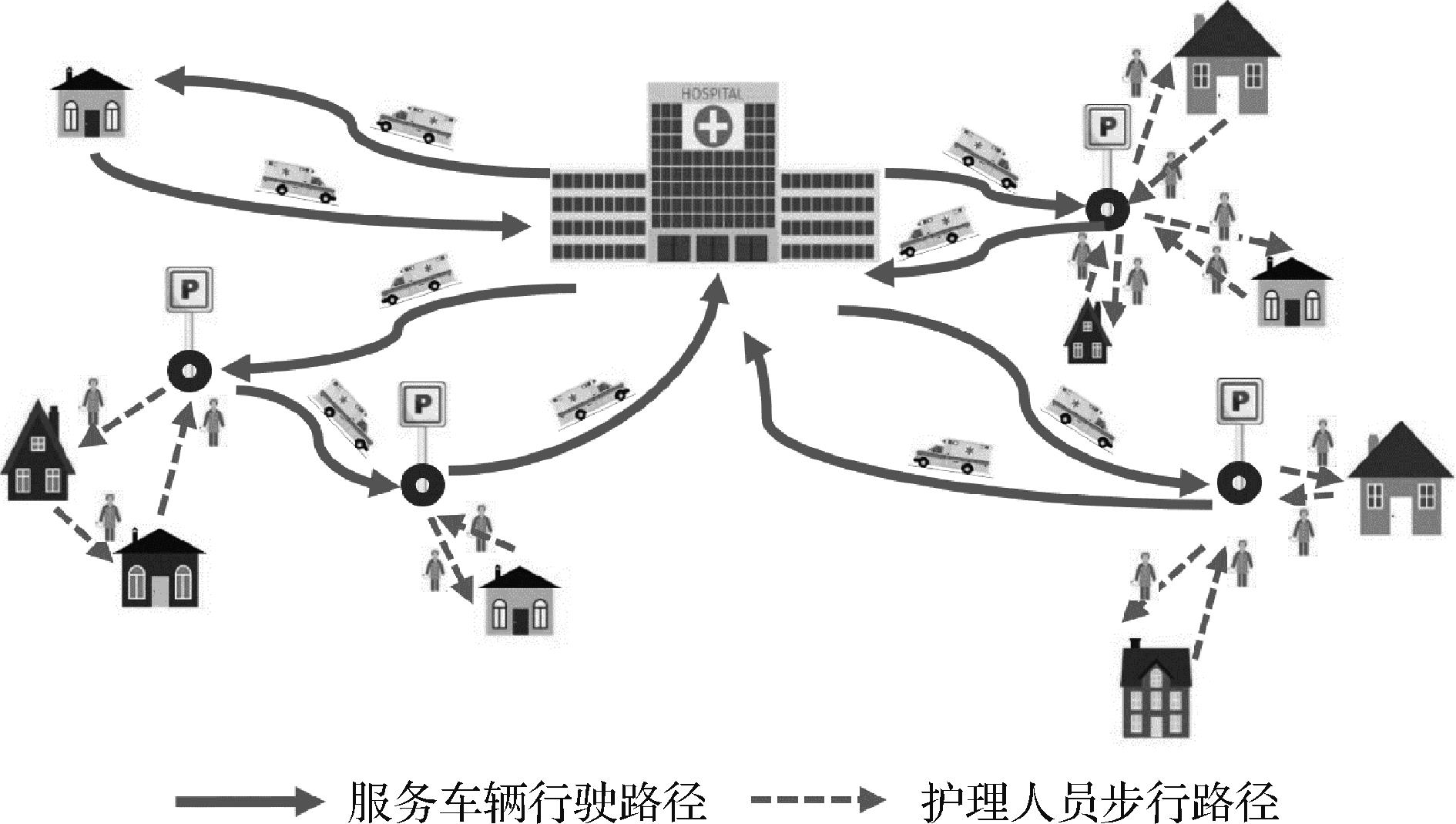
随着我国经济的快速增长和城市化进程的加快,居民对健康管理和慢性病治疗的需求持续增长,家庭医疗护理服务的重要性日益凸显。与西方国家居民多为分散式居住不同,我国城市居民通常以小区为单位聚集居住,常出现同一时段、同一区域内多户家庭同时需要居家护理的情形。在传统的“一人一车”服务模式下,医护人员各自乘车为患者提供上门服务。该模式虽调度简单,但在患者空间分布较为集中的场景下,往往带来较高的运营成本。为此,本文提出了基于医护小组的“一车多人”服务模式,允许多名医护人员共乘一辆医疗巴士,在车辆停靠后为停靠点及周边患者提供服务,从而以较低的成本应对患者的集中请求。本文以最小化护理机构的综合成本为优化目标,构建了一个基于医护小组的家庭医疗护理调度问题的混合整数规划模型,涉及医护小组规模确定、医疗巴士访问路径规划与医护人员下车后的患者服务排序等关键决策。考虑到该问题的NP难特性,设计了一种改进的自适应大邻域搜索算法进行求解,并通过不同规模的算例实验验证了算法的有效性。实验结果还表明,相较于传统的“一人一车”服务模式,“一车多人”服务模式在患者需求集中场景下更具成本优势;同时,对关键参数的敏感性分析进一步为该服务模式下的资源配置与调度策略优化提供了实践参考。

关键词: 家庭医疗护理, 医护小组, 车辆路径规划, 调度, 自适应大邻域搜索

Abstract:

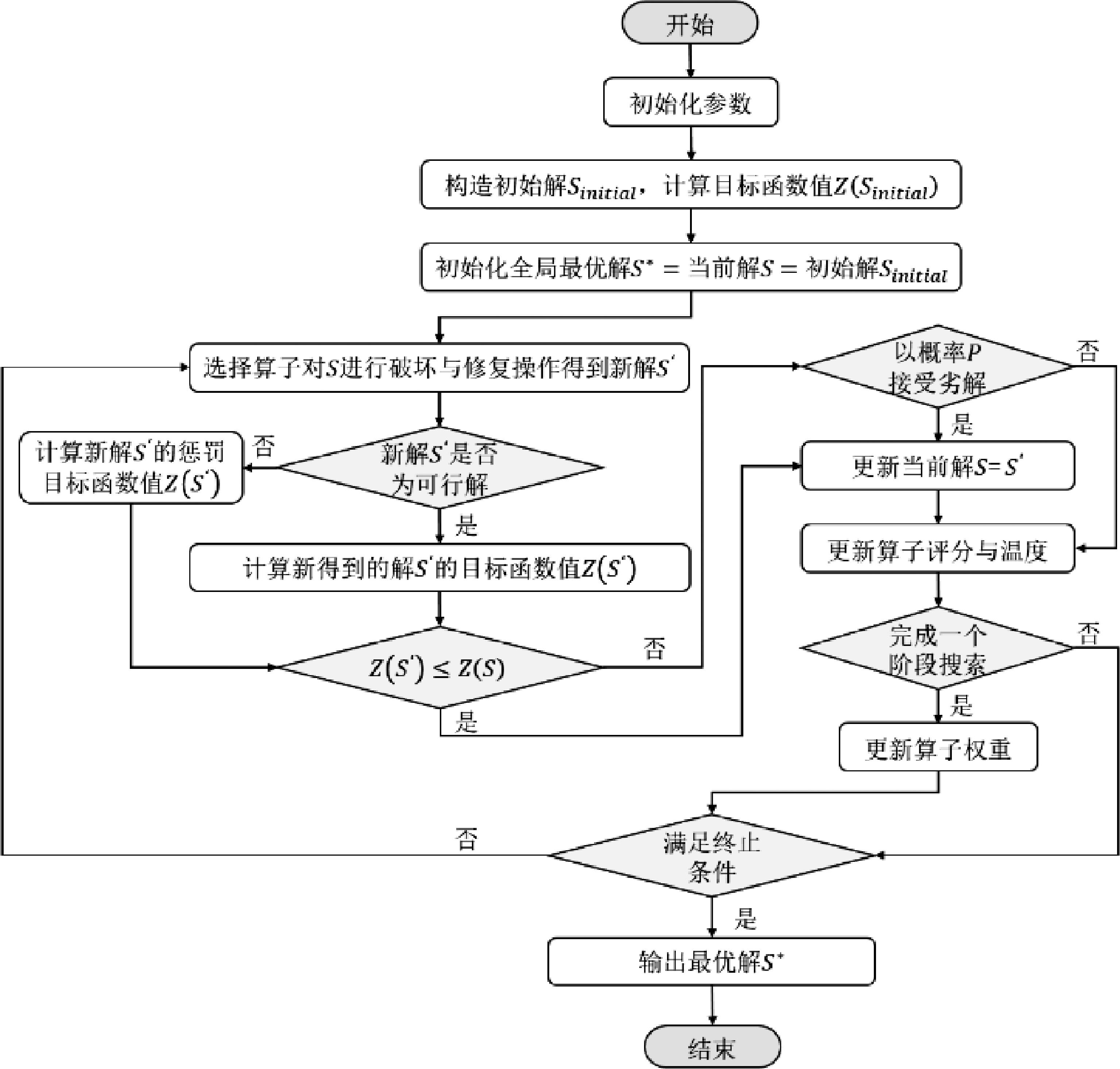
With the rapid economic growth and accelerated urbanization in China, there is an increasing demand for health management and long-term disease treatment. Home health care (HHC) is a type of medical service where professional caregivers, such as nurses, therapists, or doctors, provide in-home care for patients. It mainly serves the elderly, people with chronic illnesses, or those recovering from surgery. It focuses on a novel home health care routing and scheduling problem for clustered residents in this paper. Unlike residents in Western countries who often live dispersedly, urban residents in China typically cluster together in communities, inevitably leading to a large number of requests for home healthcare services in the same area during the same period. The traditional “one caregiver per vehicle” service model, where each caregiver travels alone to visit patients, is simple to schedule but incurs high operational costs when patient locations are spatially clustered. To address this challenge, a novel team-based “multiple caregivers per vehicle” service model is proposed. In this model, multiple medical staff travel together on a bus, disembark at designated stops simultaneously, and individually provide personalized care to patients in the surrounding area. To minimize the total cost of home healthcare centers, a mixed-integer programming model is established, which simultaneously determines team composition, vehicle routes, and the sequence of patient visits for nurses. Given the NP-hardness of the studied problem, an improved adaptive large neighborhood search algorithm (IALNS) is developed to generate solutions. Considering the two-echelon routing structure arising from the team-based mode, a total of seven destroy operators and seven repair operators are specifically designed. To further improve the solution quality, a penalizing strategy is applied to handling infeasible solutions. Computational results on small-sized and large-sized test instances are conducted. For small-sized instances, IALNS performs better than CPLEX in terms of both solution quality and computation time. For large-sized instances, IALNS outperforms the simulated annealing (SA), variable neighborhood search (VNS), and ALNS allowing infeasible solutions. In addition, sensitivity analysis of key parameters is conducted to provide managerial insights to home healthcare centers. Most importantly, the team-based service model provides greater cost advantages compared to the traditional individual-caregiver model.

Key words: home health care, medical team, vehicle routing, scheduling, adaptive large neighborhood search

中图分类号: