
主管:中国科学院
主办:中国优选法统筹法与经济数学研究会
中国科学院科技战略咨询研究院
主办:中国优选法统筹法与经济数学研究会
中国科学院科技战略咨询研究院

Chinese Journal of Management Science ›› 2026, Vol. 34 ›› Issue (8): 345-355.doi: 10.16381/j.cnki.issn1003-207x.2024.0744
Previous Articles Next Articles
Ru Yu, Xiaoli Wang, Xiaojun Xu( ), Lu Wang
Received:2024-05-10
Revised:2024-07-20
Online:2026-08-25
Published:2026-07-14
Contact:
Xiaojun Xu
E-mail:xuxiaojundoc@126.com
CLC Number:
Ru Yu,Xiaoli Wang,Xiaojun Xu, et al. Research on the Development Path of BEVs in China Based on Multi-objective Optimization[J]. Chinese Journal of Management Science, 2026, 34(8): 345-355.

"
| 变量 | 描述 |
|---|---|
| N(t) | 中国纯电动汽车的累计年销量 |
| n(t) | 中国纯电动汽车的新增年销量 |
| h(t) | 外部冲击对创新扩散过程的影响 |
| ks(t) | 中国纯电动汽车企业累计研发投入 |
| rd(t) | 中国纯电动汽车生产企业研发投入 |
| C(t) | 中国纯电动汽车单位生产成本 |
| Q(t) | 中国纯电动汽车累计产量 |
| q(t) | 中国动力电池新增年装机量 |
| t | 时间 |
| LDR | 从经验中学习的技术学习率 |
| LSR | 从研发中学习的技术学习率 |
| Φ(T) | 最优目标函数 |
| F(T) | 中国纯电动汽车发展目标总实现程度 |
| fi (t) | 中国纯电动汽车发展分目标实现程度 |
| Δfi | 目标容限 |
| P(t) | 中国纯电动汽车累计政府补贴 |
| en(t) | 第t年充电桩累计量 |
| 参数 | 描述 |
| p | 创新者系数即尚未使用该产品的人受到外部因素的影响开始使用的可能性 |
| q | 模仿者系数即尚未使用该产品的人受到使用者口碑影响开始使用的可能性 |
| m | 中国纯电动汽车累计最高销量 |
| a | 冲击开始时刻 |
| b | 冲击结束时刻 |
| c | 冲击方向及强度 |
| δ | 累计研发投入的折旧率 |
| α | 经验累积指数 |
| β | 技术创新指数 |
| ω | 多目标优化的加权因子 |
| θ | 目标容限下限 |
| γ | 目标容限上限 |
"
| 年份 | 纯电动汽车销量/万辆 |
|---|---|
| 2011 | 0.56 |
| 2012 | 1.14 |
| 2013 | 1.46 |
| 2014 | 4.5 |
| 2015 | 24.75 |
| 2016 | 40.9 |
| 2017 | 65.2 |
| 2018 | 98.4 |
| 2019 | 97.2 |
| 2020 | 111.5 |
| 2021 | 291.6 |
| 2022 | 536.5 |
| 2023 | 665.7 |
"
"
| 参数 | 广义Bass-矩形冲击1 | 广义Bass-矩形冲击2 | 广义Bass-矩形冲击3 |
|---|---|---|---|
| m | 1.59×10⁴ | 1.59×10⁴ | 1.59×10⁴ |
| p | 7.422×10⁻⁵ | 7.422×10⁻⁵ | 7.422×10⁻⁵ |
| q | 0.4696 | 0.4696 | 0.4696 |
| a | 5 | 8 | 9 |
| b | 7 | 9 | 10 |
| c | -0.462 | 0.683 | -0.856 |
"
| 拟合误差指标 | MAPE | WMAPE | R2 |
|---|---|---|---|
| 广义Bass模型 | 0.29 | 0.029 | 0.9992 |
"
"
"

"
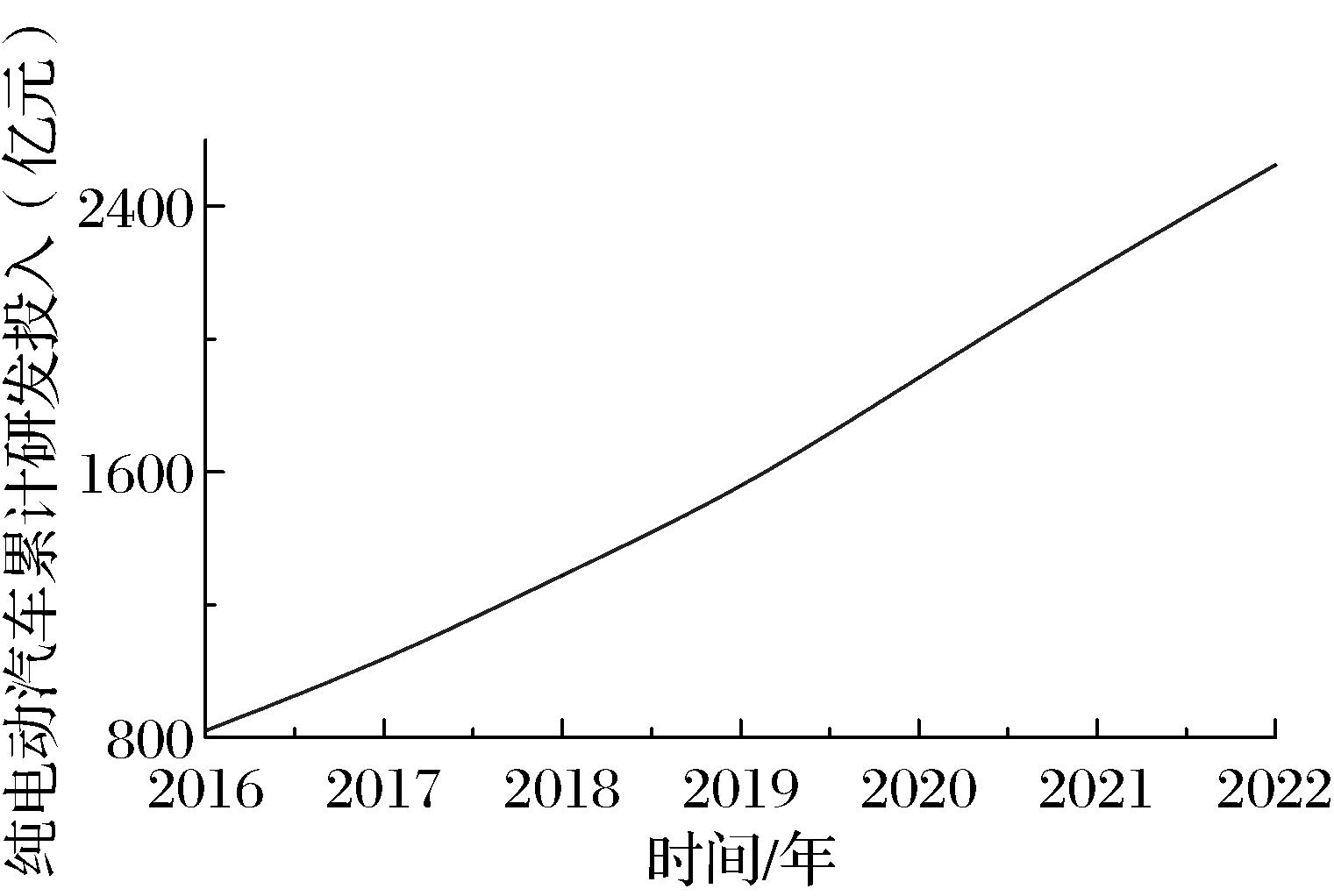
"
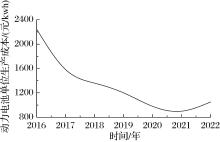
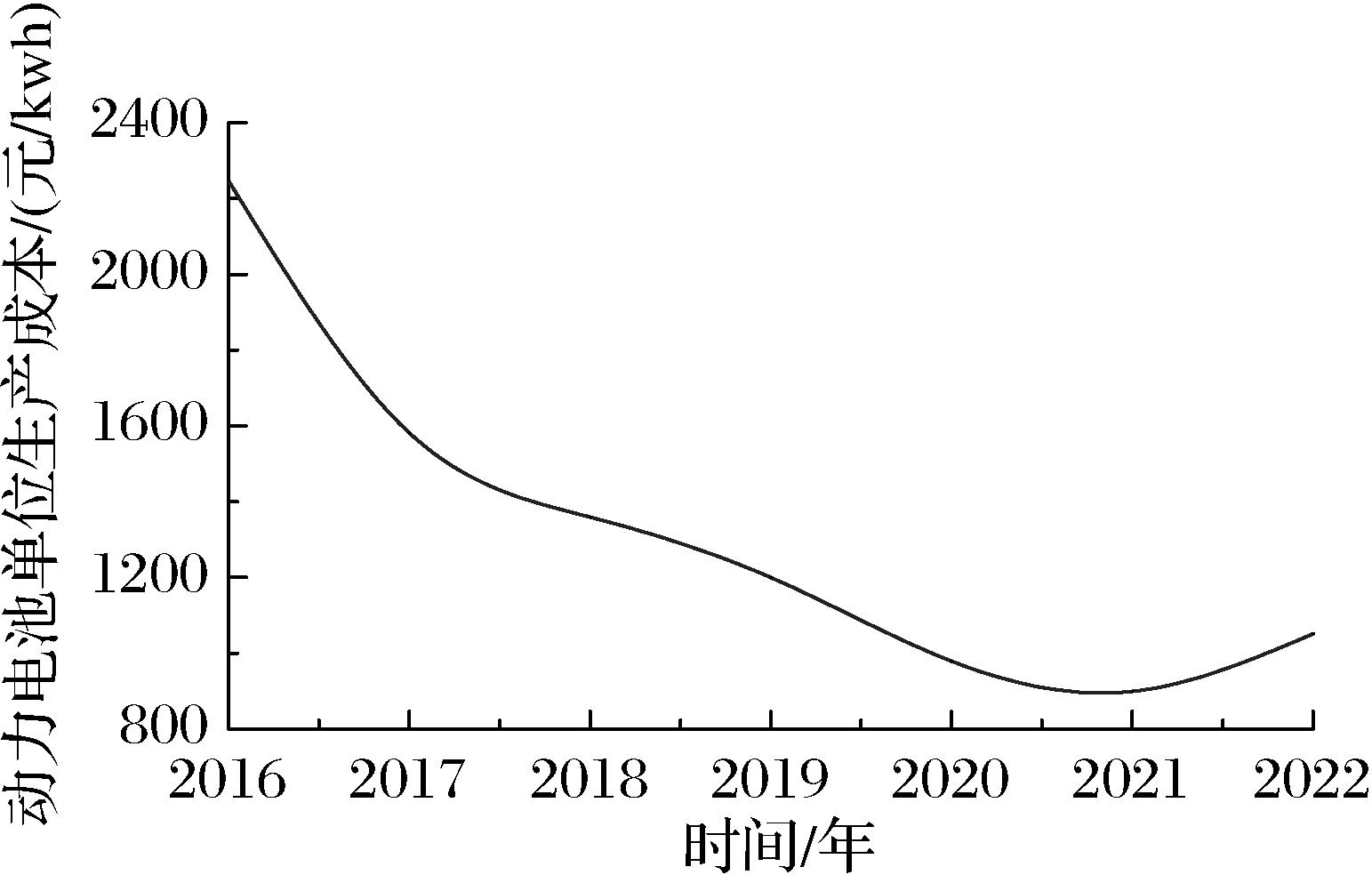
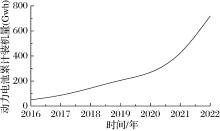
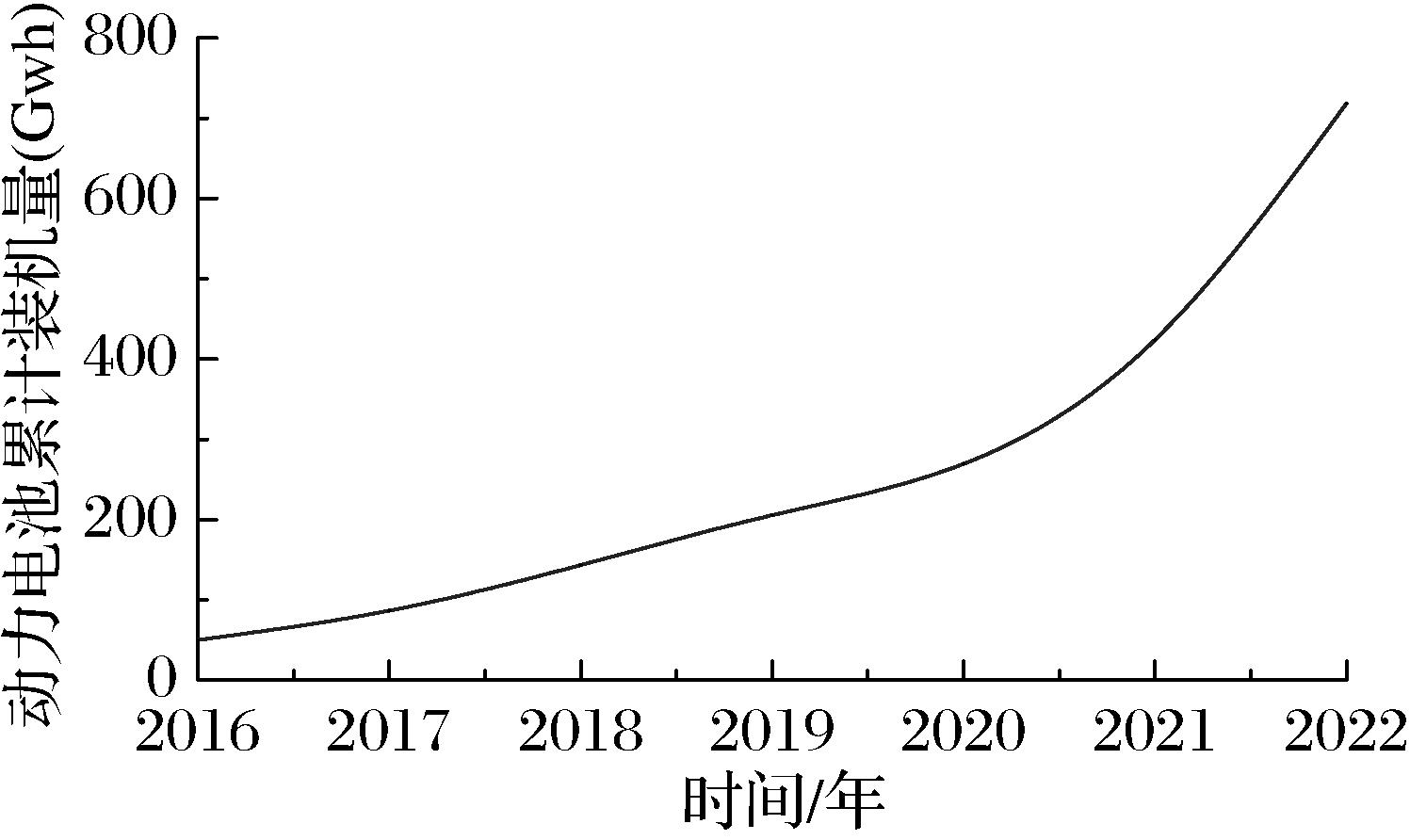
| 年份t | 单位生产成本 C(t)/(元/kW·h) | 动力电池累计装机 Q(t)/(GW·h) | 累计研发投入 ks(t)/亿元 | ln(C(t)) | ln(Q(t)) | ln(ks(t)) |
|---|---|---|---|---|---|---|
| 2016 | 2247.59 | 50.21 | 821.4985 | 7.72 | 3.92 | 6.71 |
| 2017 | 1581.28 | 86.45 | 1038.059 | 7.37 | 4.46 | 6.95 |
| 2018 | 1358.91 | 143.35 | 1288.713 | 7.21 | 4.97 | 7.16 |
| 2019 | 1199.91 | 205.55 | 1558.342 | 7.09 | 5.33 | 7.35 |
| 2020 | 978.74 | 269.55 | 1883.537 | 6.89 | 5.60 | 7.54 |
| 2021 | 898.97 | 424.05 | 2212.794 | 6.80 | 6.05 | 7.70 |
| 2022 | 1051.65 | 718.65 | 2524.184 | 6.96 | 6.58 | 7.83 |
"
| 变量 | 估计值 | t值 | P值(t检验) |
|---|---|---|---|
| 常数项 | 7.9110 | 2.477 | 0.09 |
| ln(Q(t)) | -0.0868 | -0.304 | 0.781 |
| ln(ks(t)) | -0.1024 | -0.579 | 0.603 |
| R2 | 0.979 | 调整的R2 | 0.965 |
| F统计量 | 69.626 | P值(F检验) | 0.003 |
"
| 参数 | 估计值 | 技术进步率 | 技术学习率 |
|---|---|---|---|
| -α | -0.0868 | 94.16% | 5.84% |
| -β | -0.1024 | 93.15% | 6.85% |
"
| 变量 | 估计值 | SSE | RMSE | R2 | 调整的R2 |
|---|---|---|---|---|---|
| a | 649.1 | 58778 | 108.42 | 0.9748 | 0.9697 |
| b | 0.6788 |
"
| 变量 | 估计值 | SSE | RMSE | R2 | 调整的R2 |
|---|---|---|---|---|---|
| a | 8.029 | 12842 | 50.679 | 0.9608 | 0.9529 |
| b | 2.278 |
"
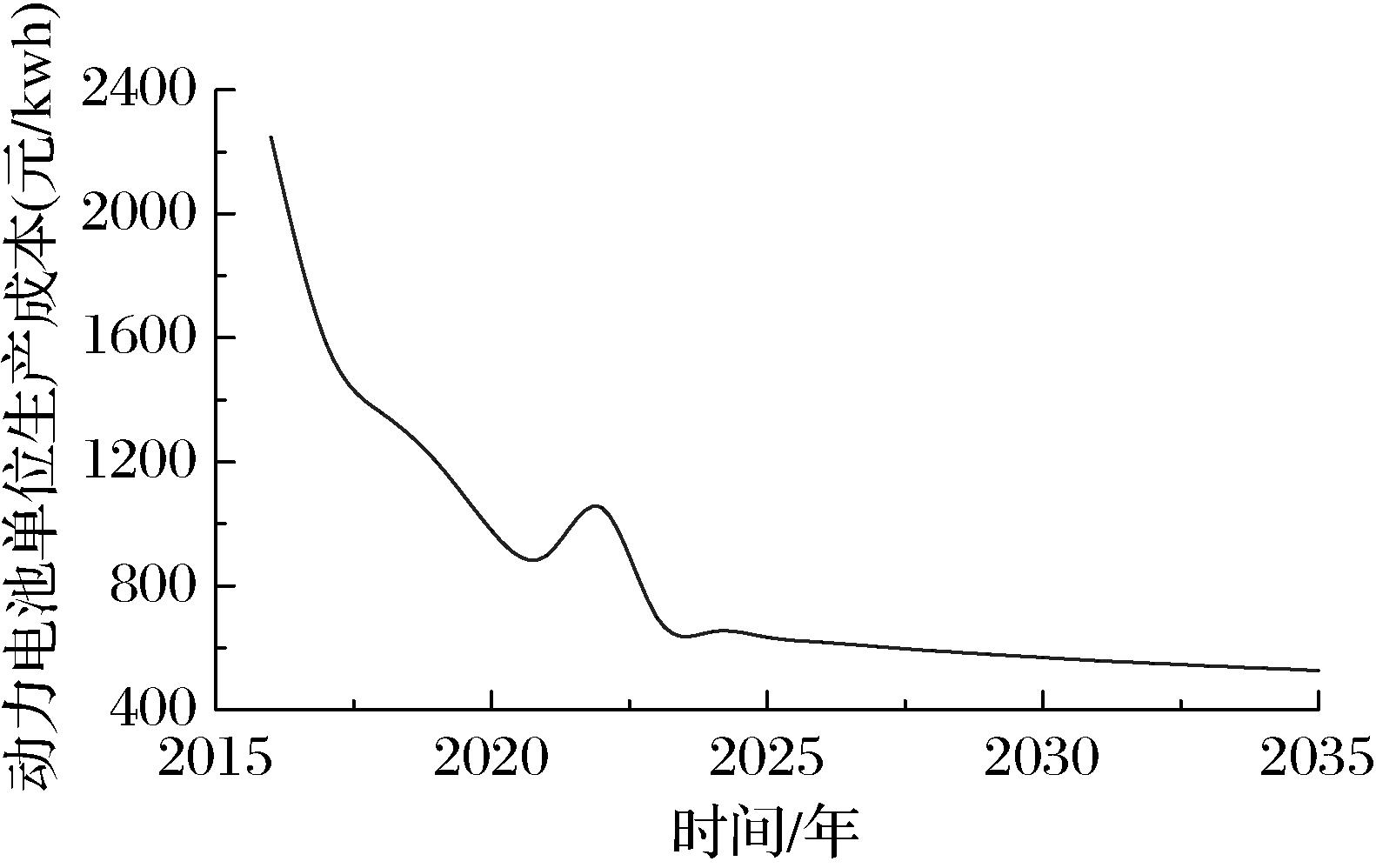
"
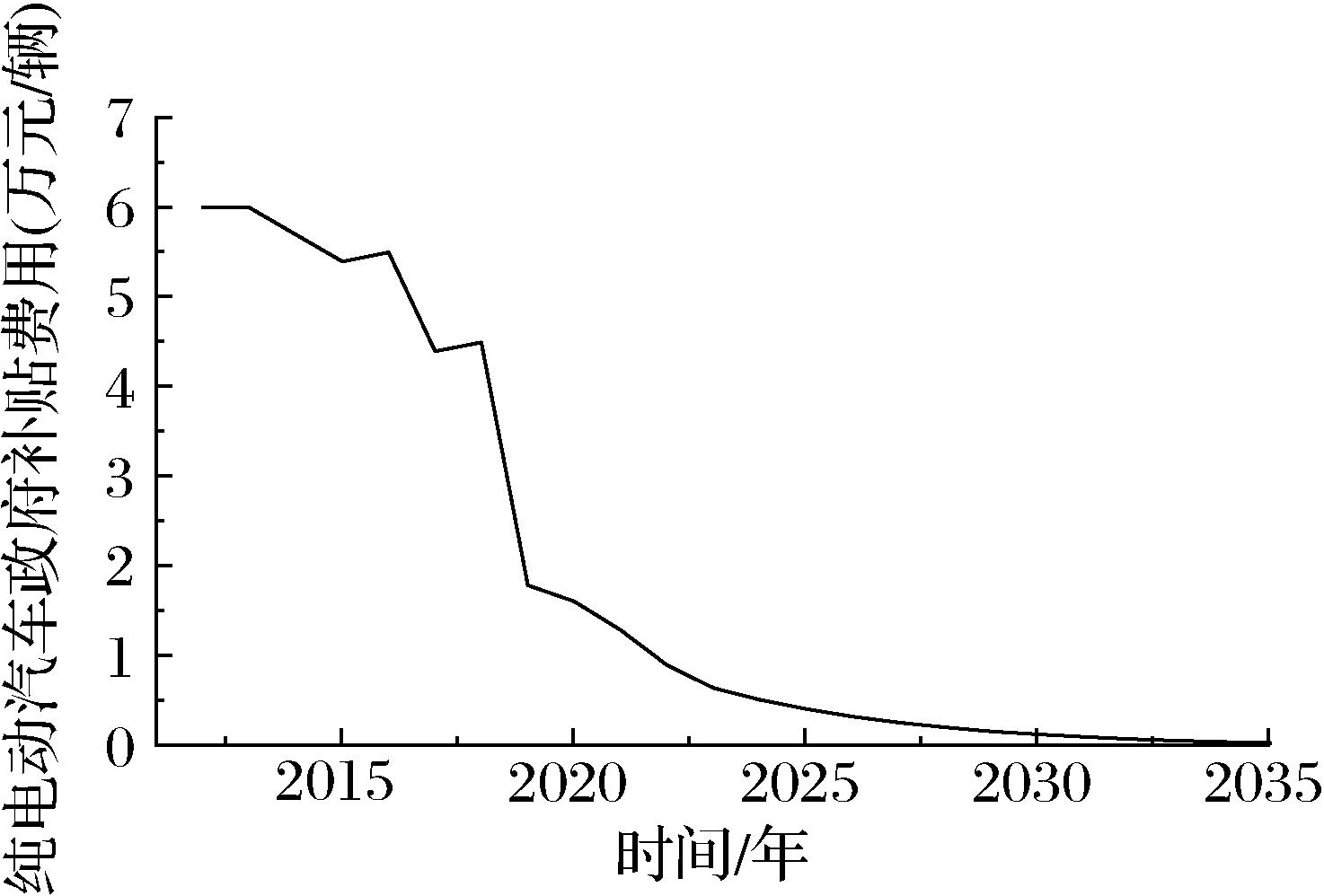
"
| 序号 | 参数 | 数值 | 单位 | 描述 |
|---|---|---|---|---|
| 1 | P | 1.59×10⁴ | 万辆 | 2035年规划累计销量 |
| 2 | M | 100 | 美元 | 单位生产成本目标 |
| 3 | C(0) | 1051.65 | 元/kW·h | 2022年纯电动汽车单位生产成本 |
| 4 | GDP0 | 121.02 | 万亿元 | 2022年GDP值 |
| 5 | d | 5 | % | GDP年均增速 |
| 6 | ic | 42 | % | 动力电池生产成本占整车成本的比例 |
| 7 | it | 0.09 | % | 纯电动汽车投资比例[ |
| 8 | cP1 | 1 | 理想车桩比 | |
| 9 | cP2 | 2.5 | 2022年车桩比 | |
| 10 | C | 8.37 | kg/百公里 | 二氧化碳排放量[ |
| 11 | S | 9970 | 百公里 | 年平均运行里程 |
| 12 | CF | 122 | 亿吨 | 碳达峰值[ |
| 13 | ht | 2.6 | % | 纯电动汽车碳排放比例 |
| 14 | n0 | 2686.4 | 万辆 | 2022年汽车销量 |
| 15 | k | 2.1 | % | 汽车销量年均增长率 |
"
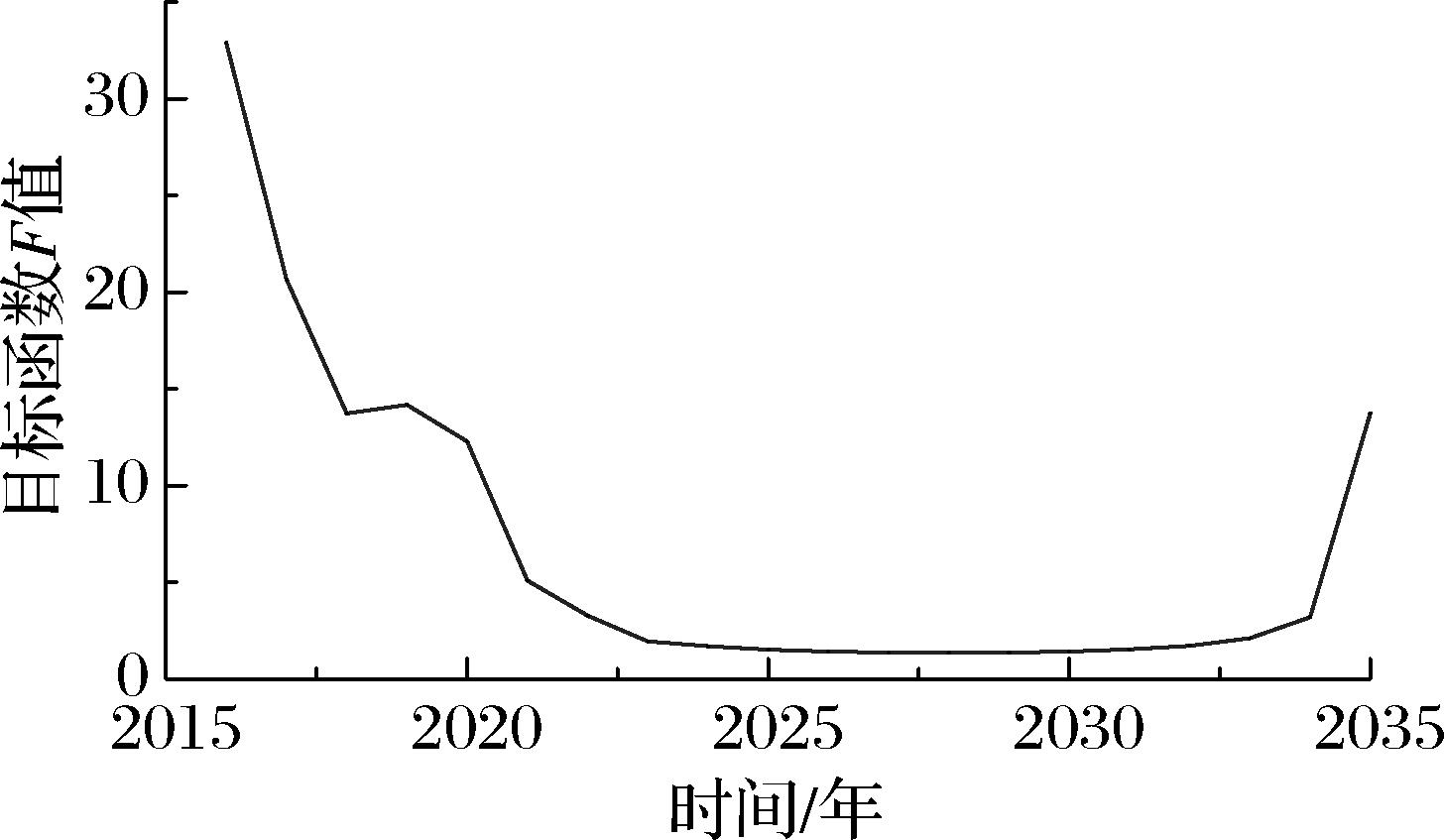
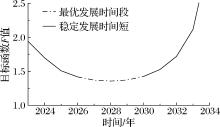
"
"
| [1] | 国务院办公厅. 新能源汽车产业发展规划(2021—2035年)[J]. 中华人民共和国国务院公报, 2020 (31): 16-23. |
| General Office of the State Council. New energy vehicle industry development plan (2021-2035)[J]. Gazette of the State Council of the People's Republic of China, 2020 (31): 16-23. | |
| [2] | 中国汽车工程学会. 节能与新能源汽车技术路线图 2.0[M]. 北京: 机械工业出版社, 2020. |
| China Society of Automotive Engineers.Technology roadmap of energy-saving and new energy vehicles 2.0[M]. Beijing: China Machine Press, 2020. | |
| [3] | Bitencourt L, Abud T, Santos R, et al. Bass diffusion model adaptation considering public policies to improve electric vehicle sales—a Brazilian case study[J]. Energies, 2021, 14(17): 5435. |
| [4] | Rietmann N, Hügler B, Lieven T. Forecasting the trajectory of electric vehicle sales and the consequences for worldwide CO2 emissions[J]. Journal of Cleaner Production, 2020, 261: 121038. |
| [5] | Kumar R R, Guha P, Chakraborty A. Comparative assessment and selection of electric vehicle diffusion models: A global outlook[J]. Energy, 2022, 238: 121932. |
| [6] | 王方, 赵桉坤, 余乐安. 数据特征驱动的新能源汽车月度销量二次分解集成预测[J]. 中国管理科学, 2024,DOI:10.16381/j.cnki.issn1003-207x.2023.2035 . |
| Wang F, Zhao A K, Yu L A. Secondary decomposition and integration forecasting of monthly new energy vehicle sales driven by data characteristics[J]. Chinese Journal of Management Science, 2024,DOI:10.16381/j.cnki.issn1003-207x.2023.2035 . | |
| [7] | 刘连义, 刘思峰, 吴利丰. 基于离散时间灰色幂模型的新能源汽车销售量预测[J]. 中国管理科学, 2024, 32(1): 106-114. |
| Liu L Y, Liu S F, Wu L F. New energy vehicle sales forecast based on siscrete time grey power model[J]. Chinese Journal of Management Science, 2024, 32(1): 106-114. | |
| [8] | 楚岩枫, 朱天聪. 基于Bass模型和GM(1, 1)模型的我国电动汽车保有量预测研究[J]. 数学的实践与认识, 2021, 51(11): 21-32. |
| Chu Y F, Zhu T C. Research on forecast of electric vehicle’s ownership in China based on bass model and GM(1, 1)model[J]. Mathematics in Practice and Theory, 2021, 51(11): 21-32. | |
| [9] | 许妙遥. 我国新能源汽车的销量预测及发展路径研究[D]. 烟台: 山东工商学院, 2023. |
| Xu M Y. Research on Sale Forecast and Development Path of China’s New Energy Vehicles[D]. Yantai: Shandong Technology and Business University, 2023. | |
| [10] | 许晓敏, 郑世鹏, 王之怡, 等. 基于数据挖掘的电力装备制造企业多价值链协同下的成本预测研究[J]. 中国管理科学, 2025, 33(12): 200-213. |
| Xu X M, Zheng S P, Wang Z Y, et al. Research on cost prediction of electric power equipment manufacturing enterprises under multi value chain collaboration based on data mining[J]. Chinese Journal of Management Science, 2025, 33(12): 200-213. | |
| [11] | 喇海霞, 段晓晨, 牛衍亮. 高铁工程全生命成本智能预测模型与实证研究[J]. 科技管理研究, 2023, 43(7): 213-220. |
| La H X, Duan X C, Niu Y L. Intelligent prediction model and empirical study on life-circle cost for high-speed railway project[J]. Science and Technology Management Research, 2023, 43(7): 213-220. | |
| [12] | 李沐阳, 崔姗姗, 翟海燕. 抽水蓄能电站生产成本预测模型研究[J]. 建筑经济, 2022, 43(S2): 106-109. |
| Li M Y, Cui S S, Zhai H Y. Research on the prediction model of production cost for pumped storage power station[J]. Construction Economy, 2022, 43(S2): 106-109. | |
| [13] | 迟春洁, 麻易帆. 基于改进型学习曲线理论的风电产业学习率估计[J]. 经济与管理研究, 2018, 39(5): 69-77. |
| Chi C J, Ma Y F. Estimating the learning rate of wind power industry based on the modified learning curve theory[J]. Research on Economics and Management, 2018, 39(5): 69-77. | |
| [14] | 隆清琦, 刘杰鹏, 彭娟娟, 等. 考虑资源下沉与家庭签约的医联体多目标协调优化决策[J]. 运筹与管理, 2024, 33(12): 24-31. |
| Long Q Q, Liu J P, Peng J J, et al. Multi-objective optimization of medical association coordination considering sinking high-quality medical resources and family contract services[J]. Operations Research and Management Science, 2024, 33(12): 24-31. | |
| [15] | 王斯一, 吴静, 罗宏, 等. 基于多目标非线性规划的生物质发电补贴政策优化与应用[J]. 干旱区资源与环境, 2020, 34(12): 65-71. |
| Wang S Y, Wu J, Luo H, et al. Optimization and application of subsidy policy for biomass power generation based on multi-objective nonlinear programming[J]. Journal of Arid Land Resources and Environment, 2020, 34(12): 65-71. | |
| [16] | 陈可嘉, 陈锦涛. 航班波运行下多目标时隙二次分配的改进NSGA-Ⅱ算法[J]. 运筹与管理, 2025, 34(3): 23-29. |
| Chen K J, Chen J T. Improved NSGA-Ⅱ algorithm for multi-objective slot secondary allocation model based on flight wave operation[J]. Operations Research and Management Science, 2025, 34(3): 23-29. | |
| [17] | 张艺, 杨佳峰, 胡伟. 基于多链式区块链的多类型产消者电力交易决策模型[J]. 系统管理学报, 2024, 33(5): 1251-1260. |
| Zhang Y, Yang J F, Hu W. Decision-making model of multi-types for producers and consumers in electricity transaction based on multi-chain blockchain[J]. Journal of Systems Management, 2024, 33(5): 1251-1260. | |
| [18] | 杨艳艳, 杨红娟, 李加莲, 等. 基于多目标优化的我国风电企业国际化发展风险管理研究[J]. 运筹与管理, 2025, 34(1): 120-125. |
| Yang Y Y, Yang H J, Li J L, et al. Research on risk management of international development of wind power enterprises in China based on multi-objective optimization[J]. Operations Research and Management Science, 2025, 34(1): 120-125. | |
| [19] | Mahajan V, Muller E, Bass F M. New product diffusion models in marketing: A review and directions for research[J]. Journal of Marketing, 1990, 54(1): 1-26. |
| [20] | Bass F M, Krishnan T V, Jain D C. Why the bass model fits without decision variables[J]. Marketing Science, 1994, 13(3): 203-223. |
| [21] | 袁潮清, 董鸿源. 光伏组件技术进步的 “干中学” 与 “研中学”效应研究[J].中国软科学,2024(7): 49-58. |
| Yuan C Q, Dong H Y. Study on the “learning by doing” and “learning by researching” effects of technological progress of photovoltaic module[J]. China Soft Science, 2024(7): 49-58. | |
| [22] | 董海, 高秀秀, 魏铭琦. 不确定环境下两阶段应急供应链网络建模与优化求解[J]. 中国管理科学, 2023, 31(12): 107-116. |
| Dong H, Gao X X, Wei M Q. Modeling and optimization solution of two-stage emergency supply chain network under uncertain environment[J]. Chinese Journal of Management Science, 2023, 31(12): 107-116. | |
| [23] | 王春元, 张子楠. 税收优惠政策组合对企业研发投入的影响研究[J]. 科研管理, 2025, 46(5): 92-101. |
| Wang C Y, Zhang Z N. Research on the impact of tax incentive policy mix on corporate R D investment[J]. Science Research Management, 2025, 46(5): 92-101. | |
| [24] | 中国汽车工业协会, 中国汽车技术研究中心有限公司, 丰田汽车公司. 中国汽车工业发展报告(2020)[M]. 北京: 社会科学文献出版社, 2020: 120-121. |
| China Association of Automobile Manufacturers, China Automotive Technology and Research Center Co., Ltd., Toyota Motor Corporation. Report on the development of China's automobile industry (2020)[M]. Beijing: Social Sciences Academic Press, 2020: 120-121. | |
| [25] | 赵宁. 中国新能源汽车外部效应研究[D]. 西安: 西安电子科技大学, 2020. |
| Zhao N. Research on the external effects of China’s new energy vehicles[D]. Xi’an: Xidian University, 2020. | |
| [26] | 刘丽丽, 刘同礼, 金小香. 电动汽车碳排放计算与跟踪评估的探讨[J].内燃机与配件,2022(1): 196-198. |
| Liu L L, Liu T L, Jin X X. The discussion of calculation method of electric vehicle carbon emission and tracking evaluation[J]. Internal Combustion Engine Parts, 2022(1): 196-198. | |
| [27] | 乔英俊, 赵世佳, 伍晨波, 等. “双碳”目标下我国汽车产业低碳发展战略研究[J]. 中国软科学, 2022(6): 31-40. |
| Qiao Y J, Zhao S J, Wu C B, et al. Research on low-carbon development strategy of China’s automotive industry with the “carbon-peak and carbon-neutrality”Goal[J]. China Soft Science, 2022(6): 31-40. | |
| [28] | 刘卫东, 姜宛贝, 唐志鹏, 等. 中国2030年前实现碳达峰的路径研究——基于GDP增速的组合分析[J]. 中国科学: 地球科学, 2022, 52(7): 1268-1282. |
| Liu W D, Jiang W B, Tang Z P, et al. Research on China’s Path to peak carbon dioxide emissions by 2030: Based on the combination analysis of GDP growth rate[J]. Scientia Sinica (Terrae), 2022, 52(7): 1268-1282. |
| Viewed | ||||||
|
Full text |
|
|||||
|
Abstract |
|
|||||
|
||
