
主管:中国科学院
主办:中国优选法统筹法与经济数学研究会
中国科学院科技战略咨询研究院
主办:中国优选法统筹法与经济数学研究会
中国科学院科技战略咨询研究院

Chinese Journal of Management Science ›› 2026, Vol. 34 ›› Issue (8): 280-291.doi: 10.16381/j.cnki.issn1003-207x.2024.1554
Previous Articles Next Articles
Huifeng Jiang1,2( ), Yiping Liu1
Received:2024-09-05
Revised:2025-05-19
Online:2026-08-25
Published:2026-07-14
Contact:
Huifeng Jiang
E-mail:943134210@qq.com
CLC Number:
Huifeng Jiang,Yiping Liu. The RDEU Game Model Analysis of Legitimacy Spillover of the Industrial College[J]. Chinese Journal of Management Science, 2026, 34(8): 280-291.
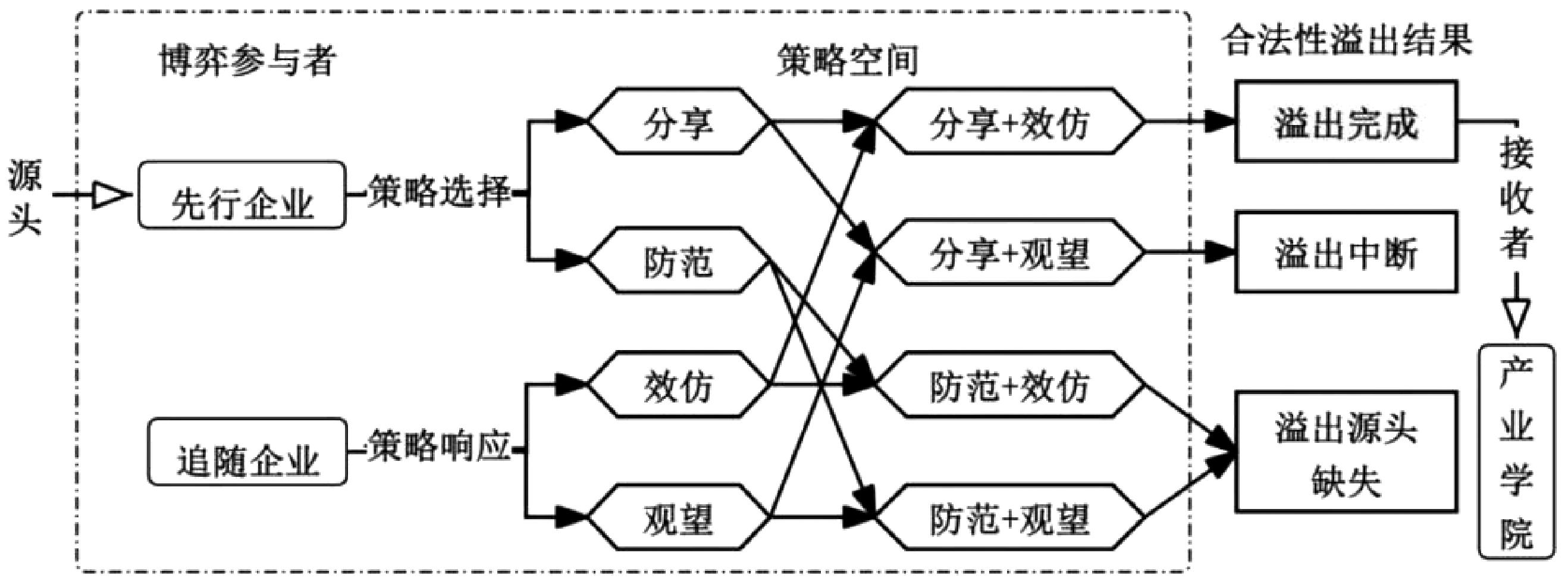
"

"
| 模型参数 | 参数含义 |
|---|---|
| 先行企业选择分享策略的概率, | |
| 追随企业选择效仿策略的概率, | |
| 原有的可盈利空间 | |
| 共建产业学院后,额外拓展的盈利空间, | |
| 共建产业学院的投入成本 | |
| 追随企业所占市场份额是先行企业的 | |
| 市场份额损失比例, | |
| 风险偏好指数 |
"
先行 企业 | 追随企业 | |
|---|---|---|
| 效仿 | 观望 | |
分享 | ||
防范 | ||
"
先行企业得益 | 先行企业概率 | 先行企业秩 | 先行企业 |
|---|---|---|---|
"
| 追随企业得益 | 追随企业概率 | 追随企业秩 | 追随企业 |
|---|---|---|---|
"
| 先行企业得益 | 先行企业概率 | 先行企业秩 | 先行企业 |
|---|---|---|---|
"
| 追随企业得益 | 追随企业概率 | 追随企业秩 | 追随企业 |
|---|---|---|---|
"
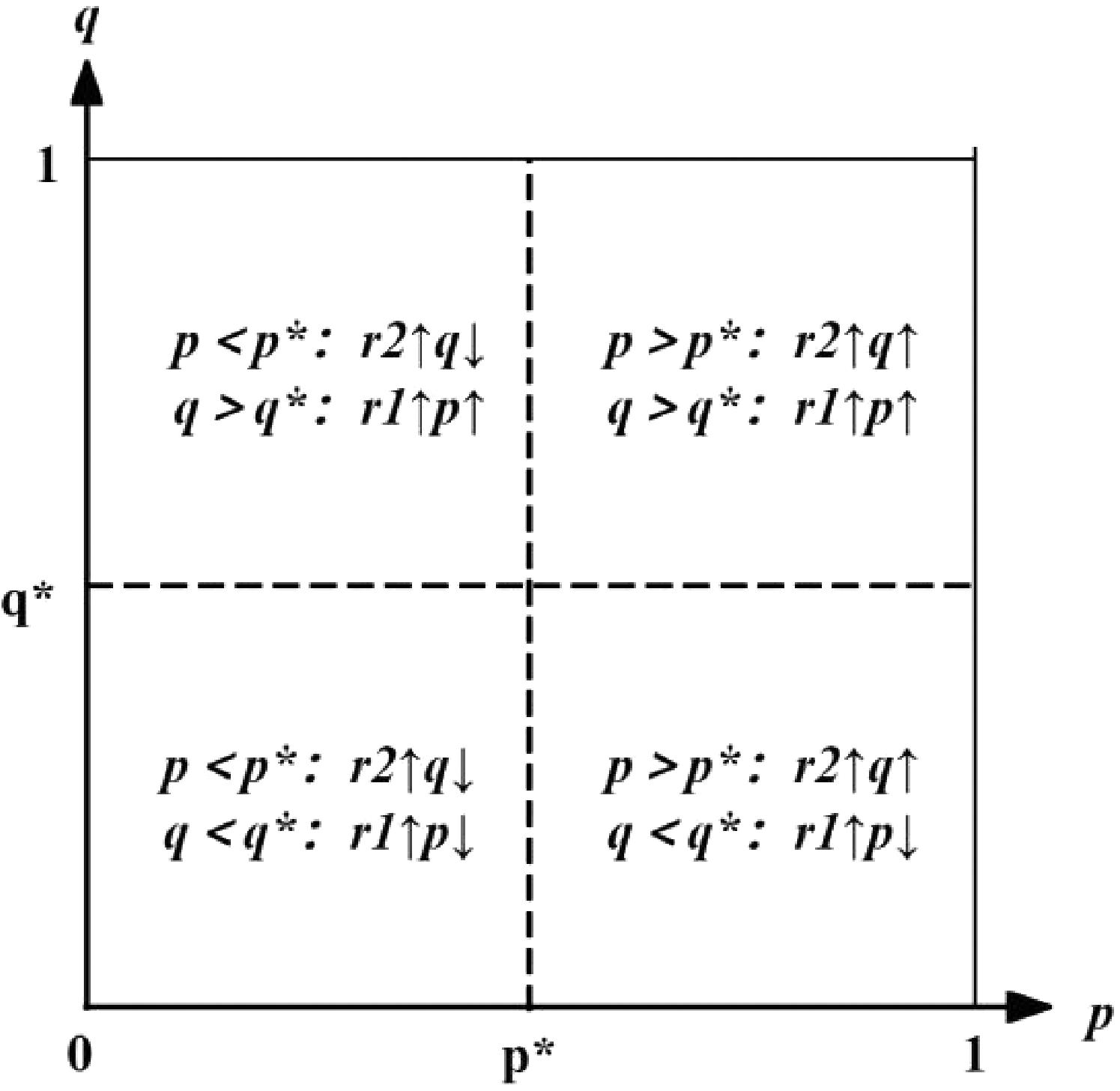
"
| 1.6 | 1.5 | 2 | 1700 | 0.0021 |
"
"
"
"
"
| [1] | 葛高丰. 高职院校产业学院建设的实践演进、功能转型和提升路径[J]. 教育与职业, 2023(15): 43-49. |
| Ge G F. Practical evolution, functional transformation and improvement paths of the construction of industrial colleges in higher vocational colleges[J]. Education and Vocation, 2023(15): 43-49. | |
| [2] | Suchman M C. Managing legitimacy: Strategic and institutional approaches[J]. The Academy of Management Review, 1995, 20(3): 571-610. |
| [3] | Aldrich H E, Fiol C M. Fools rush in? The institutional context of industry creation[J]. The Academy of Management Review, 1994, 19(4): 645-670. |
| [4] | DiMaggio P J, Powell W W. The iron cage revisited: Institutional isomorphism and collective rationality in organizational fields[J]. American Sociological Review, 1983, 48(2): 147-160. |
| [5] | Kostova T, Zaheer S. Organizational legitimacy under conditions of complexity: The case of the multinational enterprise[J]. The Academy of Management Review, 1999, 24(1): 64-81. |
| [6] | 徐堇, 彭璧玉. 种群密度与环境承载力对组织种群灭绝的影响[J]. 科研管理, 2019, 40(3): 143-152. |
| Xu J, Peng B Y. Effects of population density and environmental carrying capacity on organizational population extinction[J]. Science Research Management, 2019, 40(3): 143-152. | |
| [7] | 匡瑛, 朱正茹. 深化职业教育产教融合的关键是实现跨界组织实体化运作[J]. 河北大学学报(哲学社会科学版), 2024, 49(2): 81-92. |
| Kuang Y, Zhu Z R. The key to deepening the integration of industry and education in vocational education is to realize the entity-based operations of the cross-boundary organizations[J]. Journal of Hebei University (Philosophy and Social Science), 2024, 49(2): 81-92. | |
| [8] | 童卫丰, 张璐, 施俊庆. 利益与合力: 基于利益相关者理论的产教融合及其实施路径[J]. 教育发展研究, 2022, 42(17): 67-73. |
| Tong W F, Zhang L, Shi J Q. Interests and resultant force: The implementation path of the production-education integration based on the stakeholder theory[J]. Research in Educational Development, 2022, 42(17): 67-73. | |
| [9] | 金劲彪, 侯嘉淳, 李继芳. 现代产业学院建设的法律风险与防范——基于江浙产业学院建设的实证分析[J]. 教育发展研究, 2021, 41(5): 20-27. |
| Jin J B, Hou J C, Li J F. Legal risks and prevention of the construction of modern industry college[J]. Research in Educational Development, 2021, 41(5): 20-27. | |
| [10] | 刘燕楠, 贾天枝, 池春阳. 高职产业学院发展的运行逻辑与治理机制——基于交易成本的理论视角[J]. 教育发展研究, 2024, 44(1): 58-66. |
| Liu Y N, Jia T Z, Chi C Y. The operational logic and governance mechanism of higher vocational industry colleges development: A theoretical perspective based on transaction costs[J]. Research in Educational Development, 2024, 44(1): 58-66. | |
| [11] | 李雷. 合法性溢出文献综述与批判性思考[J]. 财经论丛(浙江财经学院学报), 2019(8): 95-103. |
| Li L. Literature review and critical thinking on legitimacy spillover[J]. Collected Essays on Finance and Economics, 2019(8): 95-103. | |
| [12] | Haack P, Pfarrer M D, Scherer A G. Legitimacy-as-feeling: How affect leads to vertical legitimacy spillovers in transnational governance[J]. Journal of Management Studies, 2014, 51(4): 634-666. |
| [13] | 周继良, 吴肖. 现代产业学院促进地方本科院校一流学科建设的内在逻辑——基于产业学院组织属性与特征的考察[J].内蒙古社会科学,2022, 43(4): 185-192. |
| Zhou J L, Wu X. The internal logic of industrial Colleges’Promoting first-class discipline construction of local undergraduate universities: Based on the organizational attributes and characteristics of industrial colleges[J]. Inner Mongolia Social Sciences, 2022, 43(4): 185-192. | |
| [14] | 李雷, 刘博. 生态型企业的合法性溢出战略——小米公司纵向案例研究[J].管理学报,2020,17(8): 1117-1129. |
| Li L, Liu B. Legitimacy spillover strategy of eco-enterprises: A longitudinal case study of xiaomi company[J]. Chinese Journal of Management, 2020, 17(8): 1117-1129. | |
| [15] | 施必翔, 唐方成, 郝玉. 合法性溢出视角下IP生态系统涌现机理——基于数字文创产业的案例研究[J]. 科学学与科学技术管理, 2023, 44(3): 42-62. |
| Shi B X, Tang F C, Hao Y. Research on the mechanism of IP ecosystems emergence from legitimacy spillover perspective: A case study from the industry of digital culture and creation[J]. Science of Science and Management of S T (Monthly), 2023, 44(3): 42-62. | |
| [16] | Machina M J. Choice under uncertainty: Problems solved and unsolved[J]. Journal of Economic Perspectives, 1987, 1(1): 121-154. |
| [17] | Quiggin J. Comparative statics for rank-dependent expected utility theory[J]. Journal of Risk and Uncertainty, 1991, 4(4): 339-350. |
| [18] | Starmer C. Developments in non-expected utility theory: The hunt for a descriptive theory of choice under risk[J]. Journal of Economic Literature, 2000, 38(2): 332-382. |
| [19] | 龚日朝. 基于秩依期望效用理论的鹰鸽博弈均衡解分析[J]. 管理科学学报, 2012, 15(9): 35-45. |
| Gong R Z. Nash equilibrium of hawk-dove game based on rank-dependent expected utility theory[J]. Journal of Management Sciences in China, 2012, 15(9): 35-45. | |
| [20] | Diecidue E, Wakker P P. On the intuition of rank-dependent utility[J]. Journal of Risk and Uncertainty, 2001, 23(3): 281-298. |
| [21] | 熊国强, 张婷, 王海涛. 情绪影响下群体性冲突的RDEU博弈模型分析[J]. 中国管理科学, 2015, 23(9): 162-170. |
| Xiong G Q, Zhang T, Wang H T. The RDEU game model analysis of group conflict influenced by emotion[J]. Chinese Journal of Management Science, 2015, 23(9): 162-170. | |
| [22] | 赵昕, 白雨, 丁黎黎. 碳情绪能否助力碳捕捉与封存项目发展?[J]. 中国管理科学, 2023, 31(1): 81-91. |
| Zhao X, Bai Y, Ding L L. Can carbon emotions contribute to the development of carbon capture and storage projects?[J]. Chinese Journal of Management Science, 2023, 31(1): 81-91. | |
| [23] | 鲍计国, 鲍长生. 企业主导的现代产业学院是如何建设的?——以华为ICT学院为例[J]. 职业技术教育, 2024, 45(14): 19-22. |
| Bao J G, Bao C S. How was a modern industrial college led by enterprises constructed: Taking Huawei ICT academy as an example[J]. Vocational and Technical Education, 2024, 45(14): 19-22. | |
| [24] | 吕文蓉,单而芳,刘涛,等. 基于一致性的联盟Banzhaf值的刻画及其在产业联盟创新收益分配中的应用[J].中国管理科学,2026,34(5):86-96. |
| Lv W R, Shan E F, Liu T, et al. Consistency of the Banzhaf value with coalition structure and its application in innovation benefit allocation of the industrial alliance [J]. Chinese Journal of Management Science, 2026,34(5):86-96. | |
| [25] | 单而芳, 史纪磊, 蔡蕾. 具有联盟和概率图结构合作对策的分配规则及其应用[J]. 中国管理科学, 2024, 32(1): 137-145. |
| Shan E F, Shi J L, Cai L. The allocation rule for TU-games with coalition and probabilistic graph structures and its applications[J]. Chinese Journal of Management Science, 2024, 32(1): 137-145. |
| [1] | Xia Liu, Yunyue Zhang, Mengqi Li, Yejun Xu. Quantum Supervised Game Model and Simulation Analysis for Manipulative Behavior in Trading Stock Market [J]. Chinese Journal of Management Science, 2025, 33(3): 24-33. |
| [2] | Haojia He,Xingzheng Ai,Hua Tang,Songbo Guo. Patent Licensing Strategy Selection in the Presence of Chain-to-Chain Competition [J]. Chinese Journal of Management Science, 2024, 32(9): 142-153. |
| [3] | ZHAO Xin, , BAI Yu, DING Li-li,. Can Carbon Emotions Contribute to the Development of Carbon Capture and Storage Projects? [J]. Chinese Journal of Management Science, 2023, 31(1): 81-91. |
| [4] | CHEN Jin-xiao, CHEN Jian. Supply Chain Profit Game and Equilibrium Pricing [J]. Chinese Journal of Management Science, 2022, 30(9): 128-139. |
| [5] | WU Jiang-hua, JIANG Fan. Vertical Information Acquisition and Horizontal Information Sharing Strategy in a Supply Chain [J]. Chinese Journal of Management Science, 2021, 29(8): 161-173. |
| [6] | ZHU Huai-nian, ZHANG Cheng-ke, CAO Ming. Investment and Reinsurance Games between an Insurer and a Reinsurer under the Heston Model [J]. Chinese Journal of Management Science, 2021, 29(6): 48-59. |
| [7] | FENG Hai-rong, ZENG Yin-lian, ZHOU Jie. Cost Allocation for Collaborative Procurement with Carbon Cap and Trade Policy [J]. Chinese Journal of Management Science, 2021, 29(5): 108-116. |
| [8] | YAO Dong-min, LI Hao-yang, ZHANG Peng-yuan. Fiscal Subsidy VS. Proprietary Trading: Study on the Government's Intervention Decision on the Supply of Public Goods under the “Catch-all” Motive [J]. Chinese Journal of Management Science, 2021, 29(3): 100-108. |
| [9] | DING Long, HU Bin, CHANG Shan, SHI Chun-lai. A Game Analysis on RFID Technology and Parallel Importation Based on Gray Market Traceability [J]. Chinese Journal of Management Science, 2021, 29(2): 78-88. |
| [10] | GUO Jie. Online Tourism Supply Chain Network Equilibrium Model with the Transaction Risk Investment [J]. Chinese Journal of Management Science, 2020, 28(6): 137-145. |
| [11] | WU Jiang-hua, JIANG Fan. Information Sharing Strategy among Competitive Companies with Capacity Constraints in a Supply Chain [J]. Chinese Journal of Management Science, 2020, 28(5): 146-158. |
| [12] | YU Xiang-yu, HUANG Shou-jun, YANG Jun. Differential Game Models for Carbon Emission Reduction Competition Considering Horizontal Cooperation in Oligopoly Electricity Market [J]. Chinese Journal of Management Science, 2020, 28(5): 189-199. |
| [13] | HAN Shuai, LIU Shu-lin. A Study on Advertisers' Equilibrium Bids with Budget-constraints-Based on the Nash Equilibrium [J]. Chinese Journal of Management Science, 2019, 27(5): 57-67. |
| [14] | LIU Chang-yu, YU Tao, MA Ying-hong. Game of Government, Enterprise and Consumer Based on Product Quality Regulation Perspective [J]. Chinese Journal of Management Science, 2019, 27(4): 127-135. |
| [15] | ZHOU Zhong-bao, REN Tian-tian, XIAO He-lu, WU Shi-jian, LIU Wen-bin. Multi-period Portfolio Game Model Based on Relative Wealth Utility [J]. Chinese Journal of Management Science, 2019, 27(1): 34-43. |
| Viewed | ||||||
|
Full text |
|
|||||
|
Abstract |
|
|||||
|
||
