
主管:中国科学院
主办:中国优选法统筹法与经济数学研究会
中国科学院科技战略咨询研究院
主办:中国优选法统筹法与经济数学研究会
中国科学院科技战略咨询研究院

Chinese Journal of Management Science ›› 2026, Vol. 34 ›› Issue (8): 269-279.doi: 10.16381/j.cnki.issn1003-207x.2024.0001
Previous Articles Next Articles
Shuyu Shao1,2( ), Qing Wang1, Yan Liu1
Received:2024-01-02
Revised:2024-06-28
Online:2026-08-25
Published:2026-07-14
Contact:
Shuyu Shao
E-mail:shaoshuyu@bwu.edu.cn
CLC Number:
Shuyu Shao,Qing Wang,Yan Liu. Green Transformation of Small and Medium-Sized Manufacturing Enterprises under the Dynamic Government Reward and Punishment Mechanism[J]. Chinese Journal of Management Science, 2026, 34(8): 269-279.
"

"
| 参数 | 含义 |
|---|---|
| 地方政府选择积极监管/消极监管的概率, | |
| 中小型制造企业选择协同绿色转型/不协同绿色转型的概率 | |
| 地方政府选择绿色转型监管时产生的成本 | |
| 地方政府选择绿色转型监管时产生的收益 | |
| 中小型制造企业选择积极参与绿色协同转型产生的成本 | |
| 中小型制造企业选择积极参与绿色转型协同产生的收益 | |
| 中小型制造企业选择消极参与绿色协同转型产生的成本 | |
| 中小型制造企业选择消极参与绿色转型协同产生的收益 | |
| 中小型制造企业不选择协同绿色转型时给地方政府带来的政绩及公信损失 | |
| 地方政府积极监管时给予积极参与绿色转型协同的中小型制造企业的奖励 | |
| 地方政府积极监管时给予消极参与绿色协同转型的中小型制造企业的惩罚 |
"
| 参与博弈方 | 地方政府 | ||
|---|---|---|---|
| 积极监管 | 消极监管 | ||
| 中小型制造企业 | 积极参与绿色协同转型 | ||
| 消极参与绿色协同转型 | |||
"
| 均衡点 | 符号 | 符号 | 稳定性 | ||
|---|---|---|---|---|---|
| - | 不确定 | 鞍点 | |||
| -E(P+E+C3-C2+R2-R3) | - | 不确定 | 鞍点 | ||
| - | 不确定 | 鞍点 | |||
| - | 不确定 | 鞍点 | |||
| + | 0 | 中心点 |
"
| 均衡点 | 符号 | 符号 | 局部稳定性 | ||
|---|---|---|---|---|---|
| - | 不确定 | 鞍点 | |||
| - | 不确定 | 鞍点 | |||
| - | - | 不稳定 | |||
| - | + | 鞍点 | |||
| + | - | 均衡点 |
"
| 均衡点 | 符号 | 符号 | 局部稳定性 | ||
|---|---|---|---|---|---|
| - | + | 鞍点 | |||
| - | - | 不稳定 | |||
| - | 不确定 | 鞍点 | |||
| - | 不确定 | 鞍点 | |||
| + | + | 不稳定 |
"
| 均衡点 | 符号 | 符号 | 局部稳定性 | ||
|---|---|---|---|---|---|
| - | + | 鞍点 | |||
| - | - | 鞍点 | |||
| - | - | 鞍点 | |||
| - | + | 鞍点 | |||
| + | - | 稳定点 |
"
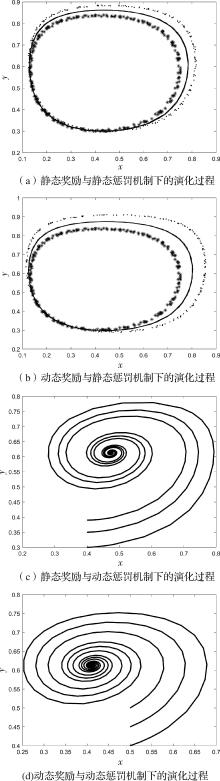
"

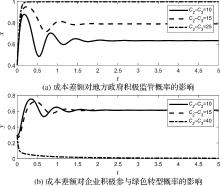
"
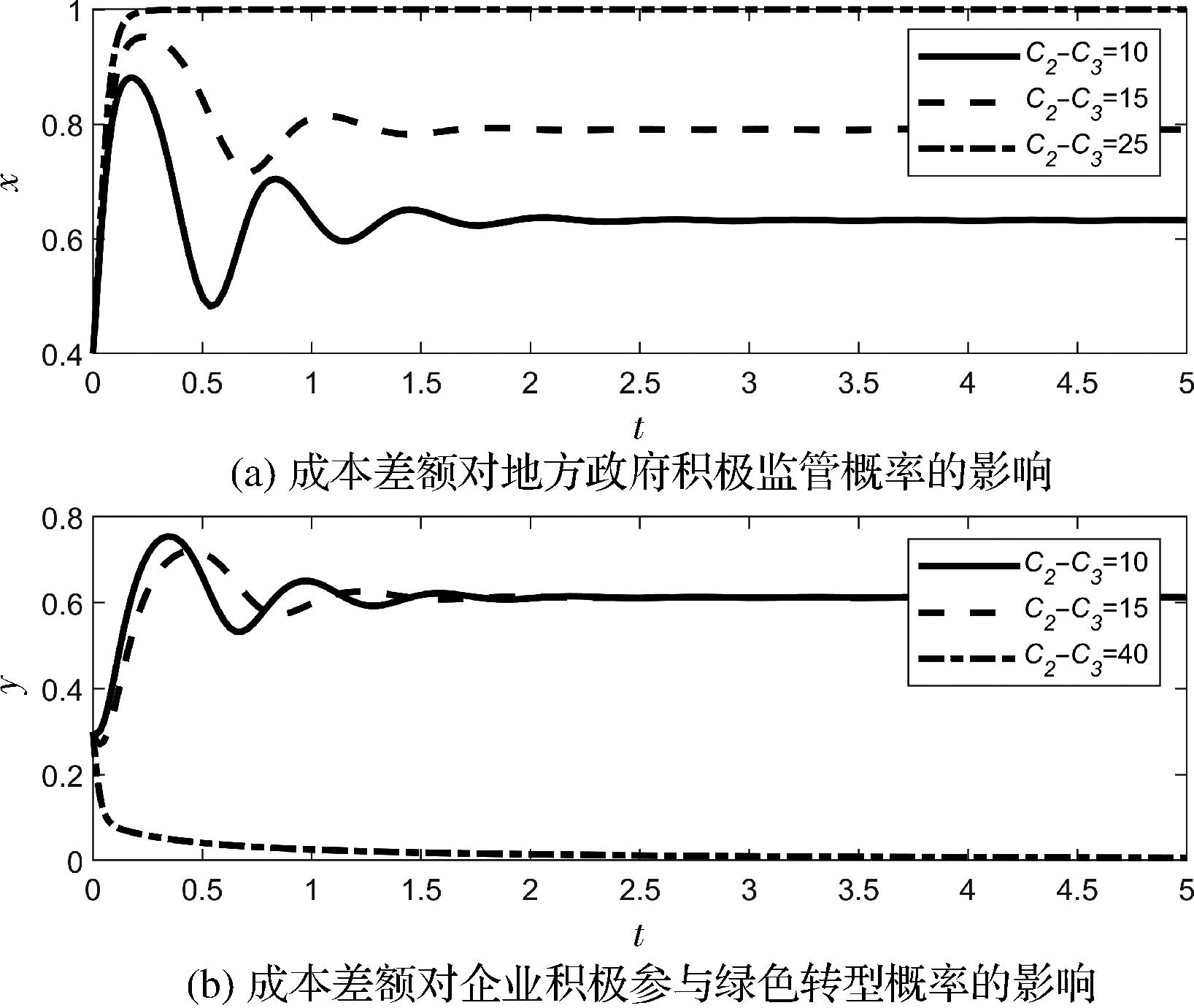
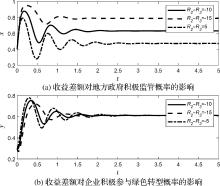
"
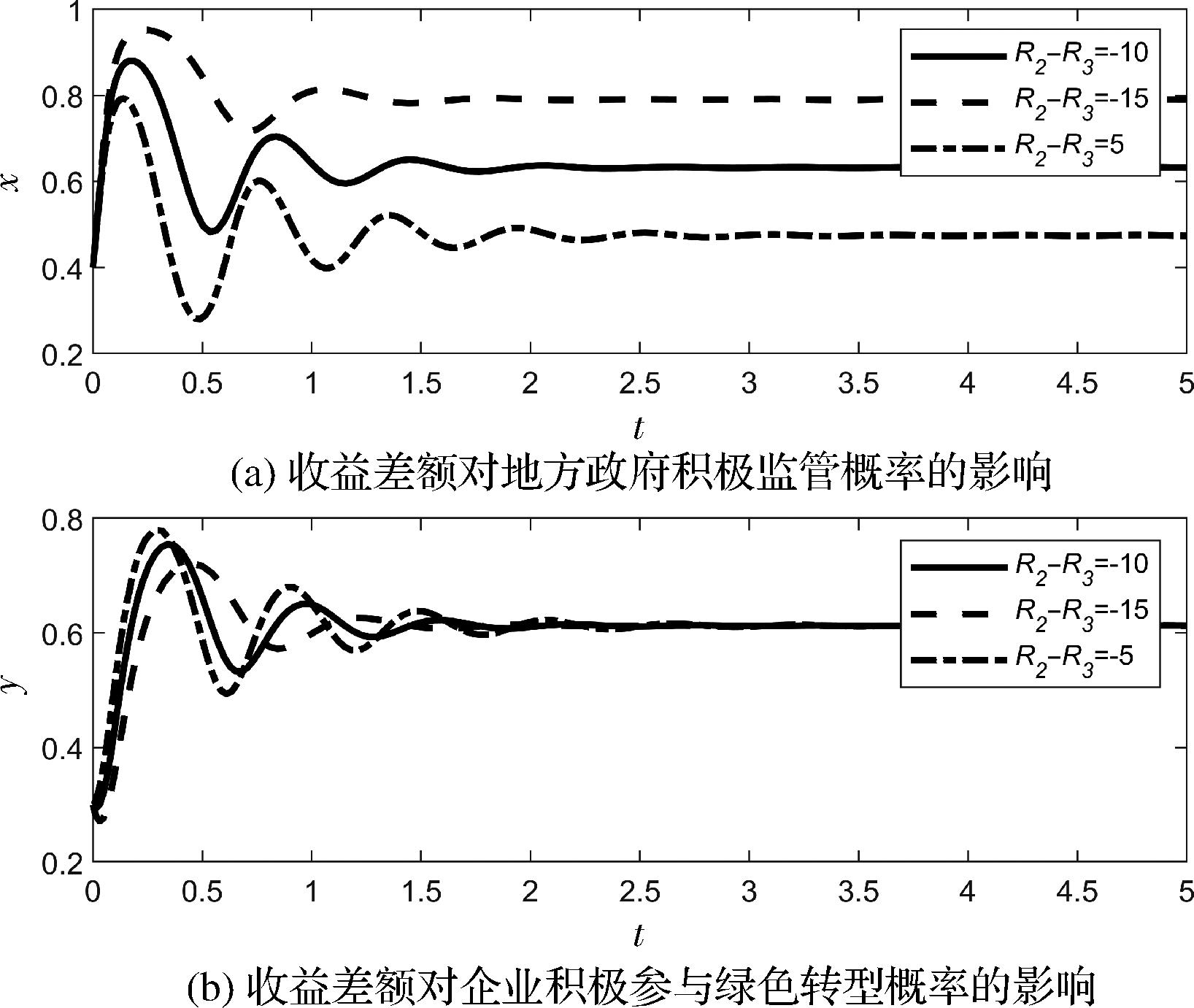
"
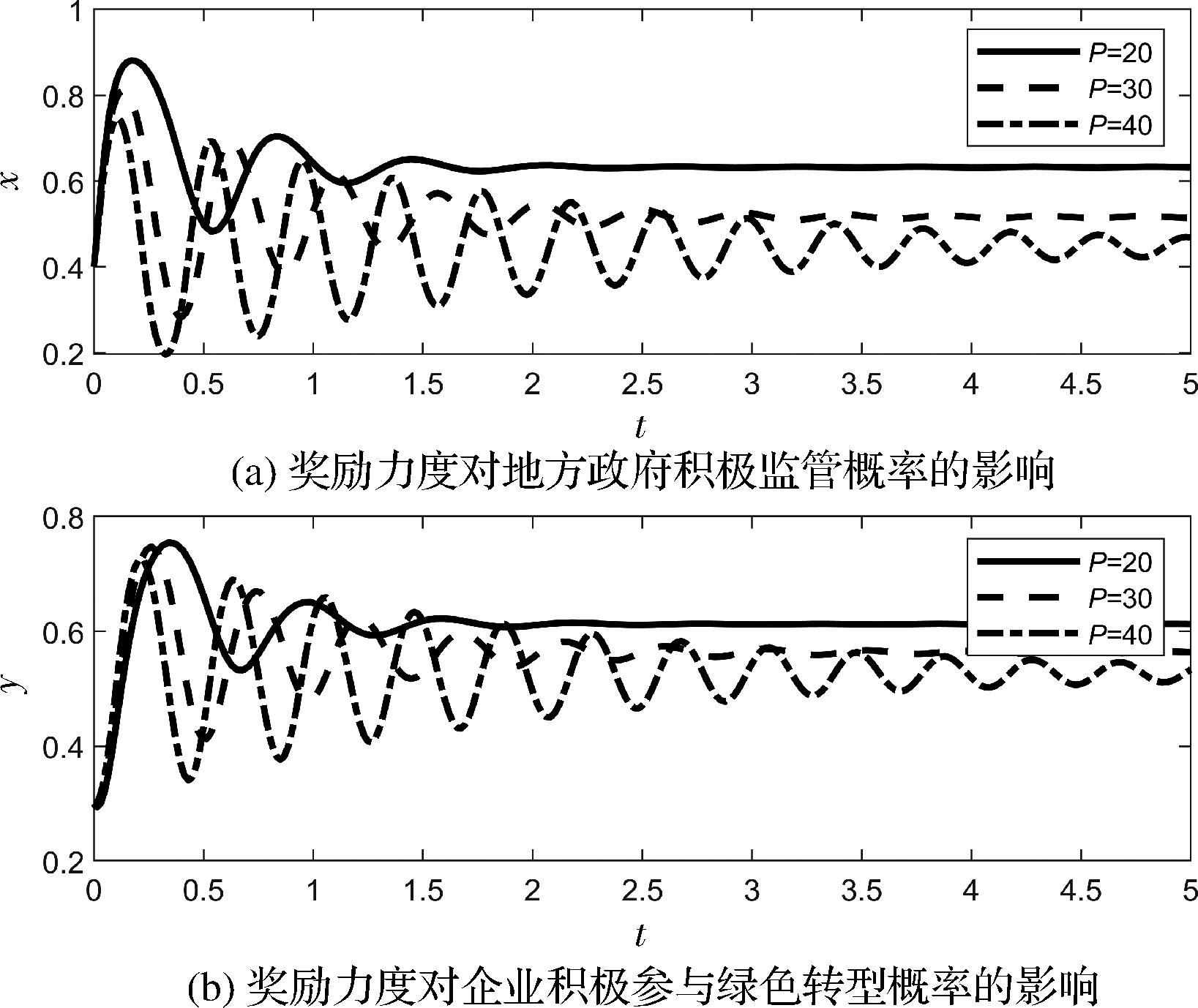
"
| [1] | 徐浩鑫, 于天阳, 关志民, 等. 不同权力结构下考虑制造商失望规避行为的低碳供应链决策研究[J]. 运筹与管理, 2023, 32(2): 45-52. |
| Xu H X, Yu T Y, Guan Z M, et al. Research on low-carbon supply chain decisions considering manufacturers' disappointment aversion behaviors under different power structures[J]. Operations Research and Management Science, 2023, 32(2): 45-52. | |
| [2] | 梅强, 佴红, 刘素霞, 等. 面向中小制造企业的绿色供应链协同创新模式多案例研究[J]. 科学学与科学技术管理, 2023, 44(5): 50-61. |
| Mei Q, Nai H, Liu S X, et al. A multi-case study on collaborative innovation mode of green supply chain for small and medium-sized manufacturing enterprises[J]. Science of Science and Management of S T, 2023, 44(5): 50-61. | |
| [3] | 高东峰, 黄进, 高彦鑫. “双碳”背景下我国中小企业绿色低碳转型标准化路径分析——基于ISO 14002标准框架[J]. 中国标准化, 2023(12): 21-25+35. |
| Gao D F, Huang J, Gao Y X. Research on the standardization path of green-oriented transition of SMEs in China under the carbon peaking and carbon neutrality goals: Based on the ISO 14002 framework[J]. China Standardization, 2023(12): 21-25+35. | |
| [4] | 王辉,甘玮,王翔,等.碳限额及交易下同时考虑制造商和零售商的中小企业低碳供应链补贴策略[J].科技管理研究,2023,43(8):193-202. |
| Wang H, Gan W, Wang X, et al. Low-carbon supply chain subsidy strategies for small and medium-sized enterprises considering manufacturers and retailers under carbon cap and trade system [J]. Science and Technology Management Research, 2023, 43(8): 193-202. | |
| [5] | 李金生, 柯雯. 知识搜寻与重构如何促进专精特新中小企业绿色技术创新——战略柔性与激励型环境规制的调节作用[J].科技进步与对策,2024,41(7): 111-121. |
| Li J S, Ke W. How can knowledge search and reconstruction promote green technology innovation in SRDI small and medium-sized Enterprises? The moderating roles of strategic flexibility and incentive environmental regulation[J]. Science Technology Progress and Policy, 2024, 41(7): 111-121. | |
| [6] | 杨丹辉, 邵军. 新型工业化推动构建现代化产业体系的理论逻辑与实现路径[J]. 南京社会科学, 2025(1): 39-48. |
| Yang D H, Shao J. Promoting new industrialization and constructing a modernized industrial system: The theoretical logic and implementation path[J]. Nanjing Journal of Social Sciences, 2025(1): 39-48. | |
| [7] | 韩少真, 王超凡, 张涵诗, 等. 智能制造促进企业绿色创新——基于外部压力与支持的调节效应分析[J]. 管理学刊, 2025, 38(2): 114-133. |
| Han S Z, Wang C F, Zhang H S, et al. Intelligent manufacturing promotes enterprise green innovation: Based on the moderating effect of external pressure and support[J]. Journal of Management, 2025, 38(2): 114-133. | |
| [8] | 魏悦羚, 张洪胜. 数字金融与企业污染排放——来自中小企业层面的证据[J]. 财经问题研究, 2022(11): 110-119. |
| Wei Y L, Zhang H S. Digital finance and corporate pollution emissions: Evidence from SME level[J]. Research on Financial and Economic Issues, 2022(11): 110-119. | |
| [9] | 王舒扬, 朱強, 王兴元. 中小企业绿色创新多元导向实证研究: 基于创新生态系统视角[J]. 企业经济, 2023, 42(6): 12-21. |
| Wang S Y, Zhu Q, Wang X Y. Empirical study on multi-orientation of green innovation in SMES: Based on perspective of innovation ecosystem[J]. Enterprise Economy, 2023, 42(6): 12-21. | |
| [10] | 贺勇, 陈志豪, 廖诺. 政府补贴方式对绿色供应链制造商减排决策的影响机制[J]. 中国管理科学, 2022, 30(6): 87-98. |
| He Y, Chen Z H, Liao N. The impact mechanism of government subsidy approach on manufacturer’s decision-making in green supply chain[J]. Chinese Journal of Management Science, 2022, 30(6): 87-98. | |
| [11] | 张夏然, 王自然, 蓝传晓, 等. 供应商资金约束下考虑政府补贴的供应链绿色生产决策研究[J]. 管理学报, 2022, 19(2): 280-288. |
| Zhang X R, Wang Z R, Lan C X, et al. Research on green production decision-making of supply chain considering government subsidies under supplier capital constraints[J]. Chinese Journal of Management, 2022, 19(2): 280-288. | |
| [12] | 王奕雪, 王松江. “三有” 协同视角下的城市碳排放多元监管机制[J]. 云南民族大学学报(哲学社会科学版), 2025, 42(2): 118-131. |
| Wang Y X, Wang S J. The multiple regulation mechanism for urban carbon emission from the synergy perspective of “the effective government”, “the efficient market” and “the orderly society”[J]. Journal of Yunnan Nationalities University (Social Sciences Edition), 2025, 42(2): 118-131. | |
| [13] | 刘长玉, 夏同水, 于涛. 基于低碳视角的政府监管与制造商生产的演化博弈研究[J]. 中国管理科学, 2019, 27(11): 96-106. |
| Liu C Y, Xia T S, Yu T. Research on evolutionary game of government regulation and production of manufacturer in the angle of low carbon[J]. Chinese Journal of Management Science, 2019, 27(11): 96-106. | |
| [14] | 杨玉香, 林梦, 张宝友, 等. 不同碳税政策对供应链网络均衡的影响研究[J]. 计算机集成制造系统, 2021, 27(10): 3036-3048. |
| Yang Y X, Lin M, Zhang B Y, et al. Effect of different carbon tax policies on supply chain network equilibrium[J]. Computer Integrated Manufacturing Systems, 2021, 27(10): 3036-3048. | |
| [15] | 潘大鹏, 郝亚杰, 王雪妍, 等. 绿色偏好视角下的绿色发展: 政府监管、企业转型与金融机构投资选择[J]. 系统工程理论与实践, 2024, 44(8): 2411-2422. |
| Pan D P, Hao Y J, Wang X Y, et al. Green development from the perspective of green preference: Government regulation, corporate transformation and investment choice of financial institution[J]. Systems Engineering-Theory Practice, 2024,44(8): 2411-2422. | |
| [16] | 张金泉, 温素彬, 吕欣, 等. 低碳经济下闭环供应链的三方博弈分析[J]. 工业工程与管理, 2023, 28(4): 60-69. |
| Zhang J Q, Wen S B, Lv X, et al. Tripartite game analysis of closed-loop supply chain under the background of low-carbon economy[J]. Industrial Engineering and Management, 2023, 28(4): 60-69. | |
| [17] | 李剑培, 韦东明, 顾乃华. 政府引导、政策赋能与企业数字化转型[J]. 数量经济技术经济研究, 2024, 41(11): 155-176. |
| Li J P, Wei D M, Gu N H. Government guidance, policy empowerment and enterprise digital transformation[J]. Journal of Quantitative Technological Economics, 2024, 41(11): 155-176. | |
| [18] | 方国昌, 何宇, 田立新. 碳交易驱动下的政企碳减排演化博弈分析[J]. 中国管理科学, 2024, 32(5): 196-206. |
| Fang G C, He Y, Tian L X. Evolutionary game analysis of government and enterprises carbon-reduction under the driven of carbon trading[J]. Chinese Journal of Management Science, 2024, 32(5): 196-206. | |
| [19] | 汪和平, 严啸宸, 赵丹, 等. 政府奖惩机制下考虑消费者低碳偏好的汽车制造商生产决策研究[J]. 系统工程理论与实践, 2023, 43(9): 2669-2684. |
| Wang H P, Yan X C, Zhao D, et al. Research on production-decision of automakers considering consumer’s low-carbon preference under the government reward-penalty mechanism[J].Systems Engineering-Theory Practice, 2023, 43(9): 2669-2684. | |
| [20] | 胡彪, 马俊. 奖惩机制下铅蓄电池生产商实施EPR的演化博弈分析[J]. 安全与环境学报, 2022, 22(2): 962-971. |
| Hu B, Ma J. Evolutionary game analysis of EPR implementation by lead battery producers under reward and punishment mechanism[J]. Journal of Safety and Environment, 2022, 22(2): 962-971. | |
| [21] | 李凤荣, 何柏霖. “双碳”目标约束下我国碳税制度实施的政企博弈分析[J].税务与经济,2022(5): 53-59. |
| Li F R, He B L. Analysis of government-enterprise game in the implementation of China's carbon tax system under the constraints of dual carbon goals[J]. Taxation and Economy, 2022(5): 53-59. | |
| [22] | 邵舒羽, 刘艳, 王晴, 等. 非常规突发事件下应急物资储备政企协同演化博弈[J]. 中国安全科学学报, 2023, 33(4): 210-220. |
| Shao S Y, Liu Y, Wang Q, et al. Government-enterprise cooperative evolutionary game of emergency material reserve under unconventional emergency events[J]. China Safety Science Journal, 2023, 33(4): 210-220. | |
| [23] | Xie J, Wang S, Zhou X, et al. Credit evaluation method of generating companies considering the market behavior in China electricity market[J]. Energy Science Engineering, 2021, 9(9): 1554-1567. |
| [24] | 谢敬东, 王诗瑶, 周雪梅, 等. 基于三方演化博弈的电力市场监管策略[J]. 科学技术与工程, 2021, 21(35): 15072-15083. |
| Xie J D, Wang S Y, Zhou X M, et al. Electricity market supervision strategy based on tripartite game[J]. Science Technology and Engineering, 2021, 21(35): 15072-15083. | |
| [25] | 梁喜, 陈清卿. 政府动态奖惩机制下重大疫情防控演化博弈研究[J]. 中国管理科学, 2023, 31(3): 277-286. |
| Liang X, Chen Q Q. Study on the major epidemic prevention and control under the mechanism of government dynamic reward and punishment[J]. Chinese Journal of Management Science, 2023, 31(3): 277-286. | |
| [26] | 刘畅, 潘慧峰, 李珮, 等. 数字化转型对制造业企业绿色创新效率的影响和机制研究[J]. 中国软科学, 2023(4): 121-129. |
| Liu C, Pan H F, Li P, et al. Impact and mechanism of digital transformation on the green innovation efficiency of manufacturing enterprises in China[J]. China Soft Science, 2023(4): 121-129. | |
| [27] | 王道平, 张可, 周玉. 政府奖惩下考虑回收率动态随机的闭环供应链微分博弈[J]. 中国管理科学, 2024, 32(5): 158-170. |
| Wang D P, Zhang K, Zhou Y. Differential game of closed-loop supply chain with dynamic stochastic recovery rate under reward-penalty mechanism of government[J]. Chinese Journal of Management Science, 2024, 32(5): 158-170. |
| [1] | Xichen Lyu, Yinfeng Tian, Shihai Tian, Jiayuan Liu, Qingwei Kong. Research on Multi-Agent Decision-Making in Carbon Data Quality Supervision under MRV Mechanism: A Blockchain Technology Empowerment Perspective [J]. Chinese Journal of Management Science, 2025, 33(8): 355-368. |
| [2] | Jihai Zhang, Qichang Guo, Xu Jiang, Zhengfan Yang. Research on Emergency Supplies Reserve Strategy of Government-enterprise Cooperation from the Perspective of Hierarchical Responsibility [J]. Chinese Journal of Management Science, 2025, 33(7): 232-242. |
| [3] | Zhiwen Li, Xianhao Xu, Xu Guan, Qingguo Bai, Cheng Chen. Evolutionary Game Analysis for Blockchain Adoption Decisions of Two Oligopolies in An Agricultural Market [J]. Chinese Journal of Management Science, 2025, 33(7): 324-336. |
| [4] | Lili Ding, Zhongchao Zhao, Kaixuan Zhang. Research on the Mechanism of Perceived Value on the Development of Personal Carbon Account Green Credit [J]. Chinese Journal of Management Science, 2025, 33(5): 344-355. |
| [5] | Hongyang He, Bin Zhang, Sujun Tian. Evolutionary Game Analysis of Government-Enterprise Collaborative Governance in Platform Economy [J]. Chinese Journal of Management Science, 2025, 33(5): 76-87. |
| [6] | Yu Bai, Xin Zhao, Lili Ding. Research on Chinese Emission Allowances Storage and Lending Mechanism Considering Enterprise Time Preference [J]. Chinese Journal of Management Science, 2025, 33(4): 357-368. |
| [7] | Weian Li, Ruirui Feng, Guangqian Ren, Minna Zheng. Differences in Government Incentive Models, Mixed Ownership Reform and Strategic Choice of State /Non-state Capital [J]. Chinese Journal of Management Science, 2025, 33(2): 356-368. |
| [8] | Wenbin Wang, Jinyu Qi, Mengxin Zhang, Jie Guan, Wenxin Yu. The Influence of Government Reward-penalty Mechanism on the Recycling of WEEE under the Tripartite Evolutionary Game [J]. Chinese Journal of Management Science, 2025, 33(11): 264-274. |
| [9] | Huifang Nie, Jianjun Zhu. Two-Stage Decision-making Method in Response to Public Opinion Crisis Derived from Emergency Considering Emotion Evolution [J]. Chinese Journal of Management Science, 2025, 33(10): 112-125. |
| [10] | Zhi Yang. Quadripartite Evolutionary Game of Public Participation in Interactive Transboundary Pollution Control Compensation [J]. Chinese Journal of Management Science, 2024, 32(8): 261-273. |
| [11] | Xiangyan Sun,Xinchi Qu. Multi-stage Dynamic Evolution of Over-treatment Behavior under Drug-proportion Regulation [J]. Chinese Journal of Management Science, 2024, 32(8): 308-321. |
| [12] | Zuankuo Liu,Yu Li,Shouwei Li,Kaixuan Di,Changyu Liu,Rongkun Liu. Research on the Third-party Market Cooperation and Stability Strategy Based on the Perspective of Financing Mode [J]. Chinese Journal of Management Science, 2024, 32(8): 36-49. |
| [13] | Xusheng Yao,Shoufeng Ma,Shunqiang Ye,Shuai Ling. Yield or Go?Evolutionary Game Analysis of Pedestrian and Autonomous Vehicle Conflicts [J]. Chinese Journal of Management Science, 2024, 32(7): 138-149. |
| [14] | Zhiguo Shao,Mengdi Li,Chuanfeng Han,Lingpeng Meng,Qidi Wu. Simulation and Cooperative Mechanism of Construction Waste Disposal Based on Evolutionary Game [J]. Chinese Journal of Management Science, 2024, 32(7): 324-334. |
| [15] | Yanru Liang,Jianzhong Xu. Research on Incentive Policy Optimization of Enterprise Ecological Innovation Driving System [J]. Chinese Journal of Management Science, 2024, 32(6): 281-289. |
| Viewed | ||||||
|
Full text |
|
|||||
|
Abstract |
|
|||||
|
||
