
主管:中国科学院
主办:中国优选法统筹法与经济数学研究会
中国科学院科技战略咨询研究院
主办:中国优选法统筹法与经济数学研究会
中国科学院科技战略咨询研究院

Chinese Journal of Management Science ›› 2026, Vol. 34 ›› Issue (11): 276-287.doi: 10.16381/j.cnki.issn1003-207x.2024.1221
Previous Articles Next Articles
Xujin Pu( ), Suxin Li, Xueyan Wu
Received:2024-07-23
Revised:2024-12-31
Online:2026-11-25
Published:2026-11-10
Contact:
Xujin Pu
E-mail:puyiwei@ustc.edu
CLC Number:
Xujin Pu,Suxin Li,Xueyan Wu. Retailer Ownership or Retailer Outsourcing? The Pre-cooling Mode Selection and Coordination Mechanism of Fresh Agricultural Products Supply Chain[J]. Chinese Journal of Management Science, 2026, 34(11): 276-287.

"
| 符号 | 注释 |
|---|---|
| 单位产品批发价格(决策变量) | |
| 预冷保鲜努力水平(决策变量) | |
| 零售商投入的终端保鲜努力水平(决策变量) | |
| 单位产品的零售价格(决策变量) | |
| 第三方预冷保鲜服务商单位服务价格 | |
| 生鲜农产品的新鲜度 | |
| 生鲜农产品的初始新鲜度,即不投入预冷保鲜努力时,生鲜农产品达到零售商时的新鲜度 | |
| 生鲜农产品的销售周期 | |
| 生鲜农产品的新鲜度衰减值极值 | |
预冷保鲜努力和终端保鲜努力对保鲜效果的影响系数 预冷保鲜努力和终端保鲜努力对成本的影响系数 | |
| 消费者对于新鲜度的敏感系数 | |
| 供应链各主体利润函数 | |
| 供应链总利润函数 |

"


"

"

"


"
"
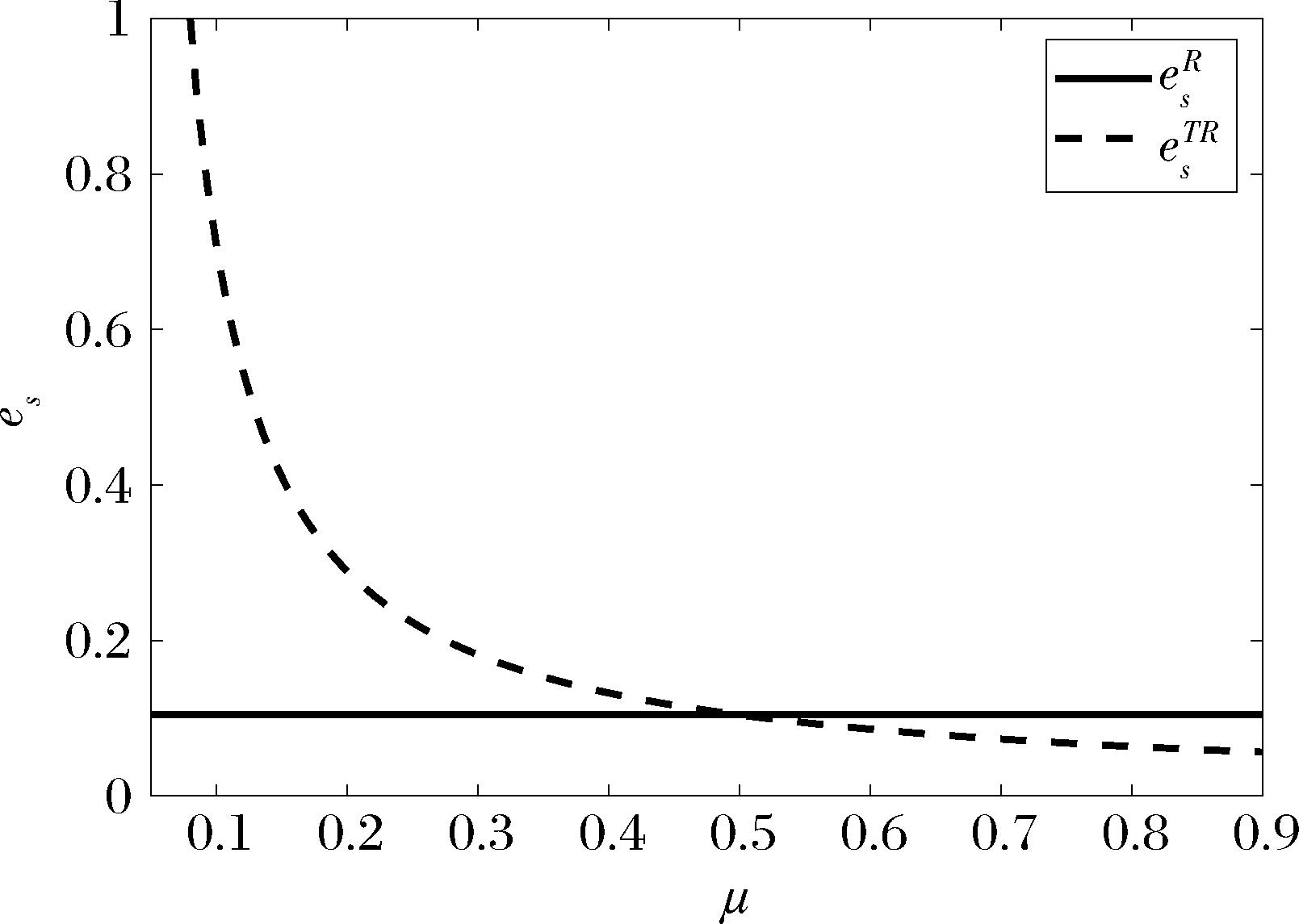
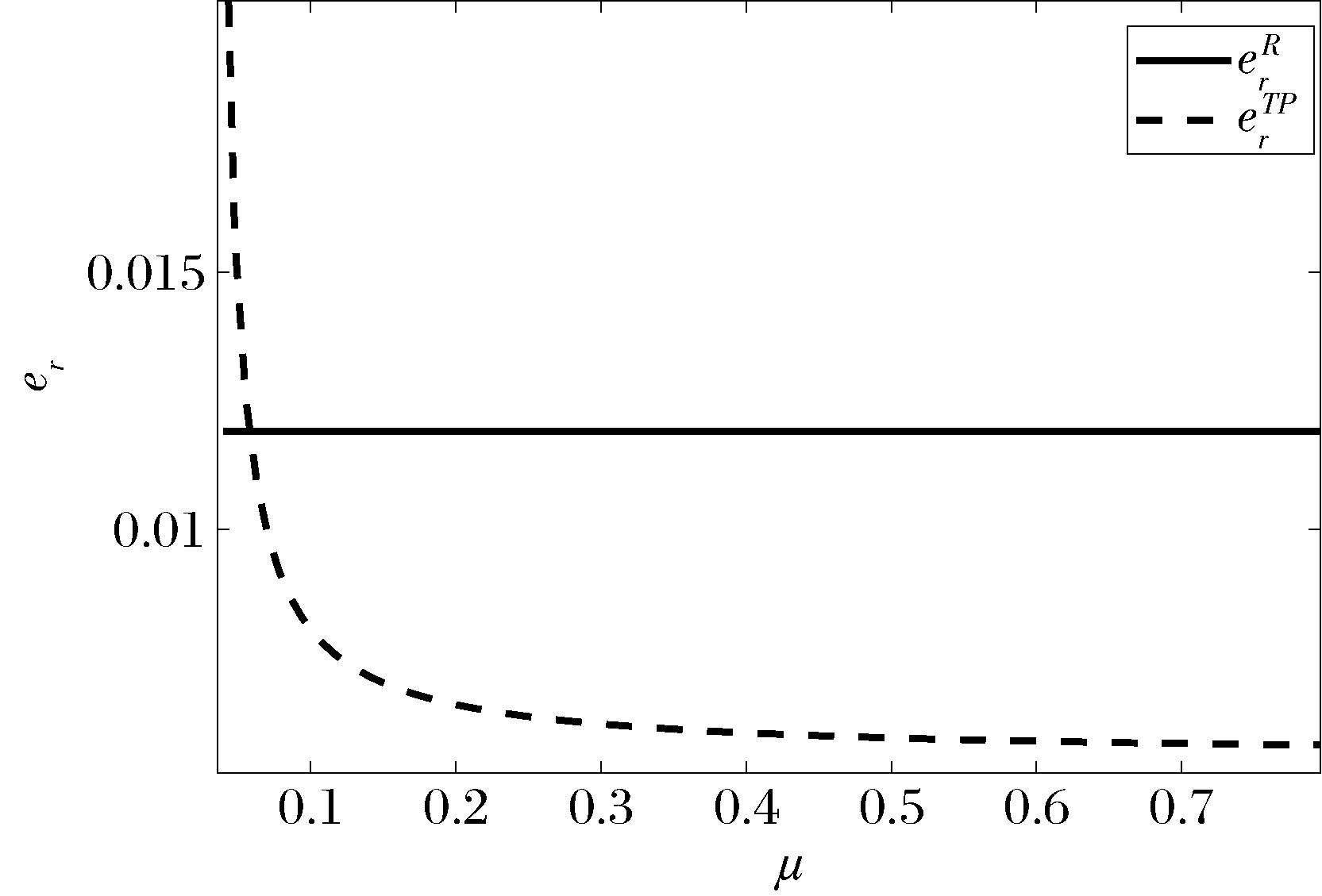
"
"
"
"
"
"
| [1] | Lodree E J, Uzochukwu B M. Production planning for a deteriorating item with stochastic demand and consumer choice[J]. International Journal of Production Economics, 2008, 116(2): 219-232. |
| [2] | 中华人民共和国农业农村部. “冷服务”激活“最先一公里”[EB/OL].(2022-08-31)[2023-02-18]. . |
| Ministry of Agriculture and Rural Affairs of the People’s Republic of China. “Cold services” energize the “first mile” of agricultural supply chains. [EB/OL] (2022-08-31)[2023-02-18]. . | |
| [3] | Brosnan T, Sun D W. Precooling techniques and applications for horticultural products—a review[J]. International Journal of Refrigeration, 2001, 24(2): 154-170. |
| [4] | Han J W, Zuo M, Zhu W Y, et al. A comprehensive review of cold chain logistics for fresh agricultural products: Current status, challenges, and future trends[J]. Trends in Food Science & Technology, 2021, 109: 536-551. |
| [5] | Hardenburg R E, Watada A E, Wang C Y. The commercial storage of fruits, vegetables, and florist and nursery stocks[M]. US Department of Agriculture, Agricultural Research Service, 1986. |
| [6] | Pelletier W, Brecht J K, Cecilia do Nascimento Nunes M, et al. Quality of strawberries shipped by truck from California to Florida as influenced by postharvest temperature management practices[J]. HortTechnology, 2011, 21(4): 482-493. |
| [7] | 新京报. “一颗草莓的千里之行,看百果园如何把控食安?”[EB/OL].(2023-12-06)[2024-12-27]. . |
| The Beijing News. “The long journey of a strawberry: How Pagoda controls food safety across the supply chain?”[EB/OL].(2023-12-06)[2024-12-27].. | |
| [8] | Chen J, Dong M, Rong Y, et al. Dynamic pricing for deteriorating products with menu cost[J]. Omega, 2018, 75: 13-26. |
| [9] | Cai X, Chen J, Xiao Y, et al. Optimization and coordination of fresh product supply chains with freshness-keeping effort[J]. Production and Operations Management, 2010, 19(3): 261-278. |
| [10] | Ma X, Wang J, Bai Q, et al. Optimization of a three-echelon cold chain considering freshness-keeping efforts under cap-and-trade regulation in Industry 4.0[J]. International Journal of Production Economics, 2020, 220: 107457. |
| [11] | Zhao Z, Chi X. Dynamic decision-making in fresh products supply chain with strategic consumers[J]. IEEE Access, 2023, 11: 140077-140091. |
| [12] | Liu C, Chen W, Zhou Q, et al. Modelling dynamic freshness-keeping effort over a finite time horizon in a two-echelon online fresh product supply chain[J]. European Journal of Operational Research, 2021, 293(2): 511-528. |
| [13] | Duan Y, Wang G B, Fawole O A, et al. Postharvest precooling of fruit and vegetables: A review[J]. Trends in Food Science & Technology, 2020, 100: 278-291. |
| [14] | 杨钲叙, 何小玲, 康宁波, 等. 真空预冷对鲜枸杞质构及生理生化特性的影响[J]. 中国食品学报, 2025, 25(7): 249-261. |
| Yang Z X, He X L, Kang N B, et al. Effect of vacuum pre-cooling on the texture and physiological and biochemical properties of fresh Goji berries[J]. Journal of Chinese Institute of Food Science and Technology, 2025, 25(7): 249-261. | |
| [15] | 李燕, 刘贵珊, 何建国, 等. 预冷方式对长枣保鲜效果的影响[J]. 食品科学, 2022, 43(23): 261-268. |
| Li Y, Liu G S, He J G, et al. Effect of precooling treatments on postharvest preservation of ‘Lingwu long’ jujube[J]. Food Science, 2022, 43(23): 261-268. | |
| [16] | Choi T M, Wallace S W, Wang Y. Risk management and coordination in service supply chains: Information, logistics and outsourcing[J]. Journal of the Operational Research Society, 2016, 67(2): 159-164. |
| [17] | Arya A, Mittendorf B, Sappington D E M. The make-or-buy decision in the presence of a rival: Strategic outsourcing to a common supplier[J]. Management Science, 2008, 54(10): 1747-1758. |
| [18] | Lou Y, Feng L, He S, et al. Logistics service outsourcing choices in a retailer-led supply chain[J]. Transportation Research Part E: Logistics and Transportation Review, 2020, 141: 101944. |
| [19] | Liu M, Li G, Wu H, et al. Does free brand spillover benefit online retailers? Roles of logistics service selection[J]. Transportation Research Part E: Logistics and Transportation Review, 2023, 178: 103270. |
| [20] | Li L, Li G. Integrating logistics service or not? The role of platform entry strategy in an online marketplace[J]. Transportation Research Part E: Logistics and Transportation Review, 2023, 170: 102991. |
| [21] | Yu Y, Xiao T. Analysis of cold-chain service outsourcing modes in a fresh agri-product supply chain[J]. Transportation Research Part E: Logistics and Transportation Review, 2021, 148: 102264. |
| [22] | Cao K, Xu Y, Wu Q, et al. Optimal channel and logistics service selection strategies in the e-commerce context[J]. Electronic Commerce Research and Applications, 2021, 48: 101070. |
| [23] | Moon I, Jeong Y J, Saha S. Investment and coordination decisions in a supply chain of fresh agricultural products[J]. Operational Research, 2020, 20(4): 2307-2331. |
| [24] | Liu Y, Yan B, Chen X. Decisions of dual-channel fresh agricultural product supply chains based on information sharing[J]. International Journal of Retail & Distribution Management, 2024, 52(9): 910-930. |
| [25] | Yan B, Fan J, Cai C, et al. Supply chain coordination of fresh Agri-products based on value loss[J]. Operations Management Research,2020,13(3-4): 185-196. |
| [26] | 陈柳鑫, 黄磊. 温度影响TPL保鲜水平的农产品供应链协调契约[J]. 系统工程学报, 2023, 38(3): 344-356+371. |
| Chen L X, Huang L. Coordination contract of agricultural product supply chain considering TPL’s preservation level affected by outdoor temperature[J]. Journal of Systems Engineering, 2023,38(3): 344-356+371. | |
| [27] | 方新, 袁奉娇, 蔡继荣. 生鲜农产品供应链的保鲜投入和货架服务优化决策及其协调契约研究[J]. 中国管理科学, 2023, 31(6): 142-152. |
| Fang X, Yuan F J, Cai J R. An optimized coordination model of freshness-keeping efforts and shelf service for fresh produce supply chain[J]. Chinese Journal of Management Science, 2023, 31(6): 142-152. | |
| [28] | 曹裕, 陶兰. 绿色农产品供应链的信息分享与激励合约设计研究[J].中国管理科学,2025, 33(11): 221-230. |
| Cao Y, Tao L. Research on information sharing and incentive contract design of green agricultural product supply chain[J]. Chinese Journal of Management Science, 2025, 33(11): 221-230. | |
| [29] | Shi L, Pang T, Peng H, et al. Green technology outsourcing for agricultural supply chains with government subsidies[J]. Journal of Cleaner Production, 2024, 436: 140674. |
| [30] | 王国利, 马晨欣, 周学君. 考虑成本优势的生鲜供应链保鲜及外包决策[J]. 系统工程学报, 2023, 38(1): 101-120. |
| Wang G L, Ma C X, Zhou X J. Decisions of freshness-keeping and outsourcing strategies considering the cost advantage in a fresh product supply chain[J]. Journal of Systems Engineering, 2023, 38(1): 101-120. | |
| [31] | 王磊, 但斌. 考虑零售商保鲜和消费者效用的生鲜农产品供应链协调[J].运筹与管理,2015, 24(5): 44-51. |
| Wang L, Dan B. Coordination of fresh agricultural supply chain considering retailer’ s freshness-keeping and consumer utility[J]. Operations Research and Management Science, 2015, 24(5): 44-51. | |
| [32] | 但斌, 马崧萱, 刘墨林, 等. 考虑3PL保鲜努力的生鲜农产品供应链信息共享研究[J]. 中国管理科学, 2024, 32(5): 122-132. |
| Dan B, Ma S X, Liu M L, et al. Information sharing in the fresh produce supply chain with 3PL’s fresh-keeping effort[J]. Chinese Journal of Management Science, 2024, 32(5): 122-132. | |
| [33] | 中国国家铁路集团有限公司. “中铁特货公司:大力发展移动冷库业务助力乡村振兴”[EB/OL].(2023-12-11)[2024-12-25].. |
| China State Railway Group Co., Ltd. “CR Express Special Cargo: Promoting mobile cold storage services to support rural revitalization”[EB/OL].(2023-12-11)[2024-12-25].. | |
| [34] | 中集集团. “中集移动冷库箱 成冷链物流市场的“新宠儿”[EB/OL].(2019-04-26)[2024-12-27]. . |
| China International Marine Containers (Group) Co., Ltd. “CIMC mobile cold storage containers emerge as a new favorite in the cold chain logistics market”[EB/OL].(2019-04-26)[2024-12-27].. | |
| [35] | 南方农村报. “广州:田头冷链落户从化助“荔”保鲜荔枝预冷速度提高6倍”[EB/OL].(2021-06-21)[2024-12-24]. . |
| Southern Rural News. “Guangzhou: On-site cold chain facilities established in Conghua boost lychee freshness, increasing precooling efficiency sixfold”[EB/OL].(2021-06-21)[2024-12-24]. . | |
| [36] | 南方都市报. “一颗广东荔枝从田头小站到舌尖的48小时”[EB/OL].(2023-07-13)[2024-12-27]. . |
| Southern Metropolis Daily. “Forty-eight hours from farm station to table: the journey of a Guangdong lychee”[EB/OL].(2023-07-13)[2024-12-27]. . |
| [1] | Xujin Pu, Baihan Chen, Xiufeng Li. Historical Evolution and Future Prospects of Research on the Digital and Intelligent Transformation of the Agricultural Product Supply Chain [J]. Chinese Journal of Management Science, 2025, 33(4): 235-250. |
| [2] | Zhong Zhao, Yu Cheng. Coordination of Fresh Product Supply Chain with Option Contract Considering Freshness-keeping Effort [J]. Chinese Journal of Management Science, 2024, 32(11): 258-269. |
| Viewed | ||||||
|
Full text |
|
|||||
|
Abstract |
|
|||||
|
||
