
主管:中国科学院
主办:中国优选法统筹法与经济数学研究会
中国科学院科技战略咨询研究院
主办:中国优选法统筹法与经济数学研究会
中国科学院科技战略咨询研究院

中国管理科学 ›› 2026, Vol. 34 ›› Issue (2): 323-335.doi: 10.16381/j.cnki.issn1003-207x.2023.1242cstr: 32146.14.j.cnki.issn1003-207x.2023.1242
李伟1, 范则成2, 张莎1( )
)
收稿日期:2023-07-25
修回日期:2023-11-09
出版日期:2026-02-25
发布日期:2026-02-04
通讯作者:
张莎
E-mail:zhangsha@ucas.ac.cn
基金资助:
Wei Li1, Zecheng Fan2, Sha Zhang1()
Received:2023-07-25
Revised:2023-11-09
Online:2026-02-25
Published:2026-02-04
Contact:
Sha Zhang
E-mail:zhangsha@ucas.ac.cn
摘要:
随着多种不同类型线上渠道的出现,企业线上渠道拓展策略也越发多样化。然而,不同类型线上渠道拓展策略(如上线京东等B2C平台vs.饿了么等O2O平台)对线下渠道协同效应的对比研究较为少见。本文基于全渠道连续体框架和联想网络理论,量化完全策略(O2O)和垂直策略(B2C)两种不同类型线上渠道拓展策略对线下门店销售额的协同和侵蚀效应。基于中国某著名高档酒品连锁品牌1696家线下门店以及9个线上平台的销售额数据,通过面板回归和DID建模,研究结果显示,企业采用完全策略和垂直策略对线下门店销售额均有正向影响,但相比垂直策略,完全策略对线下渠道的协同作用更大。此外,门店密度越大,垂直策略对实体店销售额的正影响越大。本文的研究结论对全渠道营销和企业实践具有重要借鉴意义。
中图分类号:
李伟,范则成,张莎. B2C VS.O2O:线上渠道拓展类型对线下渠道的影响及门店密度的调节作用[J]. 中国管理科学, 2026, 34(2): 323-335.
Wei Li,Zecheng Fan,Sha Zhang. The Effects of Adding B2C Versus O2O Channel on Offline Sales: Store Density as a Moderator[J]. Chinese Journal of Management Science, 2026, 34(2): 323-335.
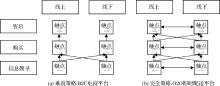
图1
全渠道连续体理论下的完全策略vs.垂直策略框架(Neslin[8])"
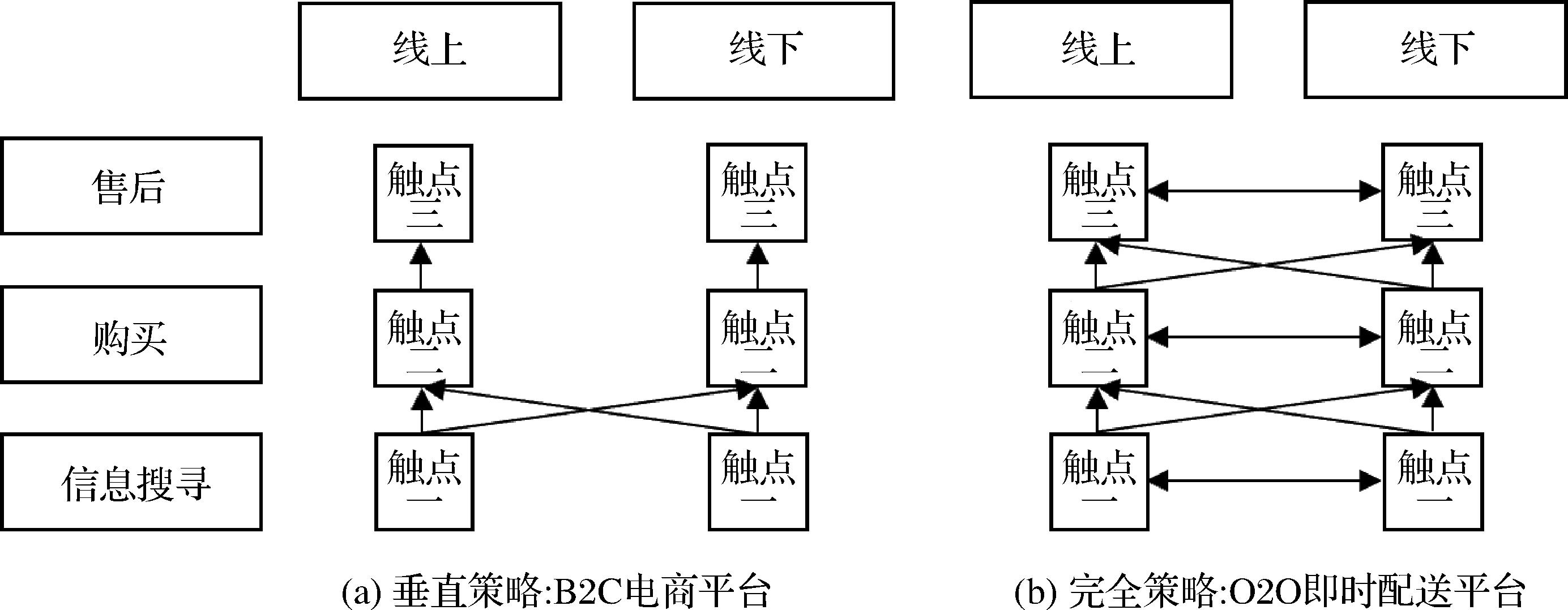

表1
变量及其定义"
| 变量类别 | 变量符号 | 定义 |
|---|---|---|
| 线下门店销售额 | offline_sales | 线下门店日销售额 |
| 完全策略渠道销售额(cs_sales) | elm_sales | 饿了么平台日销售额 |
| mt_sales | 美团平台日销售额 | |
| xcx_sales | 外卖小程序日销售额 | |
| 垂直策略渠道销售额(vs_sales) | jd1_sales | 京东1店日销售额 |
| jd2_sales | 京东2店日销售额 | |
| jdzy_sales | 京东自营日销售额 | |
| tm_sales | 天猫日销售额 | |
| tmcs_sales | 天猫超市日销售额 | |
| app_sales | 自营App日销售额 | |
| 控制变量-日期特征 | weekday | 周几 |
| after_covid19 | 是否在疫情之后 | |
| holiday | 是否节假日 | |
| pre_holidays | 是否在节假日前三天 | |
| trend | 据统计开始之日的天数 | |
| 控制变量-省份特征 | density | 门店密度,反映消费者的可触及性,各省门店数量除以地区面积 |
| age | 平均门店开业时间,当前日期减去门店开业日,单位天 | |
| square | 平均门店面积,各省所有门店的平均面积,单位平方米 | |
| worktime | 平均营业时间,省份所有门店平均每天营业时长,单位小时 |
表2
关键变量的描述统计"
| 变量 | 各子渠道销售额 | |||
|---|---|---|---|---|
| 均值 | 标准差 | 观测天数 | ||
| offline_sales | 15.043 | 0.897 | 1182 | |
| elm_sales | 8.282 | 1.741 | 1182 | |
| mt_sales | 9.147 | 1.247 | 1182 | |
| xcx_sales | 6.547 | 2.639 | 1182 | |
| jd1_sales | 8.976 | 5.083 | 1182 | |
| jd2_sales | 6.95 | 5.664 | 1182 | |
| jdzy_sales | 3.317 | 5.226 | 1182 | |
| tm_sales | 5.061 | 4.675 | 1182 | |
| tmcs_sales | 2.188 | 4.356 | 1182 | |
| app_sales | 12.948 | 1.305 | 1182 | |
| 门店特征 | ||||
| 变量 | 均值 | 标准差 | 最小值 | 最大值 |
| density | 10.508 | 14.102 | 0.075 | 68.254 |
| age | 637.742 | 349.745 | 0.000 | 4128.000 |
| square | 117.119 | 48.337 | 38.000 | 560.000 |
| worktime | 13.182 | 1.371 | 6.000 | 23.980 |
表3
完全策略和垂直策略对线下销售额的影响(标准化系数)"
| 变量 | 模型1 控制变量 | 模型2 完全策略 | 模型3 垂直策略 | 模型4 完全+垂直策略 |
|---|---|---|---|---|
| cs_impact | 0.303***(0.039) | 0.222*** (0.035) | ||
| vs_impact | 0.200*** (0.028) | 0.177*** (0.028) | ||
| elm_sales | 0.057*(0.018) | 0.022(0.013) | ||
| mt_sales | 0.326***(0.036) | 0.270*** (0.036) | ||
| xcx_sales | 0.113***(0.010) | 0.047*(0.009) | ||
| jd1_sales | 0.318**(0.025) | 0.295*(0.024) | ||
| jd2_sales | 0.309*** (0.012) | 0.311*** (0.012) | ||
| jdzy_sales | -0.115*** (0.004) | -0.102*** (0.004) | ||
| tm_sales | -0.052(0.006) | -0.056*(0.006) | ||
| tmcs_sales | 0.022(0.006) | 0.087*** (0.005) | ||
| app_sales | 0.175*** (0.016) | 0.125*** (0.016) | ||
| Tuesday | -0.018(0.108) | -0.012(0.106) | -0.026(0.109) | -0.021(0.108) |
| Wednesday | 0.017(0.063) | 0.019(0.059) | 0.014(0.055) | 0.018(0.053) |
| Thursday | 0.015(0.064) | 0.000(0.060) | 0.009(0.055) | 0.001(0.054) |
| Friday | 0.043*(0.061) | 0.007(0.059) | 0.041**(0.053) | 0.016(0.055) |
| Saturday | -0.009(0.062) | -0.047**(0.058) | 0.023(0.053) | -0.013(0.052) |
| Sunday | -0.033(0.062) | -0.039*(0.059) | 0.014(0.055) | -0.003(0.054) |
| after_covid19 | -0.155*** (0.107) | -0.118**(0.111) | -0.481*** (0.271) | -0.391*** (0.263) |
| holiday | -0.136*** (0.075) | -0.158*** (0.070) | -0.076*** (0.067) | -0.104*** (0.065) |
| pre_holidays | 0.123*** (0.072) | 0.096*** (0.070) | 0.132*** (0.071) | 0.114*** (0.069) |
| trend | 0.678*** (0.000) | 0.300*** (0.000) | 0.506*** (0.000) | 0.149**(0.000) |
| observations | 1182 | 1182 | 1182 | 1182 |
| R-squared | 0.364 | 0.421 | 0.461 | 0.485 |
表4
垂直策略渠道与完全策略线下销售额的面板回归"
| 变量 | 垂直策略 | 完全策略 | ||
|---|---|---|---|---|
| 模型5 | 模型6 | 模型7 | 模型8 | |
| vs_sales | 0.088***(0.031) | -0.057*** (0.017) | ||
| cs_sales | 0.066**(0.028) | 0.049*(0.028) | ||
| vs_sales×density | 0.007*** (0.001) | |||
| cs_sales×density | 0.001(0.002) | |||
| density | 0.024**(0.010) | -0.079*** (0.01) | 0.022**(0.009) | -0.008(0.018) |
| age | 0.001**(0.001) | 0.001(0.001) | 0.001***(0.001) | 0.001(0.001) |
| square | 0.004***(0.001) | 0.003***(0.001) | 0.005***(0.001) | 0.004***(0.001) |
| worktime | 0.011(0.053) | 0.029(0.036) | -0.009(0.058) | 0.014(0.040) |
| Tuesday | 0.032(0.070) | -0.577(0.486) | 0.042(0.068) | -.466(0.555) |
| Wednesday | 0.059(0.063) | -1.189*(0.601) | 0.082(0.064) | -1.115(0.663) |
| Thursday | 0.117**(0.059) | 0.082(0.503) | 0.162***(0.056) | 0.159(0.531) |
| Friday | 0.229***(0.065) | -0.051(0.629) | 0.246***(0.064) | 0.052(0.645) |
| Saturday | 0.120(0.088) | -1.382**(0.560) | 0.102(0.089) | -1.187**(0.568) |
| Sunday | 0.039(0.057) | -1.907***(0.676) | 0.003(0.070) | -1.724***(0.708) |
| after_covid19 | 0.664***(0.220) | 3.768***(0.643) | 0.78***(0.226) | 4.455***(0.653) |
| holiday | 0.117(0.099) | 0.793(0.521) | 0.044(0.107) | 0.764(0.545) |
| pre_holidays | 0.768***(0.086) | -0.285(0.654) | 0.774***(0.087) | -0.249(0.666) |
| fixed province effect | No | Yes | No | Yes |
| fixed time effect | No | Yes | No | Yes |
| const | 5.783***(0.698) | 6.294***(0.876) | 6.23***(0.701) | 4.87***(1.000) |
| observations | 9105 | 9105 | 8448 | 8448 |
| [1] | 赵红, 孙倬, 张莎, 等. 基于文献计量分析的社交商务研究脉络与热点演化[J]. 管理学报, 2019, 16(6): 923-931. |
| Zhao H, Sun Z, Zhang S, et al. The context and hotspot evolution of social commerce: A bibliometric approach[J]. Chinese Journal of Management, 2019, 16(6): 923-931. | |
| [2] | Verhoef P C, Kannan P K, Inman J J. From multi-channel retailing to omni-channel retailing introduction to the special issue on multi-channel retailing[J]. Journal of Retailing, 2015, 91(2): 174-181. |
| [3] | 艾瑞咨询. 2021年中国零售云行业研究报告[EB/OL]. (2021-06-10)[2023-05-15]. . |
| iReseach. 2021 China retail cloud industry research report[EB/OL].(2021-06-10)[2023-05-15].. | |
| [4] | 麦肯锡. 2022年中国零售数字化白皮书[EB/OL]. (2022-07-29)[2023-05-15]. . |
| McKinsey. 2022 China retail digitalization white paper[EB/OL].(2022-07-29)[2023-05-15].. | |
| [5] | Kavilanz P. Glossier is coming to Sephora[EB/OL]. (2022-07-26)[2023-05-15].. |
| [6] | 36氪的朋友们.1小时达,美团外卖即将为海澜之家送货[EB/OL].(2021-02-24)[2023-11-01].. |
| 36kr.“1 -Hour Delivery”: Meituan to soon deliver for Heilan Home[EB/OL].(2021-02-24)[2023-11-01].. | |
| [7] | 猎云网. 宜家推出官方小程序商城,支持配送至227个城市[EB/OL].(2021-03-24)[2023-11-01]. . |
| Lieyunpro. IKEA launches official mini program store, offering delivery to 227 cities[EB/OL].(2021-03-24)[2023-11-01].. | |
| [8] | Neslin S A. The omnichannel continuum: Integrating online and offline channels along the customer journey[J]. Journal of Retailing, 2022, 98(1): 111-132. |
| [9] | Pauwels K, Leeflang P S H, Teerling M L, et al. Does online information drive offline revenues?[J]. Journal of Retailing, 2011, 87(1): 1-17. |
| [10] | Zhang S, Pauwels K, Peng C. The impact of adding online-to-offline service platform channels on firms' offline and total sales and profits[J]. Journal of Interactive Marketing, 2019, 47: 115-128. |
| [11] | Lal R, Sarvary M. When and how is the Internet likely to decrease price competition?[J]. Marketing Science, 1999, 18(4): 485-503. |
| [12] | Chen H, Hu Y J, Smith M D. The impact of E-book distribution on print sales: Analysis of a natural experiment[J]. Management Science, 2019, 65(1): 19-31. |
| [13] | Maier E, Wieringa J. Acquiring customers through online marketplaces? The effect of marketplace sales on sales in a retailer’s own channels[J]. International Journal of Research in Marketing,2021,38(2): 311-328. |
| [14] | Kim H, Ho R, Lee D, et al. Should a small-sized store have both online and offline channels? An efficiency analysis of the O2O platform strategy[J]. Journal of Retailing and Consumer Services, 2022, 64: 102823. |
| [15] | Dey B K, Sarkar M, Chaudhuri K, et al. Do you think that the home delivery is good for retailing?[J]. Journal of Retailing and Consumer Services, 2023, 72: 103237. |
| [16] | 彭扬, 卢锦航, 言小明. 线上零售商全渠道门店布局密度策略研究[J].运筹与管理,2022, 31(4): 21-27. |
| Peng Y, Lu J H, Yan X M. Research on the offline StoresDensity strategy for online retailers under omni-channel retail environment[J]. Operations Research and Management Science, 2022, 31(4): 21-27. | |
| [17] | Song P, Wang Q, Liu H, et al. The value of buy-online-and-pickup-in-store in omni-channel: Evidence from customer usage data[J]. Production and Operations Management, 2020, 29(4): 995-1010. |
| [18] | Gao F, Su X. Omnichannel retail operations with buy-online-and-pick-up-in-store[J]. Management Science, 2017, 63(8): 2478-2492. |
| [19] | 谢平, 徐迪. 突发公共卫生事件下双渠道零售商门店配送策略的采取决策[J].中国管理科学, 2025,33(9): 77-88. |
| Xie P, Xu D. Adoption decision on ship-from-store strategy for dual-channel retailers in the context of public health emergencies[J].Chinese Journal of Management Science, 2025,33(9):77-88. | |
| [20] | Xie C, Chiang C Y, Xu X, et al. The impact of buy-online-and-return-in-store channel integration on online and offline behavioral intentions: The role of offline store[J]. Journal of Retailing and Consumer Services, 2023, 72: 103227. |
| [21] | 马双, 王智豪, 张超. 共享住宿如何影响房屋租赁市场? 替代和供给市场规模的调节作用[J]. 管理评论, 2022, 34(8): 134-143. |
| Ma S, Wang Z H, Zhang C. How does sharing accommodation influence house leasing market? Moderating roles of substitute and supplier side scale[J]. Management Review, 2022, 34(8): 134-143. | |
| [22] | Li H, Shen Q, Bart Y. Local market characteristics and online-to-offline commerce: An empirical analysis of groupon[J]. Management Science, 2018, 64(4): 1860-1878. |
| [23] | Cao L, Li L. The impact of cross-channel integration on retailers’ sales growth[J]. Journal of Retailing, 2015, 91(2): 198-216. |
| [24] | Collins A M, Loftus E F. A spreading-activation theory of semantic processing[J].Psychological Review, 1975, 82(6): 407-428. |
| [25] | Engel J F, Kollat D T, Blackwell R D. Consumer behavior[M]. New York: Holt, Rinehart, and Winston, 1968. |
| [26] | Lemon K N, Verhoef P C. Understanding customer experience throughout the customer journey[J]. Journal of Marketing,2016, 80(6): 69-96. |
| [27] | Berry L L, Bolton R N, Bridges C H, et al. Opportunities for innovation in the delivery of interactive retail services[J]. Journal of Interactive Marketing, 2010, 24(2): 155-167. |
| [28] | Gensler S, Verhoef P C, Böhm M. Understanding consumers’ multichannel choices across the different stages of the buying process[J]. Marketing Letters, 2012, 23(4): 987-1003. |
| [29] | Grewal D, Roggeveen A L. Understanding retail experiences and customer journey management[J]. Journal of Retailing, 2020, 96(1): 3-8. |
| [30] | 韩冰, 王良燕. 品牌负面事件的溢出效应及影响因素述评[J]. 心理科学, 2017, 40(1): 193-199. |
| Han B, Wang L Y. A critical review of spillover effect of brand negative publicity and its influencing factors[J]. Journal of Psychological Science, 2017, 40(1): 193-199. | |
| [31] | Zdravkovic S, Till B D. Enhancing brand image via sponsorship[J]. International Journal of Advertising, 2012, 31(1): 113-132. |
| [32] | Olsen L E, Meling Samuelsen B, Pappas I, et al. Broad vs narrow brand positioning: Effects on competitive brand performance[J]. European Journal of Marketing, 2022, 56(3): 799-816. |
| [33] | Janiszewski C, Van Osselaer S M J. A connectionist model of brand-quality associations[J]. Journal of Marketing Research, 2000, 37(3): 331-350. |
| [34] | Lei J, Dawar N, Lemmink J. Negative spillover in brand portfolios: Exploring the antecedents of asymmetric effects[J]. Journal of Marketing, 2008, 72(3): 111-123. |
| [35] | Polo Y, Sese F J. Does the nature of the interaction matter? Understanding customer channel choice for purchases and communications[J]. Journal of Service Research, 2016, 19(3): 276-290. |
| [36] | Barsalou L W, Sewell D R. Contrasting the representation of scripts and categories[J]. Journal of Memory and Language, 1985, 24(6): 646-665. |
| [37] | Anderson J R. A spreading activation theory of memory[J]. Journal of Verbal Learning and Verbal Behavior, 1983, 22(3): 261-295. |
| [38] | Till B D, Shimp T A. Endorsers in advertising: The case of negative celebrity information[J]. Journal of Advertising, 1998, 27(1): 67-82. |
| [39] | 童泽林, 冯竞丹, 冯文婷, 等. 企业家慈善高曝光度对消费者企业评价的负面影响及扭转机制: 中庸文化视角[J]. 南开管理评论, 2020, 23(4): 4-11+24. |
| Tong Z L, Feng J D, Feng W T, et al. The negative effect of high exposure of entrepreneur philanthropy on consumers' evaluation of enterprise and its reversing mechanism: Based on culture of zhongyong[J]. Nankai Business Review, 2020, 23(4): 4-11+24. | |
| [40] | Kim Y, Lee Y. Cross-channel spillover effect of price promotion in fashion[J]. International Journal of Retail & Distribution Management, 2020, 48(10): 1139-1154. |
| [41] | Roe R M, Busemeyer J R, Townsend J T. Multialternative decision field theory: A dynamic connectionst model of decision making[J]. Psychological Review, 2001, 108(2): 370-392. |
| [42] | Busemeyer J R, Townsend J T. Decision field theory: A dynamic-cognitive approach to decision making in an uncertain environment[J]. Psychological Review, 1993, 100(3): 432-459. |
| [43] | Li H, Fang Y, Lim K H, et al. Platform-based function repertoire, reputation, and sales performance of e-marketplace sellers[J]. MIS Quarterly, 2019, 43(1): 207-236. |
| [44] | Dimoka A, Hong Y, Pavlou P A. On product uncertainty in online markets: Theory and evidence[J]. MIS Quarterly, 2012, 36(2): 395-426. |
| [45] | Fang J, Liu H, Cai Z, et al. Omni-channel retailing on platforms: Disentangling the effects of channel integration and inter-platform function usage difference[J]. Journal of Operations Management, 2023, 69(2): 197-216. |
| [46] | Baker J, Parasuraman A, Grewal D, et al. The influence of multiple store environment cues on perceived merchandise value and patronage intentions[J]. Journal of Marketing, 2002, 66(2): 120-141. |
| [47] | Tsay A A, Agrawal N. Channel conflict and coordination in the E-commerce age[J]. Production and Operations Management, 2004, 13(1): 93-110. |
| [48] | Avery J, Steenburgh T J, Deighton J, et al. Adding bricks to clicks: Predicting the patterns of cross-channel elasticities over time[J]. Journal of Marketing, 2012, 76(3): 96-111. |
| [49] | Jacoby J, Mazursky D. Linking brand and retailer images: Do the potential risks outweigh the potential benefits?[J]. Journal of Retailing, 1984, 60(2):105-122. |
| [50] | Cachon G P. Retail store density and the cost of greenhouse gas emissions[J]. Management Science, 2014, 60(8): 1907-1925. |
| [51] | 江红艳, 许梦梦, 陈红, 等. 中国文化背景下权力感对送礼行为的影响: 关系取向的调节作用[J]. 管理评论, 2019, 31(3): 166-177. |
| Jiang H Y, Xu M M, Chen H, et al. The impact of power on gift-giving behavior under Chinese culture background: The moderating role of relationship orientation[J]. Management Review,2019,31(3): 166-177. | |
| [52] | Haans H, Gijsbrechts E. “One-deal-fits-all?” On category sales promotion effectiveness in smaller versus larger supermarkets[J]. Journal of Retailing, 2011, 87(4): 427-443. |
| [53] | 蔡文武, 陆静, 赵宇洋. 不同市场行情下投资者关注频率对交易驱动的非对称性影响——基于证券服务类APP用户行为数据的实证分析[J]. 中国管理科学, 2023, 31(4): 11-25. |
| Cai W W, Lu J, Zhao Y Y. The asymmetric driving effect of investors' attention frequency on trading under different market situations: An empirical analysis based on data on users' behavior in securities service mobile applications[J]. Chinese Journal of Management Science, 2023, 31(4): 11-25. | |
| [54] | 郭伟栋, 周志中, 乾春涛. 手机App列表信息在信用风险评价中的应用——基于互联网借贷平台的实证研究[J]. 中国管理科学, 2022, 30(12): 96-107. |
| Guo W D, Zhou Z Z, Qian C T. Application of mobile app list in evaluating borrowers’ credit risk: An empirical analysis of an online lending platform[J]. Chinese Journal of Management Science, 2022, 30(12): 96-107. | |
| [55] | 章琦, 陈敬贤, 梁樑. 平台自营渠道能驱赶销售劣质产品的第三方卖家吗?[J]. 中国管理科学, 2023, DOI:10.16381/j.cnki.issn1003-207x.2023.0540 . |
| Zhang Q, Chen J X, Liang L. Can the platform self-operated channel drive away the third-party sellers who sell inferior products?[J]. Chinese Journal of Management Science, 2023, DOI:10.16381/j.cnki.issn1003-207x.2023.0540 . |
| [1] | 刘琦铀, 陈嘉, 张成科, 朱怀念. 联邦学习与区块链赋能下的应收账款拍卖融资机制研究[J]. 中国管理科学, 2026, 34(6): 13-21. |
| [2] | 张晓青, 苑希港, 陈佳佳, 魏强, 霍宝锋. 考虑消费者隐私顾虑的消费品以旧换新定价策略研究[J]. 中国管理科学, 2026, 34(6): 291-302. |
| [3] | 常建红, 宋鹏, 吴丽荣. 数据交易驱动下在线商家产品个性化定价研究[J]. 中国管理科学, 2026, 34(6): 36-49. |
| [4] | 赵世杰, 荣雪娇, 高雷阜. 耦合行为运作下考虑供需关系的订购行为决策研究[J]. 中国管理科学, 2026, 34(6): 303-318. |
| [5] | 王成付, 陈祥锋, 金伟, 丁雯. 区块链智能合约驱动下动态利率定价的订单融资与供应链运营策略[J]. 中国管理科学, 2026, 34(6): 319-330. |
| [6] | 赵玉, 郑本荣, 金亮. 转售、代销还是混合模式?竞争性电商平台销售模式选择[J]. 中国管理科学, 2026, 34(6): 331-343. |
| [7] | 申笑宇, 代莉. 绿色产品“上链”决策与销售模式协同研究[J]. 中国管理科学, 2026, 34(6): 344-355. |
| [8] | 公彦德, 开吉, 王哲. 考虑公平偏好和绿色创新的绿色供应链策略研究[J]. 中国管理科学, 2026, 34(5): 310-321. |
| [9] | 孙华丽, 马晨欣, 张俊鸽. 供应中断风险下考虑低息贷款和营业中断保险的应对策略研究[J]. 中国管理科学, 2026, 34(5): 342-350. |
| [10] | 仝鹏, 丁翔, 王文宾, 毛展鹏, 肖莹. 碳交易机制下考虑零售商信息分享策略的供应链决策研究[J]. 中国管理科学, 2026, 34(4): 287-297. |
| [11] | 林帅成, 张桂涛. “双积分”政策下考虑新能源汽车续航和广告宣传的微分策略研究[J]. 中国管理科学, 2026, 34(4): 319-329. |
| [12] | 李涛, 赵俊, 刘洋, 刘斌. 考虑零售商“虚拟合作”的竞争性供应链定价策略研究[J]. 中国管理科学, 2026, 34(3): 275-285. |
| [13] | 邹宗保, 陈力豪, 梁强, 周少锐. 集中还是分离:车电运营策略对竞争对手电池供应商选择的影响研究[J]. 中国管理科学, 2026, 34(3): 309-319. |
| [14] | 戴道明, 王忆都. 可再生能源消纳责任权重制下光伏供应链合作与运营决策[J]. 中国管理科学, 2026, 34(3): 320-332. |
| [15] | 牟进进, 王淑云. 跨境电商供应链物流增值服务的优化决策[J]. 中国管理科学, 2026, 34(2): 298-308. |
| 阅读次数 | ||||||
|
全文 |
|
|||||
|
摘要 |
|
|||||
|
||
