
主管:中国科学院
主办:中国优选法统筹法与经济数学研究会
中国科学院科技战略咨询研究院
主办:中国优选法统筹法与经济数学研究会
中国科学院科技战略咨询研究院

Chinese Journal of Management Science ›› 2026, Vol. 34 ›› Issue (11): 421-432.doi: 10.16381/j.cnki.issn1003-207x.2025.0797
Hongpu Wang, Yang Wang( ), Daiqiang Yin
Received:2025-05-20
Revised:2025-07-27
Online:2026-11-25
Published:2026-11-10
Contact:
Yang Wang
E-mail:yangw@nwpu.edu.cn
CLC Number:
Hongpu Wang,Yang Wang,Daiqiang Yin. Operating Room Scheduling by Integrating Machine Learning with Stochastic Programming[J]. Chinese Journal of Management Science, 2026, 34(11): 421-432.

"
| 符号 | 符号含义 |
|---|---|
| 集合 | |
| 择期手术患者集合,由 | |
| 可被安排在手术块 | |
| 手术块集合,由 | |
| 虚拟手术块,患者被安排在此手术块时,代表拒绝该患者在本周期进行手术 | |
| 患者 | |
| 日期集合,由 | |
| 场景集合,由 | |
| 参数 | |
| 场景 | |
| 场景 | |
| 场景 | |
| 第 | |
| 患者 | |
| 手术块 | |
| 场景 | |
| 决策变量 | |
| 若患者 | |
| 场景 | |
| 场景 |
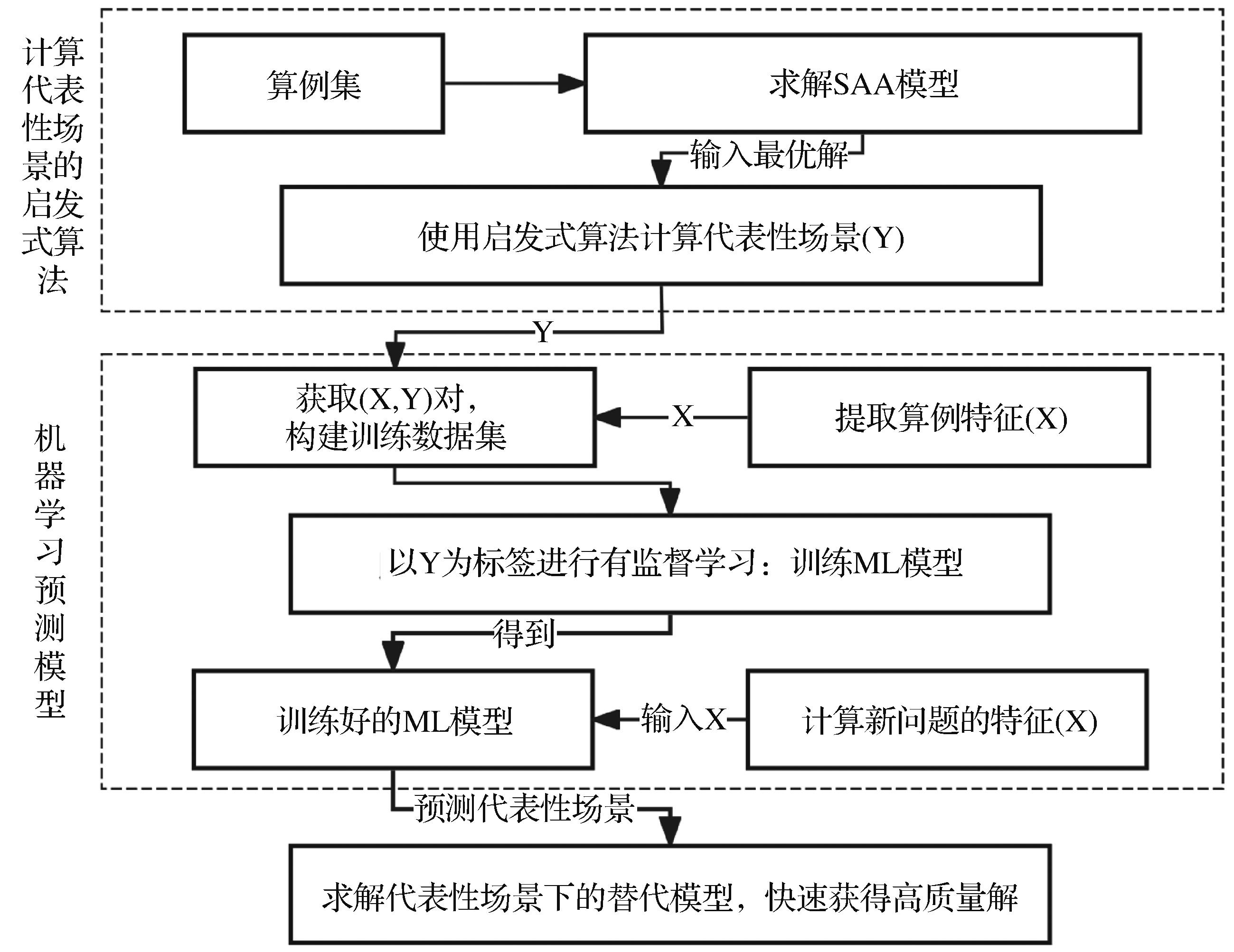
"
"
| 手术室 | 周一 | 周二 | 周三 | 周四 | 周五 |
|---|---|---|---|---|---|
| 1 | 耳鼻喉科 | 耳鼻喉科 | 耳鼻喉科 | ||
| 2 | 耳鼻喉科 | 耳鼻喉科 | 耳鼻喉科 | ||
| 3 | 妇产科 | 妇产科 | 妇产科 | ||
| 4 | 骨科 | 骨科 | 骨科 | 骨科 | |
| 5 | 骨科 | 神经外科 | |||
| 6 | 普通外科 | 普通外科 | 普通外科 | 普通外科 | |
| 7 | 普通外科 | 普通外科 | 普通外科 | 普通外科 | |
| 8 | 眼科 | 眼科 | 眼科 | 眼科 | |
| 9 | 血管科 | 心外科 | 血管科 | ||
| 10 | 泌尿科 | 骨科 |
"
| 手术类型 | 所占比例(%) | 手术时长(分钟) | 恢复时长(天) | ||
|---|---|---|---|---|---|
| 均值 | 标准差 | 均值 | 标准差 | ||
| 耳鼻喉科 | 21 | 74 | 37 | 0.10 | 0.10 |
| 妇产科 | 9 | 86 | 40 | 2.00 | 2.00 |
| 骨科 | 23 | 107 | 44 | 1.50 | 1.50 |
| 神经外科 | 5 | 160 | 77 | 2.00 | 2.00 |
| 普通外科 | 22 | 93 | 49 | 0.05 | 0.05 |
| 眼科 | 3 | 38 | 19 | 0.05 | 0.05 |
| 血管科 | 8 | 120 | 61 | 3.50 | 3.50 |
| 心外科 | 3 | 240 | 103 | 2.00 | 2.00 |
| 泌尿科 | 6 | 64 | 52 | 0.80 | 0.80 |
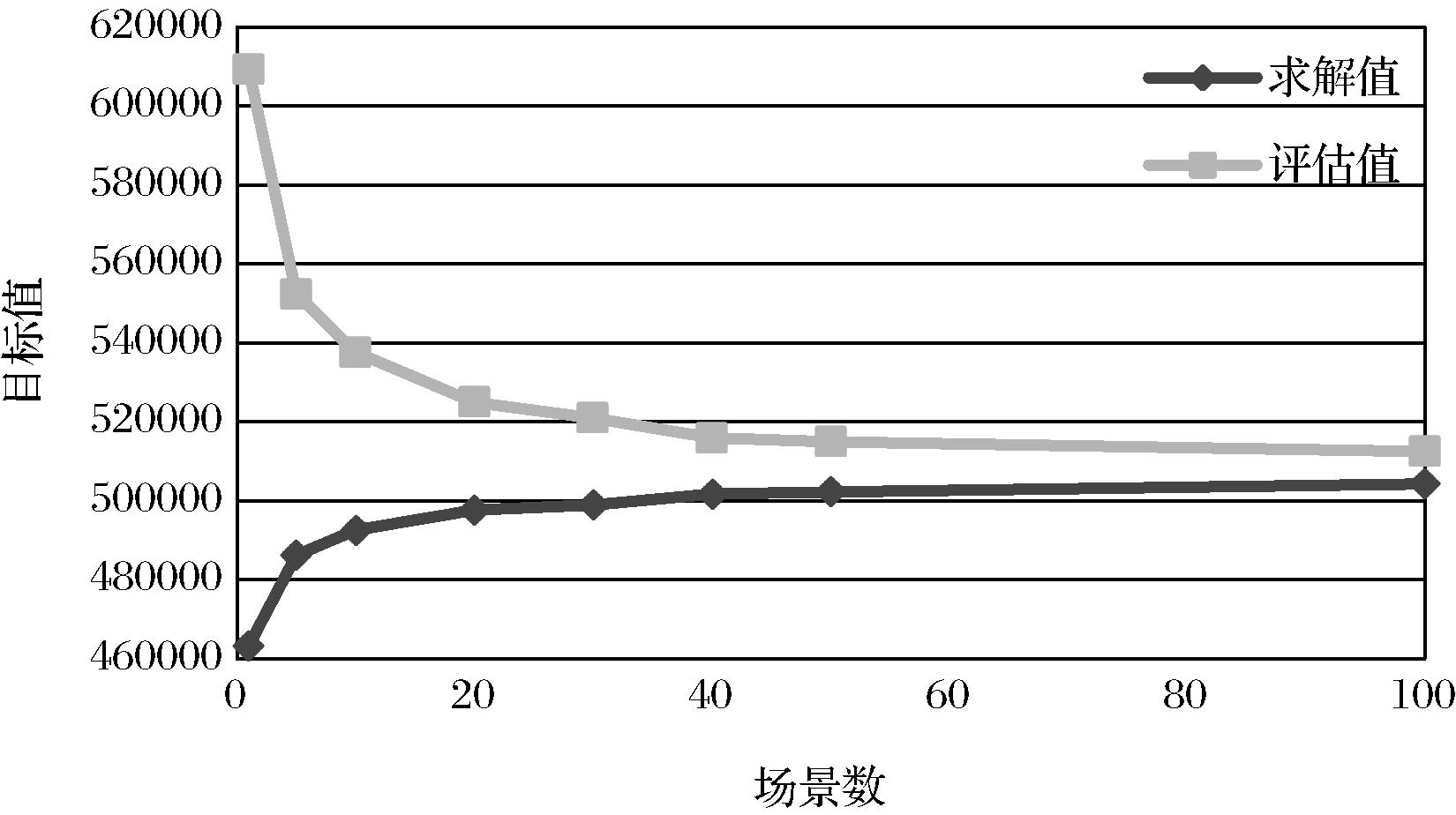
"
"
"
| 指标 | LR | XGB | ||
|---|---|---|---|---|
| 训练集 | 测试集 | 训练集 | 测试集 | |
| SMAPE(%) | 14.69 | 30.99 | 1.69 | 18.12 |
| 训练时间(秒) | 9.41 | 2284.40 | ||
"
| 指标 | 调参后XGB | ||
|---|---|---|---|
| 训练集 | 验证集 | 测试集 | |
| SMAPE(%) | 14.70 | 15.39 | 14.72 |
| 训练时间(秒) | 26573.26 | ||
"
"
gap (%) | AVG | RND | DIST | RS-XGB | GRB-XGB | SR | SSS |
|---|---|---|---|---|---|---|---|
| 最小值 | 1.34 | 11.40 | 12.32 | -0.81 | -0.79 | 11.39 | 11.83 |
| 最大值 | 6.58 | 23.06 | 22.31 | 1.77 | 2.73 | 22.24 | 21.55 |
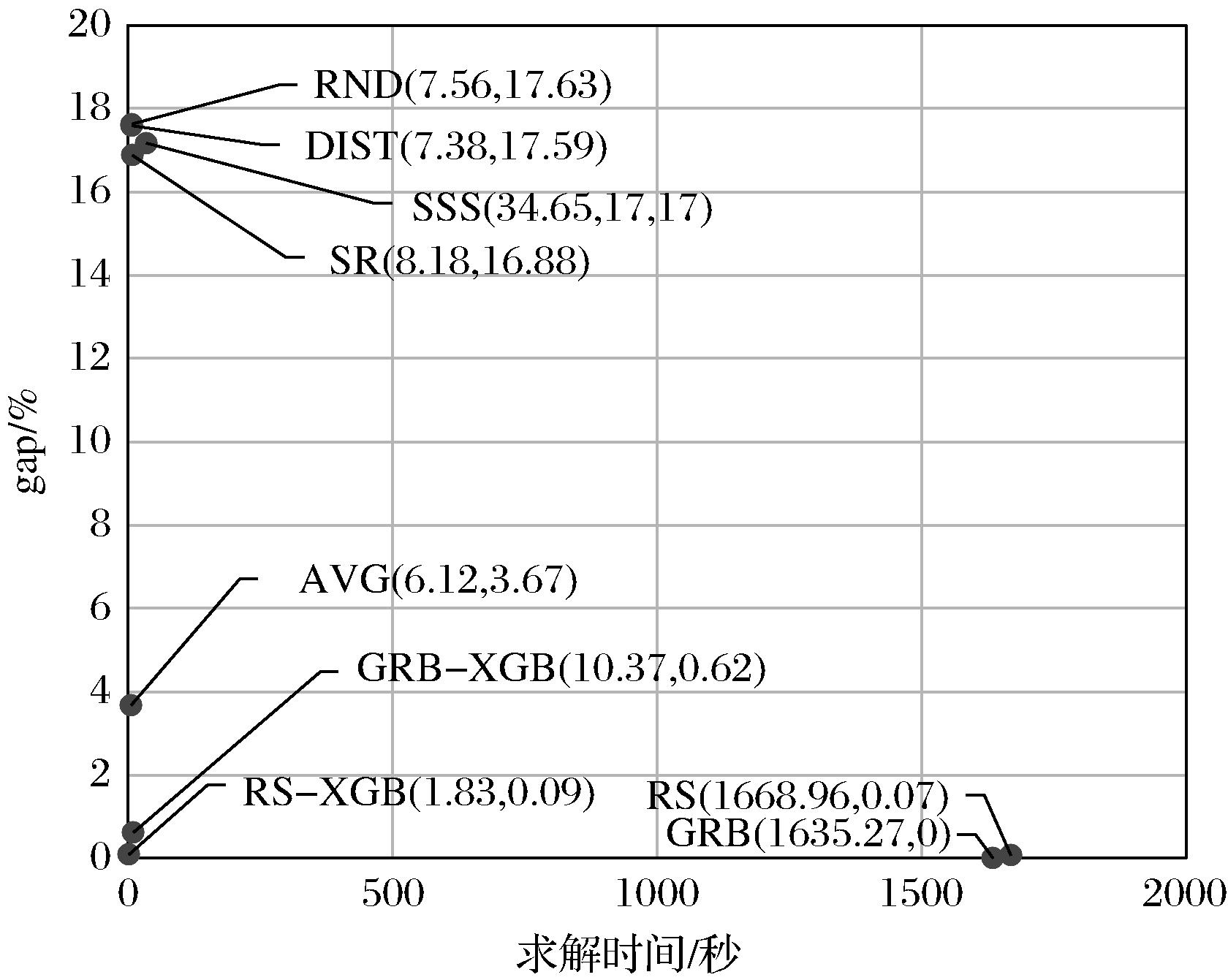
| 均值 | 3.67 | 17.63 | 17.59 | 0.09 | 0.62 | 16.88 | 17.17 |
| 中位数 | 3.65 | 17.77 | 17.64 | 0.04 | 0.60 | 16.94 | 17.17 |
| 标准差 | 0.72 | 1.71 | 1.77 | 0.34 | 0.59 | 1.68 | 1.56 |
"
| 求解时间(秒) | GRB | AVG | RND | DIST | RS-XGB | GRB-XGB | SR | SSS |
|---|---|---|---|---|---|---|---|---|
| 最小值 | 22.18 | 1.05 | 0.06 | 0.06 | 1.56 | 1.80 | 0.39 | 25.23 |
| 最大值 | 3601.88 | 15.14 | 16.96 | 16.73 | 10.61 | 72.43 | 17.32 | 44.32 |
| 均值 | 1635.27 | 6.12 | 7.56 | 7.38 | 1.83 | 10.37 | 8.18 | 34.65 |
| 中位数 | 1624.08 | 6.17 | 7.22 | 7.12 | 1.71 | 3.97 | 7.66 | 34.39 |
| 标准差 | 818.71 | 1.46 | 2.13 | 1.95 | 0.78 | 12.55 | 2.11 | 2.30 |
"
| 参数 | GRB | AVG | RND | DIST | RS-XGB | SR | SSS |
|---|---|---|---|---|---|---|---|
| 接收患者数量 | 87.44 | 97.72 | 127.22 | 127.25 | 85.92 | 125.74 | 126.32 |
| 实际手术的患者数量 | 83.04 | 84.44 | 80.89 | 80.88 | 81.76 | 81.40 | 81.29 |
| 取消手术的患者数量 | 4.40 | 13.28 | 46.33 | 46.37 | 4.16 | 44.34 | 45.03 |
| 下游资源占用量 | 8.21 | 8.87 | 9.85 | 9.84 | 8.05 | 9.84 | 9.84 |
| 空闲时间 | 114.04 | 116.47 | 144.98 | 144.87 | 116.26 | 143.13 | 144.15 |
| 超时时间 | 13.91 | 21.01 | 40.69 | 40.50 | 12.45 | 39.91 | 40.40 |
"
| OR | B | I | 指标 | GRB | AVG | RND | DIST | RS-XGB | GRB-XGB | SR | SSS |
|---|---|---|---|---|---|---|---|---|---|---|---|
| 10 | 32 | 203 | 求解gap(%) | — | 3.67 | 17.63 | 17.59 | 0.09 | 0.62 | 16.88 | 17.27 |
| 8 | 25 | 162 | — | 1.18 | 11.14 | 11.08 | 1.43 | 6.47 | 10.47 | 10.48 | |
| 5 | 16 | 102 | — | -0.03 | 7.23 | 7.19 | -1.74 | 2.34 | 6.61 | 6.31 | |
| 10 | 32 | 203 | 求解时间(秒) | 1635.27 | 6.12 | 7.56 | 7.38 | 1.83 | 10.37 | 8.18 | 33.13 |
| 8 | 25 | 162 | 175.01 | 5.52 | 6.72 | 6.62 | 1.64 | 12.32 | 7.72 | 31.25 | |
| 5 | 16 | 102 | 11.68 | 5.55 | 3.71 | 3.74 | 1.40 | 6.73 | 4.54 | 26.60 |
"
| OR | B | I | C_SICU | 指标 | GRB | AVG | RND | DIST | RS-XGB | GRB-XGB | SR | SSS |
|---|---|---|---|---|---|---|---|---|---|---|---|---|
| 10 | 32 | 203 | 5 | 求解gap(%) | — | 4.70 | 17.94 | 17.86 | 2.05 | 2.38 | 15.44 | 16.74 |
| 10 | — | 3.67 | 17.63 | 17.59 | 0.09 | 0.62 | 16.88 | 17.27 | ||||
| 15 | — | 0.50 | 10.64 | 10.60 | 0.07 | 0.71 | 10.19 | 9.85 | ||||
| 10 | 32 | 203 | 5 | 求解时间(秒) | 200.51 | 6.09 | 7.52 | 7.50 | 1.89 | 4.89 | 8.14 | 32.51 |
| 10 | 1635.27 | 6.12 | 7.56 | 7.38 | 1.83 | 10.37 | 8.18 | 33.13 | ||||
| 15 | 713.47 | 6.09 | 7.42 | 7.45 | 1.91 | 19.76 | 8.08 | 33.52 |
| [1] | 杜少甫, 谢金贵, 刘作仪. 医疗运作管理: 新兴研究热点及其进展[J]. 管理科学学报, 2013, 16(8): 1-19. |
| Du S F, Xie J G, Liu Z Y. Progress and prospects in an emerging hot topic: Healthcare operations management[J]. Journal of Management Sciences in China, 2013, 16(8): 1-19. | |
| [2] | 王昱, 唐加福, 曲刚. 医院手术室运作管理: 研究热点及发展方向[J]. 系统工程理论与实践, 2018, 38(7): 1778-1791. |
| Wang Y, Tang J F, Qu G. Overview and prospects of operating rooms management[J]. Systems Engineering- Theory & Practice, 2018, 38(7): 1778-1791. | |
| [3] | Shehadeh K S, Padman R. Stochastic optimization approaches for elective surgery scheduling with downstream capacity constraints: Models, challenges, and opportunities[J]. Computers & Operations Research, 2022, 137: 105523. |
| [4] | Birge J R, Louveaux F. Introduction to Stochastic Programming[M]. NY: Springer New York, 2011. |
| [5] | 王珊珊, 李金林, 彭春, 等. 基于机会约束的手术计划随机模型与算法[J]. 系统工程理论与实践, 2019, 39(7): 1721-1731. |
| Wang S S, Li J L, Peng C, et al. Stochastic chance-constrained surgery planning model and algorithm[J]. Systems Engineering —Theory & Practice, 2019, 39(7): 1721-1731. | |
| [6] | 蒲松, 夏嫦. 基于二阶段随机规划的城市医疗废弃物回收网络设计[J].中国管理科学,2021,29(5): 166-172. |
| Pu S, Xia C. A two-stage stochastic programming approach for urban medical waste recycling network design[J]. Chinese Journal of Management Science, 2021, 29(5): 166-172. | |
| [7] | Shapiro A, Dentcheva D, Ruszczynski A. Lectures on stochastic programming: Modeling and theory, third edition[M]. Philadelphia, PA: Society for Industrial and Applied Mathematics, 2021. |
| [8] | 乔岩, 冉伦, 李金林, 等. 基于两阶段随机规划的远程会诊预约调度问题研究[J]. 中国管理科学, 2024, 32(1): 86-93. |
| Qiao Y, Ran L, Li J L, et al. Research on teleconsultation appointment scheduling problem based on two-stage stochastic programming[J]. Chinese Journal of Management Science, 2024, 32(1): 86-93. | |
| [9] | 邱若臻, 刘健, 于悦, 等. 不确定环境下考虑风险厌恶的生产-分销网络优化模型及试验设计[J]. 中国管理科学, 2019, 27(7): 56-67. |
| Qiu R Z, Liu J, Yu Y, et al. Production-distribution network optimization model and experimental design considering risk aversion under uncertainty[J]. Chinese Journal of Management Science, 2019, 27(7): 56-67. | |
| [10] | Wang K, Jacquillat A. A stochastic integer programming approach to air traffic scheduling and operations[J]. Operations Research, 2020, 68(5): 1375-1402. |
| [11] | Zhang W, He X. A new scenario reduction method based on higher-order moments[J]. INFORMS Journal on Computing, 2022, 34(4): 1903-1918. |
| [12] | Henrion R, Römisch W. Problem-based optimal scenario generation and reduction in stochastic programming[J]. Mathematical Programming,2022,191(1): 183-205. |
| [13] | Bertsimas D, Mundru N. Optimization-based scenario reduction for data-driven two-stage stochastic optimization[J]. Operations Research, 2023, 71(4): 1343-1361. |
| [14] | He X, Zhang W. An efficient scenario reduction method for problems with higher moment coherent risk measures[J]. INFORMS Journal on Computing, 2024, 37(3): 743-760. |
| [15] | Bengio Y, Frejinger E, Lodi A, et al. A learning-based algorithm to quickly compute good primal solutions for stochastic integer programs[C]//Proceedings of Integration of Constraint Programming, Artificial Intelligence, and Operations Research,Vienna, Austria, September 21-24 , Cham: Springer, 2020: 99-111. |
| [16] | Xavier Á S, Qiu F, Ahmed S. Learning to solve large-scale security-constrained unit commitment problems[J]. INFORMS Journal on Computing, 2021, 33(2): 739-756. |
| [17] | 王昱, 张舒政, 曲刚. 考虑患者特征及下游资源限制的鲁棒手术调度[J]. 系统工程理论与实践, 2025, 45(1): 192-207. |
| Wang Y, Zhang S Z, Qu G. Robust surgery scheduling with patient feature and downstream resource constraints[J]. Systems Engineering —Theory & Practice, 2025, 45(1): 192-207. | |
| [18] | Larsen E, Frejinger E, Gendron B, et al. Fast continuous and integer L-shaped heuristics through supervised learning[J]. INFORMS Journal on Computing, 2024, 36(1): 203-223. |
| [19] | Wu Y, Zhang Y, Liang Z, et al. HGCN2SP: Hierarchical graph convolutional network for two-stage stochastic programming[C]//Proceedings of Forty-First International Conference on Machine Learning (ICML 2024),Vienna, Austria, July 21-27 ,JMLR.org, 2024: 53999-54014. |
| [20] | 冯景, 王长军, 杨东, 等. 机器学习驱动的农产品进销决策——以新疆棉为例[J]. 工业工程与管理, 2024, 29(5): 94-103. |
| Feng J, Wang C J, Yang D, et al. Machine learning-driven purchase-sale decision-making for agricultural products: A case of Xinjiang cotton[J]. Industrial Engineering and Management, 2024, 29(5): 94-103. | |
| [21] | Shapiro A, Homem-de-Mello T, Kim J. Conditioning of convex piecewise linear stochastic programs[J]. Mathematical Programming, 2002, 94(1): 1-19. |
| [22] | Shapiro A, Homem-de-Mello T. On the rate of convergence of optimal solutions of Monte Carlo approximations of stochastic programs[J]. SIAM Journal on Optimization, 2000, 11(1): 70-86. |
| [23] | Khalil E B, Le Bodic P, Song L, et al. Learning to branch in mixed integer programming[C]//Proceedings of the Thirtieth AAAI Conference on Artificial Intelligence, Phoenix, Arizona, February 12-17 ,AAAI Press, 2016: 724-731. |
| [24] | Gasse M, Chételat D, Ferroni N, et al. Exact combinatorial optimization with graph convolutional neural networks[C]// Proceedings of the 33rd International Conference on Neural Information Processing Systems, Vancouver British Columbia, December 8-14 , Curran Associates Inc., 2019: 15580-15592 . |
| [25] | Bengio Y, Lodi A, Prouvost A. Machine learning for combinatorial optimization: A methodological tour d’horizon[J]. European Journal of Operational Research, 2021, 290(2): 405-421. |
| [26] | Min D, Yih Y. Scheduling elective surgery under uncertainty and downstream capacity constraints[J]. European Journal of Operational Research, 2010, 206(3): 642-652. |
| [27] | Neyshabouri S, Berg B P. Two-stage robust optimization approach to elective surgery and downstream capacity planning[J]. European Journal of Operational Research, 2017, 260(1): 21-40. |
| [28] | 刘瑞雪, 李佳轩, 李云. 水库消落带植物多样性空间格局预测模型及环境解释——基于XGBoost-SHAP模型框架[J]. 生态学报, 2024, 44(21): 9652-9669. |
| Liu R X, Li J X, Li Y. Prediction model and environmental interpretation for the spatial pattern of plant diversity in the water-level fluctuation zone of reservoir based on XGBoost and SHAP[J]. Acta Ecologica Sinica, 2024, 44(21): 9652-9669. | |
| [29] | Zhang W, Wang K, Jacquillat A, et al. Optimized scenario reduction: Solving large-scale stochastic programs with quality guarantees[J]. INFORMS Journal on Computing, 2023, 35(4): 886-908. |
| [1] | Qianqian Han, Kang Wang, Zhenping Li. Study on the Order and Rack Sequencing Problem with Rack Buffer Zones [J]. Chinese Journal of Management Science, 2026, 34(4): 168-177. |
| [2] | Baofeng Tian, Jingwen Zhang, Zhi Chen. An Automatic Algorithm Recommendation Approach for the Project Scheduling and Material Ordering Problem with Site Space Constraints Through Machine Learning [J]. Chinese Journal of Management Science, 2026, 34(10): 175-185. |
| [3] | Baofeng Tian, Jingwen Zhang, Lubo Li, Junjie Chen. Integrated Resource-constrained Project Scheduling and Material Ordering Problem with Limited Storage Space [J]. Chinese Journal of Management Science, 2025, 33(8): 144-155. |
| [4] | Manru Dong, Xiaobin Tang. Study on CPI Prediction by LSTM Model Based on Double-Layer Attention Mechanism [J]. Chinese Journal of Management Science, 2025, 33(5): 113-123. |
| [5] | Wei Gu, Yajin Liu, Feng Susan Lu, Xiangbin Yan. AI-Driven Decision Sciences: Application, Perception and Bias [J]. Chinese Journal of Management Science, 2025, 33(5): 99-112. |
| [6] | Yanting Wang, Weibo Zheng, Zhiqiang Ma, Zhengwen He. Robustness Threshold-based Max-NPV Project Scheduling Optimization on Different Clients’ Payment Modes [J]. Chinese Journal of Management Science, 2025, 33(4): 185-196. |
| [7] | Jie Zhang, Yanfeng Li. Location-routing Problem of Fresh Product Distribution in Epidemic Environment [J]. Chinese Journal of Management Science, 2025, 33(3): 196-208. |
| [8] | Jinlong Zhao, Zhongzhong Jiang, Mingzhong Wan, Chunzheng Zhang. Order Picking Optimization in "Parts-to-Picker" Systems Considering Delivery Due Dates [J]. Chinese Journal of Management Science, 2025, 33(3): 239-255. |
| [9] | Ziqing Zhang, Lin Wang, Sirui Wang, Jinlong Zhang. The Location of Post-harvest Grain Service Centers Considering Two Service Capabilities and Benders Decomposition Algorithm [J]. Chinese Journal of Management Science, 2025, 33(2): 141-149. |
| [10] | Fang Guo, Runliu Niu, Zhihong Huang. Robust Optimization of Procurement and Routing Strategy of Multi-period Multimodal Transport in Uncertain Environment [J]. Chinese Journal of Management Science, 2025, 33(11): 103-113. |
| [11] | Xingyi Li, Zhongfei Li, Qiqian Li, Yujun Liu, Wenjin Tang. A Review of Research on Asset Return Prediction Based on Machine Learning [J]. Chinese Journal of Management Science, 2025, 33(1): 311-322. |
| [12] | Yao Zhang,Yuwei Zhang,Zhenping Li,Yuwen Wu. Research on Joint Reserve and Allocation of Multiple Emergency Medical Materials under Uncertain Demands [J]. Chinese Journal of Management Science, 2024, 32(7): 129-137. |
| [13] | Zhihong Huang,Weilai Huang,Fang Guo. Collaborative Optimization of Charging Network and Charging Strategy with Practical Battery Wear Model [J]. Chinese Journal of Management Science, 2024, 32(6): 68-78. |
| [14] | Xinnan Lei,Lefan Lin,Binqing Xiao,Honghai Yu. Re-exploration of Small and Micro Enterprises' Default Characteristics Based on Machine Learning Models with SHAP [J]. Chinese Journal of Management Science, 2024, 32(5): 1-12. |
| [15] | Jun Zhuang,Dong Yang. Stochastic Optimization for Fresh E-commerce Network Design and Order Fulfillment under Uncertain Demand [J]. Chinese Journal of Management Science, 2024, 32(2): 188-198. |
| Viewed | ||||||
|
Full text |
|
|||||
|
Abstract |
|
|||||
|
||
