
主管:中国科学院
主办:中国优选法统筹法与经济数学研究会
中国科学院科技战略咨询研究院
主办:中国优选法统筹法与经济数学研究会
中国科学院科技战略咨询研究院

Chinese Journal of Management Science ›› 2026, Vol. 34 ›› Issue (11): 33-45.doi: 10.16381/j.cnki.issn1003-207x.2024.1257
Previous Articles Next Articles
Zhibing Lin( ), Zhiwei Liu
Received:2024-07-24
Revised:2025-01-23
Online:2026-11-25
Published:2026-11-10
Contact:
Zhibing Lin
E-mail:linzhib@fzu.edu.cn
CLC Number:
Zhibing Lin,Zhiwei Liu. The Impact of Green Credit Financing on Manufacturer 's Technology R&D and Licensing Decisions[J]. Chinese Journal of Management Science, 2026, 34(11): 33-45.

"
| 符号 | 说明 | 符号 | 说明 |
|---|---|---|---|
| 制造商i的单位生产成本 | 消费者对于碳减排量的敏感性 | ||
| 制造商i的批发价格 | 产品替代率 | ||
| 产品i的零售价格 | 碳排放交易价格 | ||
| 产品i的市场需求 | 初始单位碳排放量 | ||
| 研发成本系数 | 碳减排量 | ||
| 银行的一般信贷利率 | 银行的绿色优惠力度 | ||
| 碳配额 | 技术授权费用 | ||
| 制造商i的利润 | 银行的利润 | ||
| 零售商的利润 |
"
"
"
"
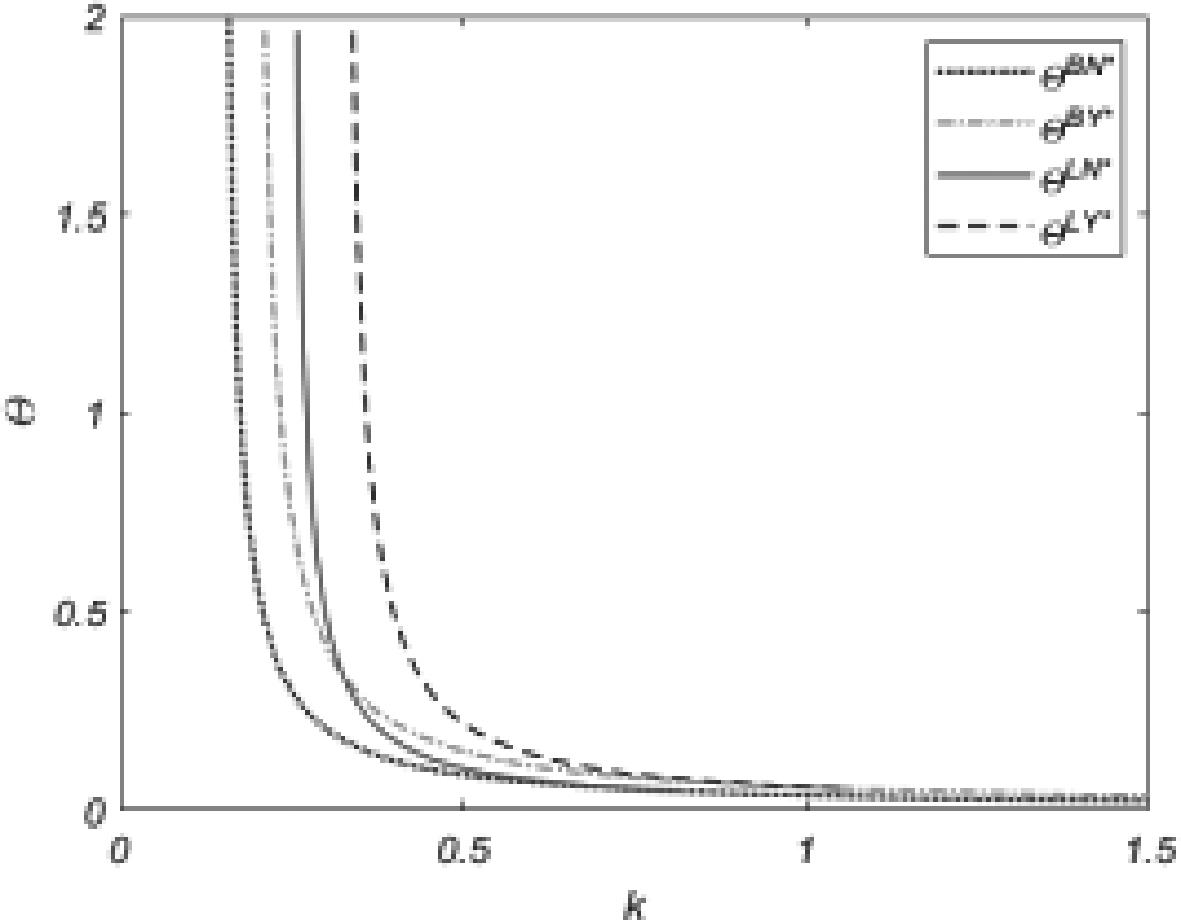
"
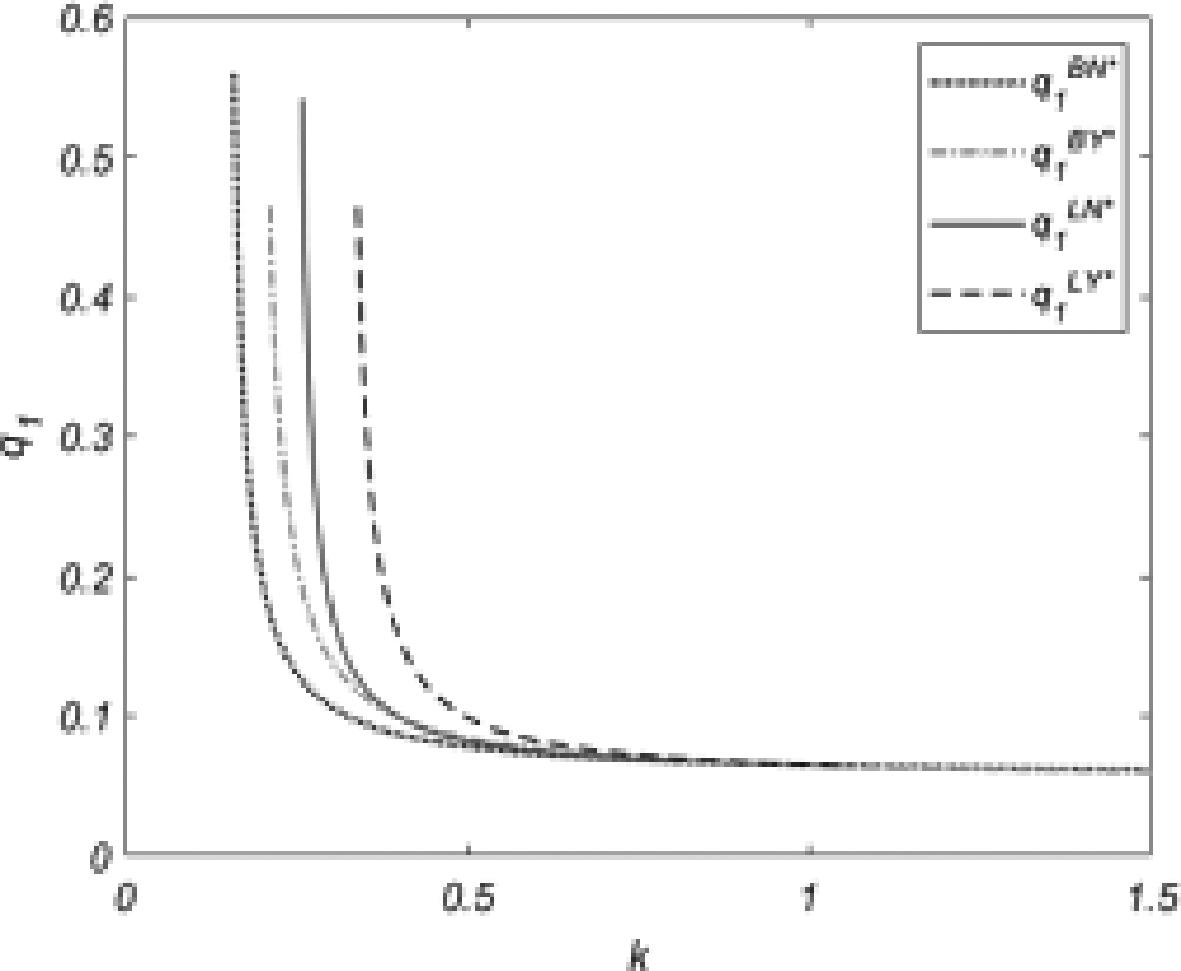
"
"
"
"
"
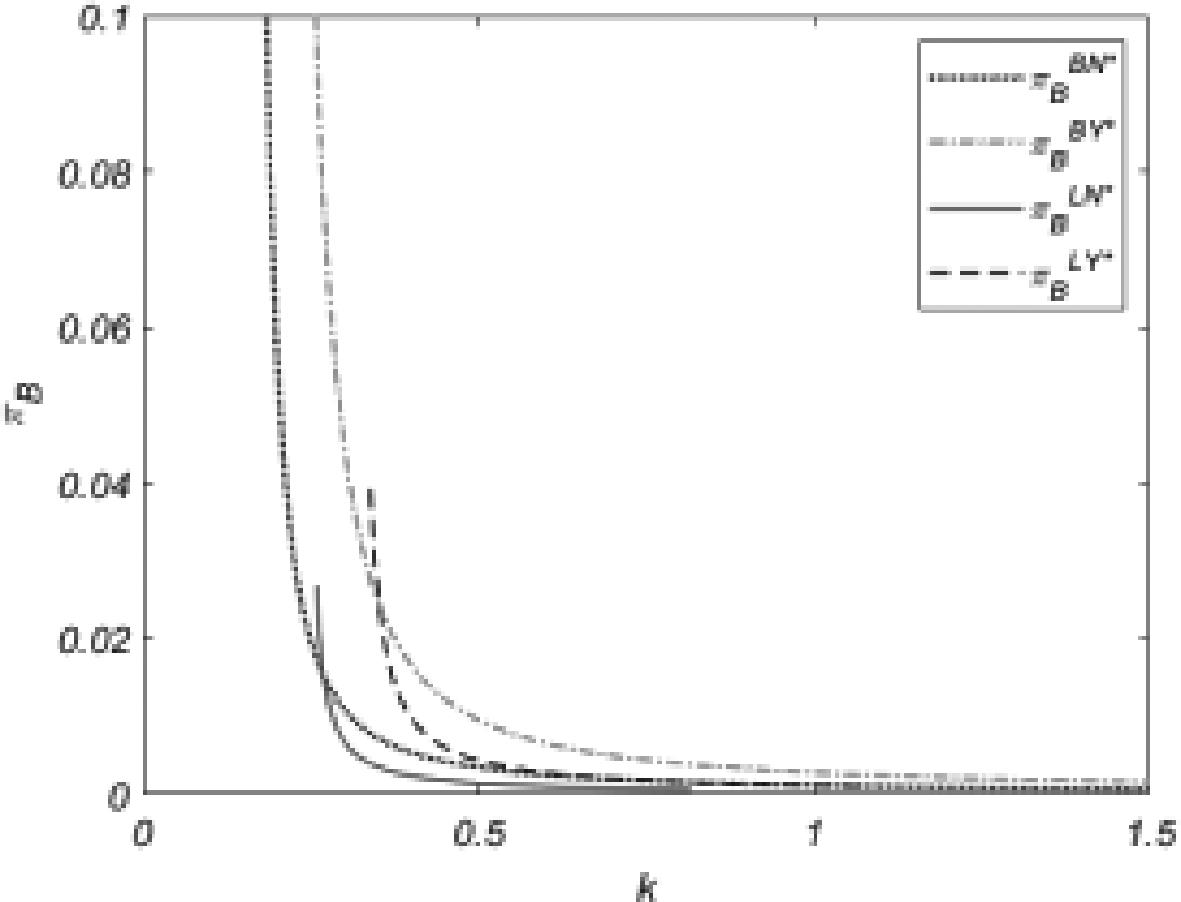
"
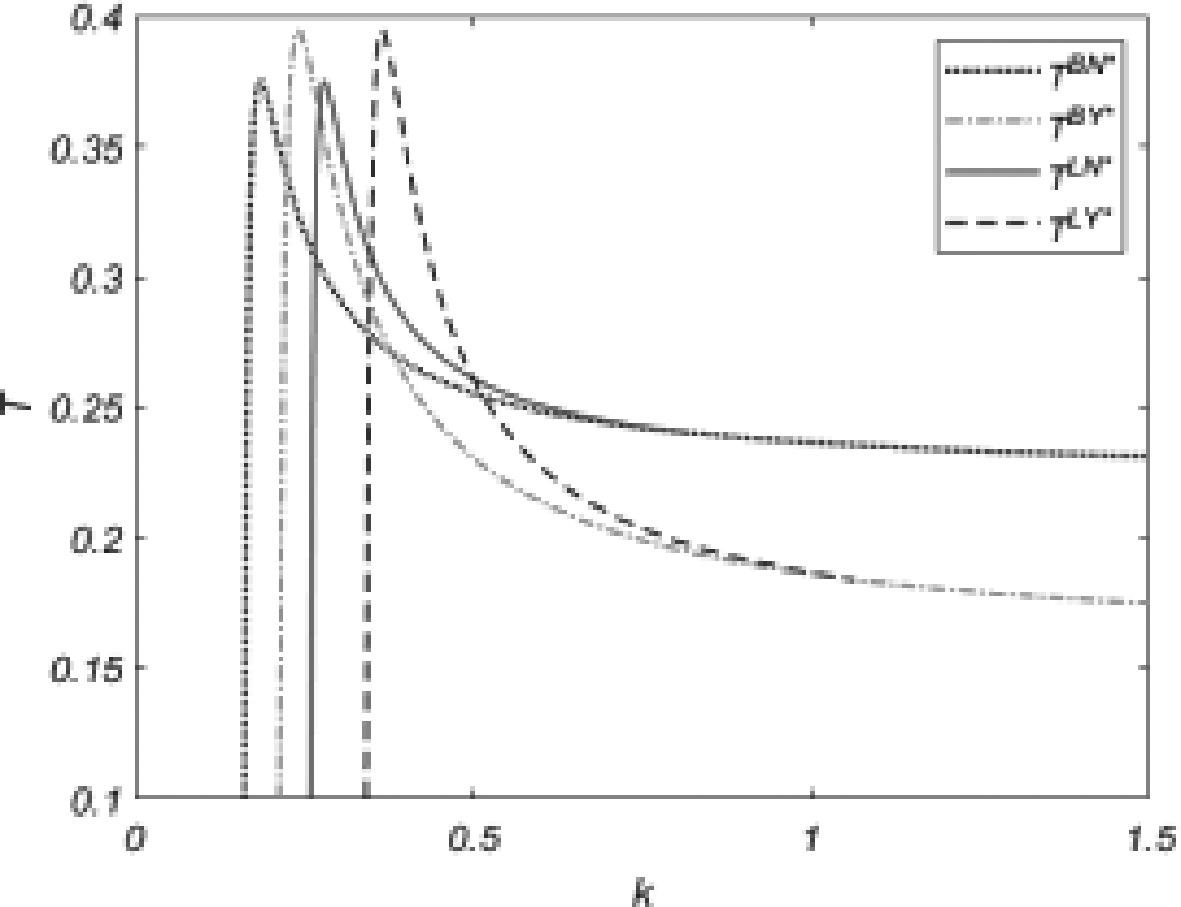
"
"
| [1] | 李景. 全国碳市场释放减排新动能[N]. 经济日报, 2022-12-25(5). |
| Li J. The national carbon market releases new kinetic energy for emission reduction[N]. Economic Daily, 2022-12-25(5). | |
| [2] | 海南省人民政府. 我省开建首个年捕集利用6万吨二氧化碳项目[EB/OL].(2023-12-25)[2024-12-25]. . |
| Hainan Provincial People's Government. Our province opened the first annual capture and utilization of 60,000 tons of carbon dioxide project[EB/OL].(2023-12-25)[2024-12-25]. . | |
| [3] | Zhang Q, Zhang J, Zaccour G, et al. Strategic technology licensing in a supply chain[J]. European Journal of Operational Research, 2018, 267(1): 162-175. |
| [4] | 王伟, 黄照旺, 丁黎黎, 等. 研发结果不确定时制造商的横向技术授权策略研究[J]. 中国管理科学, 2023, 31(7): 266-275. |
| Wang W, Huang Z W, Ding L L, et al. Horizontal technology authorization strategies of the R & D manufacturer with uncertain R & D results[J]. Chinese Journal of Management Science, 2023, 31(7): 266-275. | |
| [5] | 百度. 比亚迪与博格华纳携手,推动刀片电池生产与技术授权[EB/OL].(2025-01-10)[2025-01-20].. |
| Baidu. BYD partners with BorgWarner to drive Blade Battery production and technology licensing[EB/OL]. (2025-01-10)[2025-01-20].. | |
| [6] | 搜狐. 30亿美元ESG贷款:先正达如何引领可持续金融潮流?[EB/OL].(2024-10-21)[2025-01-20].. |
| Sohu.com. $3 billion ESG loan: How is Syngenta leading the way in sustainable finance?[EB/OL].(2024-10-21)[2025-01-20].. | |
| [7] | 农药咨询网. 先正达公司宣布开放基因编辑和育种技术授权[EB/OL].(2025-01-17)[2025-01-20]. . |
| Agrochemical Information Net.Syngenta announces open licensing of gene editing and breeding technologies[EB/OL].(2025-01-17)[2025-01-20].. | |
| [8] | 国家开发银行深圳市分行. 绿色金融助力比亚迪新能源汽车筑梦辉煌[EB/OL].(2024-02-02)[2025-01-20].. |
| China Development Bank Shenzhen Branch. Green finance helps BYD new energy vehicles realize a brilliant dream[EB/OL].(2024-02-02)[2025-01-20].. | |
| [9] | 中华人民共和国中央政府.人民银行推出碳减排支持工具[EB/OL].(2021-11-08)[2025-01-20].. |
| Central Government of China. The People's Bank of China launched a carbon emission reduction support tool [EB/OL].(2021-11-08)[2025-01-20].. | |
| [10] | 新华网. 交通银行珠海分行运用碳减排支持工具 助力斗门华发“渔光互补”海洋牧场建设[EB/OL].(2024-03-21)[2025-01-20].. |
| Net Xinhua. Bank of Communications Zhuhai Branch uses the carbon emission reduction support tool to support the construction of Doumen Huafa's fishery-photovoltaic complementary marine ranch[EB/OL]. (2024-03-21)[2025-01-20].. | |
| [11] | 王君美. 非生产性企业技术授权的对象选择问题[J]. 科研管理, 2012, 33(10): 37-47. |
| Wang J M. Licensing choice for a nonproductive firm[J]. Science Research Management, 2012, 33(10): 37-47. | |
| [12] | Chen J X, Liang L, Yao D Q. An analysis of intellectual property licensing strategy under duopoly competition: Component or product-based?[J]. International Journal of Production Economics,2017,193: 502-513. |
| [13] | 王伟, 黄照旺, 丁黎黎, 等. “二对一”结构供应链中研发型制造商的技术授权策略研究[J]. 科技管理研究, 2020, 40(21): 121-133. |
| Wang W, Huang Z W, Ding L L, et al. Research on technology authorization strategy of the R & D manufacturer in a supply chain with “two-to-one” structure[J]. Science and Technology Management Research, 2020, 40(21): 121-133. | |
| [14] | Hong X, Govindan K, Xu L, et al. Quantity and collection decisions in a closed-loop supply chain with technology licensing[J]. European Journal of Operational Research, 2017, 256(3): 820-829. |
| [15] | Yan Q Y, Yang L. Optimal licensing in a differentiated Bertrand market under uncertain R&D outcomes and technology spillover[J]. Economic Modelling, 2018, 68: 117-126. |
| [16] | Zou Y X, Chen T L. Quality differentiation and product innovation licensing[J]. Economic Modelling, 2020, 87: 372-382. |
| [17] | 金亮, 陆淳鸿, 程永生, 等. 基于专利保护的专利技术授权与CSR投入研究[J]. 中国管理科学, 2023, 31(2): 40-50. |
| Jin L, Lu C H, Cheng Y S, et al. Optimal patent licensing contracts design and CRS investment decisions under patent protection[J]. Chinese Journal of Management Science, 2023, 31(2): 40-50. | |
| [18] | 金亮. 不对称信息下企业最优技术授权合同设计[J]. 系统工程学报, 2025, 40(1): 1-14. |
| Jin L. Optimal design of licensing contracts innovators under asymmetric information[J]. Journal of Systems Engineering, 2025, 40(1): 1-14. | |
| [19] | 李冬冬, 张婷, 杨晶玉. 市场结构及所有权性质对企业绿色技术授权策略的影响研究[J]. 软科学, 2020, 34(2): 14-20. |
| Li D D, Zhang T, Yang J Y. Research on the influence of market structure and ownership nature on the optimal eco-technology licensing of enterprises[J]. Soft Science, 2020, 34(2): 14-20. | |
| [20] | 黄虹富, 陈祉霖. 政府补贴下双寡头竞争企业间绿色技术授权策略研究[J].信息与管理研究, 2021, 6(1): 1-18. |
| Huang H F, Chen Z L. Green technology licensing strategies for competing duopoly firms with government subsidy[J]. Journal of Information and Management, 2021, 6(1): 1-18. | |
| [21] | Kong J J, Yang F. Green technology licensing under platform selling[J]. Journal of the Operational Research Society, 2022, 73(11): 2451-2464. |
| [22] | Sim S G, Hong S. Technology licensing and environmental policy instruments: Price control versus quantity control[J]. Resource and Energy Economics, 2020, 62: 101187. |
| [23] | Chen X, Wang X J, Xia Y X. Low-carbon technology transfer between rival firms under cap-and-trade policies[J]. IISE Transactions, 2022, 54(2): 105-121. |
| [24] | 林志炳, 张娟. 碳限额与交易机制下企业减排技术授权策略研究[J].系统科学与数学,2024, 44(1): 200-216. |
| Lin Z B, Zhang J. Research on enterprise emission reduction technology authorization strategy under carbon cap-and-trade mechanism[J]. Journal of Systems Science and Mathematical Sciences, 2024, 44(1): 200-216. | |
| [25] | Lai Z, Lou G, Chung S H, et al. The bright side of low-carbon technology sharing in a capital-constrained supply chain[J]. Transportation Research Part E: Logistics and Transportation Review, 2025, 193: 103827. |
| [26] | 陈伟达, 董凯丽. 考虑低碳信贷融资的制造/再制造生产决策研究[J].工业技术经济,2021, 40(8): 109-117. |
| Chen W D, Dong K L. Research on manufacturing/remanufacturing production decisions considering low-carbon credit financing[J]. Industrial Technology & Economy, 2021, 40(8): 109-117. | |
| [27] | 陆文香, 苏磊. 绿色信贷政策如何影响企业产能利用率?——来自中国微观企业的经验证据[J]. 财经论丛, 2023(7): 3-14. |
| Lu W X, Su L. How does green credit policy affect the capacity utilization rate of enterprises? Theoretical relationship model and empirical research[J]. Collected Essays on Finance and Economics, 2023(7): 3-14. | |
| [28] | 周永圣, 梁淑慧, 刘淑芹, 等. 绿色信贷视角下建立绿色供应链的博弈研究[J].管理科学学报, 2017, 20(12): 87-98. |
| Zhou Y S, Liang S H, Liu S Q, et al. The game study of establishing green supply chain from the perspective of green credit[J]. Journal of Management Sciences in China, 2017, 20(12): 87-98. | |
| [29] | 陈庭强, 林文娟, 王磊, 等. 基于碳交易与绿色信贷的化工企业低碳行为决策研究[J]. 中国管理科学, 2025, 33(6): 322-334. |
| Chen T Q, Lin W J, Wang L, et al. Low-carbon behavior decision of chemical enterprises based on carbon trading and green credit[J]. Chinese Journal of Management Science, 2025, 33(6): 322-334. | |
| [30] | Qin J J, Zhao Y H, Xia L J. Carbon emission reduction with capital constraint under greening financing and cost sharing contract[J]. International Journal of Environmental Research and Public Health, 2018, 15(4): 750. |
| [31] | 王康, 钱勤华, 周淑芬. 基于绿色金融贷款和成本分担下的供应链低碳减排机制研究[J]. 金融理论与实践, 2019(1): 84-92. |
| Wang K, Qian Q H, Zhou S F. Research on low-carbon emission reduction mechanism of supply chain based on green finance loan and cost sharing[J]. Financial Theory & Practice, 2019(1): 84-92. | |
| [32] | He J, Huang X, Jiang X, et al. An incentive theory of green supply chain finance[J]. International Journal of Production Research, 2025, 63(22): 8212-8234. |
| [33] | Lai Z, Lou G, Zhang T, et al. Financing and coordination strategies for a manufacturer with limited operating and green innovation capital: Bank credit financing versus supplier green investment[J]. Annals of Operations Research, 2023, 331(1): 85-119. |
| [34] | Si Y, Tian J, Wang L, et al. Should banks offer concessions? Lending rates for manufacturers’ green products[J]. International Journal of Production Research, 2022, 60(12): 3901-3919. |
| [35] | 田俊峰, 司艳红, 王力, 等. 绿色信贷优惠对企业产品定价及供应链绩效的作用机制[J]. 控制与决策, 2024, 39(10): 3431-3441. |
| Tian J F, Si Y H, Wang L, et al. Impact mechanism of green credit concessions on enterprise product pricing and supply chain performance[J]. Control and Decision, 2024, 39(10): 3431-3441. | |
| [36] | 王文利, 张睿贞. 政府补贴下绿色产品供应商的融资策略——绿色信贷VS预付款[J]. 系统管理学报, 2024, 33(6): 1423-1435. |
| Wang W L, Zhang R Z. Financing strategies for green product suppliers under government subsidies: Green credit versus prepayment[J]. Journal of Systems & Management, 2024, 33(6): 1423-1435. | |
| [37] | Lai Z, Lou G, Yin L, et al. Supply chain green strategy considering manufacturers’ financial constraints: How to manage the risk of green supply chain financing[J]. Annals of Operations Research, 2025, 348(2): 1037-1068. |
| [38] | Liu Z L, Anderson T D, Cruz J M. Consumer environmental awareness and competition in two-stage supply chains[J]. European Journal of Operational Research, 2012, 218(3): 602-613. |
| [39] | Ji J N, Zhang Z Y, Yang L. Carbon emission reduction decisions in the retail-/ dual-channel supply chain with consumers' preference[J]. Journal of Cleaner Production, 2017, 141: 852-867. |
| [40] | Wang X H. Fee versus royalty licensing in a Cournot duopoly model[J]. Economics Letters, 1998, 60(1): 55-62. |
| [41] | Kishimoto S, Muto S. Fee versus royalty policy in licensing through bargaining: An application of the Nash bargaining solution[J]. Bulletin of Economic Research, 2012, 64(2): 293-304. |
| [42] | 百度. 苹果公司每年向ARM支付的专利费用相对较低,这其中有什么秘密呢?[EB/OL].(2023-11-30) [2025-01-20].. |
| Baidu. Why are the patent fees Apple pays ARM each year relatively low, and what is the secret?[EB/OL].(2023-11-30)[2025-01-20].. | |
| [43] | 石松, 颜波, 石平. 考虑公平关切的自主减排低碳供应链决策研究[J]. 系统工程理论与实践, 2016, 36(12): 3079-3091. |
| Shi S, Yan B, Shi P. Pricing and coordination decisions in autonomous reduction low-carbon supply chain with fairness concerns[J]. Systems Engineering-Theory & Practice, 2016, 36(12): 3079-3091. | |
| [44] | Zhang W, Lee H H. Investment strategies for sourcing a new technology in the presence of a mature technology[J]. Management Science, 2022, 68(6): 4631-4644. |
| [45] | Kouvelis P, Xu F. A supply chain theory of factoring and reverse factoring[J]. Management Science, 2021, 67(10): 6071-6088. |
| [46] | Yi Z, Wang Y, Chen Y J. Financing an agricultural supply chain with a capital-constrained smallholder farmer in developing economies[J]. Production and Operations Management, 2021, 30(7): 2102-2121. |
| [47] | Shen B, Liu S, Zhang T, et al. Optimal advertising and pricing for new green products in the circular economy[J]. Journal of Cleaner Production, 2019, 233: 314-327. |
| [48] | Ji J N, Tang D L, Huang J S. Green credit financing and emission reduction decisions in a retailer-dominated supply chain with capital constraint[J]. Sustainability, 2022, 14(17): 10553. |
| [1] | Liang Jin. OEM vs. ODM: Optimal Multinational Technology Licensing and R&D Investment Decisions [J]. Chinese Journal of Management Science, 2026, 34(7): 300-311. |
| [2] | Jing Chen, Canhong Zhao, Ge Gao, Zhigang Zhao. Research on Dynamic Emission Reduction of Vertical Cooperation in Dual-channel Supply Chain under Carbon Cap and Trade Policy [J]. Chinese Journal of Management Science, 2025, 33(2): 300-307. |
| [3] | Yi Ye, Qiang Guo, Jiajia Nie. The Impact of Consumer Expected Regret on the Low-carbon Strategy Choices of Enterprises [J]. Chinese Journal of Management Science, 2025, 33(2): 242-247. |
| [4] | Liang Jin,Haitao Lu. Technology Licensing and New Product Introduction: Based on the Perspective of Multination Competition and Cooperation [J]. Chinese Journal of Management Science, 2024, 32(6): 98-108. |
| [5] | WANG Wei, HUANG Zhao-wang, DING Li-li, ZHANG Wen-si. Horizontal Technology Authorization Strategies of the R&D Manufacturer with Uncertain R&D Results [J]. Chinese Journal of Management Science, 2023, 31(7): 266-275. |
| [6] | Zhen-hua YANG,Zheng-jie SUN,Ru LIU,Peng-jun GUO. Effect of Corporate Social Responsibility on Technology Licensing and Product Pricing [J]. Chinese Journal of Management Science, 2023, 31(10): 193-204. |
| [7] | FENG Hai-rong, ZENG Yin-lian, ZHOU Jie. Cost Allocation for Collaborative Procurement with Carbon Cap and Trade Policy [J]. Chinese Journal of Management Science, 2021, 29(5): 108-116. |
| [8] | XUE Ming-gao. R&D Investment Decision with Technology Licensing Alliance [J]. Chinese Journal of Management Science, 2008, 16(4): 104-110. |
| Viewed | ||||||
|
Full text |
|
|||||
|
Abstract |
|
|||||
|
||
