
主管:中国科学院
主办:中国优选法统筹法与经济数学研究会
中国科学院科技战略咨询研究院
主办:中国优选法统筹法与经济数学研究会
中国科学院科技战略咨询研究院

Chinese Journal of Management Science ›› 2026, Vol. 34 ›› Issue (11): 313-325.doi: 10.16381/j.cnki.issn1003-207x.2024.1786
Previous Articles Next Articles
Ligang Cui1,4, Haili Ren1,2, Jie Deng3( ), Yingcong Chen1,4
Received:2024-10-03
Revised:2025-03-15
Online:2026-11-25
Published:2026-11-10
Contact:
Jie Deng
E-mail:mabelduo@hotmail.com
CLC Number:
Ligang Cui,Haili Ren,Jie Deng, et al. Multi-item Joint Replenishment Model Considering Financial Repayment Portfolio[J]. Chinese Journal of Management Science, 2026, 34(11): 313-325.

"
| 参数 | 定义 | 参数 | 定义 |
|---|---|---|---|
| 商品种类 | 缺货商品 | ||
| 商品品类编号, | 商品 | ||
| 商品 | 间隔期( | ||
| 商品 | 商品 | ||
| 主要订购成本 | 违约风险系数(正常数) | ||
| 次要订购成本 | 单位商品 | ||
| 单位商品 | 反向保理融资比例 | ||
| 单位商品 | 单位商品 | ||
| 单位商品 | 单位商品 | ||
| 商品 | 商品 | ||
| 决策变量 | |||
| 商品 | 商品 | ||
| 基础采购周期 | 商品 | ||
| 函数 | |||
| 取0和 | 数学期望 | ||
| 标准正态分布概率密度函数 | 标准正态分布累积分布函数 | ||
| 零售商成本函数 | |||
"
"
"
"
"
"
"
"
| 参数 | 商品1 | 商品2 | 商品3 | 商品4 | 商品5 | 商品6 |
|---|---|---|---|---|---|---|
| 0.02 | 0.02 | 0.02 | 0.02 | 0.02 | 0.02 | |
| 200 | 200 | 200 | 200 | 200 | 200 | |
| 45 | 46 | 47 | 44 | 45 | 47 | |
| 10000 | 5000 | 3000 | 1000 | 600 | 200 | |
| 2500 | 1000 | 700 | 500 | 300 | 150 | |
| 1 | 1 | 1 | 1 | 1 | 1 | |
| 25 | 30 | 15 | 30 | 35 | 30 | |
| 25 | 20 | 15 | 30 | 35 | 28 | |
| 35 | 50 | 45 | 65 | 75 | 70 | |
| 10 | 20 | 30 | 35 | 40 | 40 | |
| 0.28 | 0.65 | 0.76 | 0.59 | 0.26 | 0.44 |
"
| 参数 | 数值 | 参数 | 数值 |
|---|---|---|---|
| 0.1 | 0.5 | ||
| 0.15 | 0.99 | ||
| 0.1 | 0.95 | ||
| 1 | 90/365 |
"
| 算法 | ||||
|---|---|---|---|---|
| PSO | 384243 | 1,1,1,2,2,2 | 2.4446,2.8186,2.3903,2.2096,2.0169,2.6258 | 0.0540 |
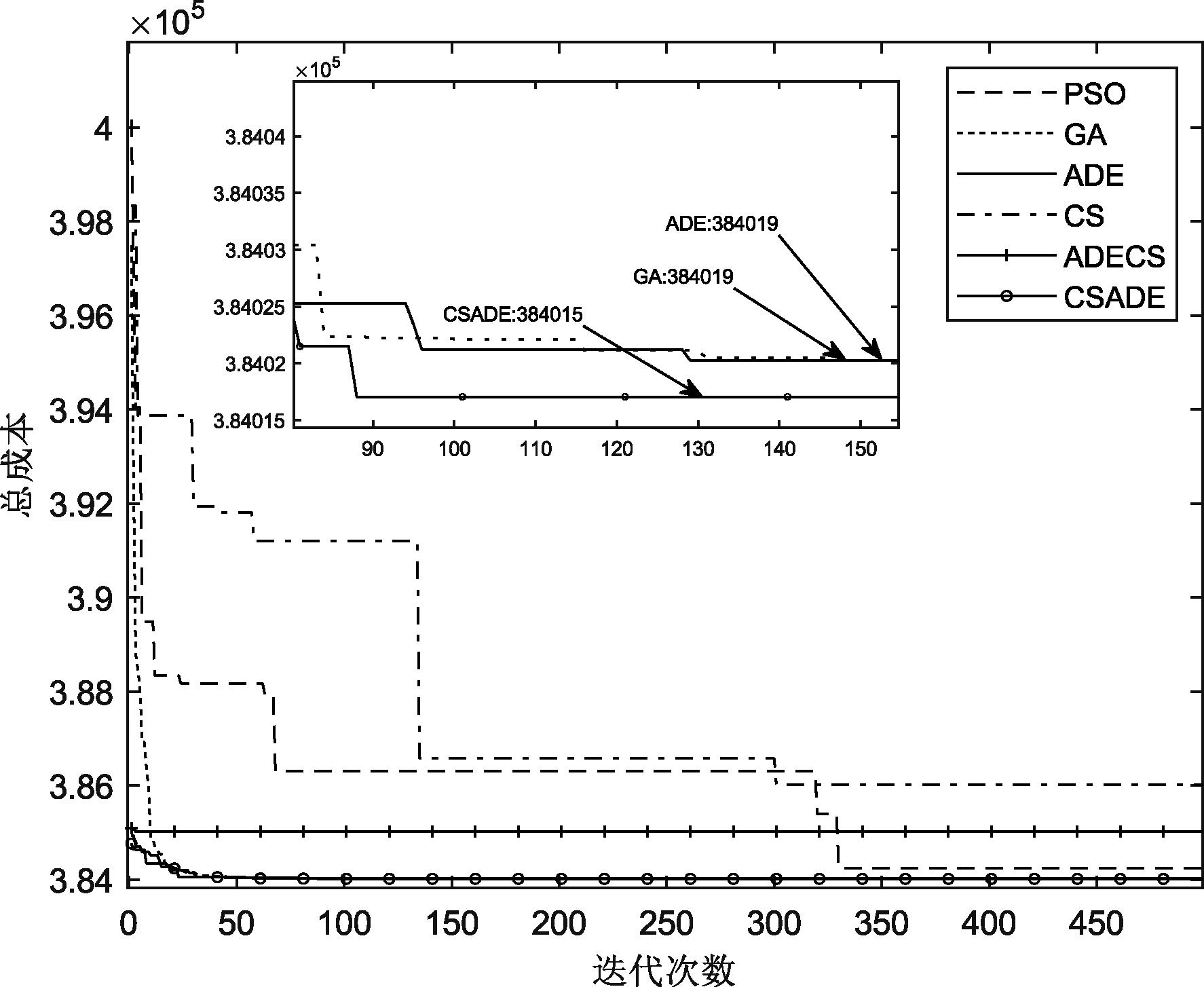
| GA | 384019 | 1,1,1,1,1,2 | 2.6890,2.7058,2.5399,2.6509,2.6640,2.3207 | 0.0611 |
| ADE | 384019 | 1,1,1,1,1,2 | 2.6870,2.7088,2.5343,2.6467,2.6615,2.3201 | 0.0611 |
| CS | 386014 | 1,1,1,1,1,2 | 2.7324,2.6154,2.5526,2.0954, 2.8868,2.8779 | 0.0439 |
| ADECS | 385020 | 1,1,1,2,1,2 | 2.5705,2.8452,2.4982,2.3759,2.2423,2.3787 | 0.0745 |
| CSADE | 384015 | 1,1,1,1,1,2 | 2.6796,2.7023,2.5194,2.6430,2.6413,2.3077 | 0.0629 |
"
| 算法 | ||||||
|---|---|---|---|---|---|---|
| PSO | 335588 | 2,2,2,2,1,2 | 1,1,1,0,1,0 | 2.8257,2.5908,2.8294,2.3909,2.8421,2.0862 | 0.2430,0.2443,0.2277,0.1917,0.2275,0.1703 | 0.1127 |
| GA | 322964 | 2,2,2,2,2,2 | 1,1,1,1,1,1 | 2.5481,2.7186,2.6546,2.8095,2.8513,2.7744 | 0.2459,0.2462,0.2458,0.2461,0.2433,0.2463 | 0.1132 |
| ADE | 322956 | 2,2,2,2,2,2 | 1,1,1,1,1,1 | 2.5556,2.7946,2.7868,2.8558,2.9331,2.8653 | 0.2465,0.2465,0.2465,0.2462,0.2465,0.2464 | 0.1133 |
| CS | 346641 | 2,1,1,2,3,2 | 0,1,1,1,0,0 | 2.2234,2.0525,2.4922,2.0984,1.8364,2.4387 | 0.2344,0.1203,0.2261,0.1818,0.2403,0.0232 | 0.1209 |
| ADECS | 325468 | 2,2,2,2,2,2 | 1,1,1,1,1,1 | 2.5073,2.8532,2.3804,2.6594,2.7974,2.7089 | 0.2452,0.2442,0.2389,0.2396,0.2396,0.2122 | 0.1128 |
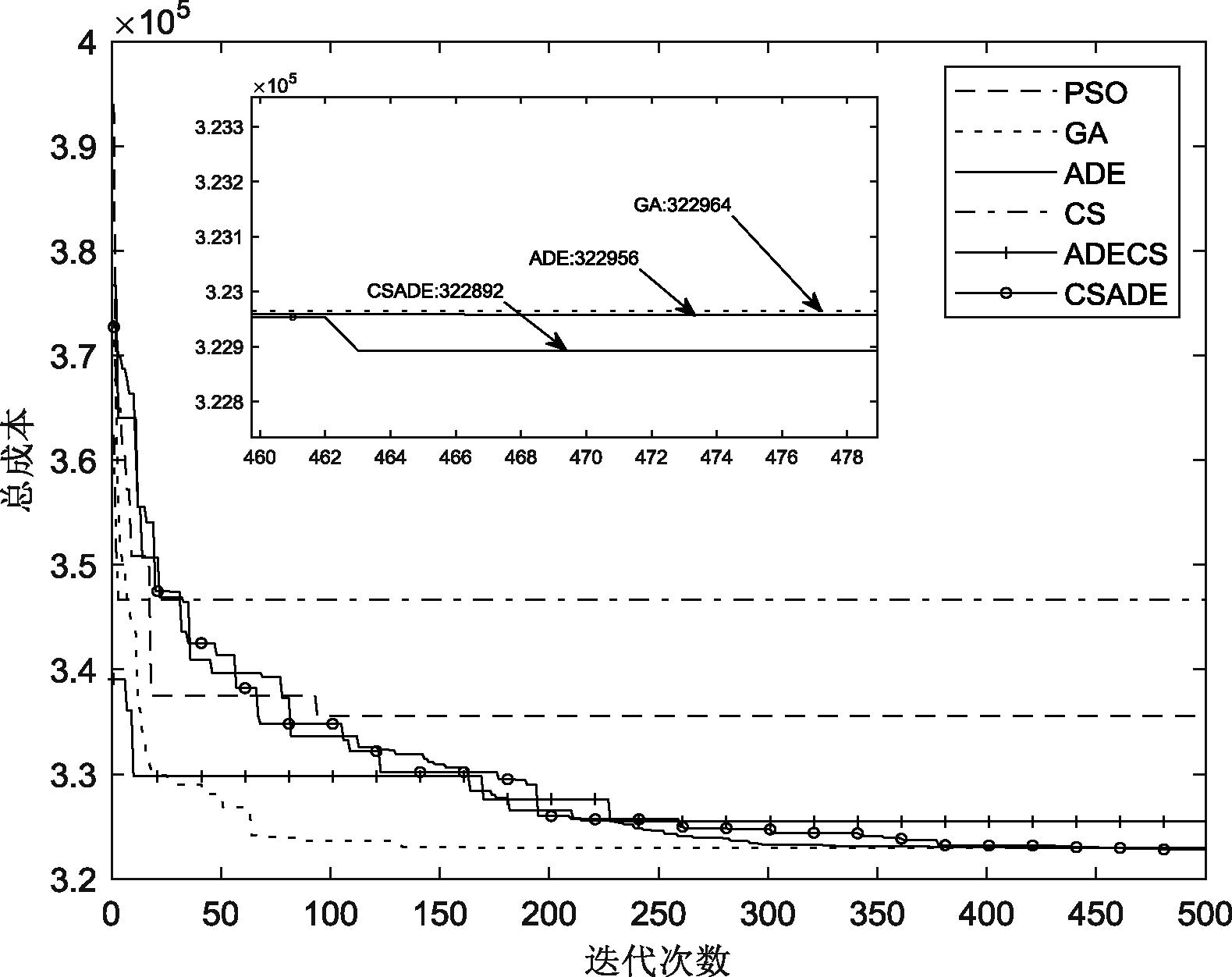
| CSADE | 322892 | 2,2,2,2,2,2 | 1,1,1,1,1,1 | 2.4507,2.8047,2.7667,2.8271,2.7273,2.9398 | 0.2462,0.2464, 0.2459,0.2457,0.2457,0.2435 | 0.1133 |
"
"
"
| 模型 | 算法 | AVE.TC | Std.Err | AVE.T | BEST. Freq |
|---|---|---|---|---|---|
| SJRP-B | PSO | 384629 | 759 | 0.15 | 2 |
| GA | 384020 | 6.13 | 0.45 | 18 | |
| ADE | 384174 | 352 | 0.26 | 21 | |
| CS | 386300 | 732 | 0.13 | 2 | |
| ADECS | 385267 | 671 | 0.16 | 1 | |
| CSADE | 384016 | 0.91 | 0.29 | 41 | |
| SJRP-D | PSO | 336352 | 2692 | 0.31 | 1 |
| GA | 324379 | 3222 | 0.68 | 4 | |
| ADE | 323410 | 483 | 0.62 | 5 | |
| CS | 347550 | 2897 | 0.34 | 1 | |
| ADECS | 325529 | 396 | 0.39 | 1 | |
| CSADE | 323534 | 152 | 0.65 | 8 |

"
"
"
"
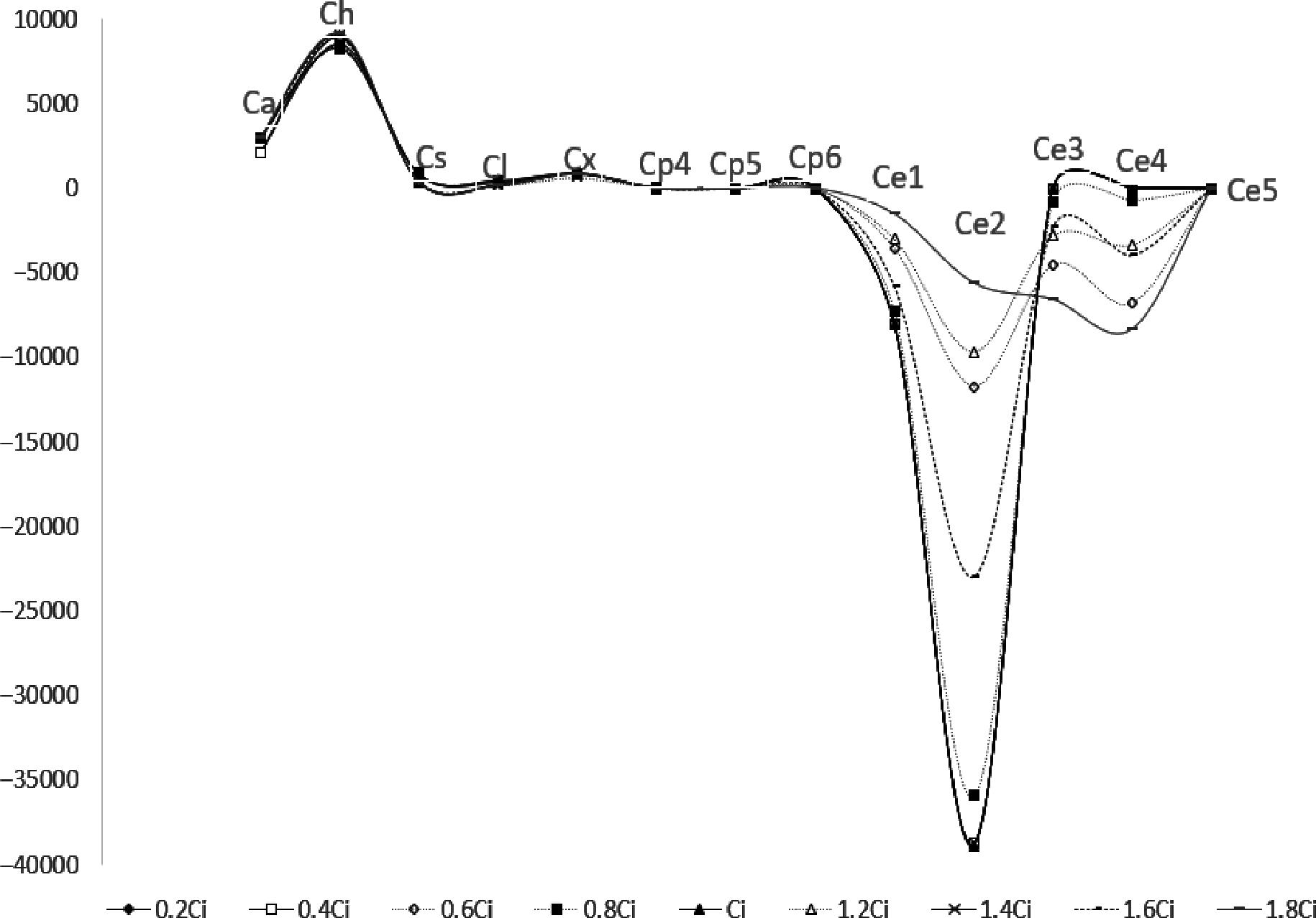
"
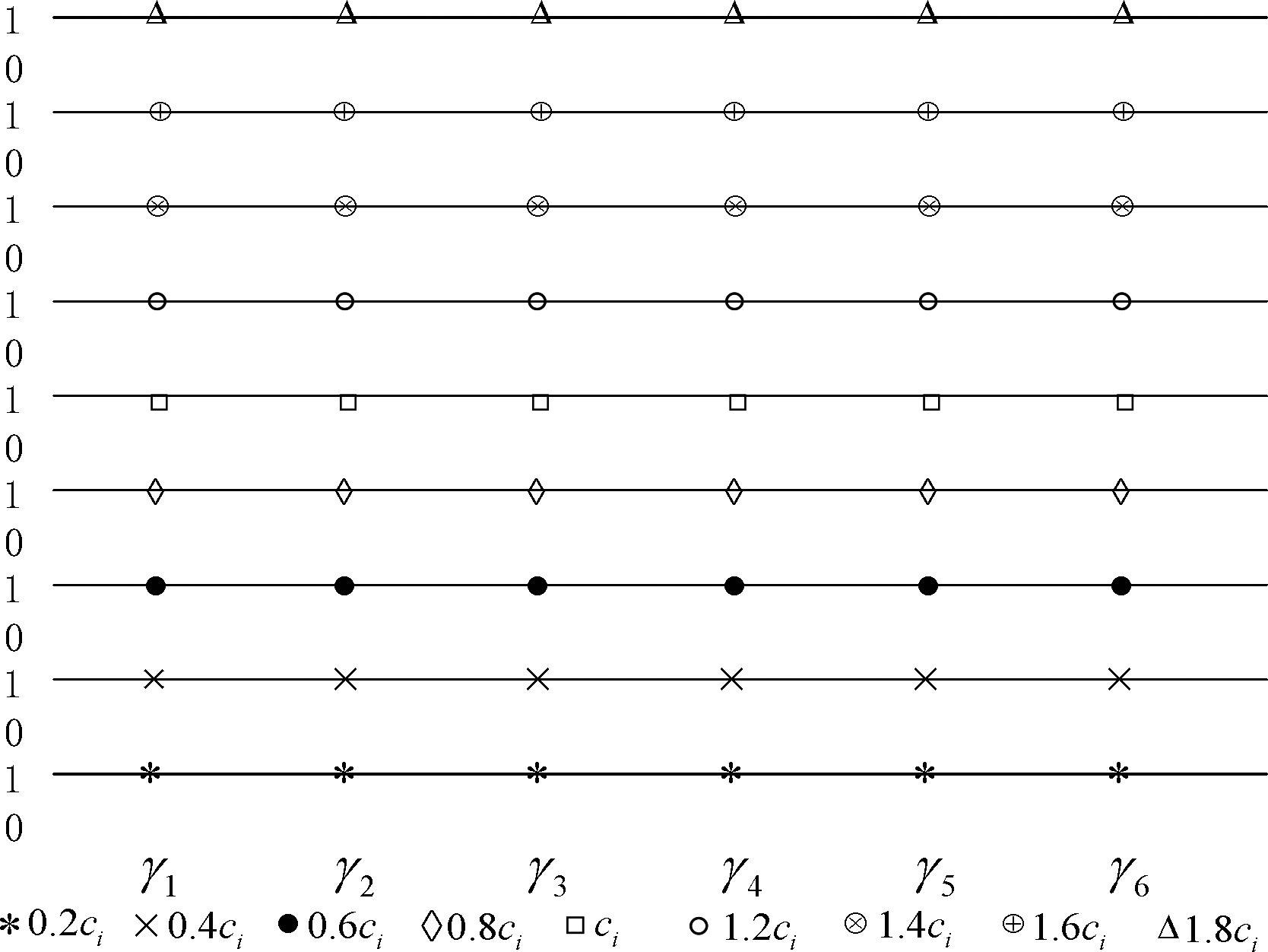
"
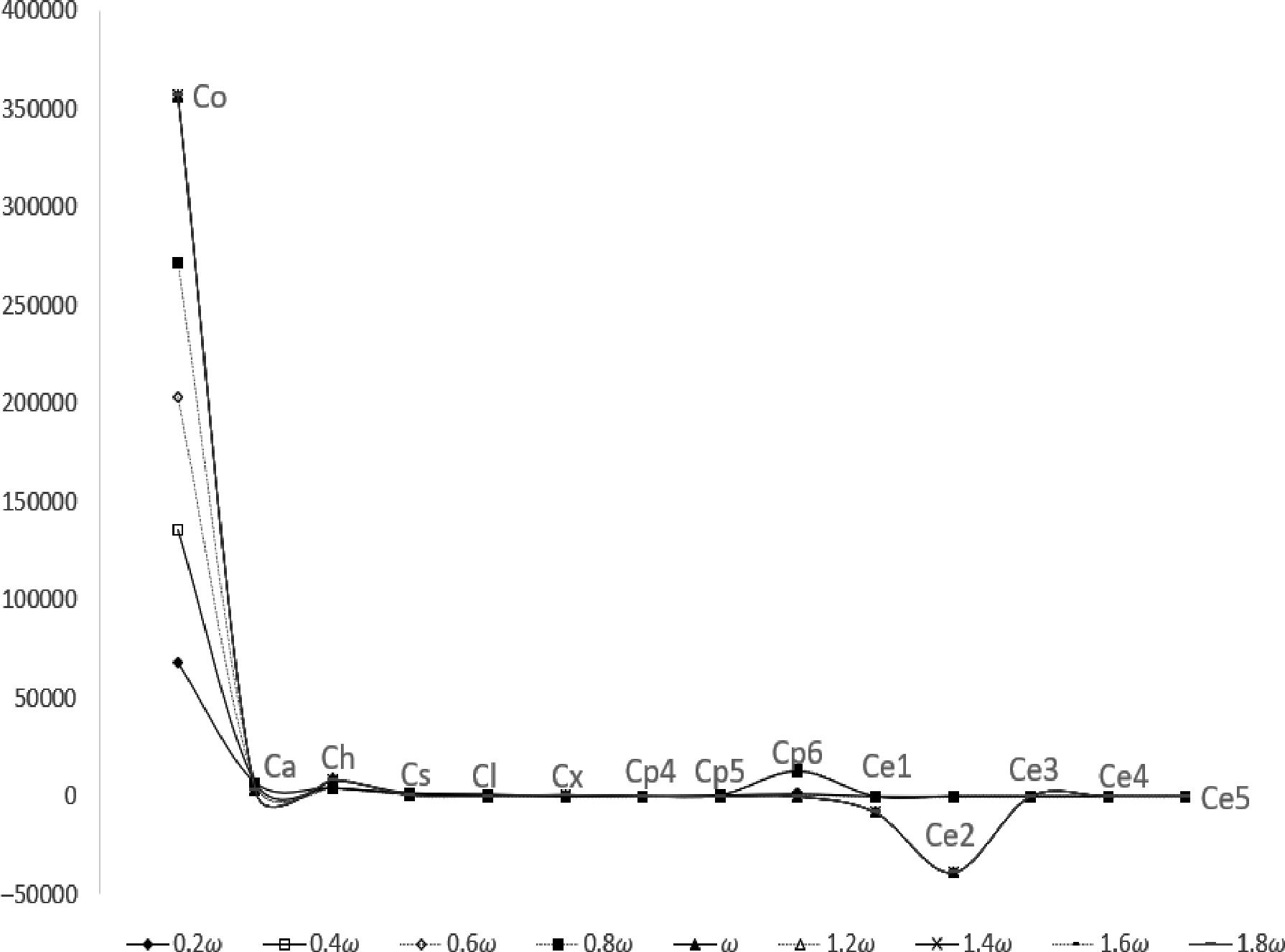
"
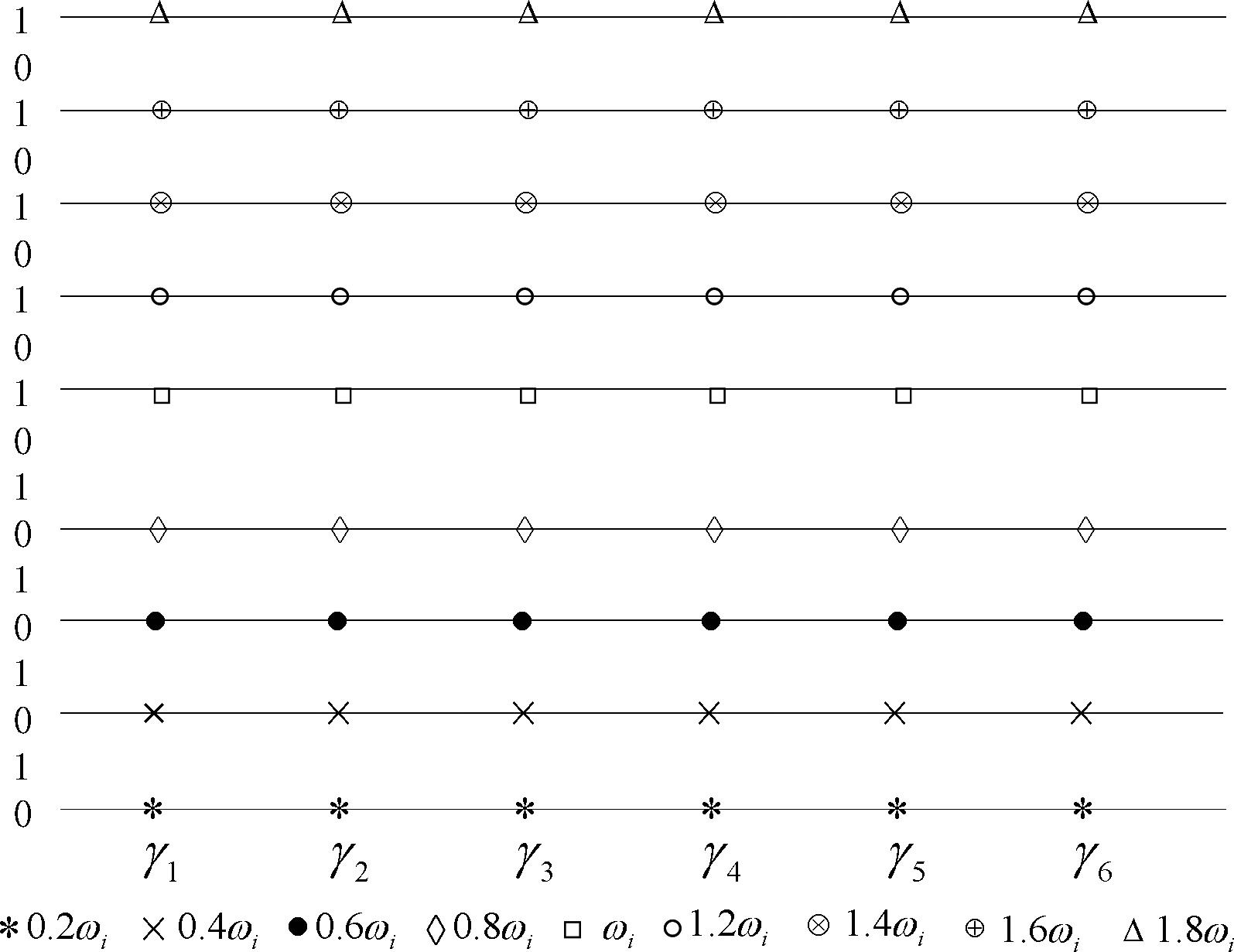
"
"
| [1] | 钱佳, 骆建文. 供应稳定性改善下的零售商提前支付策略[J]. 管理工程学报, 2017, 31(1): 79-84. |
| Qian J, Luo J W. Strategies for retailers' optimal advance payment under the improvement of supply reliability[J]. Journal of Industrial Engineering and Engineering Management, 2017, 31(1): 79-84. | |
| [2] | 曹裕, 李业梅, 李青松. 基于提前支付的易变质产品批量订货策略研究[J].管理评论,2019,31(4): 206-216. |
| Cao Y, Li Y M, Li Q S. Inventory lot-size policies for perishable products based on advance payments[J]. Management Review, 2019, 31(4): 206-216. | |
| [3] | 张冲, 张俊, 韩广华. 不同公平偏好下最优订购周期和延迟支付期决策[J]. 系统管理学报, 2020, 29(1): 129-139. |
| Zhang C, Zhang J, Han G H. Optimal ordering period and delayed payment decision in different fairness preference[J]. Journal of Systems & Management, 2020, 29(1): 129-139. | |
| [4] | Zeng Y R, Peng L, Zhang J, et al. An effective hybrid differential evolution algorithm incorporating simulated annealing for joint replenishment and delivery problem with trade credit[J]. International Journal of Computational Intelligence Systems, 2016, 9(6): 1001-1015. |
| [5] | Lekkakos S D, Serrano A. Supply chain finance for small and medium sized enterprises: The case of reverse factoring[J]. International Journal of Physical Distribution & Logistics Management, 2016, 46(4):367-392. |
| [6] | 陈中洁, 于辉. 需求扰动下供应链反向保理的鲁棒决策[J]. 中国管理科学, 2020, 28(7): 89-101. |
| Chen Z J, Yu H. Robust decision to reverse factoring supply chain with demand disturbance[J]. Chinese Journal of Management Science, 2020, 28(7): 89-101. | |
| [7] | Zhou Y W, Zhong Y G, Wahab M I M. How to make the replenishment and payment strategy under flexible two-part trade credit[J]. Computers & Operations Research, 2013, 40(5): 1328-1338. |
| [8] | Yang H, Zhuo W, Zha Y, et al. Two-period supply chain with flexible trade credit contract[J]. Expert Systems with Applications, 2016, 66: 95-105 |
| [9] | 李业梅, 黄少安. 基于EOQ模型的非瞬时变质食品提前支付订货策略研究[J]. 中国管理科学, 2023, 31(2): 150-161. |
| Li Y M, Huang S A. Advance payment strategy of non—Instantaneous food based on EOQ model[J]. Chinese Journal of Management Science,2023,31(2): 150-161. | |
| [10] | 郭金森, 杨萍, 周永务, 等. 基于提前订货折扣和延期支付契约的双渠道供应链运作策略研究[J]. 运筹与管理, 2021, 30(3): 90-97. |
| Guo J S, Yang P, Zhou Y W, et al. Research on the operation strategy of dual channel supply chain with advance booking discount and delay in payment[J]. Operations Research and Management Science, 2021, 30(3): 90-97. | |
| [11] | Gelsomino L M, de Boer R, Steeman M, et al. An optimisation strategy for concurrent Supply Chain Finance schemes[J]. Journal of Purchasing and Supply Management, 2019, 25(2): 185-196. |
| [12] | Wang L, Peng L, Wang S, et al. Advanced backtracking search optimization algorithm for a new joint replenishment problem under trade credit with grouping constraint[J].Applied Soft Computing, 2020, 86: 105953. |
| [13] | 崔利刚, 任海利, 邓洁, 等. 基于模糊随机需求的B2C多品采配协同模型及其粒子群算法求解[J]. 管理工程学报, 2020, 34(6): 183-190. |
| Cui L G, Ren H L, Deng J, et al. A particle swarm algorithm for a novel B2C multi-item replenishment and delivery coordination model with fuzzy random demands[J]. Journal of Industrial Engineering and Engineering Management, 2020, 34(6): 183-190. | |
| [14] | 王林, 冯俊翔, 张金隆. 联合补货策略下基于改进蛙跳算法的选址: 库存集成优化研究[J]. 管理工程学报, 2019, 33(2): 180-187. |
| Wang L, Feng J X, Zhang J L. Optimizing the location-inventory problem using joint replenishment policy based on improved shuffled frog-leaping algorithm[J]. Journal of Industrial Engineering and Engineering Management, 2019, 33(2): 180-187. | |
| [15] | Cui L, Deng J, Liu R, et al. A stochastic multi-item replenishment and delivery problem with lead-time reduction initiatives and the solving methodologies[J]. Applied Mathematics and Computation, 2020, 374: 125055. |
| [16] | 曾宇容, 万建超, 吕盛祥, 等. 联合补货策略下的供应商选择和订货量分配协同优化[J]. 控制与决策, 2019, 34(8): 1714-1722. |
| Zeng Y R, Wan J C, Lv S X, et al. Collaborative optimization of suppliers selection and order quantity allocation using joint replenishment policy[J]. Control and Decision, 2019, 34(8): 1714-1722. | |
| [17] | 崔利刚, 刘孝林, 邓洁, 等. 考虑贸易信贷周期的中欧班列联合补货决策[J]. 中国管理科学,2024, 32(4): 76-88. |
| Cui L G, Liu X L, Deng J, et al. Stochastic multi-item joint replenishment problem considering trade creditunder China-Europe trade[J]. Chinese Journal of Management Science, 2024, 32(4): 76-88. | |
| [18] | 张子卿, 王林, 王思睿, 等. 考虑两种服务功能的粮食产后服务中心选址问题及Benders分解算法[J]. 中国管理科学, 2025, 33(2): 141-149. |
| Zhang Z Q, Wang L, Wang S R, et al. The location of post-harvest grain service centers considering two service capabilities and benders decomposition algorithm[J]. Chinese Journal of Management Science, 2025, 33(2): 141-149. | |
| [19] | Yang X S, Deb S. Cuckoo search via levy flight [C]//Proceedings of World Congress on Nature & Biologically Inspired Computing, India, December 9-11 ,IEEE Publications, 2009: 210-214. |
| [20] | 李煜, 尚志勇, 刘景森. 求解函数优化问题的改进布谷鸟搜索算法[J].计算机科学,2020, 47(1): 219-230. |
| Li Y, Shang Z Y, Liu J S. Improved cuckoo search algorithm for function optimization problems[J]. Computer Science, 2020, 47(1): 219-230. | |
| [21] | 陈中洁, 于辉. 资金约束背景下反向保理的供应链合作[J]. 中国管理科学, 2018, 26(12): 113-123. |
| Chen Z J, Yu H. Supply chain cooperation in reverse factoring when capital constraints[J]. Chinese Journal of Management Science, 2018, 26(12): 113-123. | |
| [22] | Braglia M, Castellano D, Song D. Distribution-free approach for stochastic Joint-Replenishment Problem with backorders-lost sales mixtures, and controllable major ordering cost and lead times[J]. Computers & Operations Research, 2017, 79: 161-173. |
| [23] | Wu J, Ouyang L Y, Cárdenas-Barrón L E, et al. Optimal credit period and lot size for deteriorating items with expiration dates under two-level trade credit financing[J]. European Journal of Operational Research, 2014, 237(3): 898-908. |
| [24] | 王磊, 李京杭, 齐俊艳, 等. 基于自适应步长布谷鸟搜索和粒子群融合算法的AUV水下三维路径规划[J]. 武汉大学学报(理学版), 2023, 69(6): 739-748. |
| Wang L, Li J H, Qi J Y, et al. AUV underwater 3D path planning based on adaptive step-size cuckoo search-particle swarm optimization algorithm[J]. Journal of Wuhan University (Natural Science Edition), 2023, 69(6): 739-748. |
| [1] | Sirui Wang,Lin Wang,Lu Peng,Jinlong Zhang. Coordinated Optimization of Joint Replenishment and Delivery Scheduling with Heterogenous Items Based on Lipschitz Continuity [J]. Chinese Journal of Management Science, 2024, 32(5): 218-228. |
| [2] | Ligang Cui,Xiaolin Liu,Jie Deng,Dongyang Xu. Stochastic Multi-item Joint Replenishment Problem Considering Trade Creditunder China-Europe Trade [J]. Chinese Journal of Management Science, 2024, 32(4): 76-88. |
| [3] | CAO Yu, XU Rong-liang, HU Han-li, LI Qing-song. Joint Replenishment Strategy of Vending Machines in Unmanned Retail Industry [J]. Chinese Journal of Management Science, 2021, 29(11): 179-190. |
| [4] | CHEN Zhong-jie, YU Hui. Robust Decision to Reverse Factoring Supply Chain with Demand Disturbance [J]. Chinese Journal of Management Science, 2020, 28(7): 89-101. |
| [5] | ZHANG Ke-hui, YANG Hua-long, XIN Yu-chen, LIU Qing-qi. Multi-item/Two-stage JIT Joint Replenishment Considering Customer Response to Stock-out [J]. Chinese Journal of Management Science, 2020, 28(10): 118-130. |
| [6] | ZHANG Yun-feng, WANG Yong, GONG Ben-gang, DAN Bin. The Level Coordination for the Ameliorating Items Supply Chain Considering Ordering Coordination Cost and Quantity Discount [J]. Chinese Journal of Management Science, 2019, 27(12): 55-66. |
| [7] | YE Yin-fang, LI Deng-feng, YU Gao-feng. Joint Replenishment Interval-Valued EOQ Model and Cost Allocation Approach Based on Variable-weighted Shapely Value [J]. Chinese Journal of Management Science, 2019, 27(10): 90-99. |
| [8] | CUI Li-gang, DENG Jie, WANG Lin, ZHANG Jin-Long, XU Mao-zeng. A Study on the RFID Investment Decision Model for the Revised Joint Replenishment and Delivery Problem [J]. Chinese Journal of Management Science, 2018, 26(5): 86-97. |
| [9] | CHEN Zhong-jie, YU Hui. Supply Chain Cooperation in Reverse Factoring when Capital Constraints [J]. Chinese Journal of Management Science, 2018, 26(12): 113-123. |
| [10] | LIU Chun-ling, XIAO Wei-chun, LI Ji-zi, CAO Xiao-gang, HUANG Chun-hui. Cluster Supply Chain Replenishment Model and Algorithm with Credit Option [J]. Chinese Journal of Management Science, 2014, 22(8): 72-79. |
| [11] | WANG Lin, DUN Cai-xia, ZHANG Jin-long. Integrated Joint Replenishment and Distribution Model Using Hybrid Differential Evolution Algorithm [J]. Chinese Journal of Management Science, 2012, (3): 86-93. |
| [12] | WU Yun, ZHOU Jian, YANG Jun. Dependent - Chance Programming Model for Stochastic Network Bottleneck Capacity Expansion [J]. Chinese Journal of Management Science, 2004, (6): 113-117. |
| Viewed | ||||||
|
Full text |
|
|||||
|
Abstract |
|
|||||
|
||
