
主管:中国科学院
主办:中国优选法统筹法与经济数学研究会
中国科学院科技战略咨询研究院
主办:中国优选法统筹法与经济数学研究会
中国科学院科技战略咨询研究院

中国管理科学 ›› 2026, Vol. 34 ›› Issue (2): 25-40.doi: 10.16381/j.cnki.issn1003-207x.2024.1766cstr: 32146.14.j.cnki.issn1003-207x.2024.1766
李希熙1, 王倩1, 闫相斌2( ), 刘正琳1, 梁爽1
收稿日期:2024-10-03
修回日期:2024-11-17
出版日期:2026-02-25
发布日期:2026-02-04
通讯作者:
闫相斌
E-mail:xbyan@gdufs.edu.cn
基金资助:
Xixi Li1, Qian Wang1, Xiangbin Yan2(), Zhenglin Liu1, Shuang Liang1
Received:2024-10-03
Revised:2024-11-17
Online:2026-02-25
Published:2026-02-04
Contact:
Xiangbin Yan
E-mail:xbyan@gdufs.edu.cn
摘要:
社交媒体(social media)作为新兴的信息传播和人际互动的在线网络平台,已经广泛融入人们日常生活和生产活动中,并引起相关领域学者的广泛关注。目前关于社交媒体用户关系网络的相关研究已经取得较为丰富的成果,但仍缺乏基于具体理论框架的系统性梳理和全局性解读。鉴于此,本文以一般系统论(general system theory)为理论框架,从要素和过程两个角度对社交媒体用户关系网络的研究进行梳理和总结。具体而言,从要素角度来看,社交媒体用户关系网络的研究内容围绕用户关系网络特征刻画、检测和预测这三个方面来展开,其研究对象聚焦于用户关系或网络,其研究视角立足于静态或动态;从过程角度来看,社交媒体用户关系网络的作用机制从多个层面探讨了影响因素和影响效应,且这些影响因素和效应依托于多种具体场景。结合相关研究的现状及进展,本文从线上与线下融合、情境多样性以及负面效应等三个方面提出了未来研究趋势。
中图分类号:
李希熙,王倩,闫相斌, 等. 社交媒体用户关系网络研究综述[J]. 中国管理科学, 2026, 34(2): 25-40.
Xixi Li,Qian Wang,Xiangbin Yan, et al. A Review of Research on the Social Media User Relationship Networks[J]. Chinese Journal of Management Science, 2026, 34(2): 25-40.
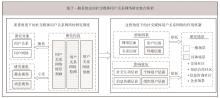
图1
研究整合框架"


表1
一般场景中的影响因素"
| 影响因素分类 | 影响因素变量 | 对应文献 |
|---|---|---|
| 网络层面 | 偏好连接 | 黄敏学等[ |
| 结构相似性 | 黄敏学等[ | |
| 传递性 | 肖云鹏等[ | |
| 关系层面 | 互惠性 | 黄敏学等[ |
| 同质性 | 代宝和刘业政[ | |
| 异质性 | Deng等[ | |
| 历史关系 | 覃梦河和晋佑顺[ | |
| 熟悉性 | 代宝和刘业政[ | |
| 关系收益 | 代宝和刘业政[ | |
| 时间 | Bhattacharya等[ | |
| 用户层面 | 内在吸引力 | Lu等[ |
| 外显特征 | 代宝和刘业政[ | |
| 信任 | Kim[ | |
| 社交互动 | Mahmoudi等[ | |
| 沟通 | Deng等[ |
表2
具体社区场景中的影响因素"
| 社区类型 | 影响因素变量 | 对应文献 |
|---|---|---|
| 交易社区 | 关系观察 | Kozlenkova[ |
| 声誉 | Kozlenkova[ | |
| 制度感知 | Dong和Wang[ | |
| 信用等级 | 张音等[ | |
| 财务绩效 | Deng等[ | |
| 信息咨询社区 | 内容贡献数量 | 黄敏学等[ |
| 内容贡献质量 | 黄敏学等[ | |
| 知识合作社区 | 节点度数 | Allaho等[ |
| 共同活动和目标 | Cho[ | |
| 科研影响力 | Yan等[ | |
| 社会身份 | Liang等[ |
表3
一般场景中的影响效应"
| 影响效应分类 | 影响效应变量 | 对应文献 |
|---|---|---|
| 社交互动 | 社交互动 | 王楠等[ |
| 社会影响 | 徐新然等[ | |
| 信息传播 | 传播效用 | 冯娇和姚忠[ |
| 信息使用行为 | 李根强等[ |
表4
具体场景中的影响效应"
| 场景类别 | 影响效应变量 | 对应文献 |
|---|---|---|
| 交易社区场景 | 交易绩效 | 张音等[ |
| 购买意愿 | 冯娇和姚忠[ | |
| 信息咨询社区场景 | 患者择医 | Chen等[ |
| 知识合作社区场景 | 学习能力 | 刘征驰[ |
| 创新能力 | ||
| 企业场景 | 个体绩效 | Ahuja等[ |
| 工作保留 | Rajkumar等[ | |
| 企业绩效 | 叶琼伟等[ | |
| 竞争优势 | 杨学成等[ |
| [1] | Susarla A, Oh J H, Tan Y. Social networks and the diffusion of user-generated content: Evidence from YouTube[J]. Information Systems Research, 2012, 23(1): 23-41. |
| [2] | Zeng X, Wei L. Social ties and user content generation: Evidence from flickr[J]. Information Systems Research, 2013, 24(1): 71-87. |
| [3] | Dixon. Number of social network users worldwide 2017-2030[EB/OL]. (2024-11-10)[2025-01-10]. |
| [4] | 刘征驰, 陈文武, 马滔. 社交机制、关系结构与社群网络知识协作[J]. 管理学报, 2020, 17(9): 1373-1382. |
| Liu Z C, Chen W W, Ma T. Social mechanisms, relationship structures, and community network knowledge collaboration[J]. Chinese Journal of Management, 2020, 17(9): 1373-1382. | |
| [5] | Kang K, Lu J, Guo L, et al. The dynamic effect of interactivity on customer engagement behavior through Tie strength: Evidence from live streaming commerce platforms[J]. International Journal of Information Management, 2021, 56: 102251. |
| [6] | von Bertalanffy L, General system theory[M]. New York: George Braziller, 1968. |
| [7] | Vasalou A, Joinson A, Bänziger T, et al. Avatars in social media: Balancing accuracy, playfulness and embodied messages[J]. International Journal of Human-Computer Studies, 2008, 66(11): 801-811. |
| [8] | Li X, Li Z, Wang Q, et al. The influences of expressive and instrumental social ties in social commerce: Integrating dyadic views from buyers and sellers[J]. Information Technology & People, 2024, 37(1): 251-284. |
| [9] | Ma L, Zhang X, Wang G, et al. How to build employees’ relationship capital through different enterprise social media platform use: The moderating role of innovation culture[J]. Internet Research, 2021, 31(5): 1823-1848. |
| [10] | Penttinen V. Hi, I’m taking over this account! Leveraging social media takeovers in fostering consumer-brand relationships[J]. Journal of Business Research, 2023, 165: 114030. |
| [11] | Porra J, Hirschheim R, Parks M S. The history of texaco’s corporate information technology function: A general systems theoretical interpretation[J]. MIS Quarterly, 2005, 29(4): 721-746. |
| [12] | Porra J, Hirschheim R, University L S. A lifetime of theory and action on the ethical use of computers: A dialogue with Enid Mumford[J]. Journal of the Association for Information Systems, 2007, 8(9): 467-478. |
| [13] | Nevo S, Wade M R. The formation and value of IT-enabled resources: Antecedents and consequences of synergistic relationships[J]. MIS Quarterly, 2010, 34(1): 163-183. |
| [14] | Gerlach J P, Cenfetelli R T. Overcoming the single-IS paradigm in individual-level IS research[J]. Information Systems Research, 2022, 33(2): 476-488. |
| [15] | 陈洋林, 黎杰生. 论金融稳定框架的建立——基于系统论视角[J]. 现代管理科学, 2014(1): 48-50. |
| Chen Y L, Li J S. On the establishment of financial stability framework—Based on system theory[J]. Modern Management Science, 2014(1): 48-50. | |
| [16] | 张宗翔, 郑大庆, 张成洪, 等. 面向应用的联邦学习研究评述: 基于“要素-过程”框架[J]. 管理工程学报, 2024, 38(1): 14-30. |
| Zhang Z X, Zheng D Q, Zhang C H, et al. Literature review on federated learning application: Based on “element-process” framework[J]. Journal of Industrial Engineering and Engineering Management, 2024, 38(1): 14-30. | |
| [17] | 宋宁, 刘婵君. 过程与要素视角下的突发事件网络舆情演化规律研究综述[J]. 图书情报工作, 2016, 60(15): 140-147. |
| Song N, Liu C J. Metrology analysis on the evolvement rule of the emergency network public opinion from the perspective of process and element[J]. Library and Information Service, 2016, 60(15): 140-147. | |
| [18] | Bapna R, Gupta A, Rice S, et al. Trust and the strength of ties in online social networks: An exploratory field Experiment1[J]. MIS Quarterly, 2017, 41(1): 115-130. |
| [19] | Qureshi I, Fang Y, Haggerty N, et al. IT-mediated social interactions and knowledge sharing: Role of competence-based trust and background heterogeneity[J]. Information Systems Journal, 2018, 28(5): 929-955. |
| [20] | Sasidharan S, Santhanam R, Brass D J, et al. The effects of social network structure on enterprise systems success: A longitudinal multilevel analysis[J]. Information Systems Research, 2011, 23(3-part-1): 658-678. |
| [21] | 毋江波, 李常洪, 莫蕙鸿. 微信用户信息交互中的关系维护与私人空间边界问题分析[J]. 情报资料工作, 2019, 40(3): 63-72. |
| Wu J B, Li C H, Mo H H. Analysis of relationship maintenance and private space boundary issues in WeChat users information interaction[J]. Information and Documentation Services, 2019, 40(3): 63-72. | |
| [22] | 吴小兰, 章成志. 基于突发事件特征网络的用户社区发现与社区主题演化研究——以新浪微博H7N9事件为例[J]. 情报理论与实践, 2017, 40(5): 94-98+60. |
| Wu X L, Zhang C Z. User community detection and community topic evolution based on the network characteristics of emergency[J]. Information Studies Theory & Application, 2017, 40(5): 94-98+60. | |
| [23] | 杨慎, 陈磊, 周绮凤. 基于图增强和图神经网络的层次社区发现方法[J]. 厦门大学学报(自然科学版), 2024, 63(2): 209-220. |
| Yang S, Chen L, Zhou Q F. Hierarchical community detection method based on enhanced graph and graph neural networks[J]. Journal of Xiamen University (Natural Science), 2024, 63(2): 209-220. | |
| [24] | 褚建勋, 倪国香, 魏燊. 基于用户网络关系结构的微博社交功能研究[J]. 情报杂志, 2014, 33(2): 128-131+154. |
| Chu J X, Ni G X, Wei S. A study on the social function of micro-blog based on the network structure of users[J]. Journal of Intelligence, 2014, 33(2): 128-131+154. | |
| [25] | 谢雪梅, 谢玉洁. 用户生成内容视频社区用户关系网络研究——以B站为例[J]. 情报探索, 2022(6): 85-93. |
| Xie X M, Xie Y J. Research on user relationship network of user-generated content video community: Case study of bilibili[J]. Information Research, 2022(6): 85-93. | |
| [26] | 胡吉明, 林鑫. 社会网络环境下用户关系网络结构的仿真描述[J]. 情报资料工作, 2014, 35(2): 39-43. |
| Hu J M, Lin X. Simulation description of users’ relational network structure in the social network environment[J]. Information and Documentation Services, 2014, 35(2): 39-43. | |
| [27] | 马翔, 徐名海, 吴宇鹏. 基于相似性的社交网络结构建模[J]. 计算机应用与软件, 2020, 37(12): 83-89. |
| Ma X, Xu M H, Wu Y P. Social network structure modeling based on similarity[J]. Computer Applications and Software, 2020, 37(12): 83-89. | |
| [28] | 仪建红, 王欢. 基于块模型的微信用户关系网络分析[J]. 首都师范大学学报(自然科学版), 2015, 36(6): 18-23. |
| Yi J H, Wang H. The analysis of wechat users’ relationships network based on the block model[J]. Journal of Capital Normal University (Natural Science Edition), 2015, 36(6): 18-23. | |
| [29] | 琚春华, 陶婉琼, 马希骜. 基于关系圈与个体交互习惯的用户关系强度计算方法[J]. 情报学报, 2019, 38(9): 974-987. |
| Ju C H, Tao W Q, Ma X A. A relationship strength calculation method based on the relationship circle and individual interaction habits[J]. Journal of the China Society for Scientific and Technical Information, 2019, 38(9): 974-987. | |
| [30] | 高江丽, 陈翔, 周华富. 用户创新虚拟社区的社会网络关系研究——以M虚拟社区为例[J]. 科技与管理, 2019, 21(1): 62-67. |
| Gao J L, Chen X, Zhou H F. Research on the social network relations of user innovation virtual community: Taking M virtual community as an example[J]. Science-Technology and Management, 2019, 21(1): 62-67. | |
| [31] | 索琪, 郭进利. 在线社交网络资源评论关系超网络演化模型[J]. 系统管理学报, 2016, 25(5): 852-857+867. |
| Suo Q, Guo J L. An evolving hypernetwork model for the relationship of resources comments in online social networks[J]. Journal of Systems & Management, 2016, 25(5): 852-857+867. | |
| [32] | 顾秋阳, 琚春华, 鲍福光. 融入隐私关注的社交网络服务与用户间关系的演化博弈模型研究[J]. 情报科学, 2019, 37(9): 29-36. |
| Gu Q Y, Ju C H, Bao F G. A study on the evolutionary game model of the relationship between social network service and their users with the integration of privacy concern[J]. Information Science, 2019, 37(9): 29-36. | |
| [33] | 董睿, 张海涛, 苏欣宇. 开放式创新社区用户知识协同创新网络演化分析[J]. 现代情报, 2022, 42(10): 15-26. |
| Dong R, Zhang H T, Su X Y. Evolution analysis of user knowledge collaborative innovation network in open innovation community[J]. Journal of Modern Information, 2022, 42(10): 15-26. | |
| [34] | Hu J, Du Y, Liu J. Detecting and evolving microblog community based on structure and gravity cohesion[J]. IEEE Access, 2020, 8: 176624-176639. |
| [35] | 田燕, 张新刚. 在线社交网络的拓扑结构与信息传播机制综述[J]. 长沙大学学报, 2016, 30(2): 73-75. |
| Tian Y, Zhang X G. Review of topological structure and information dissemination mechanism of online social network[J]. Journal of Changsha University, 2016, 30(2): 73-75. | |
| [36] | 琚春华, 陈彦, 鲍福光. 融入网络结构与社交习惯的不对称用户关系强度计算[J]. 系统工程理论与实践, 2018, 38(8): 2135-2146. |
| Ju C H, Chen Y, Bao F G. A dissymmetrical Tie strength estimation method based on topology of networks and habituation of social interactions[J]. Systems Engineering—Theory & Practice, 2018, 38(8): 2135-2146. | |
| [37] | 王大阜, 邓志文, 贾志勇, 等. 多维属性视角下学者用户画像构建及合作学者推荐研究[J]. 南京师大学报(自然科学版), 2023, 46(3): 112-122. |
| Wang D F, Deng Z W, Jia Z Y, et al. Research on the construction of scholar user portrait and the recommendation of cooperative scholars from the perspective of multidimensional attributes[J]. Journal of Nanjing Normal University (Natural Science Edition), 2023, 46(3): 112-122. | |
| [38] | Zhao X, Liang J, Wang J. A community detection algorithm based on graph compression for large-scale social networks[J]. Information Sciences, 2021, 551: 358-372. |
| [39] | Behera R K, Rath S K, Jena M. Spanning tree based community detection using Min-max modularity[J]. Procedia Computer Science, 2016, 93: 1070-1076. |
| [40] | Chen N, Liu Y, Chen H, et al. Detecting communities in social networks using label propagation with information entropy[J]. Physica A: Statistical Mechanics and Its Applications, 2017, 471: 788-798. |
| [41] | Mahmoudi A, Abu Bakar A, Sookhak M, et al. A temporal user attribute-based algorithm to detect communities in online social networks[J]. IEEE Access, 2020, 8: 154363-154381. |
| [42] | 罗惠, 郭斌, 於志文, 等. 基于网络拓扑和地理特征融合的朋友关系预测模型[J]. 计算机科学, 2014, 41(6): 43-47. |
| Luo H, Guo B, Yu Z W, et al. Friendship prediction based on fusion of network topology and geographical features[J]. Computer Science, 2014, 41(6): 43-47. | |
| [43] | 杜翠凤, 陈少权. 基于社交网络和地理位置的用户关系预测[J]. 移动通信, 2017, 41(8): 21-23+28. |
| Du C F, Chen S Q. The prediction of user relationship based on social network and geographic location[J]. Mobile Communications, 2017, 41(8): 21-23+28. | |
| [44] | Chen J, Zhao H, Yang X, et al. Community evolution prediction based on multivariate feature sets and potential structural features[J]. Mathematics, 2022, 10(20): 3802. |
| [45] | Tajeuna E G, Bouguessa M, Wang S. Modeling and predicting community structure changes in time-evolving social networks[J]. IEEE Transactions on Knowledge and Data Engineering, 2019, 31(6): 1166-1180. |
| [46] | Zhang B, Mi Y, Zhang L, et al. Dynamic community detection method of a social network based on node embedding representation[J]. Mathematics, 2022, 10(24): 4738. |
| [47] | 黄敏学, 王琦缘, 肖邦明, 等. 消费咨询网络中意见领袖的演化机制研究——预期线索与网络结构[J]. 管理世界, 2015, 31(7): 109-121+187-188. |
| Huang M X, Wang Q Y, Xiao B M, et al. A study on the evolutionary mechanism of the idea leader in the consumer advice network of the expectancy clue and the network structure[J]. Journal of Management World, 2015, 31(7): 109-121+187-188. | |
| [48] | Bhattacharya P, Phan T Q, Bai X, et al. A coevolution model of network structure and user behavior: The case of content generation in online social networks[J]. Information Systems Research, 2019, 30(1): 117-132. |
| [49] | Deng J, Yang M, Pelster M, et al. Social trading, communication, and networks[J]. Information Systems Research, 2023, 35(4): 1546-1564. |
| [50] | 肖云鹏, 杨光, 刘宴兵, 等. 一种基于最大熵原理的社交网络用户关系分析模型[J]. 电子与信息学报, 2017, 39(4): 778-784. |
| Xiao Y P, Yang G, Liu Y B, et al. Social relationship analysis model based on the principle of maximum entropy[J]. Journal of Electronics & Information Technology, 2017, 39(4): 778-784. | |
| [51] | 李亚鑫, 杨中华, 李般若, 等. 众包竞赛用户网络演化特征及驱动因素: 以猪八戒网站为例[J]. 科技管理研究, 2022, 42(16): 11-19. |
| Li Y X, Yang Z H, Li B R, et al. Network evolution characteristics and driving factors of crowdsourcing competition users: Taking ZBJ.COM as an example[J]. Science and Technology Management Research, 2022, 42(16): 11-19. | |
| [52] | 代宝, 刘业政. 社交网站中用户间好友关系建立的影响因素研究[J]. 兰州学刊, 2013(12): 127-131. |
| Dai B, Liu Y Z. Research on the influencing factors of establishing friends relationship among users in social networking sites[J]. Lanzhou Academic Journal, 2013(12): 127-131. | |
| [53] | Lu Y, Jerath K, Singh P V. The emergence of opinion leaders in a networked online community: A dyadic model with time dynamics and a heuristic for fast estimation[J]. Management Science, 2013, 59(8): 1783-1799. |
| [54] | Ollier-Malaterre A, Foucreault A. When are social network sites connections with coworkers beneficial? the roles of age difference and preferences for segmentation between work and life[J]. Journal of the Association for Information Systems, 2021, 22(5): 1454-1471. |
| [55] | Kim D J, Ferrin D L, Rao H R. Trust and satisfaction, two stepping stones for successful E-commerce relationships: A longitudinal exploration[J]. Information Systems Research, 2009, 20(2): 237-257. |
| [56] | Dong X, Wang T. Social Tie formation in Chinese online social commerce: The role of IT affordances[J]. International Journal of Information Management, 2018, 42: 49-64. |
| [57] | 李倩倩, 顾基发. 用户行为驱动的在线社交网络建模[J]. 系统工程学报, 2015, 30(1): 9-15. |
| Li Q Q, Gu J F. Activity driven modelling of online social network[J]. Journal of Systems Engineering, 2015, 30(1): 9-15. | |
| [58] | 肖邦明, 黄敏学, 孙培翔. 交易型社区中买家与卖家之间的网络闭包机制研究[J]. 管理学报, 2015, 12(8): 1191-1203. |
| Xiao B M, Huang M X, Sun P X. Network evolution of transactional community: A differentiated mechanism study based on social network closure[J]. Chinese Journal of Management, 2015, 12(8): 1191-1203. | |
| [59] | 黄敏学, 肖邦明, 孙培翔. 基于网络闭包理论的交易型社区网络演化研究[J]. 系统工程理论与实践, 2015, 35(5): 1165-1176. |
| Huang M X, Xiao B M, Sun P X. Network evolution of transactional community based on network closure theory[J]. Systems Engineering-Theory & Practice, 2015, 35(5): 1165-1176. | |
| [60] | 覃梦河, 晋佑顺. 基于微博显性结构特征的用户强关系研究[J]. 图书馆学研究, 2013(3): 58-63. |
| Qin M H, Jin Y S. A research of the user’s strong relationship based on the dominant structure characteristics of microblog[J]. Research on Library Science, 2013(3): 58-63. | |
| [61] | Mahmoudi A, Yaakub M R, Abu Bakar A. The relationship between online social network ties and user attributes[J]. ACM Transactions on Knowledge Discovery from Data, 2019, 13(3): 1-15. |
| [62] | Butler B S. Membership size, communication activity, and sustainability: A resource-based model of online social structures[J]. Information Systems Research, 2001, 12(4): 346-362. |
| [63] | Luo N, Zhang M, Hu M, et al. How community interactions contribute to harmonious community relationships and customers’ identification in online brand community[J]. International Journal of Information Management, 2016, 36(5): 673-685. |
| [64] | Kozlenkova I V, Palmatier R W, Fang E E, et al. Online relationship formation[J]. Journal of Marketing, 2017, 81(3): 21-40. |
| [65] | Yan W, Liu Q, Chen R, et al. Social networks formed by follower-followee relationships on academic social networking sites: An examination of corporation users[J]. Scientometrics, 2020, 124(3): 2083-2101. |
| [66] | Liang H, Qi C, Huang R, et al. Mathematics teachers’ interaction patterns and role changes in online research-practice partnerships: A social network analysis[J]. Computers & Education, 2024, 218: 105077. |
| [67] | 张音, 卢宝周, 胡波. 在线商人社区成员社交行为对交易绩效的影响机制研究[J]. 管理评论, 2018, 30(11): 119-129. |
| Zhang Y, Lu B Z, Hu B. The impact of social interactions in online businessmen communities on sales performance[J]. Management Review, 2018, 30(11): 119-129. | |
| [68] | Allaho M Y, Lee W C. Analyzing the social ties and structure of contributors in open source software community[C]//Proceedings of the 2013 IEEE/ACM International Conference on Advances in Social Networks Analysis and Mining. Niagara Ontario Canada. ACM, 2013: 56-60. |
| [69] | Cho H. Under co-construction: An online community of practice for bilingual pre-service teachers[J]. Computers & Education, 2016, 92: 76-89. |
| [70] | 王楠, 王莉雅, 李瑶, 等. 同侪影响对用户贡献行为的作用研究——基于网络客观大数据的分析[J]. 科学学研究, 2021, 39(12): 2294-2304. |
| Wang N, Wang L Y, Li Y, et al. The effect of peer influence on users’ contribution behavior in online innovation community—Analysis based on network objective data[J]. Studies in Science of Science, 2021, 39(12): 2294-2304. | |
| [71] | Kang K, Lu J, Guo L, et al. The dynamic effect of interactivity on customer engagement behavior through Tie strength: Evidence from live streaming commerce platforms[J]. International Journal of Information Management, 2021, 56: 102251. |
| [72] | 徐新然, 纪雪梅, 李长荣. 社交媒体中社交关系对突发事件舆论表达的影响——基于平衡理论的研究[J]. 情报资料工作, 2019, 40(6): 51-62. |
| Xu X R, Ji X M, Li C R. The influence of social relationships in social media on the expression of public opinion: Based on the study of balance theory[J]. Information and Documentation Services, 2019, 40(6): 51-62. | |
| [73] | 姚升保, 古淼. 移情关系影响下的群体共识决策模型研究[J]. 中国管理科学, 2021, 29(11): 203-214. |
| Yao S B, Gu M. A consensus model for group decision making under the influence of empathy[J]. Chinese Journal of Management Science, 2021, 29(11): 203-214. | |
| [74] | Aral S, Dhillon P S. What (exactly) is novelty in networks? unpacking the vision advantages of brokers, bridges, and weak ties[J]. Management Science, 2023, 69(2): 1092-1115. |
| [75] | 张胜兵, 蔡皖东. 用户关系特征对微博转发行为影响分析研究[J]. 计算机工程与应用, 2014, 50(11): 11-16+20. |
| Zhang S B, Cai W D. Influence analysis of user characteristics to microblogging retweet behavior[J]. Computer Engineering and Applications, 2014, 50(11): 11-16+20. | |
| [76] | Rishika R, Ramaprasad J. The effects of asymmetric social ties, structural embeddedness, and Tie strength on online content contribution behavior[J]. Management Science, 2019, 65(7): 3398-3422. |
| [77] | Wang T, Mai X T, Thai T D. Approach or avoid? The dualistic effects of envy on social media users’ behavioral intention[J]. International Journal of Information Management, 2021, 60: 102374. |
| [78] | Zeng Z, Dai H, Zhang D J, et al. The impact of social nudges on user-generated content for social network platforms[J]. Management Science, 2023, 69(9): 5189-5208. |
| [79] | Liu C W, Gao G, Agarwal R. Unraveling the “social” in social norms: The conditioning effect of user connectivity[J]. Information Systems Research, 2019, 30(4): 1272-1295. |
| [80] | Wang C, Zhang X, Hann I H. Socially nudged: A quasi-experimental study of friends’ social influence in online product ratings[J]. Information Systems Research, 2018, 29(3): 641-655. |
| [81] | 冯娇, 姚忠. 基于强弱关系理论的社会化商务购买意愿影响因素研究[J]. 管理评论, 2015, 27(12): 99-109. |
| Feng J, Yao Z. What factors affect purchase intention in social commerce: Based on strong and weak relationship theory[J]. Management Review, 2015, 27(12): 99-109. | |
| [82] | 胡吉明, 张蔓蒂, 黄如花. 社会网络环境下用户关系对信息传播的影响作用——以新浪微博为例[J]. 情报杂志, 2013, 32(6): 181-185. |
| Hu J M, Zhang M D, Huang R H. Influence of users' relationship under social networking environment on information dissemination—Taking sina microblog as an example[J]. Journal of Intelligence, 2013, 32(6): 181-185. | |
| [83] | 魏莹, 刘冠, 李锋. 线上社交网络上信息扩散中“隐形”关键节点的识别及影响力评价[J]. 情报科学, 2018, 36(3): 138-143. |
| Wei Y, Liu G, Li F. Recognizing and influence evaluating of the‘lurkers’ in information diffusion on social network platform[J]. Information Science, 2018, 36(3): 138-143. | |
| [84] | 张鹏, 赵动员, 谢毛迪, 等. 基于强关系的移动社交网络信息传播机理建模与仿真研究[J]. 情报科学, 2019, 37(3): 105-111. |
| Zhang P, Zhao D Y, Xie M D, et al. Information dissemination mechanism in mobile social network with strong ties: Model building and simulation[J]. Information Science, 2019, 37(3): 105-111. | |
| [85] | De Meo P, Ferrara E, Fiumara G, et al. On facebook, most ties are weak[J]. Communications of the ACM, 2014, 57(11): 78-84. |
| [86] | Song T, Tang Q, Huang J. Triadic closure, homophily, and reciprocation: An empirical investigation of social ties between content providers[J]. Information Systems Research, 2019, 30(3): 912-926. |
| [87] | 李根强, 刘人境, 罗艳艳. 社交网络用户双重行为倾向对产品知识共享的影响[J]. 情报科学, 2016, 34(11): 115-121. |
| Li G Q, Liu R J, Luo Y Y. The effect of online social network members’ dual behavioral intention on product knowledge sharing[J]. Information Science, 2016, 34(11): 115-121. | |
| [88] | Ghose A, Han S P. An empirical analysis of user content generation and usage behavior on the mobile internet[J]. Management Science, 2011, 57(9): 1671-1691. |
| [89] | Sun L, Wang T, Guan F. How the strength of social ties influences users’ information sharing and purchase intentions[J]. Current Psychology, 2023, 42(9): 7712-7726. |
| [90] | Chen S, Guo X, Wu T, et al. Exploring the influence of doctor-patient social ties and knowledge ties on patient selection[J]. Internet Research, 2022, 32(1): 219-240. |
| [91] | Rajkumar K, Saint-Jacques G, Bojinov I, et al. A causal test of the strength of weak ties[J]. Science, 2022, 377(6612): 1304-1310. |
| [92] | Fisher G. Online communities and firm advantages[J]. Academy of Management Review, 2019, 44(2): 279-298. |
| [93] | 洪乐银, 霍峥. 关系强度调节下社交电商用户隐私关注作用机理研究[J]. 新媒体研究, 2021, 7(10): 34-36+40. |
| Hong L Y, Huo Z. Research on the mechanism of privacy concern of social E-commerce users under the adjustment of relationship intensity[J]. New Media Research, 2021, 7(10): 34-36+40. | |
| [94] | Koo D M. The strength of no Tie relationship in an online recommendation: Focused on interactional effects of valence, Tie strength, and type of service[J]. European Journal of Marketing, 2015, 49(7/8): 1163-1183. |
| [95] | Ahuja M K, Galletta D F, Carley K M. Individual centrality and performance in virtual R&D groups: An empirical study[J]. Management Science, 2003, 49(1): 21-38. |
| [96] | Chen L, Qiao S, Han N, et al. Friendship prediction model based on factor graphs integrating geographical location[J]. CAAI Transactions on Intelligence Technology, 2020, 5(3): 193-199. |
| [97] | Zhu M, Sun Y, Jeyaraj A, et al. Impact of task characteristics on employee agility: The moderating effect of enterprise social media visibility[J]. Internet Research, 2021, 31(3): 931-960. |
| [98] | Wu L. Social network effects on productivity and job security: Evidence from the adoption of a social networking tool[J]. Information Systems Research, 2013, 24(1): 30-51. |
| [99] | 叶琼伟, 张谦, 杜萌, 等. 基于双边市场理论的社交网络广告定价分析[J]. 南开管理评论, 2016, 19(1): 169-178. |
| Ye Q W, Zhang Q, Du M, et al. The analysis of advertising pricing based on the two-sided markets theory in social network[J]. Nankai Business Review, 2016, 19(1): 169-178. | |
| [100] | 魏尉, 梅姝娥, 仲伟俊. 商户与用户间社交关系对渠道协调的影响研究[J]. 系统工程理论与实践, 2018, 38(11): 2793-2804. |
| Wei W, Mei S E, Zhong W J. The impact of social ties between retailers and consumers on channel coordination[J]. Systems Engineering —Theory & Practice, 2018, 38(11): 2793-2804. | |
| [101] | Zhang C, Phang C W, Wu Q, et al. Nonlinear effects of social connections and interactions on individual goal attainment and spending: Evidences from online gaming markets[J]. Journal of Marketing, 2017, 81(6): 132-155. |
| [102] | 杨学成, 刘洋, 岳欣, 等. 基于社会关系网络的市场营销策略研究[J]. 中国社会科学院研究生院学报, 2013, 33(1): 139-144. |
| Yang X C, Liu Y, Yue X, et al. Marketing strategy research based on social network[J]. Journal of Graduate School of Chinese Academy of Social Sciences, 2013, 33(1): 139-144. | |
| [103] | 周静, 周小宇, 王汉生. 自我网络特征对电信客户流失的影响[J]. 管理科学, 2017, 30(5): 28-37. |
| Zhou J, Zhou X Y, Wang H S. On the influence of ego network concerning customer attrition of the telecommunication industry[J]. Journal of Management Science, 2017, 30(5): 28-37. | |
| [104] | Casaló L V, Flavián C, Guinalíu M. Relationship quality, community promotion and brand loyalty in virtual communities: Evidence from free software communities[J]. International Journal of Information Management, 2010, 30(4): 357-367. |
| [105] | Grégoire Y, Tripp T M, Legoux R. When customer love turns into lasting hate: The effects of relationship strength and time on customer revenge and avoidance[J]. Journal of Marketing, 2009, 73(6): 18-32. |
| [106] | Risselada H, Verhoef P C, Bijmolt T H A. Dynamic effects of social influence and direct marketing on the adoption of high-technology products[J]. Journal of Marketing, 2014, 78(2): 52-68. |
| [107] | Wang C, Yuan T, Feng J. Instrumental ties or expressive ties? Impact mechanism of supervisor-subordinate ties based on enterprise social media on employee performance[J]. Journal of Enterprise Information Management, 2022, 35(3): 866-884. |
| [108] | 黄光国. 知识与行动:中华文化的传统的社会心理诠释[M]. 中国台北: 心理学出版社, 1995. |
| Huang G G. Knowledge and action: A traditional social psychological interpretation of Chinese culture[M]. Chinese Taibei: Psychology Press, 1995. | |
| [109] | 陈晓刚, 苏利波. 员工的信息隐私感知和感情承诺: 集体主义认同度和性别差异的交互调节[J]. 中国管理科学, 2014, 22(S1): 666-670. |
| Chen X G, Su L B. Employees’ perception of information privacy and emotional commitment: Interactive adjustment of collectivism identity and gender differences[J]. Chinese Journal of Management Science, 2014, 22(S1): 666-670. | |
| [110] | 瞿皎姣, 赵宜萱, 赵曙明. 国企员工组织政治知觉下的行为选择——基于中国政治文化—人情社会内洽情境的整合性解释[J]. 管理世界, 2021, 37(8): 143-162. |
| Qu J J, Zhao Y X, Zhao S M. How to determine work behaviors when employees of state-owned enterprise perceive the organizational politics: An integrating perspective rooted in the context of political culture-human society in China[J]. Journal of Management World, 2021, 37(8): 143-162. | |
| [111] | 侯建荣, 赵慧, 张宋燕. 文化差异会影响中西消费者预付卡办卡意愿吗?——以上海电影院行业为例[J]. 中国管理科学, 2015, 23(S1): 143-149. |
| Hou J R, Zhao H, Zhang S Y. Can cultural difference affectthe willingness to do prepaid cards for Chinese and western customers: A case of cinema industry in Shanghai[J]. Chinese Journal of Management Science, 2015, 23(S1): 143-149. | |
| [112] | 魏新东, 汪凤炎. 个体主义/集体主义的“东西”与“南北”差异[J]. 心理科学, 2022, 45(4): 1017-1023. |
| Wei X D, Wang F Y. The influencing factors of individualism/collectivism between east-west and north-south[J]. Journal of Psychological Science, 2022, 45(4): 1017-1023. | |
| [113] | Yu L, Cao X, Liu Z, et al. Excessive social media use at work: Exploring the effects of social media overload on job performance[J]. Information Technology & People, 2018, 31(6): 1091-1112. |
| [114] | 董继远, 刘九强. 基于博弈的有向时序网络两阶段社区发现算法[J]. 科技和产业, 2024, 2(3): 154-160. |
| Dong J Y, Liu J Q. Two-stage community discovery algorithm for directed dynamic network based on game theory[J]. Science Technology and Industry, 2024, 2(3): 154-160. | |
| [115] | 刘苗苗, 陈晶, 刘志君, 等. 基于多核心节点的增量式动态社区发现算法[J]. 通信学报, 2024, 45(3): 66-80. |
| Liu M M, Chen J, Liu Z J, et al. Incremental dynamic community discovery algorithm based on multi-core nodes[J]. Journal on Communications, 2024, 45(3): 66-80. | |
| [116] | 王瀚橙, 戴海鹏, 陈志鹏, 等. 基于MapReduce的大规模网络社区发现算法[J]. 计算机科学, 2024, 51(4): 11-18 |
| Wang H C, Dai H P, Chen Z P, et al. Large-scale network community detection algorithm based on mapreduce[J]. Computer Science, 2024, 51(4): 11-18. | |
| [117] | 王松,王鑫. 共创失败情境下用户关系再续意愿模型构建及检验[J]. 财经理论研究,2023(4):90-100. |
| Wang S, Wang X. Establishment and test of a model of user’s willingness to renew relationship under co-creation failure[J]. Journal of Finance and Economics Theory,2023(4):90-100. | |
| [118] | 严炜炜, 温馨. 关注与合作:科研用户在线学术关系网络与行为模式分析[J]. 情报理论与实践, 2022, 45(4): 75-82. |
| Yan W W, Wen X. Following and cooperation: an analysis of online academic relationship networks and behavior patterns of research users[J]. Information Studies: Theory & Application, 2022, 45(4): 75-82. | |
| [119] | 舒鹏, 杜庆伟. 一种融合多维信息的移动社区发现方法[J]. 计算机与现代化, 2021, 309: 88-126. |
| Shu P, Du Q W. A method for mobile community detection based on multi-dimensional informational fusion[J]. Computer and Modernization, 2021, 309: 88-126. | |
| [120] | 罗颖, 陈伟, 张超. 基于LDA模型的疾病患者网络社区发现方法[J]. 九江学院学报(自然科学版), 2021, 36(03): 59-62. |
| Luo Y, Chen W, Zhang C. Discovery method of disease patient network community based on LDA model[J]. Journal of Jiujiang University (Natural Science Edition), 2021, 36(03): 59-62. | |
| [121] | 龚卫华, 沈松, 裴小兵, 等. 基于位置的社交网络中双重异质社区的聚类与关联方法[J]. 计算机学报, 2020, 43(10): 1909-1923. |
| Gong W H, Shen S, Pei X B, et al. Clustering and association methods of dual heterogeneous communities in location based social networks[J]. Chinese Journal of Computers, 2020, 43(10): 1909-1923. | |
| [122] | Devi S, Rajalakshmi M. Community detection by node betweenness using optimized girvan-newman cuckoo search algorithm[J]. Information Technology and Control, 2023, 52(1): 53-67. |
| [123] | Chitra K, Tamilarasi A. Community detection using jaacard similarity with sim-edge detection techniques[J]. Computer Systems Science and Engineering, 2023, 44(1): 327-337. |
| [124] | Zhang H, Han X, Zheng S, et al. How to achieve sustainable buyer-seller relationship in social commerce? The effect of network closure on ties evolution[J]. Frontiers in Psychology, 2023, 13:1-12. |
| [125] | Li W, Zhou X, Yang C, et al. Multi-objective optimization algorithm based on characteristics fusion of dynamic social networks for community discovery[J]. Information Fusion, 2022, 79: 110-123. |
| [126] | Karatas A, Sahin S. A novel efficient method for tracking evolution of communities in dynamic networks[J]. IEEE Access, 2022, 10: 46276-46290. |
| [127] | Sun R, Chen C, Wang X, et al. Stable Community detection in signed social networks[J]. IEEE Transactions on Knowledge and Data Engineering, 2022, 34(10): 5051-5055. |
| [128] | Weng Y, Chen L, Chen X. Identifying user relationship on WeChat money-gifting network[J]. IEEE Transactions on Knowledge and Data Engineering, 2022, 34(8): 3814-3825. |
| [129] | Hu H, Lin Z, Hu Q, et al. Potential friendship discovery in social networks based on hybrid ensemble multiple collaborative filtering models in a 5G network environment[J]. Digital Communications and Networks, 2022, 8(6): 868-876. |
| [130] | Khawaja F R, Sheng J, Wang B, et al. Uncovering hidden community structure in multi-layer networks[J]. Applied Sciences, 2021, 11(6): 2857-2871. |
| [131] | Figeac J, Favre G. How behavioral homophily on social media influences the perception of tie-strengthening within young adults’ personal networks[J]. New Media & Society, 2021, 25(8): 1971-1990. |
| [132] | Menardi G, De Stefano D. Density-based clustering of social networks[J]. Journal of the Royal Statistical Society Series A: Statistics in Society, 2022, 185(3): 1004-1029. |
| [133] | Ferraro A, Moscato V, Sperlì G. Deep learning-based community detection approach on multimedia social networks[J]. Applied Sciences, 2021, 11(23): 11447. |
| [134] | Wang Y, Cao J, Bu Z, et al. Proximity-based group formation game model for community detection in social network[J]. Knowledge-Based Systems, 2021, 214: 106670. |
| [135] | Li D, Wang C, Li L, et al. Collaborative filtering algorithm with social information and dynamic time windows[J]. Applied Intelligence, 2021, 52(5): 5261-5272. |
| [136] | Guo K, Huang X, Wu L, et al. Local community detection algorithm based on local modularity density[J]. Applied Intelligence, 2021, 52(2): 1238-1253. |
| [137] | Naderipour M, Fazel Zarandi M H, Bastani S. Fuzzy community detection on the basis of similarities in structural/attribute in large-scale social networks[J]. Artificial Intelligence Review, 2021, 55(2): 1373-1407. |
| [138] | Tunali V. Large-scale network community detection using similarity-guided merge and refinement[J]. IEEE Access, 2021, 9: 78538-78552. |
| [139] | Jia J, Liu P, Du X, et al. Multilayer social network overlapping community detection algorithm based on trust relationship[J]. Wireless Communications and Mobile Computing, 2021, 2021(1): 1-14. |
| [140] | Yang R, Yang C, Peng X, et al. A novel similarity measure of link prediction in multi-layer social networks based on reliable paths[J]. Concurrency and computation: practice and experience, 2022, 34(10): 1-34. |
| [141] | Dakiche N, Benbouzid-Si Tayeb F, Benatchba K, et al. tailored network splitting for community evolution prediction in dynamic social networks[J]. New Generation Computing, 2021, 39(1): 303-340. |
| [142] | Jheng G Y, Chen Y C, Liang H M. Evolution pattern mining on dynamic social network[J]. The Journal of Supercomputing, 2021, 77(7): 6979-6991. |
| [143] | Li M, Lu S, Zhang L, et al. A community detection method for social network based on community embedding[J]. IEEE Transactions on Computational Social Systems, 2021, 8(2): 308-318. |
| [144] | Yu L, Li P, Zhang J, et al. Dynamic community discovery via common subspace projection[J]. New Journal of Physics, 2021, 23(3): 033029. |
| [145] | Gelardi V, Le Bail D, Barrat A, et al. From temporal network data to the dynamics of social relationships[J]. Proceedings of the Royal Society B: Biological Sciences, 2021, 288(1959): 20211164. |
| [146] | Kadkhoda Mohammadmosaferi K, Naderi H. AFIF: Automatically Finding Important Features in community evolution prediction for dynamic social networks[J]. Computer Communications, 2021, 176: 66-80. |
| [147] | Zardi H, Alharbi B, Karamti W, et al. Detection of community structures in dynamic social networks based on message distribution and structural attribute similarities[J]. IEEE Access, 2021, 9: 67028-67041. |
| [148] | Goyal R, De Gruttola V. Dynamic network prediction[J]. Network Science, 2020, 8(4): 574-595. |
| [149] | Han D, Lu D, Zheng S, et al. Latent patterns detection and interpretation in multi-layer temporal network[J]. IEEE Access, 2020, 8: 132786-132798. |
| [150] | Blanco G, Pérez-López R, Fdez-Riverola F, et al. Understanding the social evolution of the Java community in Stack Overflow: A 10-year study of developer interactions[J]. Future Generation Computer Systems, 2020, 105: 446-454. |
| [151] | Chen D, Du P, Jiang Q, et al. A feasible community detection algorithm for multilayer networks[J]. Symmetry, 2020, 12(2):1-18. |
| [152] | Jiang L, Liu L, Yao J, et al. A user interest community evolution model based on subgraph matching for social networking in mobile edge computing environments[J]. Journal of Cloud Computing, 2020, 9(1): 1-15. |
| [153] | Li T, Wang W, Wu X, et al. Exploring the transition behavior of nodes in temporal networks based on dynamic community detection[J]. Future Generation Computer Systems, 2020, 107: 458-468. |
| [154] | Zhang P, Lu T, Liu B, et al. Understanding social interaction across social network sites[J]. International Journal of Human-Computer Interaction, 2020, 36(19): 1818-1833. |
| [155] | Chen N, Hu B, Rui Y. Dynamic network community detection with coherent neighborhood propinquity[J]. IEEE Access, 2020, 8: 27915-27926. |
| [156] | Zareie A, Sakellariou R. Similarity-based link prediction in social networks using latent relationships between the users[J]. Scientific Reports, 2020, 10(1): 20137. |
| [157] | Tian J, Xue L, Cai H, et al. An Algorithm based on influence to predict invisible relationship[J]. Wireless Communications and Mobile Computing, 2020, 2020: 1-12. |
| [158] | Liu C, Huang F, Li R, et al. Community detection using multitopology and attributes in social networks[J]. Concurrency and Computation: Practice and Experience, 2020, 34(12):1-17. |
| [159] | Liu H, Li G. Overlapping community detection method based on network representation learning and density peaks[J]. IEEE Access, 2020, 8: 226506-226514. |
| [160] | Ge J, Sun H, Xue C, et al. LPX: Overlapping community detection based on X-means and label propagation algorithm in attributed networks[J]. Computational Intelligence, 2020, 37(1): 484-510. |
| [161] | Ye F, Chen C, Wen Z, et al. Homophily preserving community detection[J]. IEEE Transactions on Neural Networks and Learning Systems, 2020, 31(8): 2903-2915. |
| [162] | Zhu Z, Zhou T, Jia C, et al. Community detection across multiple social networks based on overlapping users[J]. Transactions on Emerging Telecommunications Technologies, 2020, 33(6): 1-11. |
| [163] | Taheri S, Bouyer A. Community detection in social networks using affinity propagation with adaptive similarity matrix[J]. Big Data, 2020, 8(3): 189-202. |
| [164] | Liu Q, Liu S, Wang G, et al. Social relationship prediction across networks using tri-training BP neural networks[J]. Neurocomputing, 2020, 401: 377-391. |
| [165] | Chen X, Wei S, Davison R M, et al. How do enterprise social media affordances affect social network ties and job performance?[J]. Information Technology & People, 2020, 33(1): 361-388. |
| [166] | Liu Z, Ma Y, Wang X. A compression-based multi-objective evolutionary algorithm for community detection in social networks[J]. IEEE Access, 2020, 8: 62137-62150. |
| [167] | Ge J, Shi L, Liu L, et al. Edge intelligence-enabled dynamic overlapping community discovery and evolution prediction in social media data streams[J]. Suqian Municipal Science and Technology Plan Project, 2020, 35(4): 1-18. |
| [1] | 王泽舟, 许启发, 蒋翠侠. 上市公司多层关系网络中混频信息交互与传播能够提升资产定价性能吗?——基于图神经网络的资产定价研究[J]. 中国管理科学, 2026, 34(4): 47-62. |
| [2] | 李星毅, 李仲飞, 李其谦, 刘昱君, 唐文金. 基于机器学习的资产收益率预测研究综述[J]. 中国管理科学, 2025, 33(1): 311-322. |
| [3] | 魏尉,梅姝娥,仲伟俊. 社交媒体中企业分享奖励营销模式研究[J]. 中国管理科学, 2021, 29(10): 213-223. |
| 阅读次数 | ||||||
|
全文 |
|
|||||
|
摘要 |
|
|||||
|
||
