
主管:中国科学院
主办:中国优选法统筹法与经济数学研究会
中国科学院科技战略咨询研究院
主办:中国优选法统筹法与经济数学研究会
中国科学院科技战略咨询研究院

中国管理科学 ›› 2026, Vol. 34 ›› Issue (10): 80-93.doi: 10.16381/j.cnki.issn1003-207x.2023.2045
苟梦圆1,2, 王勇1,2( ), 罗思妤1, 许茂增1
收稿日期:2023-12-05
修回日期:2024-04-07
出版日期:2026-10-25
发布日期:2026-10-09
通讯作者:
王勇
E-mail:yongwx@cqjtu.edu.cn
基金资助:
Mengyuan Gou1,2, Yong Wang1,2(), Siyu Luo1, Maozeng Xu1
Received:2023-12-05
Revised:2024-04-07
Online:2026-10-25
Published:2026-10-09
Contact:
Yong Wang
E-mail:yongwx@cqjtu.edu.cn
摘要:
针对多中心电动车辆路径优化研究在资源共享和开闭混合式车辆路径设计相结合方面存在的不足,研究了带时间窗的多中心开闭混合式电动车配送路径优化问题。首先,构建了包含机械功率、放电效率和能量转化效率等因素的电动车电量消耗最小化和运营成本最小化的双目标优化模型。然后,提出了基于贪婪算法的改进NSGA-Ⅱ混合算法求解模型,该混合算法设计了基于时空距离的贪婪算法生成初始种群,并结合问题特征进行了种群异位交叉与变异操作,增强了种群多样性,以及设计了充电站插入策略和资源共享策略,进而提高了算法收敛速度。其次,将所提算法与多目标粒子群算法、多目标差分进化算法和多目标遗传算法进行对比分析,并应用帕累托解数量、超体积与平均理想距离算法性能衡量指标进一步比较分析,综合验证了所提算法的有效性。最后,结合实例对提出的模型和算法进行验证,并对不同开闭混合模式和不同合作模式下的多中心电动配送车辆路径优化方案进行了对比分析。结果表明,多中心开闭混合式电动车配送路径优化方法能够有效降低电动车配送网络的运营成本,减少电动车的总电量消耗和使用数量,并有利于提高多中心电动车配送网络的资源配置效率,进而为城市电动车物流配送网络优化调度以及新能源物流网络构建提供方法支持和理论支撑。
中图分类号:
苟梦圆,王勇,罗思妤, 等. 带时间窗的多中心开闭混合式电动车配送路径优化问题研究[J]. 中国管理科学, 2026, 34(10): 80-93.
Mengyuan Gou,Yong Wang,Siyu Luo, et al. Open-Closed Mixed Electric Vehicle Routing Optimization of Multi-center Distribution with Time Windows[J]. Chinese Journal of Management Science, 2026, 34(10): 80-93.
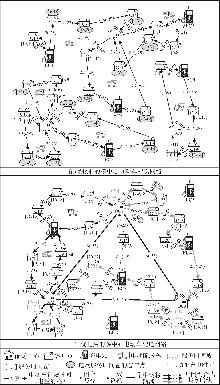
图1
带时间窗的多中心开闭混合式电动车配送路径优化前后对比"
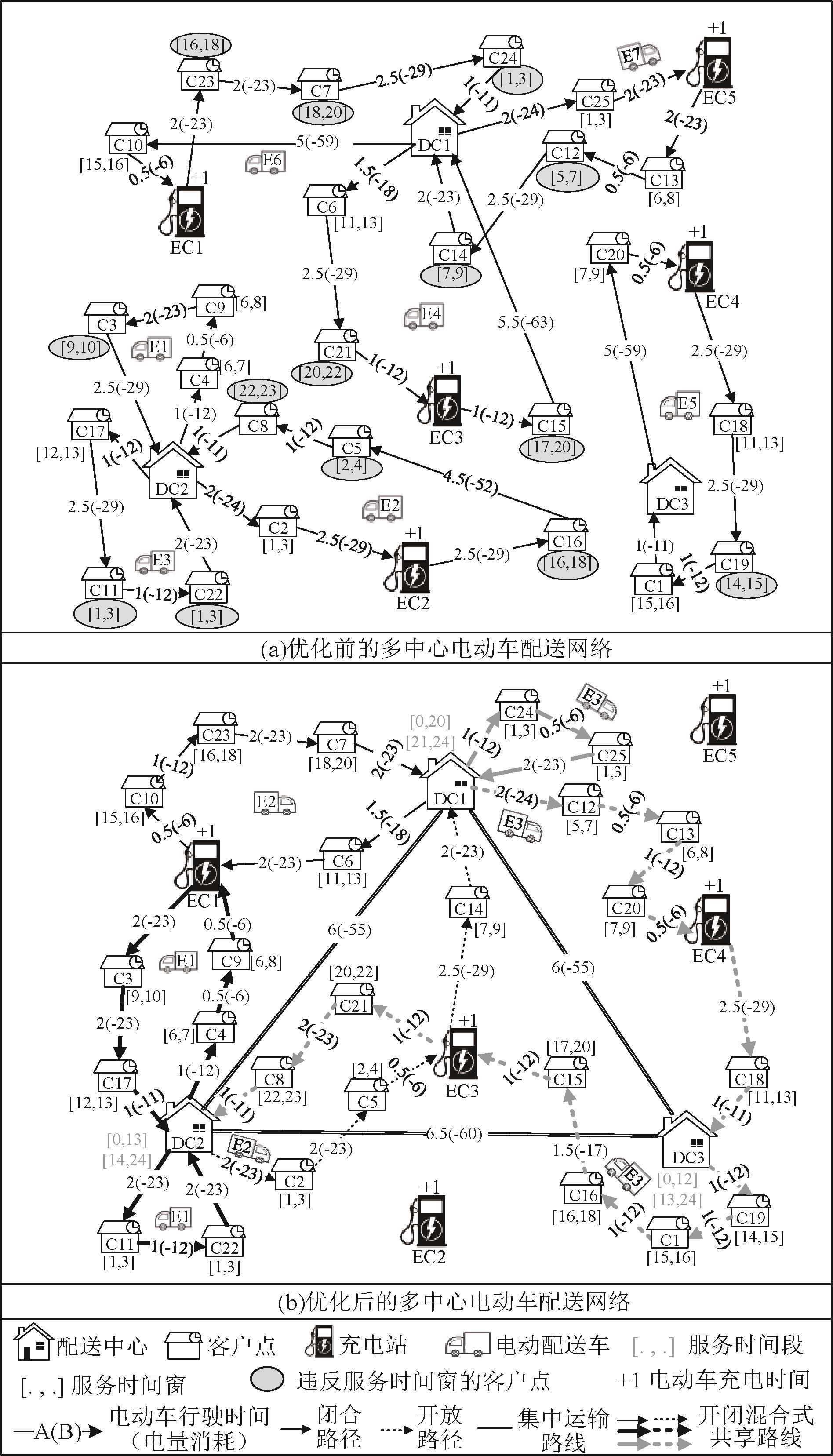

表1
带时间窗的多中心电动车开闭混合式配送车辆路径优化前后运营指标对比"
| 场景 | 电动配送车使用数/辆 | 电动运输车使用数/辆 | 充电站使用数/个 | 总行驶距离/千米 | 总电量消耗/千瓦·时 | 服务成本/元 | 充电成本/元 | 惩罚成本/元 | 电动配送车维护成本/元 | 电动运输车维护成本/元 | 运营成本/元 |
|---|---|---|---|---|---|---|---|---|---|---|---|
| 优化前 | 7 | 0 | 5 | 3700 | 862 | 1580 | 1724 | 1742.5 | 700 | 0 | 5746.5 |
| 优化后 | 3 | 1 | 3 | 3080 | 758 | 1480 | 1516 | 0 | 300 | 200 | 3496 |
表2
变量定义"
| 变量 | 定义 |
|---|---|
| 集合 | |
| 配送中心集合, | |
| 客户点集合, | |
| 充电站集合, | |
| 配送网络中所有节点的集合, | |
| 电动运输车集合, | |
| 电动配送车集合, | |
| 服务周期集合, | |
| 服务周期 | |
| 服务周期 | |
| 电动配送车 | |
| 在服务周期 | |
| 参数 | |
| 电动车单位消耗量的充电费用(元/千瓦‧时) | |
| 电动车司机单位时间的服务成本(元/小时) | |
| 电动车早到惩罚成本(元/小时) | |
| 电动车晚到惩罚成本(元/小时) | |
| 电动车充电速率(千瓦/小时) | |
| 电动运输车的维护成本(元/辆) | |
| 电动配送车的维护成本(元/辆) | |
| 电动运输车y的额定电量, | |
| 电动配送车v的额定电量, | |
| 电动运输车y的最大装载量, | |
| 电动配送车v的最大装载量, | |
| 电动运输车y的自身重量, | |
| 电动配送车v的自身重量, | |
| 电动运输车y的行驶速度, | |
| 电动配送车v的行驶速度, | |
| B | 电动配送车使用数 |
| 一个无穷大的正数 | |
| 配送中心d在服务周期 | |
| 客户i在服务周期 | |
| 电动运输车 | |
| 电动配送车 | |
| 电动运输车y在服务周期z内从配送中心d到 | |
| 电动配送车v在服务周期z内从节点i到j的总重量, | |
| 电动运输车 | |
| 电动配送车 | |
| 电动配送车 | |
| 电动运输车 | |
| 电动运输车 | |
| 电动配送车 | |
| 电动配送车 | |
| 电动配送车 | |
| 电动配送车 | |
| 电动运输车 | |
| 电动运输车 | |
| 电动运输车 | |
| 电动运输车在服务周期 | |
| 电动配送车在服务周期 | |
| 电动配送车 | |
| 在服务周期 | |
| 决策变量 | |
| 若电动配送车 | |
| 若电动配送车 | |
| 若使用电动运输车 | |
| 若电动配送车 | |
| 若电动配送车 |
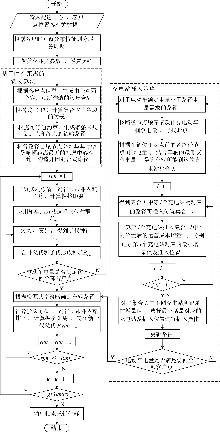
图2
基于贪婪算法的改进NSGA-II混合算法流程"

表3
算法参数设置"
| 算法 | 参数设置 |
|---|---|
| 基于贪婪算法的改进NSGA-II混合算法 | |
| MOPSO | |
| MODE | |
| MOGA |
表4
不同算法的优化结果对比"
| 算例 | 基于贪婪算法的改进NSGA-II混合算法 | MOPSO | MODE | MOGA | ||||||||
|---|---|---|---|---|---|---|---|---|---|---|---|---|
| 运营成本/元 | 电量消耗/千瓦·时 | 计算时长/秒 | 运营成 本/元 | 电量消耗/ 千瓦·时 | 计算时长/秒 | 运营成 本/元 | 电量消耗/千瓦·时 | 计算时长/秒 | 运营成 本/元 | 电量消耗/千瓦·时 | 计算时长/秒 | |
| 1 | 1752 | 339 | 226 | 1872 | 346 | 238 | 1894 | 348 | 248 | 1903 | 344 | 255 |
| 2 | 2009 | 365 | 244 | 2064 | 379 | 251 | 2107 | 382 | 269 | 2162 | 381 | 286 |
| 3 | 2294 | 446 | 279 | 2323 | 461 | 294 | 2379 | 465 | 311 | 2411 | 473 | 329 |
| 4 | 2793 | 489 | 315 | 3001 | 504 | 323 | 3012 | 508 | 337 | 3039 | 513 | 354 |
| 5 | 3341 | 555 | 345 | 3439 | 584 | 362 | 3479 | 590 | 374 | 3513 | 596 | 387 |
| 6 | 3875 | 695 | 374 | 4049 | 715 | 387 | 4077 | 714 | 398 | 4097 | 711 | 412 |
| 7 | 1879 | 368 | 239 | 1993 | 380 | 255 | 1998 | 385 | 263 | 2006 | 387 | 278 |
| 8 | 2492 | 468 | 273 | 2579 | 474 | 285 | 2607 | 480 | 292 | 2665 | 487 | 309 |
| 9 | 3489 | 578 | 332 | 3523 | 582 | 346 | 3539 | 585 | 360 | 3542 | 594 | 373 |
| 10 | 4181 | 714 | 371 | 4253 | 721 | 389 | 4259 | 720 | 405 | 4267 | 722 | 421 |
| 11 | 1754 | 340 | 219 | 1889 | 352 | 229 | 1994 | 353 | 241 | 1913 | 355 | 257 |
| 12 | 2016 | 362 | 241 | 2108 | 375 | 256 | 2135 | 380 | 267 | 2152 | 382 | 282 |
| 13 | 2273 | 422 | 274 | 2311 | 441 | 292 | 2352 | 452 | 309 | 2473 | 468 | 329 |
| 14 | 2819 | 498 | 317 | 3016 | 509 | 331 | 3015 | 517 | 344 | 3014 | 539 | 359 |
| 15 | 3402 | 581 | 352 | 3529 | 599 | 374 | 3507 | 603 | 387 | 3491 | 614 | 405 |
| 16 | 3991 | 671 | 369 | 4051 | 689 | 388 | 4060 | 688 | 401 | 4069 | 707 | 419 |
| 17 | 1918 | 347 | 235 | 2020 | 360 | 259 | 2039 | 369 | 267 | 2043 | 395 | 279 |
| 18 | 2412 | 442 | 268 | 2521 | 462 | 298 | 2600 | 470 | 315 | 2631 | 474 | 326 |
| 19 | 3573 | 609 | 335 | 3578 | 610 | 354 | 3598 | 609 | 369 | 3621 | 618 | 383 |
| 20 | 4084 | 708 | 374 | 4238 | 743 | 392 | 4211 | 756 | 413 | 4196 | 776 | 427 |
| 21 | 1769 | 326 | 238 | 1841 | 342 | 263 | 1869 | 354 | 276 | 1890 | 364 | 288 |
| 22 | 2046 | 378 | 256 | 2148 | 385 | 281 | 2159 | 390 | 298 | 2196 | 396 | 323 |
| 23 | 2153 | 402 | 281 | 2234 | 432 | 317 | 2308 | 482 | 334 | 2318 | 479 | 354 |
| 24 | 2805 | 535 | 327 | 2990 | 543 | 359 | 2940 | 559 | 385 | 2876 | 564 | 402 |
| 25 | 3358 | 590 | 359 | 3450 | 604 | 398 | 3508 | 610 | 417 | 3583 | 626 | 435 |
| 26 | 4003 | 688 | 375 | 4036 | 704 | 401 | 4089 | 719 | 423 | 4179 | 722 | 446 |
| 27 | 1935 | 344 | 241 | 2015 | 382 | 272 | 2044 | 390 | 289 | 2048 | 416 | 297 |
| 28 | 2466 | 443 | 284 | 2496 | 456 | 315 | 2500 | 469 | 326 | 2507 | 489 | 341 |
| 29 | 3604 | 615 | 342 | 3682 | 619 | 378 | 3697 | 620 | 394 | 3714 | 629 | 415 |
| 30 | 4124 | 706 | 377 | 4196 | 730 | 403 | 4197 | 745 | 420 | 4198 | 749 | 439 |
| 平均值 | 2820 | 501 | 302 | 2915 | 516 | 323 | 2939 | 524 | 338 | 2957 | 532 | 354 |
| t-检验 | -10.0 | -12.5 | -13.4 | |||||||||
| p值 | 3.3E-11 | 1.7E-13 | 2.9E-14 | |||||||||
表5
不同多目标算法的性能指标计算结果对比"
| 算例 | 基于贪婪算法的改进 NSGA-II混合算法 | MOPSO | MODE | MOGA | ||||||||
|---|---|---|---|---|---|---|---|---|---|---|---|---|
| 帕累托解数量 | 超体积 | 平均理想距离 | 帕累托解数量 | 超体积 | 平均理想距离 | 帕累托解数量 | 超体积 | 平均理想距离 | 帕累托解数量 | 超体积 | 平均理想距离 | |
| 1 | 10 | 0.89 | 0.83 | 10 | 0.84 | 0.87 | 9 | 0.81 | 0.97 | 9 | 0.80 | 0.98 |
| 2 | 11 | 0.86 | 0.85 | 10 | 0.81 | 0.87 | 10 | 0.77 | 0.88 | 9 | 0.74 | 0.98 |
| 3 | 9 | 0.97 | 0.79 | 9 | 0.85 | 0.96 | 8 | 0.82 | 1.09 | 8 | 0.81 | 1.11 |
| 4 | 10 | 0.74 | 0.90 | 9 | 0.76 | 0.96 | 9 | 0.74 | 0.97 | 9 | 0.76 | 0.98 |
| 5 | 7 | 0.95 | 0.89 | 7 | 0.88 | 1.24 | 6 | 0.84 | 1.31 | 7 | 0.79 | 1.26 |
| 6 | 8 | 1.00 | 0.88 | 8 | 0.93 | 1.09 | 8 | 0.89 | 1.09 | 7 | 0.85 | 1.26 |
| 7 | 9 | 1.08 | 0.71 | 9 | 0.95 | 0.96 | 8 | 0.91 | 1.09 | 8 | 0.87 | 1.11 |
| 8 | 11 | 1.01 | 0.73 | 9 | 0.89 | 0.96 | 9 | 0.82 | 0.97 | 9 | 0.76 | 0.98 |
| 9 | 10 | 0.91 | 0.99 | 10 | 0.86 | 0.87 | 10 | 0.81 | 0.88 | 10 | 0.77 | 0.89 |
| 10 | 10 | 1.03 | 0.84 | 9 | 0.94 | 0.96 | 9 | 0.88 | 0.97 | 9 | 0.84 | 0.98 |
| 11 | 9 | 0.85 | 0.90 | 9 | 0.79 | 0.96 | 9 | 0.75 | 0.97 | 9 | 0.73 | 0.98 |
| 12 | 8 | 0.73 | 0.91 | 8 | 0.71 | 1.09 | 8 | 0.67 | 1.09 | 8 | 0.65 | 1.11 |
| 13 | 7 | 0.88 | 0.97 | 7 | 0.85 | 1.24 | 7 | 0.79 | 1.25 | 7 | 0.76 | 1.26 |
| 14 | 10 | 0.82 | 0.94 | 10 | 0.78 | 0.87 | 10 | 0.75 | 0.88 | 10 | 0.73 | 0.89 |
| 15 | 11 | 1.14 | 0.69 | 9 | 0.94 | 0.96 | 10 | 0.92 | 0.88 | 9 | 0.89 | 0.98 |
| 平均值 | 9.33 | 0.92 | 0.85 | 8.87 | 0.85 | 0.99 | 8.67 | 0.81 | 1.02 | 8.53 | 0.78 | 1.05 |

图3
多中心电动车配送网络地理位置分布图"
表6
不同参数设置下的计算结果对比"
| 场景 | 交叉概率(Pc ) | 变异概率(Pm ) | ||||
|---|---|---|---|---|---|---|
| 取值 | 运营成本/元 | 标准差 | 取值 | 运营成本/元 | 标准差 | |
| 1 | 0.1 | 5375 | 12 | 0.06 | 5184 | 9 |
| 2 | 0.2 | 5219 | 9 | 0.07 | 5270 | 11 |
| 3 | 0.3 | 5179 | 7 | 0.08 | 5193 | 10 |
| 4 | 0.4 | 5185 | 8 | 0.09 | 5085 | 8 |
| 5 | 0.5 | 5202 | 9 | 0.10 | 5162 | 5 |
| 6 | 0.6 | 5234 | 10 | 0.11 | 5206 | 6 |
| 7 | 0.7 | 5108 | 4 | 0.12 | 5143 | 4 |
| 8 | 0.8 | 5091 | 2 | 0.13 | 5159 | 5 |
| 9 | 0.9 | 4988 | 1 | 0.14 | 5208 | 6 |
| 10 | 1.0 | 5098 | 3 | 0.15 | 5314 | 12 |
| 11 | 1.1 | 5153 | 7 | 0.16 | 5281 | 10 |
| 12 | 1.2 | 5194 | 8 | 0.17 | 5177 | 6 |
| 13 | 1.3 | 5283 | 10 | 0.18 | 5135 | 5 |
| 14 | 1.4 | 5295 | 10 | 0.19 | 5123 | 4 |
| 15 | 1.5 | 5351 | 13 | 0.20 | 4988 | 2 |
| 16 | 1.6 | 4997 | 5 | 0.21 | 5131 | 3 |
| 17 | 1.7 | 5174 | 6 | 0.22 | 5245 | 10 |
| 18 | 1.8 | 5222 | 8 | 0.23 | 5218 | 9 |
| 19 | 1.9 | 5086 | 5 | 0.24 | 5232 | 10 |
| 20 | 2.0 | 5379 | 11 | 0.25 | 5275 | 10 |
表7
实例参数设置"
| 符号 | 定义 | 参数值 |
|---|---|---|
| 电动车早到惩罚成本(元/小时) | 15 | |
| 电动车晚到惩罚成本(元/小时) | 20 | |
| 电动运输车的维护成本(元/辆) | 120 | |
| 电动配送车的维护成本(元/辆) | 100 | |
| 电动运输车的最大装载量(千克) | 2000 | |
| 电动配送车的最大装载量(千克) | 700 | |
| 电动运输车的行驶速度(千米/小时) | 35 | |
| 电动配送车的行驶速度(千米/小时) | 40 | |
| 电动车单位消耗量的充电费用(元/千瓦‧时) | 1.9 | |
| 电动车司机的单位时间服务成本(元/小时) | 20 | |
| A | 电动车的正面迎风面积(平方米) | 4.73 |
| ρ | 空气密度(千克/立方米) | 1.204 |
| 电动引擎的放电效率 | 0.7 | |
| 电动引擎的能量转化效率 | 0.8 | |
| cd | 空气阻力系数 | 0.7 |
| cr | 滚动阻力系数 | 0.01 |
| a | 电动车加速度(米/平方秒) | 0 |
| g | 重力加速度(米/平方秒) | 9.8 |
| α | 道路坡度 | 0 |
| gmax | 最大外部循环次数 | 200 |
| Run | 最大内部循环次数 | 50 |
| popsize | 种群规模 | 100 |
图4
多中心开闭混合式电动车配送路径图"
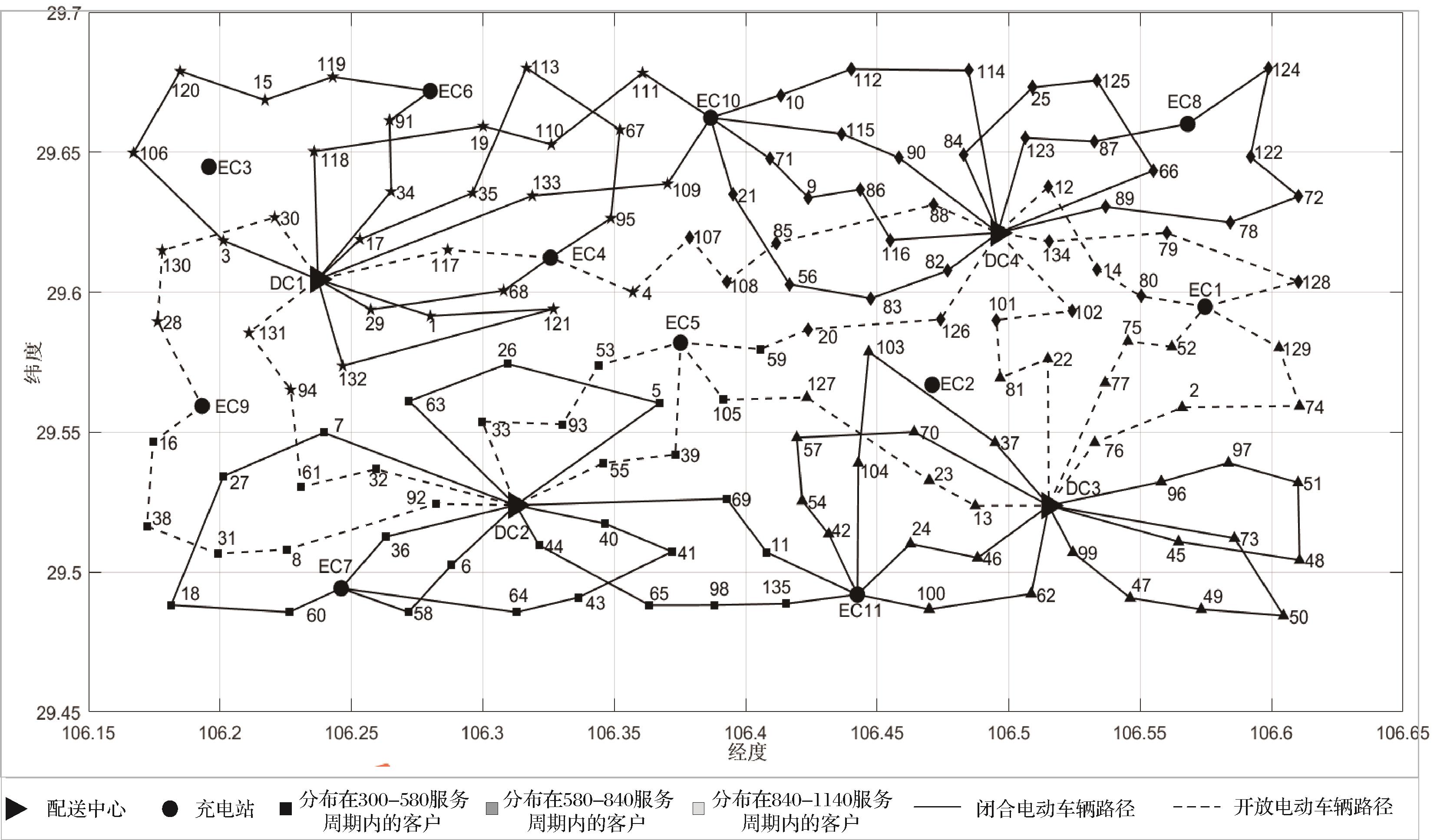
图5
不同开闭混合模式下的优化结果对比"
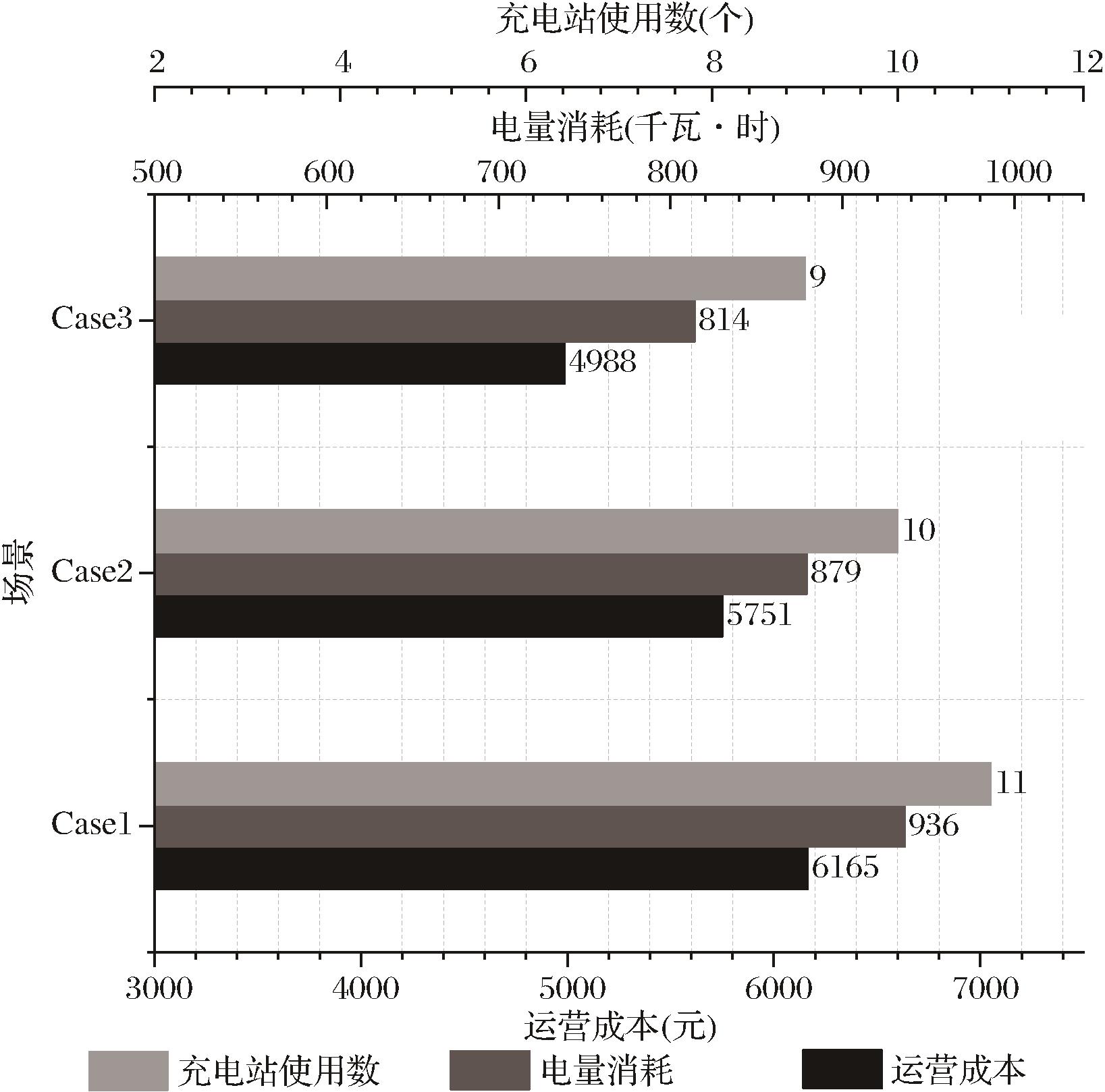
表8
多中心开闭混合式电动车配送网络的优化前后指标对比"
| 场景 | 电动配送车使用数/辆 | 电动运输车 使用数/辆 | 电量消耗 /千瓦·时 | 行驶里程 /千米 | 充电站使用数/个 | 服务成本 /元 | 充电成本 /元 | 惩罚成本 /元 | 维护成本 /元 | 运营成本/元 |
|---|---|---|---|---|---|---|---|---|---|---|
| 优化前 | 26 | 0 | 1173 | 4309 | 11 | 2654 | 2229 | 2404 | 2600 | 9887 |
| 优化后 | 11 | 1 | 814 | 2990 | 9 | 1743 | 1547 | 478 | 1220 | 4988 |
表9
多中心开闭混合式电动车配送路径优化方案"
配送 车辆 | 使用的 充电站 | 起点 | 终点 | 配送路径 | 服务周期 |
|---|---|---|---|---|---|
| EV1#& | EC7# EC9 -- | DC2 DC2 DC1 | DC2 DC1 DC1 | DC2→C7→C27→C18→C60→EC7→C58→C6→DC2 DC2→C92→C8→C31→C38→C16→EC9→C28→C130→C30→DC1 DC1→C132→C121→C1→DC1 | 300-580 580-840 840-1140 |
| EV2#& | EC7# EC5& -- | DC2 DC2 DC3 | DC2 DC3 DC3 | DC2→C40→C41→C43→C64→EC7→C36→DC2 DC2→C33→C93→C53→EC5→C105→C127→C23→C13→DC3 DC3→C45→C48→C51→C97→C96→DC3 | 300-580 580-840 840-1140 |
| EV3#& | -- EC1# EC10#& | DC3 DC3 DC4 | DC3 DC4 DC4 | DC3→C99→C47→C49→C50→C73→DC3 DC3→C77→C75→C52→EC1→C128→C79→C134→DC4 DC4→C82→C83→C56→C21→EC10→C115→C90→DC4 | 300-580 580-840 840-1140 |
| EV4& | -- EC4& | DC2 DC1 | DC1 DC1 | DC2→C32→C61→C94→C131→DC1 DC1→C17→C35→C113→C67→C95→EC4→C68→C29→DC1 | 300-580 840-1140 |
| EV5# | -- EC5& | DC4 DC4 | DC4 DC2 | DC4→C84→C25→C125→C66→DC4 DC4→C126→C20→C59→EC5→C39→C55→DC2 | 300-580 840-1140 |
| EV6& | EC4& EC10#& | DC4 DC1 | DC1 DC1 | DC4→C88→C85→C108→C107→C4→EC4→C117→DC1 DC1→C118→C19→C110→C111→EC10→C109→C133→DC1 | 580-840 840-1140 |
| EV7# | -- E11#& | DC2 DC2 | DC2 DC2 | DC2→C5→C26→C63→DC2 DC2→C69→C11→EC11→C135→C98→C65→C44→DC2 | 580-840 840-1140 |
| EV8& | -- EC10#& | DC3 DC4 | DC4 DC4 | DC3→C22→C81→C101→C102→DC4 DC4→C114→C112→C10→EC10→C71→C9→C86→C116→DC4 | 580-840 840-1140 |
| EV9# | EC11#& EC11#& | DC3 DC3 | DC3 DC3 | DC3→C70→C57→C54→C42→EC11→C100→C62→DC3 DC3→C37→C103→C104→EC11→C24→C46→DC3 | 580-840 840-1140 |
| EV10& | EC1# EC8 | DC3 DC4 | DC4 DC4 | DC3→C76→C2→C74→C129→EC1→C80→C14→C12→DC4 DC4→C89→C78→C72→C122→C124→EC8→C87→C123→DC4 | 580-840 840-1140 |
| EV11 | EC6 | DC1 | DC1 | DC1→C3→C106→C120→C15→C119→EC6→C91→C34→DC1 | 840-1140 |
表10
不同开闭混合模式下的运营指标对比"
| 场景 | 电动配送车使用数/辆 | 电动运输车使用数/辆 | 电量消耗 /千瓦·时 | 行驶里程 /千米 | 充电站使用数/个 | 服务成本 /元 | 充电成本 /元 | 惩罚成本 /元 | 维护成本 /元 | 运营成本 /元 |
|---|---|---|---|---|---|---|---|---|---|---|
| Case 1 | 11 | 1 | 936 | 3438 | 11 | 2117 | 1778 | 1050 | 1220 | 6165 |
| Case 2 | 12 | 1 | 879 | 3229 | 10 | 1989 | 1670 | 772 | 1320 | 5751 |
| Case 3 | 11 | 1 | 814 | 2990 | 9 | 1743 | 1547 | 478 | 1220 | 4988 |
表11
不同合作模式下的多中心开闭混合式电动车配送路径优化结果及差值"
| 序号 | 合作模式 | 优化前 | 优化后 | 差值 | |||||||
|---|---|---|---|---|---|---|---|---|---|---|---|
| 运营成本/元 | 电动配送车使用 数/辆 | 电量消耗/千瓦·时 | 运营成本/元 | 电动配送车使用数/辆 | 电量消耗/千瓦·时 | 运营成本/元 | 电动配送车使用数/辆 | 电量消耗 /千瓦·时 | |||
| 1 | {DC1, DC2} | 4911 | 13 | 571 | 3978 | 8 | 456 | 933 | 5 | 115 | |
| 2 | {DC1, DC3} | 5017 | 15 | 636 | 4022 | 9 | 512 | 995 | 6 | 124 | |
| 3 | {DC1, DC4} | 4879 | 12 | 556 | 4037 | 7 | 434 | 842 | 5 | 122 | |
| 4 | {DC2, DC3} | 5008 | 14 | 617 | 3985 | 8 | 498 | 1023 | 6 | 119 | |
| 5 | {DC2, DC4} | 4870 | 11 | 537 | 4106 | 6 | 441 | 764 | 5 | 96 | |
| 6 | {DC3, DC4} | 4976 | 13 | 602 | 4198 | 7 | 476 | 778 | 6 | 126 | |
| 7 | {DC1, DC2, DC3} | 7468 | 21 | 912 | 4431 | 10 | 682 | 3037 | 11 | 230 | |
| 8 | {DC1, DC2, DC4} | 7330 | 18 | 832 | 4396 | 9 | 644 | 2934 | 9 | 188 | |
| 9 | {DC1, DC3, DC4} | 7436 | 20 | 897 | 4518 | 10 | 706 | 2918 | 10 | 191 | |
| 10 | {DC2, DC3, DC4} | 7427 | 19 | 878 | 4556 | 9 | 689 | 2871 | 10 | 189 | |
| 11 | {DC1, DC2, DC3, DC4} | 9887 | 26 | 1173 | 4988 | 11 | 814 | 4899 | 15 | 359 | |
| [1] | 中华人民共和国中央人民政府. 节能降碳, 发展绿色物流[EB/OL].(2022-03-16)[2023-08-06].. |
| The Central People's Government of the People's Republic of China. Energy conservation and carbon reduction, developing green logistics[EB/OL].(2022-03-16)[2023-08-06].. | |
| [2] | 中华人民共和国中央人民政府. 国务院办公厅关于印发“十四五”现代物流发展规划的通知[EB/OL].(2022-12-15)[2023-08-10].. |
| The Central People's Government of the People's Republic of China. General Office of the State Council on printing and distributing the “14th Five-Year Plan” for modern logistics development[EB/OL].(2022-12-15)[2023-08-10]. . | |
| [3] | 中华人民共和国中央人民政府. 国务院办公厅关于进一步构建高质量充电基础设施体系的指导意见[EB/OL].(2023-06-19)[2023-08-10]. . |
| The Central People's Government of the People's Republic of China. Guiding Opinions of the General Office of the State Council on further building a High-Quality Charging infrastructure system[EB/OL].(2023-06-19)[2023-08-10].. | |
| [4] | 吴廷映, 孙灏. 考虑载重影响耗电率的电动车车辆路径问题[J]. 控制与决策, 2023, 38(2): 483-491. |
| Wu T Y, Sun H. Electric vehicle routing problem with time window and linear weight-related discharging[J]. Control and Decision, 2023, 38(2): 483-491. | |
| [5] | 郭放, 杨珺, 杨超. 考虑差异化服务时间的多车型电动汽车路径优化与充电策略研究[J]. 中国管理科学, 2019, 27(8): 118-128. |
| Guo F, Yang J, Yang C. Study on heterogeneous electric vehicle routing and batterycharging problem with the consideration of differentiated service cost[J]. Chinese Journal of Management Science,2019,27(8): 118-128. | |
| [6] | Wu W, Lin Y, Liu R, et al. The multi-depot electric vehicle scheduling problem with power grid characteristics[J]. Transportation Research Part B: Methodological, 2022, 155: 322-347. |
| [7] | Wang Y, Zhou J, Sun Y, et al. Collaborative multidepot electric vehicle routing problem with time windows and shared charging stations[J]. Expert Systems with Applications, 2023, 219: 119654. |
| [8] | Lera-Romero G, Miranda Bront J J, Soulignac F J. A branch-cut-and-price algorithm for the time-dependent electric vehicle routing problem with time windows[J]. European Journal of Operational Research, 2024, 312(3): 978-995. |
| [9] | Ma B S, Hu D W, Chen X Q, et al. The vehicle routing problem with speed optimization for shared autonomous electric vehicles service[J]. Computers & Industrial Engineering, 2021, 161: 107614. |
| [10] | Zhang S, Gajpal Y, Appadoo S S, et al. Electric vehicle routing problem with recharging stations for minimizing energy consumption[J]. International Journal of Production Economics, 2018, 203: 404-413. |
| [11] | 范厚明, 张轩, 任晓雪, 等. 多中心开放且需求可拆分的VRPSDP问题优化[J]. 系统工程理论与实践, 2021, 41(6): 1521-1534. |
| Fan H M, Zhang X, Ren X X, et al. Optimization of multi-depot open split delivery vehicle routing problem with simultaneous delivery and pick-up[J]. Systems Engineering-Theory & Practice, 2021, 41(6): 1521-1534. | |
| [12] | Brandão J. A memory-based iterated local search algorithm for the multi-depot open vehicle routing problem[J]. European Journal of Operational Research, 2020, 284(2): 559-571. |
| [13] | 刘家利, 郭秀萍. 存在产品互斥和车辆匹配的多中心开环车辆路径问题[J]. 系统管理学报, 2016, 25(1): 129-138. |
| Liu J L, Guo X P. Multi-depot open vehicle routing problem with exclusive products and heterogeneous vehicles[J]. Journal of Systems & Management, 2016, 25(1): 129-138. | |
| [14] | Lahyani R, Gouguenheim A L, Coelho L C. A hybrid adaptive large neighbourhood search for multi-depot open vehicle routing problems[J]. International Journal of Production Research, 2019, 57(22): 6963-6976. |
| [15] | Ruiz E, Soto-Mendoza V, Ruiz Barbosa A E, et al. Solving the open vehicle routing problem with capacity and distance constraints with a biased random key genetic algorithm[J]. Computers & Industrial Engineering, 2019, 133: 207-219. |
| [16] | Li J, Wang R, Li T T, et al. Benefit analysis of shared depot resources for multi-depot vehicle routing problem with fuel consumption[J]. Transportation Research Part D: Transport and Environment, 2018, 59: 417-432. |
| [17] | 马冰山, 胡大伟, 陈希琼, 等. 半开放式的多配送中心纯电动车辆路径优化问题[J]. 交通运输系统工程与信息, 2019, 19(6): 199-205. |
| Ma B S, Hu D W, Chen X Q, et al. An optimization of pure electric vehicle routing problem on half-open multi-distribution center[J]. Journal of Transportation Systems Engineering and Information Technology, 2019, 19(6): 199-205. | |
| [18] | Azadeh A, Farrokhi-Asl H. The close–open mixed multi depot vehicle routing problem considering internal and external fleet of vehicles[J]. Transportation Letters, 2019, 11(2): 78-92. |
| [19] | Hamid M, Nasiri M M, Rabbani M. A mixed closed-open multi-depot routing and scheduling problem for homemade meal delivery incorporating drone and crowd-sourced fleet: A self-adaptive hyper-heuristic approach[J]. Engineering Applications of Artificial Intelligence, 2023, 120: 105876. |
| [20] | 王勇, 罗思妤, 周雪, 等. 多中心共同配送开闭混合式的车辆路径优化问题[J]. 系统管理学报, 2023, 32(2): 215-232. |
| Wang Y, Luo S Y, Zhou X, et al. Open-closed hybrid vehicle routing optimization of multi-center joint distribution[J]. Journal of Systems & Management, 2023, 32(2): 215-232. | |
| [21] | 李建斌, 周泰, 徐礼平, 等. 货运O2O平台有时间窗同城零担集货匹配优化决策[J]. 系统工程理论与实践, 2020, 40(4): 978-988. |
| Li J B, Zhou T, Xu L P, et al. Matching optimization decision of city LTL carpool based on time windows on the freight O2O platform[J]. Systems Engineering-Theory & Practice, 2020, 40(4): 978-988. | |
| [22] | 周鲜成, 李松明, 王莉, 等. 考虑非线性能耗的时间依赖型电动车辆路径模型及改进的鲸鱼优化算法[J]. 中国管理科学, 2026, 34(3): 214-225. |
| Zhou X C, Li S M, Wang L, et al. Research on time dependent electric vehicle routing model with nonlinear energy consumption and an improved whale optimization algorithm[J]. Chinese Journal of Management Science, 2026, 34(3): 214-225. | |
| [23] | 李得成, 陈彦如, 张宗成. 基于分支定价算法的电动车与燃油车混合车辆路径问题研究[J]. 系统工程理论与实践, 2021, 41(4): 995-1009. |
| Li D C, Chen Y R, Zhang Z C. A branch-and-price algorithm for electric vehicle routing problem with time windows and mixed fleet[J]. Systems Engineering —Theory & Practice, 2021, 41(4): 995-1009. | |
| [24] | 张金良, 李超. 碳排放影响下的动态配送车辆路径优化研究[J]. 中国管理科学, 2022, 30(9): 184-194. |
| Zhang J L, Li C. Research on dynamic distribution vehicle route optimization under the influence of carbon emission[J]. Chinese Journal of Management Science, 2022, 30(9): 184-194. | |
| [25] | 徐小峰, 林姿汝, 周鹏. 多油品供给受限下多油库被动配送车辆路径问题研究[J]. 中国管理科学, 2021, 29(5): 157-165. |
| Xu X F, Lin Z R, Zhou P. Research on vehicle routing problem of multiple oil depot passive distribution under multi oil supply constraints[J]. Chinese Journal of Management Science, 2021, 29(5): 157-165. | |
| [26] | Punyakum V, Sethanan K, Nitisiri K, et al. Hybrid differential evolution and particle swarm optimization for Multi-visit and Multi-period workforce scheduling and routing problems[J]. Computers and Electronics in Agriculture, 2022, 197: 106929. |
| [27] | Ghannadpour S F, Zandiyeh F. An adapted multi-objective genetic algorithm for solving the cash in transit vehicle routing problem with vulnerability estimation for risk quantification[J]. Engineering Applications of Artificial Intelligence, 2020, 96: 103964. |
| [28] | Cordeau J F, Laporte G, Mercier A. A unified tabu search heuristic for vehicle routing problems with time windows[J]. Journal of the Operational Research Society, 2001, 52(8): 928-936. |
| [29] | Vahdani B, Mansour F, Soltani M, et al. Bi-objective optimization for integrating quay crane and internal truck assignment with challenges of trucks sharing[J].Knowledge-Based Systems, 2019, 163: 675-692. |
| [1] | 张旭梅, 范继欣, 但斌, 陈振江, 雷婷. 考虑供应商保鲜的生鲜电商供应链预售策略与合作模式研究[J]. 中国管理科学, 2026, 34(8): 234-245. |
| [2] | 程永伟. 直播带货的合作模式与决策优化[J]. 中国管理科学, 2024, 32(5): 297-306. |
| [3] | 刘东霞,陈红. 产品服务供应链定价决策:数据资源挖掘与共享策略的影响分析[J]. 中国管理科学, 2024, 32(2): 129-140. |
| [4] | 崔玉泉, 刘冰洁, 刘聪, 曲晶晶. 新型订单农业合作模式的优化模型分析[J]. 中国管理科学, 2020, 28(12): 140-150. |
| [5] | 林雅琴, 郭强, 张志文, 赵达. 淡季中酒店与OTA合作模式选择研究[J]. 中国管理科学, 2018, 26(5): 187-196. |
| [6] | 石岿然, 浦珏, 孙玉玲. 平台介入的多物流服务提供商合作模式研究[J]. 中国管理科学, 2017, 25(4): 78-85. |
| [7] | 王凯, 熊中楷, 熊榆. 制造商经销再制造商产品的合作模式研究[J]. 中国管理科学, 2012, (1): 145-151. |
| 阅读次数 | ||||||
|
全文 |
|
|||||
|
摘要 |
|
|||||
|
||
