
主管:中国科学院
主办:中国优选法统筹法与经济数学研究会
中国科学院科技战略咨询研究院
主办:中国优选法统筹法与经济数学研究会
中国科学院科技战略咨询研究院

Chinese Journal of Management Science ›› 2026, Vol. 34 ›› Issue (11): 186-198.doi: 10.16381/j.cnki.issn1003-207x.2023.0675
Previous Articles Next Articles
Youguo Jing, Yan Zhang( ), Zhen Liu, Shunchao Pang, Kaida Qin
Received:2023-04-25
Revised:2026-01-12
Online:2026-11-25
Published:2026-11-10
Contact:
Yan Zhang
E-mail:zy1209778061@163.com
CLC Number:
Youguo Jing,Yan Zhang,Zhen Liu, et al. Over-prediction of Demand Change and Choice between Static or Dynamic Pricing Contracts[J]. Chinese Journal of Management Science, 2026, 34(11): 186-198.
"

"
| 符号 | 符号说明 |
|---|---|
| 第二周期需求规模的升降幅度 | |
| 过度预期放大系数 | |
| 第一、二周期批发价格 | |
| 第一、二周期采购量 | |
| 第一、二周期销售量 | |
| 战略库存 | |
| R/M | 上标 理性/过度预期 |
| S/D | 上标 静态/动态定价契约 |
| M/S/SC | 下标 制造商/零售商/供应链整体 |
"
"
"
"
"
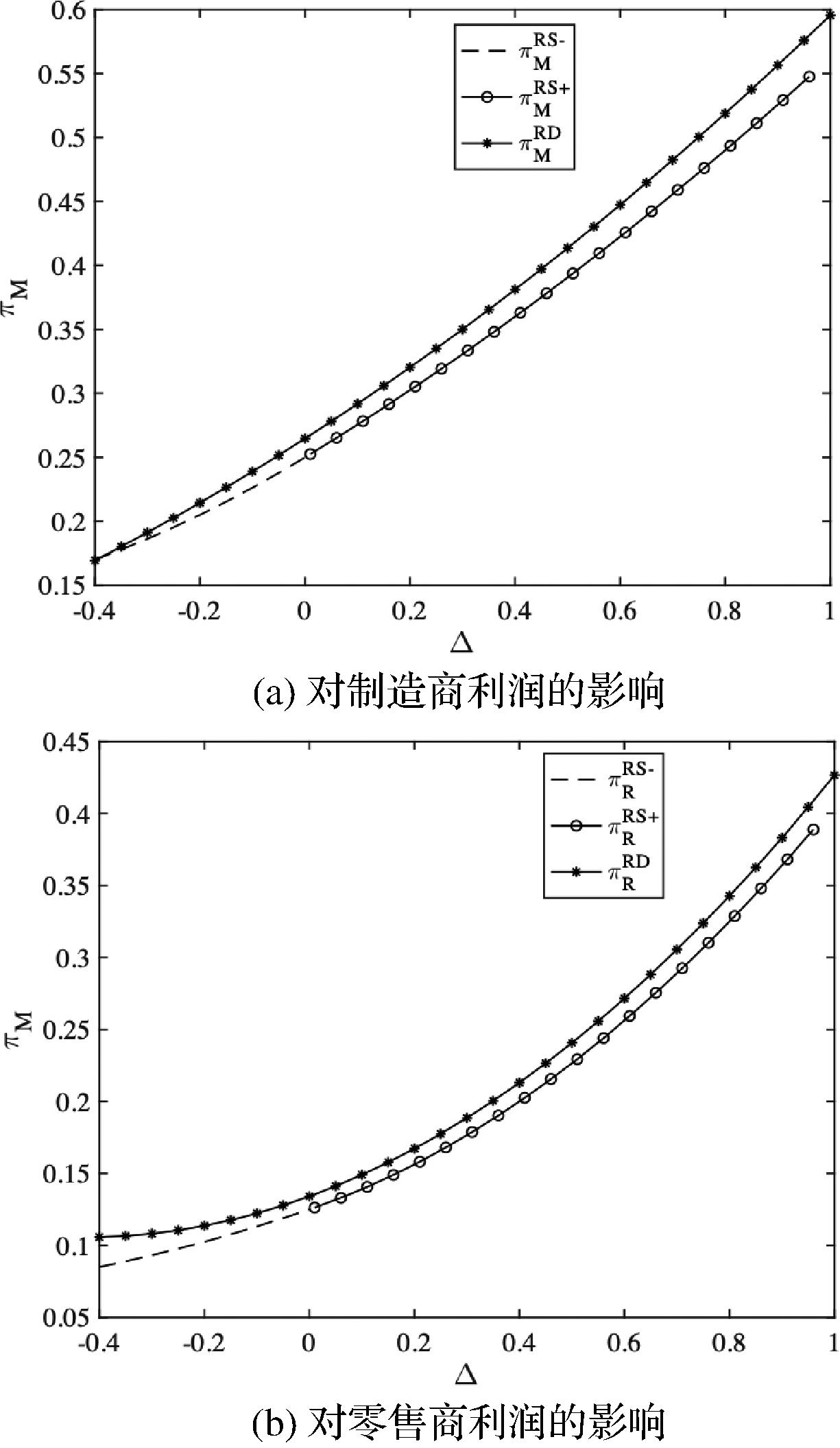
"
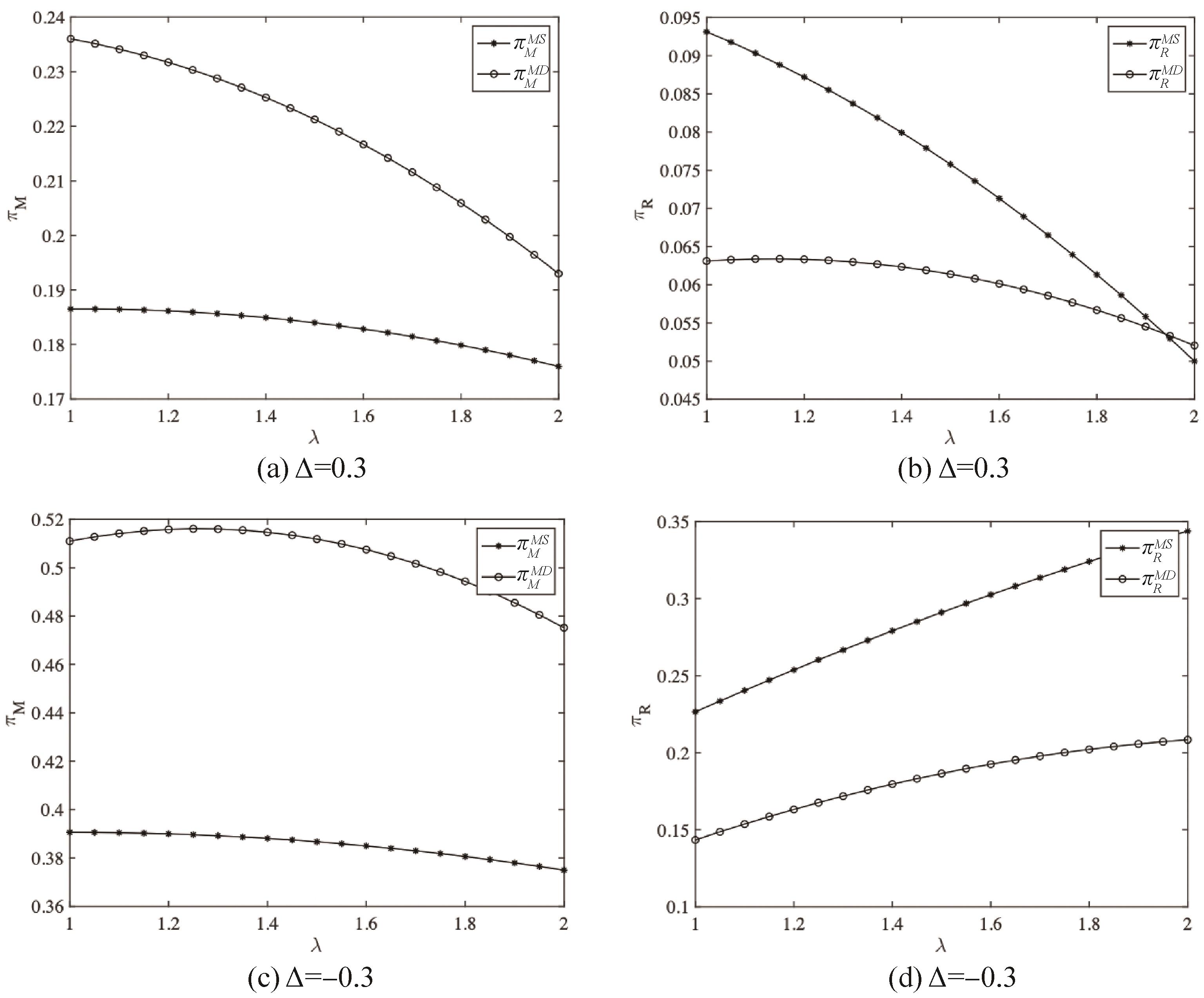
"
"
| [1] | Roy A, Gilbert S M, Lai G. The implications of strategic inventory for short-term vs. Long-term supply contracts in nonexclusive reselling environments[J]. Manufacturing & Service Operations Management, 2022, 24(5): 2629-2647. |
| [2] | Lee H L, Padmanabhan V, Whang S. The bullwhip effect in supply chains[J]. IEEE Engineering Management Review, 2015, 43(2): 108-117. |
| [3] | Anand K, Anupindi R, Bassok Y. Strategic inventories in vertical contracts[J]. Management Science, 2008, 54(10): 1792-1804. |
| [4] | Hartwig R, Inderfurth K, Sadrieh A, et al. Strategic inventory and supply chain behavior[J]. Production and Operations Management, 2015, 24(8): 1329-1345. |
| [5] | Hartwig R. Vertical competition and multi-period interaction-a theoretical and behavioral analysis on the impact of strategic inventories in supply chain management[D]. Otto-von-Guericke University Magdeburg, 2015. |
| [6] | Li X, Li Y, Chen Y J. Strategic inventories under supply chain competition[J]. Manufacturing & Service Operations Management, 2022, 24(1): 77-90. |
| [7] | Arya A, Frimor H, Mittendorf B. Decentralized procurement in light of strategic inventories[J]. Management Science, 2015, 61(3): 578-585. |
| [8] | Roy A, Gilbert S M, Lai G. The implications of visibility on the use of strategic inventory in a supply chain[J]. Management Science, 2019, 65(4): 1752-1767. |
| [9] | 经有国, 宋楗, 刘震. 需求信息不对称下基于战略库存的信息披露与契约选择[J]. 中国管理科学, 2022, 30(7): 47-58. |
| Jing Y G, Song J, Liu Z. Information disclosure and contract selection under asymmetric information with strategic inventory[J]. Chinese Journal of Management Science, 2022, 30(7): 47-58. | |
| [10] | Mantin B, Jiang L. Strategic inventories with quality deterioration[J]. European Journal of Operational Research, 2017, 258(1): 155-164. |
| [11] | Moon I, Dey K, Saha S. Strategic inventory: Manufacturer vs. Retailer investment[J]. Transportation Research Part E: Logistics and Transportation Review, 2018, 109: 63-82. |
| [12] | 孙康泰, 许明辉. 考虑参考价格效应的战略库存研究[J]. 管理工程学报, 2021, 35(3): 208-219. |
| Sun K T, Xu M H. Strategic inventories with reference price effect[J]. Journal of Industrial Engineering and Engineering Management, 2021, 35(3): 208-219. | |
| [13] | 肖蕾, 孙康泰. 产品服务升级下的契约设计与战略库存策略研究[J].中国管理科学,2024,32(3): 228-236. |
| Xiao L, Sun K T. Research on contract design and strategic inventory under product service upgrade[J]. Chinese Journal of Management Science, 2024, 32(3): 228-236. | |
| [14] | 黄雨龙, 沈婷, 袁泉. 基于产品生命周期的战略库存与动态定价决策研究[J]. 管理工程学报, 2023, 37(3): 92-102. |
| Huang Y L, Shen T, Yuan Q. Strategic inventory/backlogging and dynamic pricing decision based on product life cycle[J]. Journal of Industrial Engineering and Engineering Management, 2023, 37(3): 92-102. | |
| [15] | 郝晶, 何枫, 王博文. 高管过度自信与上市公司技术创新——基于企业金融化视角[J]. 系统工程理论与实践, 2024, 43(3): 725-739. |
| Hao J, He F, Wang B W. CEO Overconfidence and firm’s R & D investment: Evidence from firm financialization[J]. Systems Engineering-Theory & Practice, 2024, 43(3): 725-739. | |
| [16] | Ren Y, Croson R. Overconfidence in newsvendor orders: An experimental study[J]. Management Science, 2013, 59(11): 2502-2517. |
| [17] | Ren Y, Croson D C, Croson R T A. The overconfident newsvendor[J]. Journal of the Operational Research Society, 2017, 68(5): 496-506. |
| [18] | 赵道致, 吕昕. 随机需求下基于供应商过度自信的VMI模型[J]. 系统工程, 2011, 29(8): 1-7. |
| Zhao D Z, Lv X. Vender managed inventory model based on overconfident suppliers under stochastic demand[J]. Systems Engineering, 2011, 29(8): 1-7. | |
| [19] | 周永务, 刘哲睿, 郭金森, 等. 基于报童模型的过度自信零售商的订货决策与协调研究[J]. 运筹与管理, 2012, 21(3): 62-66. |
| Zhou Y W, Liu Z R, Guo J S, et al. Research on ordering decision and coordination of overconfident retailer based on newsvendor model[J]. Operations Research and Management Science, 2012, 21(3): 62-66. | |
| [20] | 陈克贵, 宋学锋, 王新宇, 等. 基于销售商过度自信的定价与生产联合决策[J]. 系统管理学报, 2016, 25(3): 468-476. |
| Chen K G, Song X F, Wang X Y, et al. Joint pricing and production decisions with the overconfident sales agent[J]. Journal of Systems & Management, 2016, 25(3): 468-476. | |
| [21] | Xu L, Shi X, Du P, et al. Optimization on pricing and overconfidence problem in a duopolistic supply chain[J]. Computers & Operations Research, 2019, 101: 162-172. |
| [22] | 肖迪, 袁敬霞, 鲁其辉. 决策者过度自信视角下考虑质量控制的供应链库存策略[J]. 中国管理科学, 2014, 22(10): 59-65. |
| Xiao D, Yuan J X, Lu Q H. Supply chain inventory strategy considering quality control under decision-maker overconfidence perspective[J]. Chinese Journal of Management Science, 2014, 22(10): 59-65. | |
| [23] | Li M. Overconfident distribution channels[J]. Production and Operations Management, 2019, 28(6): 1347-1365. |
| [24] | 周辉. 基于过度自信的双渠道绿色供应链决策研究[J]. 工业工程, 2022, 25(5): 47-54. |
| Zhou H. Decision-making of dual-channel green supply chain based on overconfidence[J]. Industrial Engineering Journal, 2022, 25(5): 47-54. | |
| [25] | Garz M. Unemployment expectations, excessive pessimism, and news coverage[J]. Journal of Economic Psychology, 2013, 34: 156-168. |
| [26] | 胡秀群, 吕荣胜. 高管过度自信、过度悲观与股利羊群行为研究[J]. 商业经济与管理, 2013(7): 28-36. |
| Hu X Q, Lv R S. Executives overconfidence, over-pessimism and dividend herd behavior[J]. Journal of Business Economics, 2013(7): 28-36. | |
| [27] | Chatterjee P, Milani F. Perceived uncertainty shocks, excess optimism-pessimism, and learning in the business cycle[J]. Journal of Economic Behavior & Organization, 2020, 179: 342-360. |
| [28] | Kabul M O, Parlaktürk A K. The value of commitments when selling to strategic consumers: A supply chain perspective[J]. Management Science, 2019, 65(10): 4754-4770. |
| [1] | Jianbin Li, Yunjing Dai, Shuiyin Zhou, Xiyang Hou. Research on Coordination Mechanism of Time-Dependent Supply Chain under Procurement Price Fluctuations [J]. Chinese Journal of Management Science, 2026, 34(9): 315-325. |
| [2] | Beibei Ye, Yingsheng Su, Jiang Wu, Minke Wang. Dynamic Pricing and Leasing Model of Long-Term Rental Apartments Based on Customer Heterogeneity [J]. Chinese Journal of Management Science, 2026, 34(7): 95-105. |
| [3] | Zhen Yao, Huaming Song, Yiken Chen, Qiang Huang, Xiaoyu Gu, Suyuan Wang. Research on dynamic pricing strategy of new experience products based on user-generated reviews [J]. Chinese Journal of Management Science, 2026, 34(2): 263-274. |
| [4] | Xiao Wang, Chaolin Yang. Dynamic Pricing with Consumer Loss Aversion and Online Reviews [J]. Chinese Journal of Management Science, 2025, 33(12): 253-263. |
| [5] | Fen Lu, Wanqi Lv, Xiaochang Wu, Jizi Li, Yong Wang. Strategic Inventory Decisions of a Retailer in a Supply Chain with Learning Effect [J]. Chinese Journal of Management Science, 2025, 33(12): 328-336. |
| [6] | Jianyi Lan,Qichao Shi,Zhongwei Feng,Mengmeng He. Research on Corporate Social Responsibility Sharing Strategy Selection in Fresh E-commerce Supply Chain [J]. Chinese Journal of Management Science, 2024, 32(9): 201-213. |
| [7] | Lei Xiao,Kangtai Sun. Research on Contract Design and Strategic Inventory under Product Service Upgrade [J]. Chinese Journal of Management Science, 2024, 32(3): 228-236. |
| [8] | Jun Wang, Wenkang Ma, Xinman Lu. Intertemporal Pricing Strategy Considering Cost Information Transparency and Learning Effect [J]. Chinese Journal of Management Science, 2024, 32(2): 11-22. |
| [9] | Huafeng Du,Zhenzhong Guan,Jianbiao Ren. The Sales Model and Pricing Strategy of Software Enterprise [J]. Chinese Journal of Management Science, 2024, 32(10): 76-88. |
| [10] | Xu-wang LIU, Cheng-na ZHU, Xing-gang LUO, Wei Qi. Dynamic Pricing of Product Line Considering Negative Network Effect [J]. Chinese Journal of Management Science, 2023, 31(9): 127-136. |
| [11] | LIU Hao, TIAN Jun, KOU Xiao-fei, LIU Hai-bin, FAN Yu-qing. Research on Dual-channel Supply Chain Operation Mode Considering Contract Types and Service [J]. Chinese Journal of Management Science, 2023, 31(5): 209-217. |
| [12] | LIU Jing-chen, ZHAI Xin. Optimal Product Innovation and Pricing Strategies in the Presence of Strategic Consumers [J]. Chinese Journal of Management Science, 2023, 31(4): 56-65. |
| [13] | REN Ting-hai, WANG Da-fei, YUAN Kai-fu, KOU Yan, ZHANG Xu-mei. Supply Chain Decision and Contract Design Considering Demand Change and Service Impact on Product Quality [J]. Chinese Journal of Management Science, 2023, 31(4): 66-78. |
| [14] | MA Dong-sheng, SONG Hua-ming, ZHAO Jin-xiao, ZHU Yan-ru. Study on Behavior-based Pricing Strategy and Contract Model for Platforms with Service Differentiation [J]. Chinese Journal of Management Science, 2023, 31(2): 215-225. |
| [15] | Tian-shan YANG,Gong-lin YUAN. Research on Dynamic Pricing and Replenishment Strategy of Perishables Considering Green Distribution Technology Investment [J]. Chinese Journal of Management Science, 2023, 31(11): 279-287. |
| Viewed | ||||||
|
Full text |
|
|||||
|
Abstract |
|
|||||
|
||
