
主管:中国科学院
主办:中国优选法统筹法与经济数学研究会
中国科学院科技战略咨询研究院
主办:中国优选法统筹法与经济数学研究会
中国科学院科技战略咨询研究院

Chinese Journal of Management Science ›› 2025, Vol. 33 ›› Issue (12): 121-133.doi: 10.16381/j.cnki.issn1003-207x.2023.1805
Previous Articles Next Articles
Renlong Wang1, Rui Shen2, Hong Chi3,4, Xueyan Shao3, Mingang Gao3( )
)
Received:2023-10-31
Revised:2023-12-29
Online:2025-12-25
Published:2025-12-25
Contact:
Mingang Gao
E-mail:mggao@casisd.cn
CLC Number:
Renlong Wang,Rui Shen,Hong Chi, et al. Partial Ordinal Priority Approach Considering Pareto Optimal Identification for Multi-attribute Decision-making[J]. Chinese Journal of Management Science, 2025, 33(12): 121-133.

"
| 符号类型 | 符号 | 定义 |
|---|---|---|
索引与 集合 | 方案索引 | |
| 准则索引 | ||
| 专家索引 | ||
| 参数 | 专家 | |
| 由专家 | ||
| 由专家 | ||
| 变量 | 权重优化模型的目标函数 | |
| 对于专家 | ||
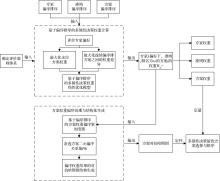
| 其他符号 | 权重偏序累加矩阵 | |
| 方案二元偏序关系矩阵 | ||
| 方案二元偏序关系矩阵的可达矩阵 | ||
| 可达矩阵的可达矩阵 | ||
| 可达矩阵的先行矩阵 | ||
| 可达矩阵的共同矩阵 | ||
| 可达矩阵的一般骨架 |
"

"
| 对象编号 | 距工作面距离/ | 氧气浓度/ | 工作面推进度/ | 漏风强度 / | 浮煤厚度/ |
|---|---|---|---|---|---|
| A1 | 80.35 | 9.98 | 2.10 | 12.00 | 0.034 |
| A2 | 90.20 | 4.60 | 1.00 | 9.00 | 0.032 |
| A3 | 58.00 | 6.92 | 0.00 | 2.41 | 0.039 |
| A4 | 62.00 | 3.70 | 0.00 | 2.49 | 0.038 |
| A5 | 61.00 | 9.20 | 1.21 | 2.25 | 0.022 |
| A6 | 58.00 | 13.69 | 0.70 | 2.11 | 0.021 |
| A7 | 4.72 | 19.34 | 0.40 | 2.80 | 0.031 |
| A8 | 4.71 | 18.23 | 0.30 | 2.70 | 0.032 |
| A9 | 61.00 | 4.49 | 0.30 | 3.45 | 0.045 |
| A10 | 63.00 | 2.95 | 0.20 | 3.78 | 0.046 |
| A11 | 91.65 | 6.77 | 2.10 | 5.60 | 0.033 |
| A12 | 94.75 | 5.87 | 1.60 | 4.20 | 0.032 |
| A13 | 51.10 | 3.59 | 1.20 | 3.18 | 0.039 |
| A14 | 55.00 | 9.13 | 0.80 | 3.11 | 0.041 |
| A15 | 35.40 | 4.00 | 0.00 | 4.20 | 0.022 |
| A16 | 4.72 | 11.43 | 0.00 | 3.10 | 0.025 |
| A17 | 58.00 | 6.92 | 0.00 | 3.80 | 0.021 |
| A18 | 27.00 | 19.50 | 0.25 | 2.50 | 0.025 |
| A19 | 65.00 | 14.00 | 1.00 | 3.50 | 0.035 |
| A20 | 90.00 | 5.50 | 2.25 | 15.50 | 0.055 |
"
| 距工作面距离 | 氧气浓度 | 工作面推进度 | 漏风强度 | 浮煤厚度 |
|---|---|---|---|---|
| 0.183 | 0.465 | 0.186 | 0.159 | 0.007 |
"
| 对象编号 | 氧气浓度(C1) | 工作面推进度(C2) | 距工作面距离(C3) | 漏风强度(C4) | 浮煤厚度(C5) |
|---|---|---|---|---|---|
| A1 | 13 | 2 | 5 | 2 | 8 |
| A2 | 6 | 6 | 3 | 3 | 10 |
| A3 | 10 | 13 | 10 | 17 | 5 |
| A4 | 3 | 13 | 8 | 16 | 6 |
| A5 | 12 | 4 | 9 | 18 | 13 |
| A6 | 15 | 8 | 10 | 19 | 14 |
| A7 | 18 | 9 | 15 | 13 | 11 |
| A8 | 17 | 10 | 16 | 14 | 10 |
| A9 | 5 | 10 | 9 | 9 | 3 |
| A10 | 1 | 12 | 7 | 7 | 2 |
| A11 | 9 | 2 | 2 | 4 | 9 |
| A12 | 8 | 3 | 1 | 5 | 10 |
| A13 | 2 | 5 | 12 | 10 | 5 |
| A14 | 11 | 7 | 11 | 11 | 4 |
| A15 | 4 | 13 | 13 | 5 | 13 |
| A16 | 14 | 13 | 15 | 12 | 12 |
| A17 | 10 | 13 | 10 | 6 | 14 |
| A18 | 19 | 11 | 14 | 15 | 12 |
| A19 | 16 | 6 | 6 | 8 | 7 |
| A20 | 7 | 1 | 4 | 1 | 1 |
| 准则排序 | 1 | 2 | 3 | 4 | 5 |
"
| 对象编号 | 评价对象权重排序 | ||||||
|---|---|---|---|---|---|---|---|
| A1 | 0.0087 | 0.0319 | 0.0109 | 0.0135 | 0.0039 | 0.0689 | 7 |
| A2 | 0.0267 | 0.0144 | 0.0148 | 0.0110 | 0.0033 | 0.0703 | 6 |
| A3 | 0.0160 | 0.0038 | 0.0053 | 0.0008 | 0.0063 | 0.0322 | 14 |
| A4 | 0.0421 | 0.0030 | 0.0076 | 0.0011 | 0.0048 | 0.0587 | 8 |
| A5 | 0.0103 | 0.0188 | 0.0068 | 0.0005 | 0.0012 | 0.0377 | 11 |
| A6 | 0.0058 | 0.0097 | 0.0047 | 0.0003 | 0.0006 | 0.0211 | 16 |
| A7 | 0.0021 | 0.0085 | 0.0013 | 0.0022 | 0.0022 | 0.0163 | 17 |
| A8 | 0.0033 | 0.0074 | 0.0004 | 0.0018 | 0.0030 | 0.0159 | 18 |
| A9 | 0.0307 | 0.0065 | 0.0061 | 0.0041 | 0.0080 | 0.0553 | 9 |
| A10 | 0.0715 | 0.0046 | 0.0085 | 0.0054 | 0.0093 | 0.0993 | 2 |
| A11 | 0.0182 | 0.0270 | 0.0180 | 0.0094 | 0.0038 | 0.0764 | 5 |
| A12 | 0.0207 | 0.0221 | 0.0246 | 0.0082 | 0.0026 | 0.0780 | 4 |
| A13 | 0.0519 | 0.0164 | 0.0028 | 0.0035 | 0.0055 | 0.0801 | 3 |
| A14 | 0.0121 | 0.0111 | 0.0034 | 0.0030 | 0.0071 | 0.0367 | 12 |
| A15 | 0.0356 | 0.0023 | 0.0022 | 0.0072 | 0.0009 | 0.0481 | 10 |
| A16 | 0.0072 | 0.0015 | 0.0008 | 0.0026 | 0.0018 | 0.0140 | 19 |
| A17 | 0.0141 | 0.0008 | 0.0040 | 0.0062 | 0.0003 | 0.0254 | 15 |
| A18 | 0.0010 | 0.0055 | 0.0017 | 0.0015 | 0.0015 | 0.0112 | 20 |
| A19 | 0.0045 | 0.0128 | 0.0096 | 0.0047 | 0.0043 | 0.0359 | 13 |
| A20 | 0.0235 | 0.0417 | 0.0126 | 0.0184 | 0.0152 | 0.1113 | 1 |
| 0.4060 | 0.2497 | 0.1463 | 0.1052 | 0.0854 | SUM=1.0 |
"

"
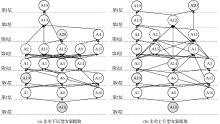
划分 层级 | 非劣下沉型方案提取 | 非劣上升型方案提取 | ||
|---|---|---|---|---|
| 优劣固定方案 | 优劣可变方案 | 优劣固定方案 | 优劣可变方案 | |
| 第1层 | A10 | A10 | A20 | |
| 第2层 | A13 | A13 | A12 | |
| 第3层 | A4 | A20 | A4 | A2,A11 |
| 第4层 | A9,A15 | A2,A11,A12 | A9,A15 | A1 |
| 第5层 | A3,A5,A14 | A1 | A3,A5,A14 | |
| 第6层 | A6,A17,A19 | A6,A17,A19 | ||
| 第7层 | A7,A8,A16 | A7,A8,A16 | ||
| 第8层 | A18 | A18 | ||
"
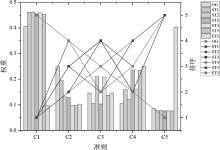
| 准则编号 | OG | ST1 | ST2 | ST3 | ST4 | ST5 | ET1 |
|---|---|---|---|---|---|---|---|
| C1 | 1 | 1 | 1 | 1 | 1 | 1 | 5 |
| C2 | 2 | 2 | 3 | 3 | 4 | 4 | 4 |
| C3 | 3 | 4 | 2 | 4 | 2 | 3 | 3 |
| C4 | 4 | 3 | 4 | 2 | 3 | 2 | 2 |
| C5 | 5 | 5 | 5 | 5 | 5 | 5 | 1 |
"

"
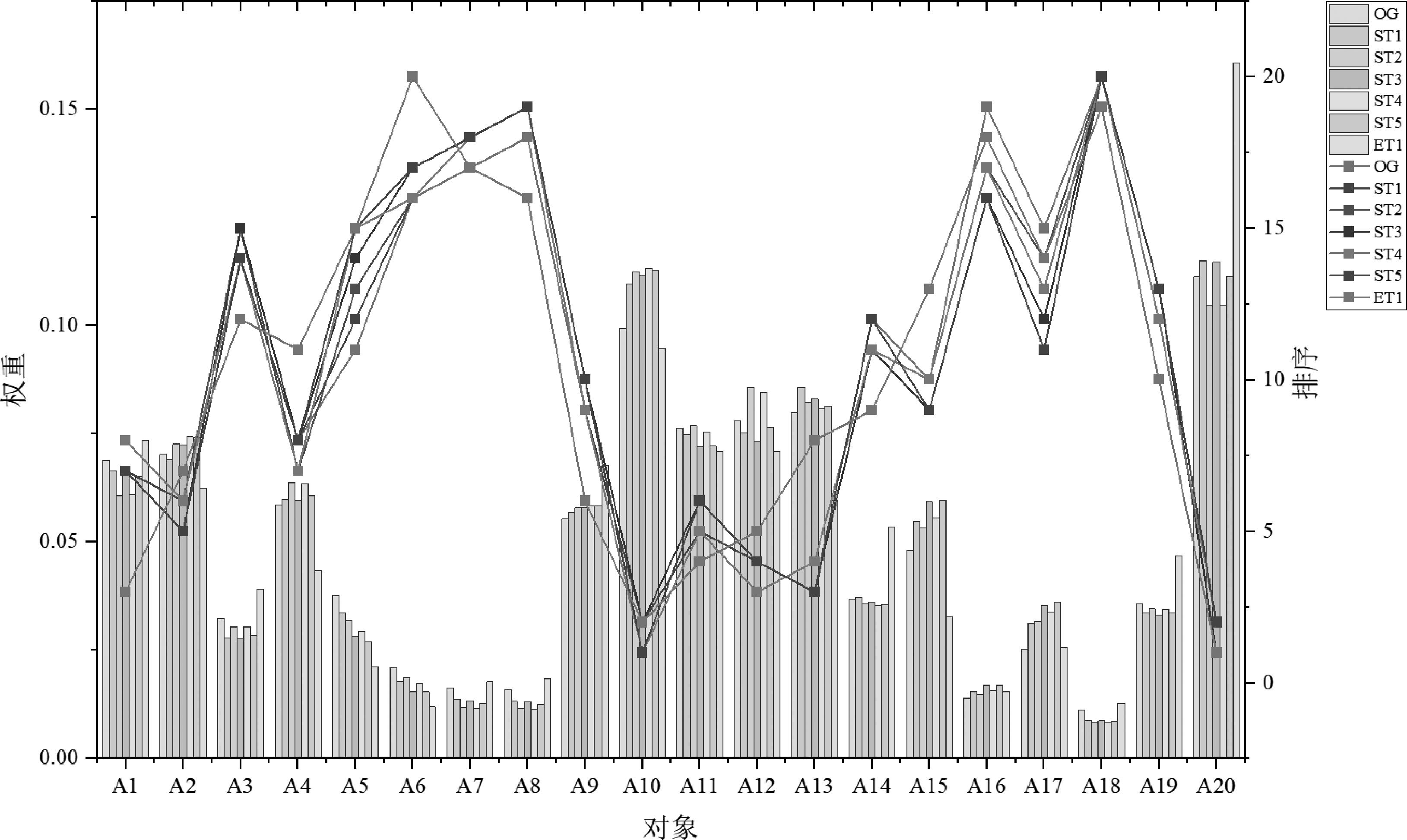
"
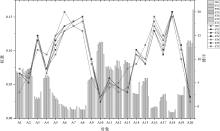
| 对象编号 | OPA-P | TOPSIS | VIKOR | RSR | TODIM |
|---|---|---|---|---|---|
| A1 | 7 | 4 | 6 | 5 | 4 |
| A2 | 6 | 2 | 2 | 2 | 8 |
| A3 | 14 | 14 | 14 | 14 | 11 |
| A4 | 8 | 9 | 9 | 9 | 10 |
| A5 | 11 | 11 | 10 | 11 | 13 |
| A6 | 16 | 16 | 17 | 16 | 18 |
| A7 | 17 | 20 | 20 | 20 | 15 |
| A8 | 18 | 19 | 18 | 19 | 14 |
| A9 | 9 | 8 | 8 | 8 | 3 |
| A10 | 2 | 7 | 7 | 7 | 2 |
| A11 | 5 | 3 | 3 | 3 | 5 |
| A12 | 4 | 5 | 4 | 4 | 9 |
| A13 | 3 | 6 | 5 | 6 | 6 |
| A14 | 12 | 13 | 12 | 13 | 7 |
| A15 | 10 | 10 | 11 | 10 | 16 |
| A16 | 19 | 17 | 15 | 17 | 19 |
| A17 | 15 | 12 | 13 | 12 | 17 |
| A18 | 20 | 18 | 19 | 18 | 20 |
| A19 | 13 | 15 | 16 | 15 | 12 |
| A20 | 1 | 1 | 1 | 1 | 1 |
"
| Spearman相关系数 | OPA-P | TOPSIS | VIKOR | RSR | TODIM |
|---|---|---|---|---|---|
| OPA-P | 1(0.000***) | 0.926(0.000***) | 0.929(0.000***) | 0.931(0.000***) | 0.857(0.000***) |
| TOPSIS | 0.926(0.000***) | 1(0.000***) | 0.986(0.000***) | 0.998(0.000***) | 0.783(0.000***) |
| VIKOR | 0.929(0.000***) | 0.986(0.000***) | 1(0.000***) | 0.989(0.000***) | 0.789(0.000***) |
| RSR | 0.931(0.000***) | 0.998(0.000***) | 0.989(0.000***) | 1(0.000***) | 0.776(0.000***) |
| TODIM | 0.857(0.000***) | 0.783(0.000***) | 0.789(0.000***) | 0.776(0.000***) | 1(0.000***) |
"
| 对象编号 | 自燃情况 | 支持向量机[ | 偏序集[ | OPA-P |
|---|---|---|---|---|
| A1 | 非自燃 | 安全 | 较安全 | 易自燃 |
| A2 | 非自燃 | 安全 | 安全 | 易自燃 |
| A3 | 自燃 | 易自燃 | 易自燃 | 易自燃 |
| A4 | 自燃 | 极易自燃 | 较安全 | 易自燃 |
| A5 | 自燃 | 易自燃 | 易自燃 | 易自燃 |
| A6 | 自燃 | 易自燃 | 较易自燃 | 易自燃 |
| A7 | 自燃 | 极易自燃 | 极易自燃 | 极易自燃 |
| A8 | 自燃 | 极易自燃 | 极易自燃 | 极易自燃 |
| A9 | 自燃 | 极易自燃 | 较安全 | 易自燃 |
| A10 | 非自燃 | 易自燃 | 安全 | 安全 |
| A11 | 非自燃 | 安全 | 较安全 | 易自燃 |
| A12 | 非自燃 | 安全 | 较安全 | 易自燃 |
| A13 | 非自燃 | 易自燃 | 安全 | 安全 |
| A14 | 非自燃 | 易自燃 | 易自燃 | 易自燃 |
| A15 | 自燃 | 极易自燃 | 易自燃 | 易自燃 |
| A16 | 自燃 | 极易自燃 | 极易自燃 | 极易自燃 |
| A17 | 自燃 | 易自燃 | 较易自燃 | 易自燃 |
| [1] | 张发明, 韩江涛, 张淋茜, 等. 社会信任网络下基于T2PLD算子的多属性大群体决策方法[J]. 中国管理科学, 2025, 33(9): 177-188. |
| Zhang F M, Han J T, Zhang L Q, et al. Multi-attribute large group decision making method based on T2PLD operator in social trust network[J]. Chinese Journal of Management Science,2025,33(9): 177-188. | |
| [2] | 崔春生, 曹艳丽, 邱闯闯, 等. 基于证据理论和Vague集的多属性群决策方法研究[J]. 运筹与管理, 2021, 30(11): 1-5. |
| Cui C S, Cao Y L, Qiu C C, et al. Research on multi-attribute group decision-making method based on evidence theory and vague sets[J]. Operations Research and Management Science, 2021, 30(11): 1-5. | |
| [3] | 刘培德, 滕飞. 基于共识模型和ORESTE的扩展概率语言多属性群决策方法[J]. 中国管理科学, 2021, 29(3): 199-209. |
| Liu P D, Teng F. Multiple attribute group decision-making method based on consensus model and ORESTE method for extended probabilistic linguistic term set[J]. Chinese Journal of Management Science, 2021, 29(3): 199-209. | |
| [4] | 岳立柱, 陆畅, 张志杰. 综合评价模型的偏序集表示[J]. 运筹与管理, 2022, 31(5): 101-106+111. |
| Yue L Z, Lu C, Zhang Z J. Partial ordered set representation of comprehensive evaluation model[J]. Operations Research and Management Science, 2022, 31(5): 101-106+111. | |
| [5] | 王茜, 张贤勇, 吕智颖. 不完备决策信息系统的混合条件熵与多属性决策[J]. 系统工程理论与实践, 2022, 42(12): 3401-3411. |
| Wang Q, Zhang X Y, Lv Z Y. Hybrid conditional entropy and multi-attribute decision making of incomplete decision information system[J]. Systems Engineering-Theory & Practice, 2022, 42(12): 3401-3411. | |
| [6] | Wang H, Peng Y, Kou G. A two-stage ranking method to minimize ordinal violation for pairwise comparisons[J]. Applied Soft Computing, 2021, 106: 107287. |
| [7] | 安博文, 侯震梅. 客观AHP判断矩阵的构造方法研究[J]. 数量经济技术经济研究, 2021, 38(12):164-182. |
| An B W, Hou Z M. Research on the construction method of objective AHP judgment matrix[J]. The Journal of Quantitative & Technical Economics, 2021, 38(12): 164-182. | |
| [8] | Mahmoudi A, Javed S A. Performance evaluation of construction sub-contractors using ordinal priority approach[J]. Evaluation and Program Planning, 2022, 91: 102022. |
| [9] | 李洁, 徐建刚, 黄晨, 等. 数据驱动的评价范式实证研究[J]. 情报理论与实践, 2021, 44(6): 55-60. |
| Li J, Xu J G, Huang C, et al. An empirical study on data-driven evaluation paradigm[J]. Information Studies (Theory & Application), 2021, 44(6): 55-60. | |
| [10] | Liu P, Pan Q, Zhu B, et al. Multi-attribute decision-making model based on regret theory and its application in selecting human resource service companies in the post-epidemic era[J]. Information Sciences, 2023, 649: 119676. |
| [11] | 刘吉成, 韦秋霜, 黄骏杰, 等. 基于区间二型模糊TOPSIS的风储联合发电系统协同决策研究[J]. 技术经济, 2019, 38(5): 110-116. |
| Liu J C, Wei Q S, Huang J J, et al. Study on collaborative decision of wind-energy storage combined power generation system based on interval type-2 fuzzy TOPSIS[J]. Technology Economics, 2019, 38(5): 110-116. | |
| [12] | Ataei Y, Mahmoudi A, Feylizadeh M R, et al. Ordinal priority approach (OPA) in multiple attribute decision-making[J].Applied Soft Computing,2020,86: 105893. |
| [13] | Yu G F. A multi-objective decision method for the network security situation grade assessment under multi-source information[J]. Information Fusion, 2024, 102: 102066. |
| [14] | 罗世华, 刘俊. 拓展区间Fermatean模糊前景理论综合评价方法[J].中国管理科学,2025, 33(6): 129-139. |
| Luo S H, Liu J. A comprehensive evaluation method based on extended interval-valued fermatean fuzzy prospect theory[J]. Chinese Journal of Management Science, 2025, 33(6): 129-139. | |
| [15] | 余高锋, 李登峰. 新零售生态网络安全态势评级混合型变权方法及稳定性研究[J]. 中国管理科学, 2024, 32(10): 234-243. |
| Yu G F, Li D F. The stability and variable weight decision method for rating new retail ecology network security situation[J]. Chinese Journal of Management Science, 2024, 32(10): 234-243. | |
| [16] | 钱丽丽, 刘思峰, 方志耕. 基于后悔理论的灰色应急决策方案动态调整方法[J]. 运筹与管理, 2020, 29(8): 73-78+88. |
| Qian L L, Liu S F, Fang Z G. Dynamic adjusting method for grey emergency decision based on regret theory[J]. Operations Research and Management Science, 2020, 29(8): 73-78+88. | |
| [17] | 缑迅杰, 徐鑫茹, 徐泽水. 基于动态社会网络的能源转型路径评估多属性群决策建模研究[J]. 中国管理科学, 2025, 33(6): 346-359. |
| Gou X J, Xu X R, Xu Z S. Research on multi-attribute group decision-making modeling of energy transition path evaluation based on dynamic social network[J]. Chinese Journal of Management Science, 2025, 33(6): 346-359. | |
| [18] | 丁垚, 王人龙, 李灵芝, 等. 装配式建筑施工安全风险评估与控制的BN-MNA模型及应用[J]. 土木工程与管理学报, 2022, 39(4): 153-161+184. |
| Ding Y, Wang R L, Li L Z, et al. Safety risk assessment and control of prefabricated building construction based on BN-MNA model[J]. Journal of Civil Engineering and Management,2022,39(4):153-161+184. | |
| [19] | 刘丹阳, 黄志刚. 金融科技、OFDI与经济高质量发展——基于“双循环”相互促进的视角[J]. 中国管理科学, 2023, 31(11): 151-164. |
| Liu D Y, Huang Z G. Fintech, outward FDI and high-quality economic development: Based on the perspective of “mutual promotion of dual circulation”[J]. Chinese Journal of Management Science, 2023, 31(11): 151-164. | |
| [20] | 刘松林, 王坦, 戚琳琳. 基于客观组合赋权的就业质量测度与评价[J].统计与决策,2023,39(20): 168-173. |
| Liu S L, Wang T, Qi L L. Objective combination weighting-based measurement and evaluation of employment quality[J]. Statistics & Decision, 2023, 39(20): 168-173. | |
| [21] | 王伟明, 徐海燕, 朱建军, 等. 基于CWPHM算子和C-DEMATEL的语言型多属性决策方法[J]. 中国管理科学, 2023,DOI:10.16381/j.cnki.issn1003-207x.2023.0903 . |
| Wang W M, Xu H Y, Zhu J J, et al. A novel linguistic multiple attribute decision making method based on CWPHM operator and C-DEMATEL[J]. Chinese Journal of Management Science, 2023,DOI:10.16381/j.cnki.issn1003-207x.2023.0903 . | |
| [22] | Zhang H, Wei G, Chen X. SF-GRA method based on cumulative prospect theory for multiple attribute group decision making and its application to emergency supplies supplier selection[J]. Engineering Applications of Artificial Intelligence, 2022, 110: 104679. |
| [23] | 李望晨, 郑文贵, 王素珍, 等. 基于区间灰数多属性群决策建模技术的卫生应急综合评价研究[J]. 数学的实践与认识, 2020, 50(2): 1-8. |
| Li W C, Zheng W G, Wang S Z, et al. Hygiene emergency comprehensive evaluation based on multi-attribute group decision modeling technique of section grey number[J]. Mathematics in Practice and Theory, 2020, 50(2): 1-8. | |
| [24] | 高原, 覃木广, 李明建. 基于支持向量机的采空区遗煤自燃预测分析[J].煤炭科学技术,2010, 38(2): 50-54. |
| Gao Y, Qin M G, Li M J. Analysis on prediction of residual coal spontaneous combustion in goaf based on support vector machine[J]. Coal Science and Technology, 2010, 38(2): 50-54. | |
| [25] | 王金宝, 侯金玲, 张浪, 等. 采空区遗煤自燃危险性评价的熵权可拓方法[J]. 矿业安全与环保, 2015, 42(2): 43-48. |
| Wang J B, Hou J L, Zhang L, et al. Entropy weight extension method for spontaneous combustion risk assessment of residual coal in gob[J]. Mining Safety & Environmental Protection, 2015, 42(2): 43-48. | |
| [26] | 孙政, 文畅平, 白银涌, 等. 基于属性数学理论的采空区煤自燃危险性评价[J]. 解放军理工大学学报(自然科学版), 2017: 1-5. |
| Sun Z, Wen C P, Bai Y Y, et al. Risk Assessment of Coal Spontaneous Combustion in Goaf Based on Attribute Mathematics Theory[J]. Journal of PLA University of Science and Technology (Natural Science Edition), 2017: 1-5. | |
| [27] | 陈金全, 王继仁, 岳立柱. 基于偏序集的采空区煤自燃可能性评价模型[J]. 中国安全生产科学技术, 2019, 15(2): 89-93. |
| Chen J Q, Wang J R, Yue L Z. Evaluation model on possibility of coal spontaneous combustion in goaf based on partially ordered set[J]. Journal of Safety Science and Technology, 2019, 15(2): 89-93. |
| [1] | REN Rong-rong, MENG Yi-ming, LI Xiao-qi, ZHAO Meng. Consensus Measure Method for Probabilistic Linguistic Information in Multi-attribute Group Decision Making [J]. Chinese Journal of Management Science, 2020, 28(4): 220-230. |
| [2] | ZHANG Jian. Research on the Model of Supplier Selection with HTFWGBM Operator [J]. Chinese Journal of Management Science, 2019, 27(3): 137-143. |
| [3] | PAN Ya-hong, GENG Xiu-li. Hybrid Multiple Attribute Decision Making Approach based on Mo-RVIKOR [J]. Chinese Journal of Management Science, 2019, 27(12): 143-151. |
| [4] | LIANG Chang-yong, GU Dong-xiao, FAN Xin, CHEN Wen-en. Research of Case Retrieval Algorithm for Decision Making with Uncertain Multiple Attributes [J]. Chinese Journal of Management Science, 2009, 17(1): 131-137. |
| Viewed | ||||||
|
Full text |
|
|||||
|
Abstract |
|
|||||
|
||
