
主管:中国科学院
主办:中国优选法统筹法与经济数学研究会
中国科学院科技战略咨询研究院
主办:中国优选法统筹法与经济数学研究会
中国科学院科技战略咨询研究院

Chinese Journal of Management Science ›› 2026, Vol. 34 ›› Issue (9): 37-47.doi: 10.16381/j.cnki.issn1003-207x.2023.2013
Previous Articles Next Articles
Dan Fang1, Qiaowen Lu2, Bin Chen1,2( ), Saige Wang1, Jiangqiang Chen2
Received:2023-11-29
Revised:2024-11-08
Online:2026-09-25
Published:2026-09-01
Contact:
Bin Chen
E-mail:chenb@bnu.edu.cn
CLC Number:
Dan Fang,Qiaowen Lu,Bin Chen, et al. Subsidy Recession Policy and Overcapacity in Strategic Emerging Industries:Evidence from Listed Photovoltaic Enterprises[J]. Chinese Journal of Management Science, 2026, 34(9): 37-47.

"
| 变量符号 | 变量描述 | 均值 | 标准差 | 最小值 | 最大值 |
|---|---|---|---|---|---|
| OC | 产能过剩率,OC=1-CU。其中CU为产能利用率,即实际产出与理论产出的比值,理论产出通过生产函数法测算 | 0.168 | 0.218 | 0.000 | 0.871 |
| Treat | “531”新政处理组虚拟变量,即光伏上市公司虚拟变量。当上市公司属于处理组即光伏产业时,取值为1;属于对照组即风电产业时,则取值为0 | 0.487 | 0.500 | 0 | 1 |
| Time | “531”新政时间虚拟变量。当年份为2018年及以后时,取值为1;否则,取值为0 | 0.600 | 0.490 | 0 | 1 |
| Age | 企业年龄,观察年份与上市年份的差值加1 | 14.763 | 7.031 | 1 | 31 |
| Labor | 职工人数,企业平均职工人数的自然对数 | 7.980 | 1.093 | 4.625 | 11.226 |
| Ks | 知识存量,无形资产的自然对数 | 19.590 | 1.569 | 0.000 | 23.722 |
| Growth | 企业成长性,营业收入增长率 | 0.212 | 0.954 | -0.913 | 23.998 |
| Fixasset | 固定资产比率,固定资产与总资产之比 | 0.351 | 0.186 | 0.010 | 0.871 |
| Capint | 资本密集度,总资产与营业收入之比 | 2.949 | 2.093 | 0.145 | 15.984 |
| 资产负债率,负债总额与资产总额之比 | 0.523 | 0.170 | 0.040 | 0.967 | |
| Covid | 新冠疫情虚拟变量。新冠疫情暴发的年份(2020—2022年)取值为1,其他年份取值为0 | 0.300 | 0.459 | 0 | 1 |
| RD | 研发强度,研发投入与营业收入之比的自然对数 | 1.181 | 0.660 | 0.000 | 2.562 |
| Cost | 寻租成本,管理费用与营业收入之比的自然对数 | -3.077 | 0.739 | -6.613 | -0.953 |
"
| OC | 上游 | 中游 | 下游 | |||||||||
|---|---|---|---|---|---|---|---|---|---|---|---|---|
| 均值 | 标准差 | 最小值 | 最大值 | 均值 | 标准差 | 最小值 | 最大值 | 均值 | 标准差 | 最小值 | 最大值 | |
| 2014年 | 33.6 | 25.7 | 0.0 | 70.9 | 27.7 | 18.4 | 0.0 | 51.3 | 12.4 | 16.9 | 0 | 43.3 |
| 2015年 | 35.0 | 22.9 | 0.0 | 58.2 | 20.7 | 18.5 | 0.0 | 53.5 | 18.5 | 22.9 | 0 | 54.2 |
| 2016年 | 25.6 | 19.5 | 0.0 | 52.0 | 23.4 | 21.1 | 0.0 | 59.6 | 20.2 | 24.8 | 0 | 57.3 |
| 2017年 | 19.9 | 22.7 | 0.0 | 62.4 | 23.0 | 23.6 | 0.0 | 63.4 | 16.8 | 22.7 | 0 | 58.5 |
| 2018年 | 14.4 | 19.4 | 0.0 | 55.7 | 12.4 | 16.1 | 0.0 | 54.0 | 12.3 | 17.7 | 0 | 52.3 |
| 2019年 | 14.3 | 23.0 | 0.0 | 69.4 | 13.3 | 21.0 | 0.0 | 58.1 | 11.8 | 16.4 | 0 | 57.7 |
| 2020年 | 14.5 | 19.4 | 0.0 | 49.1 | 15.6 | 23.6 | 0.0 | 77.5 | 9.3 | 11.3 | 0 | 32.8 |
| 2021年 | 8.5 | 15.7 | 0.0 | 46.5 | 3.6 | 8.4 | 0.0 | 28.1 | 5.2 | 9.3 | 0 | 28.8 |
| 2022年 | 4.0 | 8.2 | 0.0 | 21.8 | 2.1 | 5.6 | 0.0 | 18.8 | 3.3 | 7.2 | 0 | 24.3 |
| 2023年 | 5.9 | 10.2 | 0.0 | 29.3 | 3.7 | 6.6 | 0.0 | 18.3 | 3.2 | 6.5 | 0 | 19.5 |
| 样本量 | 9 | 9 | 9 | 9 | 14 | 14 | 14 | 14 | 14 | 14 | 14 | 14 |
"
| 变量 | OC | |
|---|---|---|
| (1) | (2) | |
| Treat×Time | -0.036** | -0.063*** |
| (0.017) | (0.023) | |
| Age | -0.019*** | |
| (0.003) | ||
| Labor | 0.097*** | |
| (0.023) | ||
| Ks | -0.005 | |
| (0.007) | ||
| Growth | -0.006** | |
| (0.002) | ||
| Fixasset | 0.466*** | |
| (0.072) | ||
| Capint | 0.064*** | |
| (0.010) | ||
| Dta | -0.161** | |
| (0.071) | ||
| Covid | -0.004 | |
| (0.008) | ||
| 常数项 | 0.254*** | -0.473** |
| (0.013) | (0.180) | |
| 年份固定效应 | Yes | Yes |
| 企业固定效应 | Yes | Yes |
| 样本数 | 760 | 760 |
| R2 | 0.268 | 0.593 |
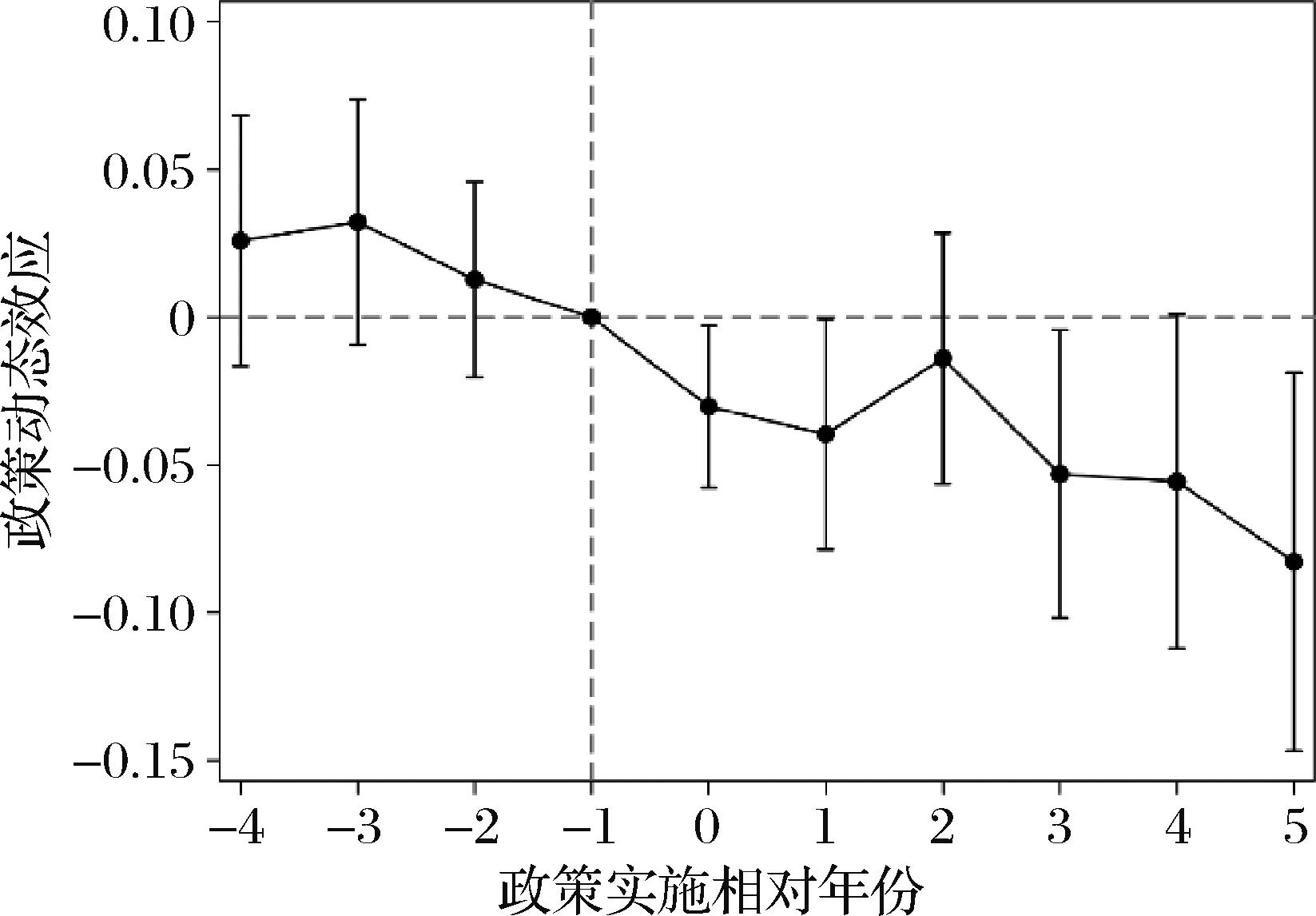
"
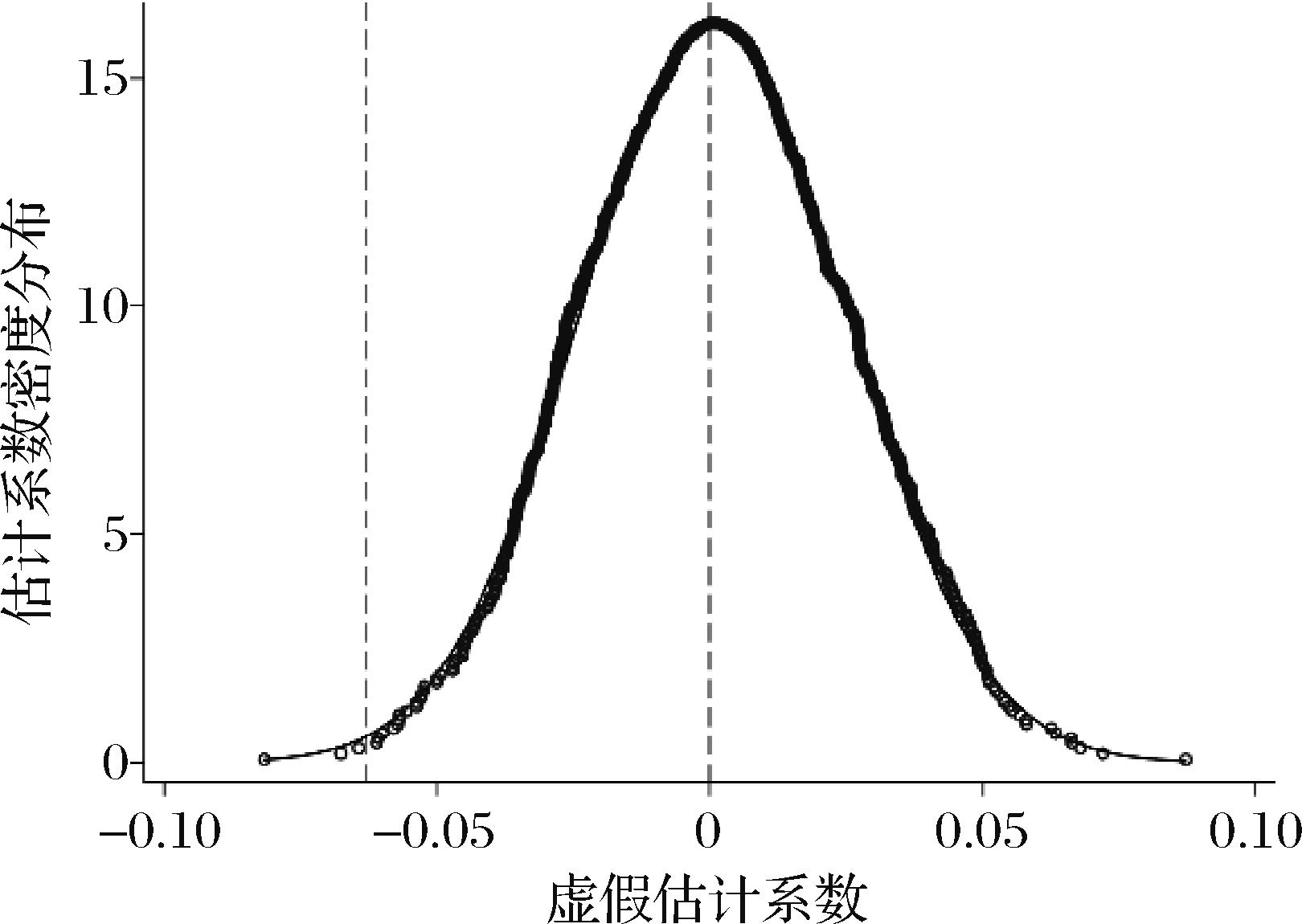
"
"
| 变量 | OC | ||||
|---|---|---|---|---|---|
| 按光伏产业链分组 | 按企业所有制分组 | ||||
| 上游企业 | 中游企业 | 下游企业 | 国有企业 | 非国有企业 | |
| (1) | (2) | (3) | (4) | (5) | |
| Treat×Time | -0.028 | -0.057** | -0.057*** | -0.089*** | -0.053*** |
| (0.024) | (0.025) | (0.018) | (0.018) | (0.019) | |
| 控制变量 | Yes | Yes | Yes | Yes | Yes |
| 企业固定效应 | Yes | Yes | Yes | Yes | Yes |
| 年份固定效应 | Yes | Yes | Yes | Yes | Yes |
| 样本量 | 200 | 230 | 330 | 340 | 420 |
| R2 | 0.714 | 0.646 | 0.595 | 0.638 | 0.607 |
"
| 变量 | RD | OC | Cost | OC |
|---|---|---|---|---|
| (1) | (2) | (3) | (4) | |
| Treat×Time | 0.085** | -0.211** | ||
| (0.033) | (0.081) | |||
| RD | -0.029* | |||
| (0.015) | ||||
| Cost | 0.069*** | |||
| (0.023) | ||||
| 控制变量 | Yes | Yes | Yes | Yes |
| 企业固定效应 | Yes | Yes | Yes | Yes |
| 年份固定效应 | Yes | Yes | Yes | Yes |
| Sobel Z | -2.711** | -3.529*** | ||
Bootstrap(1000次) 置信区间 | [-0.0063, -0.0005] | [-0.0214, -0.0034] | ||
| 样本量 | 760 | 760 | 760 | 760 |
| R2 | 0.183 | 0.580 | 0.648 | 0.596 |
| [1] | 黄卓, 陶云清, 刘兆达, 等. 智能制造如何提升企业产能利用率——基于产消合一的视角[J]. 管理世界, 2024, 40(5): 40-59. |
| Huang Z, Tao Y Q, Liu Z D, et al. How does intelligent manufacturing improve enterprise capacity Utilization? Based on the perspective of integration of production and consumption[J]. Journal of Management World, 2024, 40(5): 40-59. | |
| [2] | 中国社会科学院工业经济研究所课题组.中国经济发展的机遇与挑战——学习中央经济工作会议精神座谈会综述[J]. 中国工业经济, 2024(1): 5-16. |
| Research Group of the Institute of Industrial Economics of the Chinese Academy of Social Sciences. Opportunities and Challenges of China’s economic development: Summary of the symposium on learning the spirit of the 2023 central economic work conference[J]. China Industrial Economics, 2024(1): 5-16. | |
| [3] | 余淼杰. 对“产能过剩”与新质生产力的理解及思考[J]. 辽宁大学学报(哲学社会科学版), 2024, 52(4): 1-6. |
| Yu M J. Understanding and review of “overcapacity” and new quality productive forces[J]. Journal of Liaoning University (Philosophy and Social Sciences), 2024, 52(4): 1-6. | |
| [4] | 国务院发展研究中心《进一步化解产能过剩的政策研究》课题组. 当前我国产能过剩的特征、风险及对策研究——基于实地调研及微观数据的分析[J]. 管理世界, 2015, 31(4): 1-10. |
| Research Group of Development Research Center of the State Council on Policies to Further Resolve Overcapacity. Research on the characteristics, risks and countermeasures of current overcapacity in China: Based on field research and microdata[J]. Journal of Management World, 2015,31(4): 1—10. | |
| [5] | 柳光强. 税收优惠、财政补贴政策的激励效应分析——基于信息不对称理论视角的实证研究[J]. 管理世界, 2016, 32(10): 62-71. |
| Liu G Q. Analysis of incentive effects of tax preference and financial subsidy policies: An empirical study based on the perspective of information asymmetry theory[J]. Journal of Management World, 2016, 32(10): 62-71. | |
| [6] | Yang X L, He L Y, Xia Y F, et al. Effect of government subsidies on renewable energy investments: The threshold effect[J].Energy Policy,2019,132: 156-166. |
| [7] | 王文甫, 明娟, 岳超云. 企业规模、地方政府干预与产能过剩[J]. 管理世界, 2014, 30(10): 17-36+46. |
| Wang W F, Ming J, Yue C Y. Enterprise scale, local government intervention and overcapacity[J]. Journal of Management World, 2014, 30(10): 17-36+46. | |
| [8] | 徐业坤, 马光源. 地方官员变更与企业产能过剩[J]. 经济研究, 2019, 54(5): 129-145. |
| Xu Y K, Ma G Y. Local officials' turnover and enterprises' overcapacity[J]. Economic Research Journal, 2019, 54(5): 129-145. | |
| [9] | 颜晓畅, 黄桂田. 政府财政补贴、企业经济及创新绩效与产能过剩——基于战略性新兴产业的实证研究[J]. 南开经济研究, 2020(1): 176-198. |
| Yan X C, Huang G T. Government subsidies, enterprise economic and innovation performance, and overcapacity: An empirical research based on strategic emerging industries[J]. Nankai Economic Studies, 2020(1): 176-198. | |
| [10] | 余东华, 吕逸楠. 政府不当干预与战略性新兴产业产能过剩——以中国光伏产业为例[J]. 中国工业经济, 2015(10): 53-68. |
| Yu D H, Lv Y N. Government improper intervention and overcapacity of strategic emerging industries: A case study of Chinese photovoltaic industry[J]. China Industrial Economics, 2015(10): 53-68. | |
| [11] | 王宇, 罗悦. 外需引导与政府补贴下战略性新兴产业的产能过剩研究——以光伏产业为例[J]. 现代经济探讨, 2018(3): 78-87. |
| Wang Y, Luo Y. The research on overcapacity of strategic emerging industries based on overseas demand driven and government subsidies: Taking the photovoltaic industry as an example[J]. Modern Economic Research, 2018(3): 78-87. | |
| [12] | 高玥. 产业补贴退坡的政策效果及启示——以中国新能源汽车为例[J].软科学,2020, 34(12): 28-32+46. |
| Gao Y. The effect of the subsidy reduction policy and its implication: The case of China’s electric vehicles[J]. Soft Science, 2020, 34(12): 28-32+46. | |
| [13] | 江飞涛, 曹建海. 市场失灵还是体制扭曲——重复建设形成机理研究中的争论、缺陷与新进展[J]. 中国工业经济, 2009(1): 53-64. |
| Jiang F T, Cao J H. Market failure or institutional weaknesses: The argument, defect and new development in research of redundant construction formation mechanism[J]. China Industrial Economics, 2009(1): 53-64. | |
| [14] | 孔令池. 市场化改革、地方政府投资与产能过剩治理[J]. 经济问题探索, 2020(11): 52-60. |
| Kong L C. Market-oriented reform, local government investment and governance overcapacity[J]. Inquiry into Economic Issues, 2020(11): 52-60. | |
| [15] | 于斌斌, 胡雅静. 撤县设区的产能过剩化解效应[J]. 经济理论与经济管理, 2023, 43(7): 74-87. |
| Yu B B, Hu Y J. The overcapacity reduction effect of city-county merger[J]. Economic Theory and Business Management, 2023, 43(7): 74-87. | |
| [16] | Wang Z A, Zheng C S. Is technological innovation the cure for overcapacity? Exploring mediating and moderating mechanisms[J]. Journal of Business Research, 2022, 147: 348-361. |
| [17] | 刘振中, 叶意雯. 中国与发达经济体战略性新兴产业补贴特征比较及启示——以半导体产业为例[J]. 宏观经济研究, 2023(9): 75-88. |
| Liu Z Z, Ye Y W. Comparison and implications of the characteristics of subsidies for strategic emerging industries between China and developed economies: Taking the semiconductor industry as an example[J]. Macroeconomics, 2023(9): 75-88. | |
| [18] | 徐小晶, 徐小林. 财政补贴对企业商业信用融资的影响研究——基于新能源汽车补贴退坡政策的实证分析[J]. 南开管理评论, 2021, 24(3): 213-226. |
| Xu X J, Xu X L. The effect of subsidy reduction policy on listed firm’s investment: Evidence from new-energy vehicles[J]. Nankai Business Review, 2021, 24(3): 213-226. | |
| [19] | 查冬兰, 周剑, 赵天予, 等. 补贴加速退坡政策对光伏企业经营绩效的影响研究[J]. 中国石油大学学报(社会科学版), 2022, 38(5): 1-9. |
| Zha D L, Zhou J, Zhao T Y, et al. Effects of the accelerated declining subsidy policy on the operating performance of photovoltaic enterprises[J]. Journal of China University of Petroleum (Edition of Social Science), 2022, 38(5): 1-9. | |
| [20] | 李纪珍, 刘子諝. 光伏企业何以在补贴退坡中实现“逆势研发”?[J]. 中国软科学, 2023(10): 34-43. |
| Li J Z, Liu Z X. How do photovoltaic enterprises improve R & D investments in the trend of “phasing-out subsidies”?[J]. China Soft Science, 2023(10): 34-43. | |
| [21] | 付云. 财政补贴退坡对光伏产业的影响研究[D]. 昆明: 云南财经大学, 2022. |
| Fu Y. Research on the impact of the decline of financial subsidies on the photovoltaic industry[D]. Kunming: Yunnan University of Finance and Economics, 2022. | |
| [22] | 吴精益. 光伏企业经营管理和发展战略研究[J]. 企业改革与管理, 2023(7): 168-170. |
| Wu J Y. Research on management and development strategy of photovoltaic enterprises [J]. Enterprise Reform and Management, 2023(7): 168-170. | |
| [23] | 冯楚建, 陈宏波. 能源安全视域下的光伏清洁利用: 国际动态与中国出路[J]. 科技管理研究, 2017, 37(9): 52-58. |
| Feng C J, Chen H B. International trend and China’s outlet of clean use of photovoltaic resources from the perspective of energy security[J]. Science and Technology Management Research, 2017, 37(9): 52-58. | |
| [24] | 刘素荣, 谢笑潇, 霍江林. 补贴退坡对新能源企业研发投资的影响——基于市场预期调节视角[J]. 资源与产业, 2022, 24(4): 65-76. |
| Liu S R, Xie X X, Huo J L. Impacts of subsidy reduction on new energy companies' research & development viewing from market expectation adjustment[J]. Resources & Industries, 2022, 24(4): 65-76. | |
| [25] | 熊勇清, 颜泉润. 促进还是抑制: 新能源车企被动型异地投资对创新产出的影响[J]. 研究与发展管理, 2024, 36(3): 125-136. |
| Xiong Y Q, Yan Q R. Promote or inhibit: Impact of passive cross-regional investment by new energy vehicle enterprises on innovation output[J]. R & D Management, 2024, 36(3): 125-136. | |
| [26] | 王艺明, 马晴晴. 财政补贴对战略性新兴产业的资源配置效应——以光伏产业为例[J]. 经济管理, 2024, 46(3): 64-85. |
| Wang Y M, Ma Q Q. The resource allocation effect of fiscal subsidies on strategic emerging industries: A case study of the photovoltaic industry[J]. Business and Management Journal, 2024, 46(3): 64-85. | |
| [27] | 毛其淋, 许家云. 政府补贴、异质性与企业风险承担[J]. 经济学(季刊), 2016, 16(4): 1533-1562. |
| Mao Q L, Xu J Y. Government subsidy, heterogeneity and corporate risk-taking[J]. China Economic Quarterly, 2016, 16(4): 1533-1562. | |
| [28] | 孙传旺, 占妍泓. 电价补贴对新能源制造业企业技术创新的影响——来自风电和光伏装备制造业的证据[J].数量经济技术经济研究,2023, 40(2): 158-180. |
| Sun C W, Zhan Y H. The impact of electricity price subsidy on technological innovation of new energy manufacturing enterprises: Evidence from the wind power and solar PV equipment manufacturing industry[J]. Journal of Quantitative & Technological Economics, 2023, 40(2): 158-180. | |
| [29] | Rexhäuser S, Rammer C. Environmental innovations and firm profitability: Unmasking the porter hypothesis[J]. Environmental and Resource Economics, 2014, 57(1): 145-167. |
| [30] | Wang Z A, Zheng C. Is technological innovation the cure for overcapacity? Exploring mediating and moderating mechanisms[J]. Journal of Business Research, 2022, 147: 348-361. |
| [31] | 吴文锋, 吴冲锋, 刘晓薇. 中国民营上市公司高管的政府背景与公司价值[J]. 经济研究, 2008, 43(7): 130-141. |
| Wu W F, Wu C F, Liu X W. Political connection and market valuation: Evidence from China individual-controlled listed firms[J]. Economic Research Journal, 2008, 43(7): 130-141. | |
| [32] | 邵敏, 包群. 政府补贴与企业生产率——基于我国工业企业的经验分析[J].中国工业经济, 2012(7): 70-82. |
| Shao M, Bao Q. Government subsidies and firm’s productivity:An empirical study based on Chinese industrial plants[J]. China Industrial Economics, 2012(7): 70-82. | |
| [33] | 曹亚军, 毛其淋. 政府补贴如何影响了中国企业产能利用率?[J]. 产业经济研究, 2020(2): 58-72. |
| Cao Y J, Mao Q L. How does government subsidy affect the capacity utilization rate of Chinese enterprises?[J]. Industrial Economics Research, 2020(2): 58-72. | |
| [34] | 郭庆旺, 贾俊雪. 中国潜在产出与产出缺口的估算[J]. 经济研究, 2004, 39(5): 31-39. |
| Guo Q W, Jia J X. Estimating potential output and the output gap in China[J]. Economic Research Journal, 2004, 39(5): 31-39. | |
| [35] | 朱沆, Kushins Eric, 周影辉. 社会情感财富抑制了中国家族企业的创新投入吗?[J]. 管理世界, 2016, 32(3): 99-114. |
| Zhu H, Kushins E, Zhou Y H. Does social emotional wealth restrain the innovation investment of China family business? [J]. Journal of Management World, 2016, 32(3): 99-114. | |
| [36] | Jacobson L S, LaLonde R J, Sullivan D G. Earnings losses of displaced workers[J].American Economic Review, 1993, 83(4): 685-709. |
| [37] | 江艇. 因果推断经验研究中的中介效应与调节效应[J]. 中国工业经济, 2022(5): 100-120. |
| Jiang T. Mediating effects and moderating effects in causal inference[J]. China Industrial Economics, 2022(5): 100-120 |
| [1] | LI Bai-zhou, WANG Xue, SU Yi, LUO Xiao-fang. Evolutionary Game Research on Collaborative Innovation of Supply Chain Enterprises from Different Strategic Emerging Industries in China [J]. Chinese Journal of Management Science, 2021, 29(8): 136-147. |
| Viewed | ||||||
|
Full text |
|
|||||
|
Abstract |
|
|||||
|
||
