
主管:中国科学院
主办:中国优选法统筹法与经济数学研究会
中国科学院科技战略咨询研究院
主办:中国优选法统筹法与经济数学研究会
中国科学院科技战略咨询研究院

Chinese Journal of Management Science ›› 2026, Vol. 34 ›› Issue (1): 353-368.doi: 10.16381/j.cnki.issn1003-207x.2024.0150
Pengqi Liu1, Ping Lv2( )
)
Received:2024-01-27
Revised:2025-01-15
Online:2026-01-25
Published:2026-01-29
Contact:
Ping Lv
E-mail:lvping@ucas.ac.cn
CLC Number:
Pengqi Liu,Ping Lv. "Winner Picking" or "Winner Avoiding"? Selection Mechanism for Outward Foreign Direct Investment by China's Business Group Affiliates[J]. Chinese Journal of Management Science, 2026, 34(1): 353-368.

"
| 衡量维度 | 变量构建 | 计算方式 |
|---|---|---|
| 创新能力 | 研发支出与销售额的比率 | 研发费用/销售收入 |
| 组织效率 | 销售额与员工人数的比率 | 销售收入/员工人数 |
| 成长潜力 | 销售额的增长率 | (本期销售收入-去年同期销售收入)/去年同期销售收入 |
| 市场投入 | 市场营销费用与销售额的比率 | 营业费用/销售收入 |
| 员工流动 | 员工人数的标准差 | 过去五年员工人数的标准差 |
| 营运效率 | 销售额与固定资产净值的比率 | 销售收入/固定资产净值 |
"
| 变量类型 | 变量名称 | 变量符号 | 变量说明 |
|---|---|---|---|
| 被解释变量 | 对外直接投资概率 | OFDI_R | 成员企业在该年度是否发起对外直接投资,是为1,否则为0 |
| 对外直接投资频次 | OFDI_N | 成员企业在该年度发起对外直接投资的次数加1取自然对数 | |
| 对外直接投资规模 | OFDI_V | 成员企业在该年度发起对外直接投资的金额加1取自然对数 | |
| 解释变量 | “优胜者”指数 | WINNER | 计算以下六个变量在过去五年之间的平均数值,加总之后进行标准化处理,便可得到“优胜者”指数。这六个变量为:①研发支出与销售额的比率;②销售额与员工人数的比率;③销售额的增长率;④市场营销费用与销售额的比率;⑤员工人数的标准差;⑥销售额与固定资产净值的比率。“优胜者”指数越高,表明成员企业在集团内的表现越优秀 |
| 控制变量 | 企业规模 | MVSIZE | 成员企业市值的自然对数 |
| 盈利能力 | ROA | 成员企业资产报酬率,用企业税后净利润除以总资产再乘以100表示 | |
| 融资约束 | SA | 成员企业融资约束指数SA,参考Hadlock and Pierce (2010),SA=-0.737×SIZE+0.043×SIZE2-0.04×AGE其中,SIZE为成员企业固定资产的自然对数,AGE为成员企业的年龄。SA指数值越大,表示融资约束越大 | |
| 财务杠杆 | LEVERAGE | 成员企业的债务水平,用企业总负债除以总资产再乘以100表示 | |
| 现金持有比 | CASH | 成员企业现金及现金等价物之和除以总资产再乘以100 | |
| 账面市值比 | BM | 成员企业净资产除以总市值再乘以100 | |
| 第一大股东持股 | LARGEST | 成员企业第一大股东持股数量除以总股数再乘以100 | |
| 两职合一 | DUAL | 成员企业的董事长与总经理是否为同一人,是为1,否则为0 | |
| 分析师关注 | ANALYST | 关注该成员企业的分析师数量加1取自然对数 | |
| 机构投资者持股 | INSTHOLD | 机构投资者持股数量除以总股数再乘以100 | |
| 审计质量 | AUDIT | 成员企业的财务报表是否由四大会计师事务所审计,是为1,否则为0 | |
| 主营业务 | MB | 成员企业是否与母公司处于同一行业,是为1,否则为0 |
"
| 变量名称 | 变量符号 | 样本量 | 平均值 | 标准差 | 最小值 | 中位数 | 最大值 |
|---|---|---|---|---|---|---|---|
| 对外直接投资概率 | OFDI_R | 28647 | 0.2977 | 0.4573 | 0.0000 | 0.0000 | 1.0000 |
| 对外直接投资频次 | OFDI_N | 28647 | 0.2567 | 0.4255 | 0.0000 | 0.0000 | 2.9957 |
| 对外直接投资规模 | OFDI_V | 28647 | 5.6087 | 8.6753 | 0.0000 | 0.0000 | 22.2000 |
| “优胜者”指数 | WINNER | 28647 | 0.0000 | 1.0000 | -2.7478 | 0.0319 | 2.3798 |
| 企业规模 | MVSIZE | 28647 | 22.5055 | 0.9743 | 20.6454 | 22.3858 | 25.4542 |
| 盈利能力 | ROA | 28647 | 4.3268 | 6.1993 | -20.3016 | 3.9448 | 23.0234 |
| 融资约束 | SA | 28647 | 0.0000 | 1.0000 | -2.7266 | 0.0253 | 2.2397 |
| 财务杠杆 | LEVERAGE | 28647 | 2.2370 | 2.7478 | 0.1424 | 1.2819 | 16.5030 |
| 现金持有比 | CASH | 28647 | 15.7958 | 12.1205 | 0.9687 | 12.4034 | 59.7687 |
| 账面市值比 | BM | 28647 | 1.0257 | 1.0815 | 0.0944 | 0.6712 | 6.5859 |
| 第一大股东持股 | LARGEST | 28647 | 34.7211 | 14.9958 | 8.6600 | 32.5900 | 74.6600 |
| 两职合一 | DUAL | 28647 | 0.2491 | 0.4325 | 0.0000 | 0.0000 | 1.0000 |
| 分析师关注 | ANALYST | 28647 | 1.4369 | 1.1798 | 0.0000 | 1.3863 | 4.3307 |
| 机构投资者持股 | INSTHOLD | 28647 | 31.1403 | 23.0647 | 0.0079 | 28.4434 | 83.1583 |
| 审计质量 | AUDIT | 28647 | 0.5428 | 0.4982 | 0.0000 | 1.0000 | 1.0000 |
| 主营业务 | MB | 28647 | 0.4129 | 0.4924 | 0.0000 | 0.0000 | 1.0000 |
"
| 变量 | (1) | (2) | (3) |
|---|---|---|---|
| OFDI_R | OFDI_N | OFDI_V | |
| WINNER | 0.0654*** | 0.0124*** | 0.2394*** |
| (0.0191) | (0.0036) | (0.0730) | |
| 控制变量 | 是 | 是 | 是 |
| 行业固定效应 | 是 | 是 | 是 |
| 年份固定效应 | 是 | 是 | 是 |
| 样本量 | 28647 | 28647 | 28647 |
| Pseudo/Adj.R2 | 0.0283 | 0.0431 | 0.0363 |
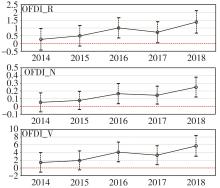
"
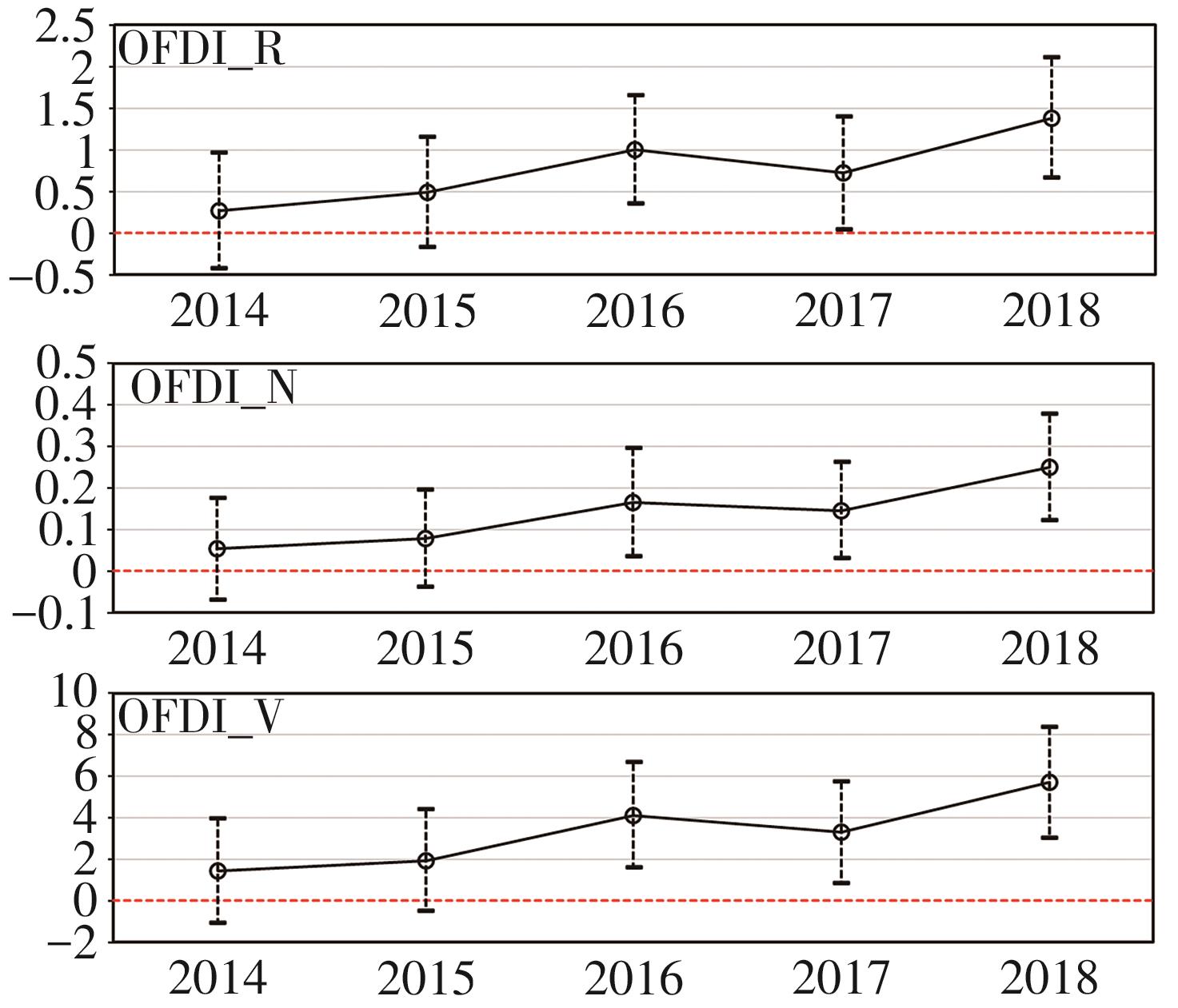
"
| 变量 | (1) | (2) | (3) |
|---|---|---|---|
| OFDI_R | OFDI_N | OFDI_V | |
| Treat*Post | 0.7860*** | 0.1423*** | 3.2353*** |
| (0.2245) | (0.0387) | (0.8167) | |
| Treat | -0.6564*** | -0.1296*** | -2.6844*** |
| (0.1804) | (0.0312) | (0.6580) | |
| 控制变量 | 是 | 是 | 是 |
| 行业固定效应 | 是 | 是 | 是 |
| 年份固定效应 | 是 | 是 | 是 |
| 样本量 | 2571 | 2571 | 2571 |
| Pseudo/Adj.R2 | 0.0497 | 0.0578 | 0.0520 |
"
| 变量 | (1) | (2) | (3) | (4) |
|---|---|---|---|---|
| WINNER | OFDI_R | OFDI_N | OFDI_V | |
| Instrumented-WINNER | 0.0135** | 0.0129** | 0.2486** | |
| (0.0054) | (0.0051) | (0.1025) | ||
| Ⅳ:Policy | 1.2372*** | |||
| (0.0123) | ||||
| 控制变量 | 是 | 是 | 是 | 是 |
| 行业固定效应 | 是 | 是 | 是 | 是 |
| 年份固定效应 | 是 | 是 | 是 | 是 |
| 样本量 | 28647 | 28647 | 28647 | 28647 |
| Pseudo/Adj.R2 | 0.6840 | 0.0324 | 0.0431 | 0.0363 |
"
| 变量 | (1) | (2) | (3) |
|---|---|---|---|
| OFDI_R | OFDI_N | OFDI_V | |
| Panel 1使用主成分分析法(PCA)构建的“优胜者”指数代理变量 | |||
| WINNER_PCA | 0.0550*** | 0.0087** | 0.1731** |
| (0.0188) | (0.0036) | (0.0728) | |
| 控制变量 | 是 | 是 | 是 |
| 行业固定效应 | 是 | 是 | 是 |
| 年份固定效应 | 是 | 是 | 是 |
| 样本量 | 28647 | 28647 | 28647 |
| Pseudo/Adj.R2 | 0.0188 | 0.0293 | 0.0242 |
| Proportion of variance explained | 68.77% | ||
| Panel 2 控制行业与年份的交叉效应 | |||
| WINNER | 0.0654*** | 0.0124*** | 0.2394*** |
| (0.0191) | (0.0036) | (0.0730) | |
| 控制变量 | 是 | 是 | 是 |
| Ind*Year | 是 | 是 | 是 |
| 样本量 | 28647 | 28647 | 28647 |
| Pseudo/Adj.R2 | 0.0283 | 0.0431 | 0.0363 |
| Panel 3 变换实证模型 | |||
| 模型 | Probit | Tobit | Tobit |
| WINNER | 0.0394*** | 0.0124*** | 0.2394*** |
| (0.0114) | (0.0032) | (0.0649) | |
| 控制变量 | 是 | 是 | 是 |
| 行业固定效应 | 是 | 是 | 是 |
| 年份固定效应 | 是 | 是 | 是 |
| 样本量 | 28647 | 28647 | 28647 |
| Pseudo/Adj.R2 | 0.0281 | 0.0403 | 0.0054 |
"
| 变量 | 集团成员数量的自然对数 | 营业收入集中度的相反数 | ||||
|---|---|---|---|---|---|---|
| (1) | (2) | (3) | (4) | (5) | (6) | |
| OFDI_R | OFDI_N | OFDI_S | OFDI_R | OFDI_N | OFDI_S | |
| WINNER*COMPETITION | 0.0211** | 0.0041** | 0.0856** | 0.1235* | 0.0241* | 0.4756* |
| (0.0101) | (0.0020) | (0.0390) | (0.0699) | (0.0138) | (0.2701) | |
| WINNER | 0.0781*** | 0.0146*** | 0.2897*** | 0.0758*** | 0.0142*** | 0.2788*** |
| (0.0204) | (0.0039) | (0.0781) | (0.0204) | (0.0039) | (0.0777) | |
| COMPETITION | 0.0029 | 0.0018 | 0.0134 | 0.0301 | 0.0145 | 0.0961 |
| (0.0120) | (0.0023) | (0.0453) | (0.0839) | (0.0160) | (0.3202) | |
| 控制变量 | 是 | 是 | 是 | 是 | 是 | 是 |
| 行业固定效应 | 是 | 是 | 是 | 是 | 是 | 是 |
| 年份固定效应 | 是 | 是 | 是 | 是 | 是 | 是 |
| 样本量 | 28647 | 28647 | 28647 | 28647 | 28647 | 28647 |
| Pseudo/Adj.R2 | 0.0285 | 0.0433 | 0.0365 | 0.0284 | 0.0432 | 0.0364 |
"
| 变量 | 隧道挖掘程度 | 股权集中 | ||||
|---|---|---|---|---|---|---|
| (1) | (2) | (3) | (4) | (5) | (6) | |
| OFDI_R | OFDI_N | OFDI_S | OFDI_R | OFDI_N | OFDI_S | |
| WINNER*Agency1 | -0.0204** | -0.0038** | -0.0818** | -0.1187* | -0.0221* | -0.4527* |
| (0.0097) | (0.0019) | (0.0375) | (0.0676) | (0.0133) | (0.2616) | |
| WINNER | 0.0782*** | 0.0146*** | 0.2892*** | 0.0759*** | 0.0141*** | 0.2786*** |
| (0.0203) | (0.0039) | (0.0776) | (0.0203) | (0.0039) | (0.0773) | |
| Agency1 | -0.0001 | -0.0012 | -0.0033 | -0.0087 | -0.0096 | -0.0201 |
| (0.0114) | (0.0022) | (0.0430) | (0.0799) | (0.0153) | (0.3058) | |
| 控制变量 | 是 | 是 | 是 | 是 | 是 | 是 |
| 行业固定效应 | 是 | 是 | 是 | 是 | 是 | 是 |
| 年份固定效应 | 是 | 是 | 是 | 是 | 是 | 是 |
| 样本量 | 28647 | 28647 | 28647 | 28647 | 28647 | 28647 |
| Pseudo/Adj.R2 | 0.0285 | 0.0432 | 0.0365 | 0.0284 | 0.0432 | 0.0364 |
"
| 变量 | 纵向层级 | 母子规模 | ||||
|---|---|---|---|---|---|---|
| (1) | (2) | (3) | (4) | (5) | (6) | |
| OFDI_R | OFDI_N | OFDI_S | OFDI_R | OFDI_N | OFDI_S | |
| WINNER*Agency2 | -0.2814*** | -0.0219*** | -0.3247*** | -2.6396*** | -0.2318*** | -4.1333*** |
| (0.0560) | (0.0038) | (0.0587) | (0.3736) | (0.0338) | (0.5164) | |
| WINNER | 1.5729*** | 0.1159*** | 1.7630*** | 1.6120*** | 0.1342*** | 2.4029*** |
| (0.3050) | (0.0188) | (0.2842) | (0.2234) | (0.0186) | (0.2750) | |
| Agency2 | 2.1950*** | 0.1422*** | 5.2404*** | 15.9702*** | 1.1078*** | 42.5940*** |
| (0.0759) | (0.0069) | (0.1039) | (0.4758) | (0.0595) | (0.8770) | |
| 控制变量 | 是 | 是 | 是 | 是 | 是 | 是 |
| 行业固定效应 | 是 | 是 | 是 | 是 | 是 | 是 |
| 年份固定效应 | 是 | 是 | 是 | 是 | 是 | 是 |
| 样本量 | 28647 | 28647 | 28647 | 28647 | 28647 | 28647 |
| Pseudo/Adj.R2 | 0.3276 | 0.1318 | 0.3044 | 0.2509 | 0.1071 | 0.2417 |
"
| 变量 | OFDI_R | OFDI_N | OFDI_S | |||
|---|---|---|---|---|---|---|
| (1) | (2) | (3) | (4) | (5) | (6) | |
| Panel A 所有权性质 | ||||||
| 国有 | 非国有 | 国有 | 非国有 | 国有 | 非国有 | |
| WINNER | 0.1080*** | 0.0325 | 0.0202*** | 0.0058 | 0.4032*** | 0.1082 |
| (0.0294) | (0.0252) | (0.0054) | (0.0048) | (0.1093) | (0.0974) | |
| 控制变量 | 是 | 是 | 是 | 是 | 是 | 是 |
| 行业固定效应 | 是 | 是 | 是 | 是 | 是 | 是 |
| 年份固定效应 | 是 | 是 | 是 | 是 | 是 | 是 |
| Pseudo/Adj.R2 | 0.0194 | 0.0408 | 0.0316 | 0.0589 | 0.0244 | 0.0522 |
| Panel B 进入模式 | ||||||
| 跨国并购 | 绿地投资 | 跨国并购 | 绿地投资 | 跨国并购 | 绿地投资 | |
| WINNER | 0.0781** | 0.0223 | 0.0185*** | 0.0019 | 0.3252** | 0.0657 |
| (0.0311) | (0.0338) | (0.0065) | (0.0053) | (0.1307) | (0.1154) | |
| 控制变量 | 是 | 是 | 是 | 是 | 是 | 是 |
| 行业固定效应 | 是 | 是 | 是 | 是 | 是 | 是 |
| 年份固定效应 | 是 | 是 | 是 | 是 | 是 | 是 |
| Pseudo/Adj.R2 | 0.0244 | 0.0389 | 0.0387 | 0.0514 | 0.0273 | 0.0448 |
| Panel C 资产规模 | ||||||
| 大 | 小 | 大 | 小 | 大 | 小 | |
| WINNER | 0.0903*** | 0.0349 | 0.0201*** | 0.0028 | 0.3691*** | 0.1046 |
| (0.0311) | (0.0346) | (0.0065) | (0.0056) | (0.1283) | (0.1195) | |
| 控制变量 | 是 | 是 | 是 | 是 | 是 | 是 |
| 行业固定效应 | 是 | 是 | 是 | 是 | 是 | 是 |
| 年份固定效应 | 是 | 是 | 是 | 是 | 是 | 是 |
| Pseudo/Adj.R2 | 0.0237 | 0.0375 | 0.0368 | 0.0510 | 0.0267 | 0.0441 |
| [1] | 李冰清, 张潇元. 基于网络结构的企业集团内部风险传染机制研究[J]. 中国管理科学, 2023, 31(5): 20-28. |
| Li B Q, Zhang X Y. Study on the internal risk contagion mechanism of enterprise groups based on network structure[J]. Chinese Journal of Management Science, 2023, 31(5): 20-28. | |
| [2] | Shi X, Sutherland D, Williams C, et al. Chinese MNE acquisition of unrelated foreign businesses: The role of diversified business group affiliation, private ownership and strategic asset seeking[J]. Journal of Business Research, 2021, 129: 145-156. |
| [3] | Kim H, Kim H, Hoskisson R E. Does market-oriented institutional change in an emerging economy make business-group-affiliated multinationals perform better? An institution-based view[J]. Journal of International Business Studies, 2010, 41(7): 1141-1160. |
| [4] | Purkayastha S, Manolova T S, Edelman L F. Business group effects on the R&D intensity-internationalization relationship: Empirical evidence from India[J]. Journal of World Business, 2018, 53(2): 104-117. |
| [5] | Colli A, Colpan A M. Business groups and corporate governance: Review, synthesis, and extension[J]. Corporate Governance: An International Review, 2016, 24(3): 274-302. |
| [6] | George R, Kabir R. Heterogeneity in business groups and the corporate diversification-firm performance relationship[J]. Journal of Business Research, 2012, 65(3): 412-420. |
| [7] | Aguilera R V, Crespí-Cladera R, Infantes P M, et al. Business groups and internationalization: Effective identification and future agenda[J]. Journal of World Business, 2020, 55(4): 101050. |
| [8] | 杨阳, 王凤彬, 孙春艳. 集团化企业决策权配置研究——基于母子公司治理距离的视角[J]. 中国工业经济, 2015(1): 108-120. |
| Yang Y, Wang F B, Sun C Y. Allocation of decision rights in business groups—From the perspective of parent-subsidiary governance distance[J]. China Industrial Economics, 2015(1): 108-120. | |
| [9] | 邢斐, 陈诗英, 蔡嘉瑶, 等. 企业集团、产业生命周期与战略选择[J]. 中国工业经济, 2022(6): 174-192. |
| Xing F, Chen S Y, Cai J Y, et al. Enterprise group, industry life cycle and strategic choice[J]. China Industrial Economics, 2022(6): 174-192. | |
| [10] | Habib A, Hasan M M. Business strategies and annual report readability[J]. Accounting and Finance, 2020, 60(3): 2513-2547. |
| [11] | Davis G F, DeWitt T. Organization theory and the resource-based view of the firm: The great divide[J]. Journal of Management, 2021, 47(7): 1684-1697. |
| [12] | Li M, Cao Y, Lu M, et al. Political uncertainty and allocation of decision rights among business groups: Evidence from the replacement of municipal officials[J]. Pacific-Basin Finance Journal, 2021, 67: 101541. |
| [13] | Almeida H, Campello M, Hackbarth D. Liquidity mergers[J]. Journal of Financial Economics, 2011, 102(3): 526-558. |
| [14] | Bardolet D, Fox C R, Lovallo D. Corporate capital allocation: A behavioral perspective[J]. Strategic Management Journal, 2011, 32(13): 1465-1483. |
| [15] | 王亮亮, 施超, 阮语, 等. 企业集团的决策权配置与实际税负[J]. 中国工业经济, 2023(6): 156-173. |
| Wang L L, Shi C, Ruan Y, et al. Allocation of decision-making power and actual tax burden of enterprise groups[J]. China Industrial Economics, 2023(6): 156-173. | |
| [16] | Lazzarini S G, Mesquita L F, Monteiro F, et al. Leviathan as an inventor: An extended agency model of state-owned versus private firm invention in emerging and developed economies[J]. Journal of International Business Studies, 2021, 52(4): 560-594. |
| [17] | 潘怡麟, 朱凯, 陈信元, 等. 决策权配置与公司价值——基于企业集团的经验证据[J]. 管理世界, 2018, 34(12): 111-119. |
| Pan Y L, Zhu K, Chen X Y, et al. Allocation of decision-making power and corporate value—Empirical evidence from enterprise groups[J]. Management World, 2018, 34(12): 111-119. | |
| [18] | 韩鹏飞, 胡奕明, 何玉, 等. 企业集团运行机制研究: 掏空、救助还是风险共担?[J]. 管理世界, 2018(5): 120-136. |
| Han P F, Hu Y M, He Y, et al. The study on the operation mechanism of business groups: Tunneling, propping, or coinsurance?[J]. Journal of Management World, 2018(5): 120-136. | |
| [19] | 蔡卫星, 倪骁然, 赵盼, 等. 企业集团对创新产出的影响: 来自制造业上市公司的经验证据[J]. 中国工业经济, 2019(1): 137-155. |
| Cai W X, Ni X R, Zhao P, et al. The impact of business groups on innovation outputs: Evidence from Chinese manufacturing firms[J]. China Industrial Economics, 2019(1): 137-155. | |
| [20] | Gubbi S R, Aulakh P S, Ray S. International search behavior of business group affiliated firms: Scope of institutional changes and intragroup heterogeneity[J]. 2015, 26(5): 1485-1501. |
| [21] | 黎文靖, 严嘉怡. 谁利用了内部资本市场: 企业集团化程度与现金持有[J]. 中国工业经济, 2021(6): 137-154. |
| Li W J, Yan J Y. Who uses the internal capital market: The degree of enterprise groupization and the cash holdings[J]. China Industrial Economics, 2021(6): 137-154. | |
| [22] | Stein J C. Internal capital markets and the competition for corporate resources[J]. The Journal of Finance, 1997, 52(1): 111-133. |
| [23] | Helfat C E, Kaul A, Ketchen Jr D J, et al. Renewing the resource-based view: New contexts, new concepts, and new methods[J]. Strategic Management Journal, 2023, 44(6): 1357-1390. |
| [24] | Grieser W, Liu Z. Corporate investment and innovation in the presence of competitor constraints[J]. The Review of Financial Studies, 2019, 32(11): 4271-4303. |
| [25] | Blouin J L, Fich E M, Rice E M, et al. Corporate tax cuts, merger activity, and shareholder wealth[J]. Journal of Accounting and Economics, 2021, 71(1): 101315. |
| [26] | 周利国, 何卓静, 蒙天成, 等. 基于动态Copula的企业集团信用风险传染效应研究[J]. 中国管理科学, 2019, 27(2): 71-82. |
| Zhou L G, He Z J, Meng T C, et al. Credit risk contangion in an enterprise group with dynamic copula models[J]. Chinese Journal of Management Science, 2019, 27(2): 71-82. | |
| [27] | Aghamolla C, Thakor R T. IPO peer effects[J]. Journal of Financial Economics, 2022, 144(1): 206-226. |
| [28] | 蔡庆丰, 陈熠辉. 开发区层级与域内企业并购[J]. 中国工业经济, 2020(6): 118-136. |
| Cai Q F, Chen Y H. Development zone level and enterprise M & A[J]. China Industrial Economics, 2020(6): 118-136. | |
| [29] | 赵勇, 初晓. “国进民进”: 国有企业在对外直接投资中的作用[J]. 世界经济, 2021, 44(5): 53-78. |
| Zhao Y, Chu X. Private corporations progress alongside SOEs: The role of SOEs in China’s OFDI[J]. The Journal of World Economy, 2021, 44(5): 53-78. | |
| [30] | 蔡卫星, 蒲雨琦, 夏婷, 等. 企业集团、短借长投与企业风险[J]. 世界经济, 2023, 46(4): 192-219. |
| Cai W X, Pu Y Q, Xia T, et al. Business group, short-term financing and long-term investment and business risk [J]. The Journal of World Economy, 2023, 46(4): 192-219. | |
| [31] | Arrfelt M, Wiseman R M. Looking backward instead of forward: Aspiration-driven influences on the efficiency of the capital allocation process[J]. The Academy of Management Journal, 2013, 56(4): 1081-1103. |
| [32] | 谭洪涛, 陈瑶. 集团内部权力配置与企业创新——基于权力细分的对比研究[J]. 中国工业经济, 2019(12): 134-151. |
| Tan H T, Chen Y. Power allocation and enterprise innovation within group—a comparative study based on power subdivision[J]. China Industrial Economics, 2019(12): 134-151. | |
| [33] | 潘红波, 杨海霞. 竞争者融资约束对企业并购行为的影响研究[J]. 中国工业经济, 2022(7): 159-177. |
| Pan H B, Yang H X. The effect of competitor financial constraints on corporate acquisitions[J]. China Industrial Economics, 2022(7): 159-177. | |
| [34] | Billett M T, Mauer D C. Cross-subsidies, external financing constraints, and the contribution of the internal capital market to firm value[J]. The Review of Financial Studies, 2003, 16(4): 1167-1201. |
| [35] | Holmes R M, Hoskisson R E, Kim H, et al. International strategy and business groups: A review and future research agenda[J]. Journal of World Business, 2018, 53(2): 134-150. |
| [36] | 冼国明, 明秀南. 海外并购与企业创新[J]. 金融研究, 2018(8): 155-171. |
| Xian G M, Ming X N. Cross broad merger and innovation of acquiring firms[J]. Journal of Financial Research, 2018(8): 155-171. | |
| [37] | Oruganti V, Bodas Freitas I M, Jacob J. R&D investment and innovation performance under vertical partner concentration[J]. Industry and Innovation, 2024, 31(10): 1264-1301. |
| [38] | Leung T Y, Sharma P. Differences in the impact of R&D intensity and R&D internationalization on firm performance-Mediating role of innovation performance[J]. Journal of Business Research, 2021, 131: 81-91. |
| [39] | Frijns B, Garel A, Liao S. Employee demographic diversity and firm performance[J]. Financial Management, 2025, 54(2): 305-330. |
| [40] | Jung C, Mallon M R, Wilden R. Strategy by doing and product-market performance: A contingency view[J]. Journal of Management, 2024, 50(5): 1684-1713. |
| [41] | Koshksaray A A, Quach S, Trinh G, et al. Brand competitiveness antecedents: The interaction effects of marketing and R&D expenditure[J]. Journal of Retailing and Consumer Services, 2023, 75: 103532. |
| [42] | Han S, Kim C, Kim T Y. Employment stability and firm performance over time: The moderating effect of industry volatility[J]. British Journal of Management, 2025, 36(4): 1478-1489. |
| [43] | Dini S, Saraswati A, Fangly Putri B. The effect of fixed asset turnover, capital structure, dividend policy and company size on the value of property and real estate companies listed on the IDX[J]. Journal Research of Social, Science, Economics, and Management, 2022, 1(10): 1755-1775. |
| [44] | 曹裕, 寇芙柔, 庄严. 进攻还是防御?供应链视角下企业战略激进度对企业绩效的影响 [J]. 管理评论, 2025, DOI:10.14120/j.cnki.cn11-5057/f.20250327.005 . |
| Cao Y, Kou F R, Zhuang Y. Offense or defense? The impact of corporate strategic aggressiveness on performance from the supply chain perspective[J]. Management Review, 2025, DOI:10.14120/j.cnki.cn11-5057/f.20250327.005 . | |
| [45] | 叶志伟, 张新民, 胡聪慧, 等. 企业为何短贷长投——基于企业战略视角的解释[J]. 南开管理评论, 2023, 26(1): 29-42. |
| Ye Z W, Zhang X M, Hu C H, et al. Corporate operating strategy and short-term loans used as long-term investment [J]. Nankai Business Review, 2023, 26(1): 29-42. | |
| [46] | Hoberg G, Phillips G. Text-based network industries and endogenous product differentiation[J]. Journal of Political Economy, 2016, 124(5): 1423-1465. |
| [47] | Ang J S, Cole R A, Lin J W. Agency costs and ownership structure[J]. The Journal of Finance, 2000, 55(1): 81-106. |
| [48] | 郭晨曦, 吕萍. 集团成员企业的国际化战略: 资源折价溢价效应的视角[J]. 中国工业经济, 2017(3): 139-155. |
| Guo C X, Lv P. Business group member’s internationalization strategy: Perspective of effects of resource discount and premium[J]. China Industrial Economics, 2017(3): 139-155. | |
| [49] | Tang Q, Gu F F, Xie E, et al. Exploratory and exploitative OFDI from emerging markets: Impacts on firm performance[J]. International Business Review, 2020, 29(2): 101661. |
| [50] | Hadlock C J, Pierce J R. New evidence on measuring financial constraints: Moving beyond the KZ index[J]. The Review of Financial Studies, 2010, 23(5): 1909-1940. |
| [51] | Bhaumik S K, Driffield N, Pal S. Does ownership structure of emerging-market firms affect their outward FDI? The case of the Indian automotive and pharmaceutical sectors[J]. Journal of International Business Studies, 2010, 41(3): 437-450. |
| [52] | 何涌, 陈之雨. 地方政府隐性债务是否促进企业对外直接投资?——基于融资能力和土地价格扭曲视角[J]. 投资研究, 2023, 42(5): 139-160. |
| He Y, Chen Z Y. Does local government implicit debt promote outward foreign direct investment? Perspectives from financing capacity and land price distortion[J]. Investment Research, 2023, 42(5): 139-160. | |
| [53] | 袁蓉丽, 夏圣洁, 李瑞敬, 等. 高管的海外经历如何帮助企业 “走出去”[J]. 财务研究, 2020(1): 38-51. |
| Yuan R L, Xia S J, Li R J, et al. How can executives’ overseas experience promote outward foreign direct investment[J]. Finance Research, 2020(1): 38-51. | |
| [54] | 戴国强, 邓文慧. 分析师关注度对企业投资决策的影响[J]. 金融经济学研究, 2017, 32(3): 107-116. |
| Dai G Q, Deng W H. The effect of analyst coverage on corporate investment decisions[J]. Financial Economics Research, 2017, 32(3): 107-116. | |
| [55] | 陈诣之, 潘敏. 机构投资者调研与并购绩效——基于信息不对称视角的研究[J]. 经济管理, 2022, 44(4): 175-192. |
| Chen Y Z, Pan M. Institutional investor’ corporate visit and M & a performance: Based on the perspective of information asymmetry[J]. Business and Management Journal (BMJ), 2022, 44(4): 175-192. | |
| [56] | 杨肃昌, 马亚红. 对外直接投资、控制风险与上市公司审计费用[J]. 审计研究, 2020(2): 76-86. |
| Yang S C, Ma Y H. Outward foreign direct investment, control risk and audit fees of listed companies[J]. Auditing Research, 2020(2): 76-86. | |
| [57] | Eulerich M, Eulerich A, Fligge B. Analyzing the strategy-performance relationship in Germany-can we still use the common strategic frameworks?[J]. Journal of Strategy and Management, 2023, 16(3): 516-532. |
| [58] | Zakrzewska-Bielawska A, Czakon W, Kraus S. Relational orientation in B2B strategies: Measurement scale development and validation[J]. Journal of Business Research, 2023, 160: 113791. |
| [59] | Genin A, Ma W, Bhagwat V, et al. Board experiential diversity and corporate radical innovation[J]. Strategic Management Journal, 2023, 44(11): 2634-2657. |
| [60] | Hoberg G, Phillips G. Product market synergies and competition in mergers and acquisitions: A text-based analysis[J]. The Review of Financial Studies, 2010, 23(10): 3773-3811. |
| [61] | 梅冬州, 杨龙见, 高崧耀, 等. 融资约束、企业异质性与增值税减税的政策效果[J]. 中国工业经济, 2022(5): 24-42. |
| Mei D Z, Yang L J, Gao S Y, et al. Financing constraints,firm heterogeneity and the policy effect of VAT reduction [J]. China Industrial Economics, 2022(5): 24-42. | |
| [62] | 汝毅, 吕萍. 绿地投资和跨国并购的绩效动态比较——基于制度理论和组织学习双重视角[J]. 经济管理, 2014, 36(12): 146-156. |
| Ru Y, Lv P. Dynamic performance comparison of greenfield and cross-border acquisition—Institutional and organizational learning dual-perspective[J]. Business and Management Journal (BMJ), 2014, 36(12): 146-156. | |
| [63] | Chang X, Chen Y, Wang S Q, et al. Credit default swaps and corporate innovation[J]. Journal of Financial Economics, 2019, 134(2): 474-500. |
| [64] | 黄群慧, 余菁, 王涛. 培育世界一流企业: 国际经验与中国情境[J]. 中国工业经济, 2017(11): 5-25. |
| Huang Q H, Yu J, Wang T. How to be a world-class enterprise: International experiences and an insight into the development of the Chinese large enterprises[J]. China Industrial Economics, 2017(11): 5-25. |
| Viewed | ||||||
|
Full text |
|
|||||
|
Abstract |
|
|||||
|
||
