
主管:中国科学院
主办:中国优选法统筹法与经济数学研究会
中国科学院科技战略咨询研究院
主办:中国优选法统筹法与经济数学研究会
中国科学院科技战略咨询研究院

Chinese Journal of Management Science ›› 2026, Vol. 34 ›› Issue (7): 189-205.doi: 10.16381/j.cnki.issn1003-207x.2024.1511
Yong Wang1,2( ), Tingting Shi1, Mengyuan Gou1, Qiong Jiang3, Maozeng Xu1
Received:2024-09-03
Revised:2025-01-26
Online:2026-07-25
Published:2026-06-18
Contact:
Yong Wang
E-mail:yongwx@cqjtu.edu.cn
CLC Number:
Yong Wang,Tingting Shi,Mengyuan Gou, et al. Multi-center CloseOpen Mixed Vehicle Routing Problem with Time Window Assignment[J]. Chinese Journal of Management Science, 2026, 34(7): 189-205.
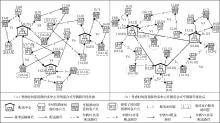
"


"
| 场景 | 配送成本/元 | 惩罚成本/元 | 时间窗指派成本/元 | 维护成本/元 | 运输车辆数/辆 | 运输成本/元 | 闭合式路径/条 | 开放式路径/条 | 配送车辆使用数/辆 | 物流运营总成本/元 |
|---|---|---|---|---|---|---|---|---|---|---|
| 优化前 | 1020 | 825 | — | 700 | — | — | 7 | — | 7 | 2545 |
| 优化后 | 720 | 50 | 90 | 600 | 1 | 420 | 4 | 3 | 4 | 1580 |
"
| 符号 | 定义 |
|---|---|
| 集合 | |
| 配送中心集合, | |
| 客户点集合, | |
| 配送服务时间段集合,主要是根据客户服务时间窗分布特征,划分的服务时间段集合, | |
| 运输车辆集合, | |
| 配送车辆集合, | |
| 不可指派时间窗的客户点集合, | |
| 可指派时间窗的客户点集合, | |
| 第r时间段内,用于服务配送中心的运输车辆集合, | |
| 第r时间段内,用于服务客户点的配送车辆集合, | |
| 第r时间段内,配送车辆h的配送线路集合, | |
| 第r时间段内,配送车辆h在第k条配送线路中服务的客户点集合, | |
| 参数 | |
| 运输车辆e的最大装载量, | |
| 配送车辆h的最大装载量, | |
| 运输车辆e单位距离的运输成本, | |
| 配送车辆h单位距离的配送成本, | |
| 第r时间段内,客户点c的需求量, | |
| 第r时间段内,配送中心o的最大配送量, | |
| 配送中心o到o´的距离, | |
| 节点i到节点j的距离, | |
| 运输车辆e的年度维护成本, | |
| 配送车辆h的年度维护成本, | |
| 第r时间段内使用的运输车辆数量, | |
| 第r时间段内使用的配送车辆数量, | |
| 第r时间段内,配送车辆h的配送线路总数, | |
| 配送中心所划分时间段的总数量, | |
| 第r时间段内,配送车辆h在第k条配送线路中服务的客户点的数量, | |
| 第r时间段内,配送中心o的服务时间窗, | |
| 不可指派时间窗的客户点c的服务时间窗, | |
| 可指派时间窗的客户点c的服务时间窗, | |
| 指派给客户点c的服务时间窗, | |
| 第r时间段内,配送车辆h在第k条配送线路上从配送中心o出发的时间, | |
| 第r时间段内,运输车辆e到达配送中心o的时间, | |
| 第r时间段内,配送车辆h在第k条配送线路上从节点i到j的行驶时间, | |
| 第r时间段内,配送车辆h在第k条配送线路上到达节点i的时间, | |
| 运输车辆e提前到达配送中心的单位时间惩罚成本, | |
| 运输车辆e晚到配送中心的单位时间惩罚成本, | |
| 配送车辆h提前到达客户点的单位时间惩罚成本, | |
| 配送车辆h晚到客户点的单位时间惩罚成本, | |
| 时间窗指派的单位时间成本系数 | |
| 配送中心o加入联盟时的政府补贴, | |
| 一个正无穷大的数 | |
| 一年内工作周期的数量 | |
| 决策变量 | |
| 第r时间段内,如果配送车辆h通过第k条线路从节点i行驶到节点j, | |
| 第r时间段内,如果运输车辆e从配送中心o到o´, | |
| 第r时间段内,如果配送车辆h从配送中心o出发服务客户点c, | |
| 第r时间段内,配送车辆h被用于服务客户, | |
| 第r时间段内,如果属于o的客户点c被指派给o´服务, | |
| 如果客户c被指派时间窗, | |
| 如果配送中心o参与合作, |
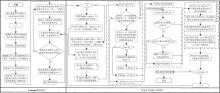
"

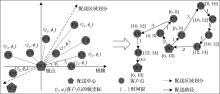
"
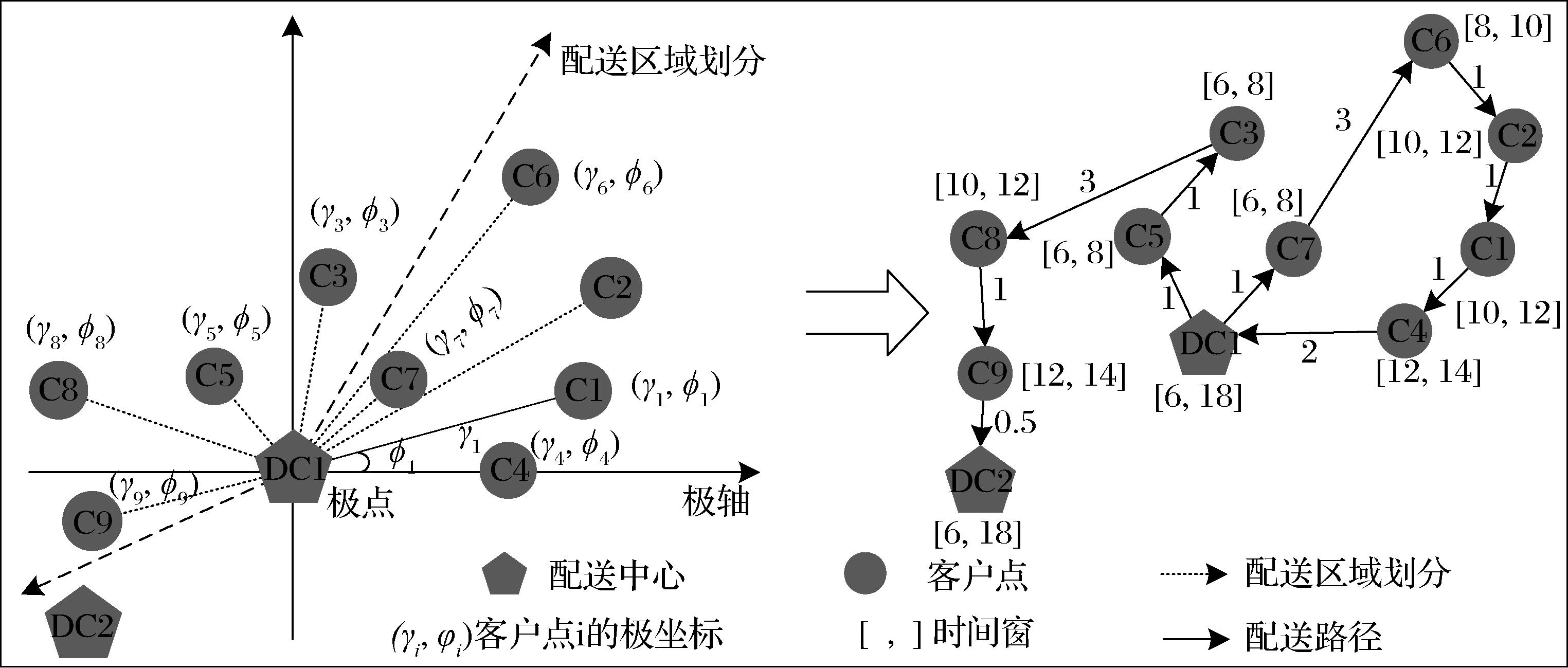
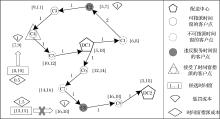
"

"
| 算例 | 客户数量 | CPLEX求解器 | IMOPSO | 成本差值/% | ||||
|---|---|---|---|---|---|---|---|---|
| 物流运营总成本/元 | 配送车辆使用数/辆 | 计算时 长/秒 | 物流运营总成本/元 | 配送车辆使用数/辆 | 计算时 长/秒 | |||
| 1 | 20 | 985 | 4 | 702 | 985 | 4 | 20 | 0 |
| 2 | 20 | 816 | 4 | 639 | 816 | 4 | 18 | 0 |
| 3 | 20 | 742 | 3 | 641 | 742 | 3 | 17 | 0 |
| 4 | 20 | 853 | 4 | 712 | 853 | 4 | 22 | 0 |
| 5 | 20 | 769 | 3 | 705 | 769 | 3 | 21 | 0 |
| 6 | 40 | 1839 | 6 | 2780 | 1839 | 6 | 43 | 0 |
| 7 | 40 | 2371 | 7 | 3052 | 2371 | 7 | 56 | 0 |
| 8 | 40 | 1948 | 6 | 2693 | 1964 | 6 | 39 | 0.82 |
| 9 | 40 | 2534 | 7 | 3149 | 2563 | 7 | 62 | 1.14 |
| 10 | 40 | 2019 | 6 | 2804 | 2019 | 6 | 47 | 0 |
| 平均值 | 30 | 1487.6 | 5 | 1787.7 | 1492.1 | 5 | 34.5 | 0.2 |
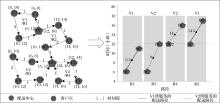
"
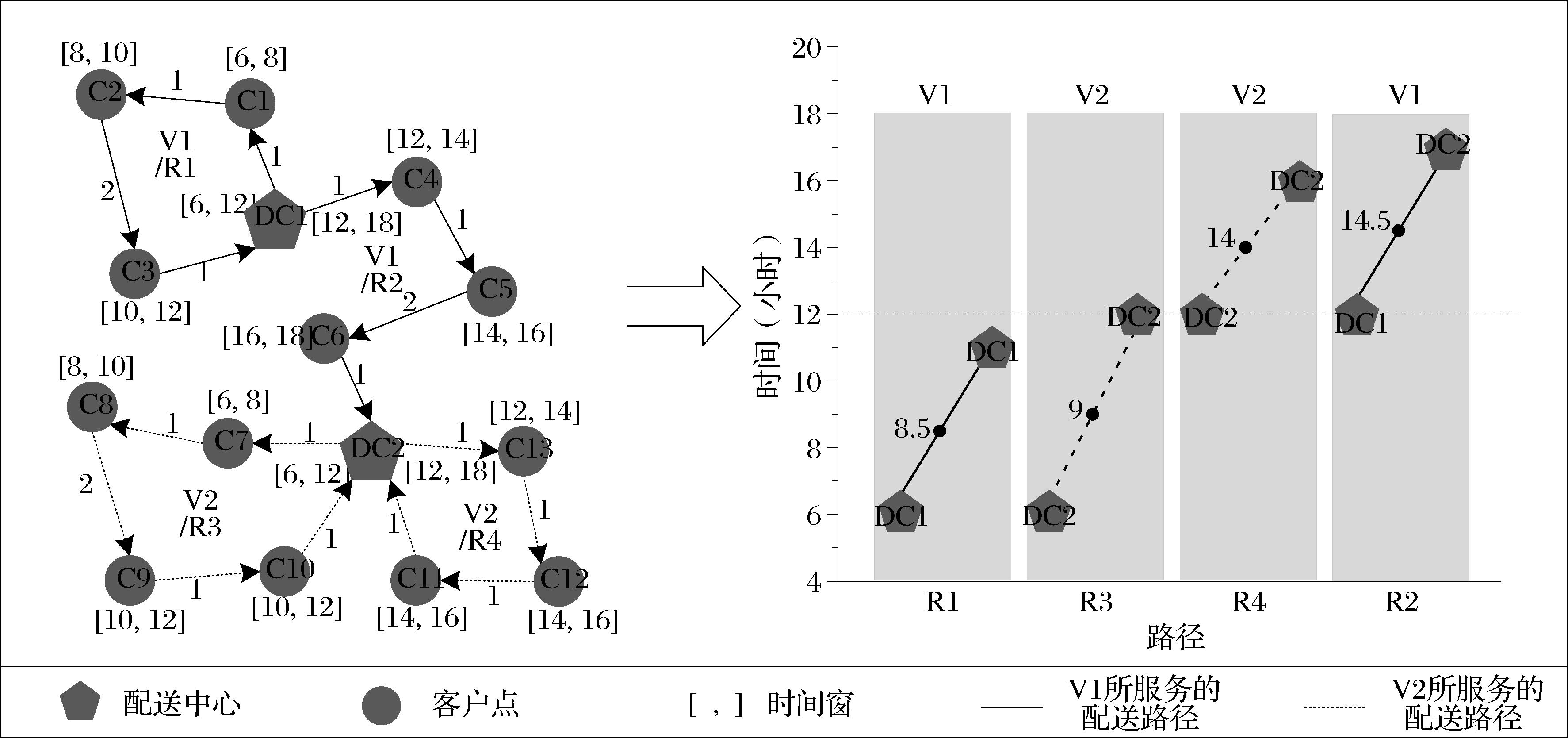
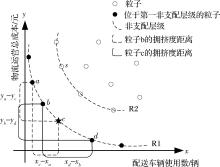
"
"
| 算例 | IMOPSO | MOACO | NSGA-Ⅱ | MOSA | ||||
|---|---|---|---|---|---|---|---|---|
| 物流运营总成本/元 | 配送车辆使用数/辆 | 物流运营总成本/元 | 配送车辆使用数/辆 | 物流运营总成本/元 | 配送车辆使用数/辆 | 物流运营总成本/元 | 配送车辆使用数/辆 | |
| 1 | 5658 | 10 | 12980 | 14 | 8792 | 12 | 9264 | 12 |
| 2 | 5810 | 11 | 11897 | 13 | 8431 | 13 | 8937 | 13 |
| 3 | 6867 | 9 | 11513 | 12 | 10141 | 11 | 11356 | 12 |
| 4 | 6589 | 10 | 12158 | 13 | 10463 | 12 | 9458 | 13 |
| 5 | 5488 | 10 | 8706 | 14 | 6344 | 13 | 8729 | 12 |
| 6 | 4897 | 11 | 7979 | 13 | 6682 | 13 | 7915 | 12 |
| 7 | 6180 | 10 | 8274 | 13 | 7739 | 12 | 9352 | 12 |
| 8 | 5788 | 11 | 8174 | 14 | 7469 | 11 | 10973 | 13 |
| 9 | 3830 | 11 | 8639 | 13 | 6400 | 13 | 9301 | 13 |
| 10 | 3764 | 10 | 8464 | 12 | 6330 | 12 | 8604 | 11 |
| 11 | 11915 | 20 | 20751 | 27 | 16582 | 21 | 15704 | 22 |
| 12 | 21866 | 19 | 38746 | 28 | 22324 | 20 | 23109 | 20 |
| 13 | 25868 | 20 | 39657 | 29 | 26485 | 22 | 31902 | 22 |
| 14 | 25230 | 19 | 33946 | 28 | 25443 | 20 | 27516 | 21 |
| 15 | 28888 | 21 | 32519 | 30 | 30596 | 23 | 28934 | 23 |
| 16 | 10482 | 20 | 17428 | 28 | 11333 | 21 | 18063 | 23 |
| 17 | 8620 | 19 | 15534 | 29 | 10068 | 20 | 14073 | 21 |
| 18 | 10356 | 21 | 16665 | 28 | 10667 | 22 | 12971 | 22 |
| 19 | 8496 | 19 | 14661 | 26 | 9216 | 20 | 10537 | 21 |
| 20 | 14909 | 20 | 23710 | 29 | 17167 | 22 | 21754 | 23 |
| 平均值 | 11075.05 | 15 | 17620.05 | 21 | 12933.6 | 17 | 14922.6 | 17 |
| t检验 | -7.99 | -8.30 | -6.66 | -10.51 | -9.12 | -13.78 | ||
| p值 | 1.72E-07 | 9.58E-08 | 2.26E-06 | 2.33E-09 | 2.27E-08 | 2.41E-11 | ||

"

"
| 场景 | w1 | w2 | ||||
|---|---|---|---|---|---|---|
| 参数值 | 物流运营总成本/元 | 标准方差 | 参数值 | 物流运营总成本/元 | 标准方差 | |
| 1 | 0.1 | 4027.6 | 10.5 | 0.1 | 3928.5 | 9.5 |
| 2 | 0.2 | 3675.3 | 8.3 | 0.2 | 4011.3 | 8.7 |
| 3 | 0.3 | 3326.5 | 9.2 | 0.3 | 3548.6 | 7.6 |
| 4 | 0.4 | 3238.9 | 8.4 | 0.4 | 3110.9 | 6.2 |
| 5 | 0.5 | 3135.2 | 7.6 | 0.5 | 3451.7 | 6.9 |
| 6 | 0.6 | 3210.7 | 8.7 | 0.6 | 3371.2 | 7.3 |
| 7 | 0.7 | 3379.8 | 6.5 | 0.7 | 3256.8 | 7.1 |
| 8 | 0.8 | 3125.4 | 6.3 | 0.8 | 3467.2 | 7.6 |
| 9 | 0.9 | 3099.5 | 5.6 | 0.9 | 3510.9 | 8.5 |
| 10 | 1 | 3209.6 | 6.8 | 1 | 3686.3 | 8.8 |
"
| 场景 | 时间窗指派成本/元 | 惩罚成本/元 | 配送成本/元 | 运输成本/元 | 维护成本/元 | 物流运营总成本/元 | 配送车辆使用数/辆 |
|---|---|---|---|---|---|---|---|
| 优化前 | 0 | 2610.23 | 3040.82 | 0 | 390 | 6041.06 | 13 |
| 优化后 | 296.67 | 666.45 | 2769.86 | 306.51 | 260 | 3099.50 | 7 |
"
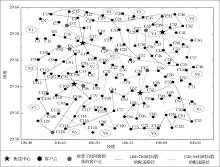
| 配送车辆 | 时间段 | 起点 | 终点 | 优化后配送路径 |
|---|---|---|---|---|
| V1 | DC1 | DC1 | DC1→C20*→C37→C44*→C34→C24*→C25*→C127*→C19→C4*→DC1 | |
| DC1 | DC1 | DC1→C5→C16→C8→C12*→C3→C9*→C7→C17*→DC1 | ||
| V2 | DC1 | DC1 | DC1→C6*→C92*→C101→C93→C111→C85→C10*→C11→DC1 | |
| DC1 | DC3 | DC1→C18*→C21*→C23*→C58→C22*→C126→C73*→C61→C38*→DC3 | ||
| V3 | DC1 | DC2 | DC1→C1*→C97*→C15→C2→C45→C40→C42→DC2 | |
| DC2 | DC2 | DC2→C60*→C54*→C41*→C32→C28*→C26→C29*→C49*→C74→C53*→C30→C27→C33*→DC2 | ||
| V4 | DC2 | DC2 | DC2→C31*→C39*→C51*→C36*→C46*→C59*→C43*→DC2 | |
| DC2 | DC3 | DC2→C50→C57→C48*→C122→C71→C83*→C80→C56→C47*→DC3 | ||
| V5 | DC3 | DC3 | DC3→C76→C84→C66*→C75*→C72*→C123*→C89→C125→C81*→C35→C82→C55→DC3 | |
| DC3 | DC3 | DC3→C52→C68*→C65→C90*→C69→C67*→C70→C88→C86*→DC3 | ||
| V6 | DC3 | DC4 | DC3→C62*→C63→C64→C77→C116*→C113→C114→C79*→DC4 | |
| DC4 | DC4 | DC4→C105*→C112→C118→C98→C120→C119*→C109*→C117*→C108*→C78*→C96*→DC4 | ||
| V7 | DC4 | DC4 | DC4→C102*→C110→C106→C128*→C124→C100*→C103→C121→C115*→C91→C13→C14*→C104*→DC4 | |
| DC4 | DC1 | DC4→C87→C95→C94*→C107→C99→DC1 |
"

"
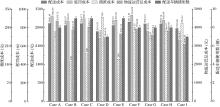
| 配送模式 | 时间窗指派成本/元 | 惩罚成本/元 | 配送成本/元 | 运输成本/元 | 物流运营总成本/元 | 配送车辆使用数/辆 |
|---|---|---|---|---|---|---|
| Case 1 | 0 | 1388.91 | 2738.34 | 306.51 | 3523.77 | 8 |
| Case 2 | 396.67 | 833.55 | 2741.71 | 306.51 | 3338.44 | 7 |
| Case 3 | 0 | 1245.24 | 2669.32 | 306.51 | 3311.07 | 8 |
| Case 4 | 343.33 | 768.91 | 2669.32 | 306.51 | 3178.08 | 8 |
| Case 5 | 0 | 1268.83 | 2778.37 | 306.51 | 3473.71 | 9 |
| Case 6 | 296.67 | 666.45 | 2769.86 | 306.51 | 3099.50 | 7 |
"

| [1] | 徐小峰, 姜明月, 邓忆瑞. 整合逆向物流协同配送动态路径优化问题研究[J]. 管理科学学报, 2021, 24(10): 106-126. |
| Xu X F, Jiang M Y, Deng Y R. Dynamic vehicle routing problem with simultaneous pickup and delivery in collaborative distribution under demand concurrent[J]. Journal of Management Sciences in China, 2021, 24(10): 106-126. | |
| [2] | Côté J F, Mansini R, Raffaele A. Multi-period time window assignment for attended home delivery[J]. European Journal of Operational Research, 2024, 316(1): 295-309. |
| [3] | Li Y, Soleimani H, Zohal M. An improved ant colony optimization algorithm for the multi-depot green vehicle routing problem with multiple objectives[J]. Journal of Cleaner Production, 2019, 227: 1161-1172. |
| [4] | Zhen L, Ma C, Wang K, et al. Multi-depot multi-trip vehicle routing problem with time windows and release dates[J]. Transportation Research Part E: Logistics and Transportation Review, 2020, 135: 101866. |
| [5] | 饶卫振, 高召珣, 朱庆华. 依托平台农超对接运营模式及物流协作机制研究[J]. 中国管理科学,2026, 34(5): 242-255. |
| Rao W Z, Gao Z X, Zhu Q H. Research on the operation mode and logistics cooperation mechanism based on the platform agriculture-supermarket docking[J]. Chinese Journal of Management Science, 2026, 34(5): 242-255. | |
| [6] | Brandão J. A memory-based iterated local search algorithm for the multi-depot open vehicle routing problem[J]. European Journal of Operational Research, 2020, 284(2): 559-571. |
| [7] | 范厚明, 杨成, 张跃光, 等. 混合时间窗下多中心混合车队车辆路径优化[J]. 计算机集成制造系统, 2023, 29(10): 3529-3546. |
| Fan H M, Yang C, Zhang Y G, et al. Multi-depot mixed fleet vehicle routing problem with mixed time windows[J]. Computer Integrated Manufacturing Systems, 2023, 29(10): 3529-3546. | |
| [8] | Subramanyam A, Wang A, Gounaris C E. A scenario decomposition algorithm for strategic time window assignment vehicle routing problems[J]. Transportation Research Part B: Methodological,2018, 117: 296-317. |
| [9] | Baradaran V, Shafaei A, Hosseinian A H. Stochastic vehicle routing problem with heterogeneous vehicles and multiple prioritized time windows: Mathematical modeling and solution approach[J]. Computers & Industrial Engineering, 2019, 131: 187-199. |
| [10] | Martins S, Ostermeier M, Amorim P, et al. Product-oriented time window assignment for a multi-compartment vehicle routing problem[J]. European Journal of Operational Research, 2019, 276(3): 893-909. |
| [11] | Jalilvand M, Bashiri M, Nikzad E. An effective Progressive Hedging algorithm for the two-layers time window assignment vehicle routing problem in a stochastic environment[J]. Expert Systems with Applications, 2021, 165: 113877. |
| [12] | Hoogeboom M, Adulyasak Y, Dullaert W, et al. The robust vehicle routing problem with time window assignments[J]. Transportation Science, 2021, 55(2): 395-413. |
| [13] | Liu G, Hu J, Yang Y, et al. Vehicle routing problem in cold Chain logistics: A joint distribution model with carbon trading mechanisms[J]. Resources, Conservation and Recycling, 2020, 156: 104715. |
| [14] | Mancini S, Gansterer M, Hartl R F. The collaborative consistent vehicle routing problem with workload balance[J]. European Journal of Operational Research, 2021, 293(3): 955-965. |
| [15] | Dumez D, Lehuédé F, Péton O. A large neighborhood search approach to the vehicle routing problem with delivery options[J]. Transportation Research Part B: Methodological, 2021, 144: 103-132. |
| [16] | Zhang Q, Wang Z, Huang M, et al. Heterogeneous multi-depot collaborative vehicle routing problem[J]. Transportation Research Part B:Methodological, 2022, 160: 1-20. |
| [17] | 王勇, 魏远晗, 蒋琼, 等. 三维装载约束下基于运输资源共享的车辆路径问题[J]. 计算机集成制造系统, 2023, 29(9): 3153-3170. |
| Wang Y, Wei Y H, Jiang Q, et al. Vehicle routing problem based on transportation resource sharing under three-dimensional loading constraints[J]. Computer Integrated Manufacturing Systems, 2023, 29(9): 3153-3170. | |
| [18] | Asgharieh Ahari S, Bakir I, Roodbergen K J. A new perspective on carrier collaboration: Collaborative vehicle utilization[J]. Transportation Research Part C: Emerging Technologies, 2024, 163: 104647. |
| [19] | Wang Y, Wang X, Guan X, et al. A combined intelligent and game theoretical methodology for collaborative multicenter pickup and delivery problems with time window assignment[J]. Applied Soft Computing, 2021, 113: 107875. |
| [20] | Wang Y, Sun Y Y, Guan X, et al. Two-echelon multi-period location routing problem with shared transportation resource[J]. Knowledge-Based Systems, 2021, 226: 107168. |
| [21] | Ikotun A M, Ezugwu A E, Abualigah L, et al. K-means clustering algorithms: A comprehensive review, variants analysis, and advances in the era of big data[J]. Information Sciences, 2023, 622: 178-210. |
| [22] | Daneshgadeh Çakmakçı S, Kemmerich T, Ahmed T, et al. Online DDoS attack detection using Mahalanobis distance and Kernel-based learning algorithm[J]. Journal of Network and Computer Applications, 2020, 168: 102756. |
| [23] | Patel S P, Upadhyay S H. Euclidean distance based feature ranking and subset selection for bearing fault diagnosis[J]. Expert Systems with Applications, 2020, 154: 113400. |
| [24] | 周鲜成, 蒋涛营, 贺彩虹, 等. 冷链物流配送的绿色车辆路径模型及其求解算法[J]. 中国管理科学, 2023, 31(12): 203-214. |
| Zhou X C, Jiang T Y, He C H, et al. Green vehicle routing model and its solution algorithm in cold-chain logistics distribution[J]. Chinese Journal of Management Science, 2023, 31(12): 203-214. | |
| [25] | Solomon M M. Algorithms for the vehicle routing and scheduling problems with time window constraints[J]. Operations Research, 1987, 35(2): 254-265. |
| [26] | 徐小峰, 林姿汝, 周鹏. 多油品供给受限下多油库被动配送车辆路径问题研究[J]. 中国管理科学, 2021, 29(5): 157-165. |
| Xu X F, Lin Z R, Zhou P. Research on vehicle routing problem of multiple oil depot passive distribution under multi oil supply constraints[J]. Chinese Journal of Management Science, 2021, 29(5): 157-165. | |
| [27] | Lu Y, Yang J, Yang C. A humanitarian vehicle routing problem synchronized with drones in time-varying weather conditions[J]. Computers & Industrial Engineering, 2023, 184: 109563. |
| [28] | 陈婉茹, 徐光明, 张得志, 等. 碳交易机制下多中心混合车队配送路径和速度优化研究[J]. 系统工程理论与实践, 2023, 43(11): 3320-3335. |
| Chen W R, Xu G M, Zhang D Z, et al. Multi-depot mixed fleet routing and speed optimization under a carbon trading mechanism[J]. Systems Engineering-Theory & Practice, 2023, 43(11): 3320-3335. |
| [1] | Fang Guo, Runliu Niu, Zhihong Huang. Robust Optimization of Procurement and Routing Strategy of Multi-period Multimodal Transport in Uncertain Environment [J]. Chinese Journal of Management Science, 2025, 33(11): 103-113. |
| [2] | Bing Su, Xiangwen Chen, Meng Zhang, Hao Ji, Lulu Sun, Yang Xu, Qing’e Guo, Guohui Lin. Research on Route Selection for Emergency Supply Distribution Based on Dual Losses of Shortage and Delay [J]. Chinese Journal of Management Science, 2025, 33(8): 209-217. |
| [3] | Zhihong Huang,Weilai Huang,Fang Guo. Collaborative Optimization of Charging Network and Charging Strategy with Practical Battery Wear Model [J]. Chinese Journal of Management Science, 2024, 32(6): 68-78. |
| [4] | WANG Yong, LUO Si-yu, ZHEN Lu, XU Mao-zeng. Multi-center Pickup and Delivery Network Alliance Optimization Considering Default Penalties and Loss Compensations for Breach of Contract [J]. Chinese Journal of Management Science, 2023, 31(3): 10-25. |
| [5] | GAO Jia-jing, ZHEN Lu. Research on Routing Problem for Joint Delivery System Based on Multiple Trucks and Robots [J]. Chinese Journal of Management Science, 2023, 31(3): 48-57. |
| [6] | GUO Fang, HUANG Zhi-hong, HUANG Wei-lai, YANG Chao. Optimal Planning of the Electric Vehicle Routing and Battery Charging Problem with Self-pickup and Door-to-door Delivery Service [J]. Chinese Journal of Management Science, 2022, 30(2): 264-275. |
| [7] | GUO Fang, YANG Jun, YANG Chao. Study on Heterogeneous Electric Vehicle Routing and Batterycharging Problem with the Consideration of Differentiated Service Cost [J]. Chinese Journal of Management Science, 2019, 27(8): 118-128. |
| [8] | GUO Fang, YANG Jun, YANG Chao. Study on the Electric Vehicle Routing Problem in the Present of Charging Strategy and Battery Consumption [J]. Chinese Journal of Management Science, 2018, 26(9): 106-118. |
| [9] | PAN Wen-wen, GUO Hai-xiang, DU Tian-song, LIU Xiao, WANG De-yun. The Vehicle Routing Problem with the Recycling of Oil Pipelines and Oil Casings and the Differential Evolution Algorithm based on Niching Clearing [J]. Chinese Journal of Management Science, 2018, 26(5): 118-128. |
| [10] | LI Shuang-lin, MA Zu-jun, ZHENG Bin, DAI Ying. Fuzzy Multi-Objective Location-Multimodal Transportation Problem for Relief Delivery during the Initial Post-earthquake Period [J]. Chinese Journal of Management Science, 2013, (2): 144-151. |
| [11] | LI Jin-hua. Time Varying Travelling Planning Problem for Maximal Utility [J]. Chinese Journal of Management Science, 2011, 19(4): 139-143. |
| [12] | YU Ming-zhu, LI Jian-bin, LEI Dong. The Research of VRP with Pick-up and Delivery and a New Tabu Search Based on Insertion Method [J]. Chinese Journal of Management Science, 2010, 18(2): 89-95. |
| [13] | WEI Hang. Hazardous Materials Transportation Path Problem in Stochastic, Time-varying Network with Constrain of Time Windows [J]. Chinese Journal of Management Science, 2009, 17(3): 93-100. |
| [14] | WEI Hang, LI Jun, LIU Ning-zi. An Algorithm for Shortest Path with Multi-Modal in Time-Varying Network [J]. Chinese Journal of Management Science, 2006, (4): 56-63. |
| [15] | MU Xiang-wei, CHEN Yan, GAO Shu-juan, YAO Si-yu. Vehicleand Cargo Matching Method Based on Improved Quantum Evolutionary Algorithm [J]. Chinese Journal of Management Science, 2016, 24(12): 166-176. |
| Viewed | ||||||
|
Full text |
|
|||||
|
Abstract |
|
|||||
|
||
