
主管:中国科学院
主办:中国优选法统筹法与经济数学研究会
中国科学院科技战略咨询研究院
主办:中国优选法统筹法与经济数学研究会
中国科学院科技战略咨询研究院

Chinese Journal of Management Science ›› 2026, Vol. 34 ›› Issue (6): 187-201.doi: 10.16381/j.cnki.issn1003-207x.2024.1406
Previous Articles Next Articles
Songqing Guo, Zhe Xu( ), Yixuan Su
Received:2024-08-16
Revised:2024-12-10
Online:2026-06-25
Published:2026-05-22
Contact:
Zhe Xu
E-mail:xuzhebuaa@163.com
CLC Number:
Songqing Guo,Zhe Xu,Yixuan Su. Optimization of Multi Skill Project Group Scheduling Based on Global Idle Resource Reallocation[J]. Chinese Journal of Management Science, 2026, 34(6): 187-201.

"
| 现有研究及局限性 | 本文的研究要点 | |||
|---|---|---|---|---|
| 调度问题 | 问题描述 | 研究要点 | 局限性 | |
项目群调度 问题 | 问题假设 | 将子项目视为活动[ | 未考虑内部调度 | 考虑子项目内部调度及子项目成本目标 |
| 仅考虑子项目内部调度[ | 未考虑局部利益 | |||
| 优化目标 | 时间类[ | 仅考虑项目群整体目标,未考虑子项目局部目标 | 同时考虑项目群整体目标与各子项目局部目标,即以项目群总工期与各子项目成本为优化目标 | |
| 工期-费用优化[ | ||||
| 多技能多项目调度问题 | 问题假设 | 无局部资源约束[ | 未考虑局部资源数量限制 | 局部资源限制下同时考虑全局资源技能水平与局部资源投入数量对活动工期的影响 |
| 仅考虑多技能资源技能水平对活动工期影响[ | 未考虑局部资源投入对活动工期的影响 | |||
"
"
"
"
| 编号 | 全局技能1水平 | 全局技能2水平 | 全局技能3水平 | 全局资源单位成本 | 编号 | 全局技能1水平 | 全局技能2水平 | 全局技能3水平 | 全局资源单位成本 |
|---|---|---|---|---|---|---|---|---|---|
| 1 | 1.2 | 0.6 | 0.8 | 3 | 11 | 0.8 | 0 | 1.4 | 3 |
| 2 | 0.8 | 0 | 1 | 2 | 12 | 0.6 | 0 | 1.4 | 2 |
| 3 | 1.2 | 1 | 1.4 | 4 | 13 | 0.8 | 1.4 | 0 | 3 |
| 4 | 1 | 0.8 | 0.6 | 3 | 14 | 0.6 | 1.4 | 1 | 3 |
| 5 | 0.8 | 1.4 | 0.8 | 3 | 15 | 1.2 | 0.6 | 0 | 2 |
| 6 | 1.4 | 1.4 | 0.6 | 4 | 16 | 0.8 | 0.8 | 0.6 | 3 |
| 7 | 0.8 | 1.2 | 0.8 | 3 | 17 | 0.6 | 1.2 | 1.4 | 4 |
| 8 | 1.4 | 0.6 | 0.8 | 3 | 18 | 1 | 1 | 1.2 | 4 |
| 9 | 1.4 | 1 | 1 | 4 | 19 | 1.4 | 0.8 | 0.6 | 3 |
| 10 | 0.6 | 0.6 | 1 | 3 | 20 | 1.4 | 1.2 | 0 | 3 |
"
活动 编号 | 活动工期 | 全局资源成本 | 局部资源成本 | 活动总成本 | ||||
|---|---|---|---|---|---|---|---|---|
| OUFGRRS | UFGRRS | OUFGRRS | UFGRRS | OUFGRRS | UFGRRS | OUFGRRS | UFGRRS | |
| 合计 | - | - | 453 | 376 | 367 | 343 | 820 | 719 |
| 3-0 | 0 | 0 | 0 | 0 | 0 | 0 | 0 | 0 |
| 3-1 | 6 | 6 | 18 | 12 | 0 | 0 | 18 | 12 |
| 3-2 | 1 | 1 | 3 | 4 | 9 | 9 | 12 | 13 |
| 3-3 | 12 | 12 | 132 | 132 | 66 | 60 | 198 | 192 |
| 3-4 | 11 | 8 | 66 | 32 | 72 | 72 | 138 | 104 |
| 3-5 | 2 | 2 | 20 | 14 | 22 | 22 | 42 | 36 |
| 3-6 | 4 | 3 | 24 | 18 | 28 | 24 | 52 | 42 |
| 3-7 | 9 | 9 | 54 | 54 | 132 | 126 | 186 | 180 |
| 3-8 | 10 | 8 | 90 | 72 | 30 | 24 | 120 | 96 |
| 3-9 | 10 | 10 | 30 | 30 | 0 | 0 | 30 | 30 |
| 3-10 | 4 | 2 | 16 | 8 | 8 | 6 | 24 | 14 |
| 3-11 | 0 | 0 | 0 | 0 | 0 | 0 | 0 | 0 |
"
| 再分配策略 | 工期 | 局部资源1 | 局部资源2 | 全局技能1 | 全局技能2 | 全局技能3 | 全局资源编号 | ||
|---|---|---|---|---|---|---|---|---|---|
| OUFGRRS | 2 | 8 | 3 | 0.8 | 1.2 | 1.2 | 11 | 20 | 18 |
| UFGRRS | 2 | 8 | 3 | 0.8 | 0.6 | 1.4 | 11 | 15 | 12 |
"
| 类型 | 参数 | 取值 |
|---|---|---|
| 子项目 | 次序强度 OS-L | 0.25、0.5、0.75 |
| 资源系数 RF | 0.25、0.5、0.75 | |
| 资源强度 RS | 0.25、0.5、0.75 | |
| 每个活动需要的全局技能 | {技能1、技能2、技能3}中随机选取两个 | |
| 项目群 | 次序强度OS-G | 0.25、0.5、0.75 |
| 全局资源技能水平 | 0.6、0.8、1.0、1.2、1.4 | |
| 全局人力资源可用量 | 20、10 | |
| 人均掌握技能数 | {2,3}中随机选取 | |
| 全局技能种类 | 3 |
"
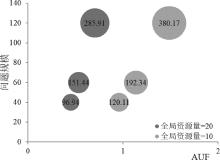
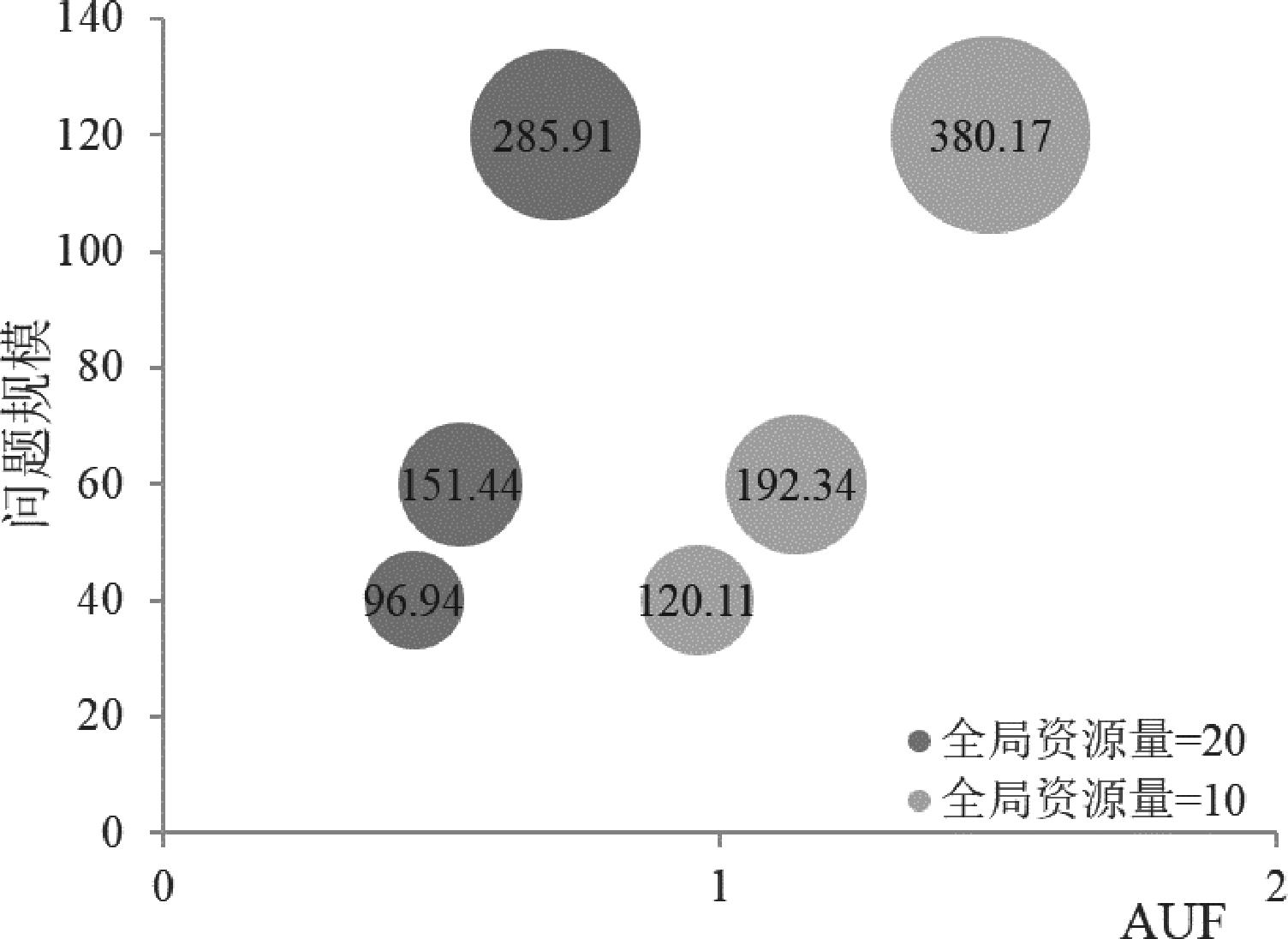
| 算例集 | 算例数 | 全局资源可用量 | 子项目数 | 活动数 | 问题规模 | 平均技能利用系数(AUF) |
|---|---|---|---|---|---|---|
| 10_4 | 27 | 20 | 4 | 10 | 40 | 0.450 |
| 27 | 10 | 4 | 10 | 40 | 0.958 | |
| 10_6 | 27 | 20 | 6 | 10 | 60 | 0.533 |
| 27 | 10 | 6 | 10 | 60 | 1.137 | |
| 10_12 | 27 | 20 | 12 | 10 | 120 | 0.704 |
| 27 | 10 | 12 | 10 | 120 | 1.487 |
"
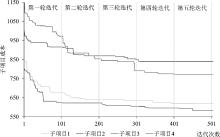
"
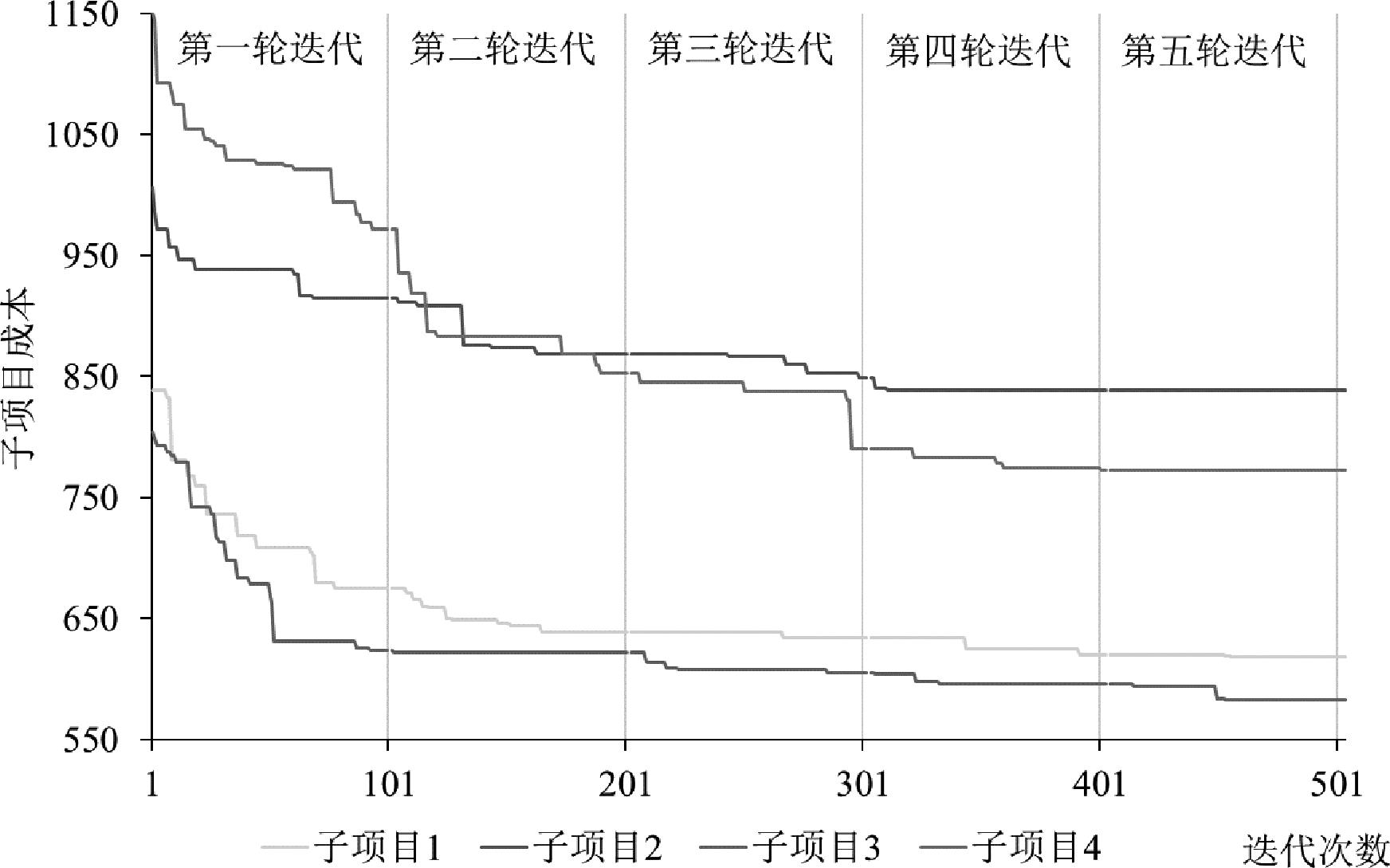
"
| 算例集 | 全局阶段 运行时间约束/秒 | 局部阶段 运行时间约束/秒 | 合计/秒 |
|---|---|---|---|
| 10_4 | 100 | 200 | 300 |
| 10_6 | 150 | 300 | 450 |
| 10_12 | 300 | 600 | 900 |
"
| 算法 | 算法阶段 | 参数 | 参数水平 | 是否显著 | 数值 |
|---|---|---|---|---|---|
| TSABMPGA | 全局 | 子种群数量 | 2、3、4 | 是 | 2 |
| 子种群大小 | 25、50、75 | 是 | 50 | ||
| 交叉概率 | 0.5、0.7、0.9 | 是 | 0.9 | ||
| 变异概率 | 0.5、0.7、0.9 | 否 | 0.5 | ||
| 局部 | 种群大小 | 25、50、75 | 是 | 50 | |
| 交叉概率 | 0.5、0.7、0.9 | 是 | 0.9 | ||
| 变异概率 | 0.5、0.7、0.9 | 否 | 0.5 | ||
| TSABSA | 全局 | 初始温度 | 50、100、200 | 是 | 100 |
| 温度衰减系数 | 0.9、0.925、0.95 | 否 | 0.9 | ||
| 马尔科夫链长度 | 100、150、200 | 是 | 200 | ||
| 变异概率 | 0.5、0.7、0.9 | 是 | 0.9 | ||
| 局部 | 初始温度 | 5、7.5、10 | 是 | 10 | |
| 温度衰减系数 | 0.7、0.75、0.8 | 是 | 0.8 | ||
| 马尔科夫链长度 | 50、75、100 | 否 | 100 | ||
| 变异概率 | 0.5、0.7、0.9 | 是 | 0.9 | ||
| TSABPSO | 全局 | 惯性权重 | 0.2、0.35、0.5 | 是 | 0.5 |
| 自我学习因子 | 0.3、0.5、0.7 | 是 | 0.3 | ||
| 群体学习因子 | 0.7、0.5、0.3 | 是 | 0.7 | ||
| 局部 | 惯性权重 | 0.2、0.35、0.5 | 是 | 0.5 | |
| 自我学习因子 | 0.3、0.5、0.7 | 是 | 0.3 | ||
| 群体学习因子 | 0.7、0.5、0.3 | 是 | 0.7 |
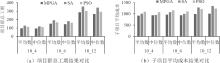
"
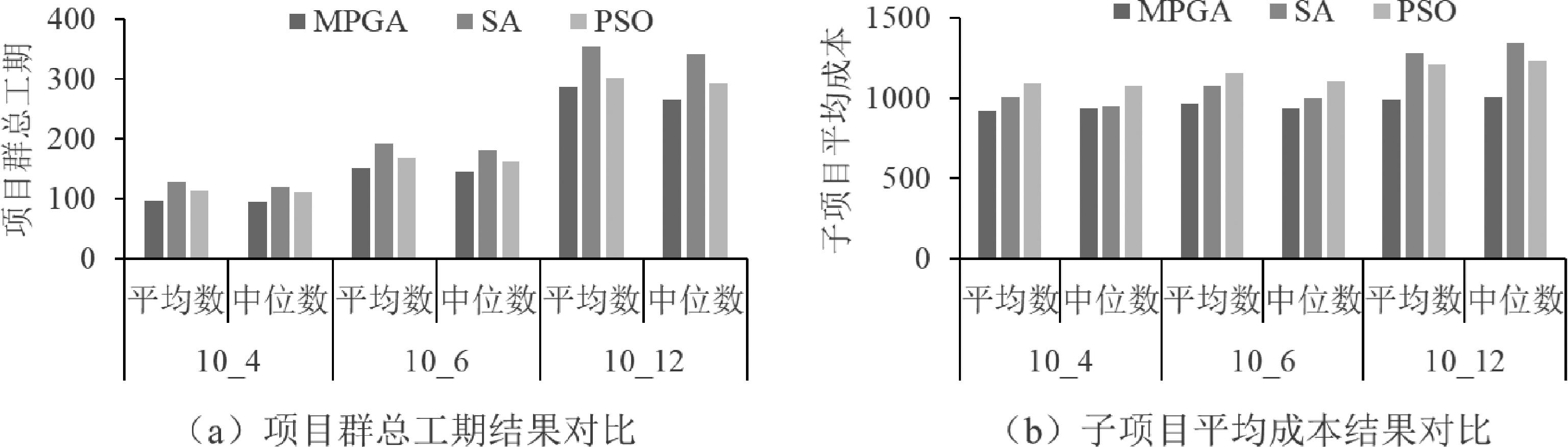
"
| 对比算法 | TSABMPGA | TSABSA | TSABPSO | ||||||
|---|---|---|---|---|---|---|---|---|---|
| 算例集 | 项目群总工期 | 项目群总工期 | 项目群总工期 | ||||||
| 10_4 | 54 | 0 | 0 | 0 | 0.352 | 0.408 | 0 | 0.172 | 0.283 |
| 10_6 | 54 | 0 | 0 | 0 | 0.295 | 0.35 | 0 | 0.117 | 0.213 |
| 10_12 | 53 | 0.009 | 0.009 | 0 | 0.248 | 0.286 | 1 | 0.053 | 0.107 |
| 全部算例 | 161 | 0.003 | 0.009 | 0 | 0.299 | 0.408 | 1 | 0.114 | 0.283 |
| 算例集 | 子项目平均成本 | 子项目平均成本 | 子项目平均成本 | ||||||
| 10_4 | 34 | 0.021 | 0.059 | 20 | 0.146 | 0.42 | 0 | 0.196 | 0.374 |
| 10_6 | 32 | 0.037 | 0.121 | 22 | 0.228 | 0.475 | 0 | 0.228 | 0.366 |
| 10_12 | 54 | 0 | 0 | 0 | 0.319 | 0.6 | 0 | 0.245 | 0.472 |
| 全部算例 | 120 | 0.019 | 0.059 | 42 | 0.246 | 0.475 | 0 | 0.223 | 0.374 |
"
"
"
"
"
"
| [1] | 彭武良, 陈良威. 一种项目群级联优化调度方法[J]. 中国管理科学, 2023, 31(10): 146-152. |
| Peng W L, Chen L W. A program cascade optimization scheduling method[J]. Chinese Journal of Management Science, 2023, 31(10): 146-152. | |
| [2] | Ferns D C. Developments in programme management[J]. International Journal of Project Management, 1991, 9(3): 148-156. |
| [3] | 丰景春, 黎书彤, 陈润东, 等. 基于效率最大化的项目群甲供非商品化资源两阶段动态优化模型[J]. 软科学, 2021, 35(4): 112-120. |
| Feng J C, Li S T, Chen R D, et al. Two-stage dynamic optimization model of the non-commercial resource provided by employer for program based on efficiency maximization[J]. Soft Science, 2021, 35(4): 112-120. | |
| [4] | Chen H, Ding G, Zhang J, et al. A filtering genetic programming framework for stochastic resource constrained multi-project scheduling problem under new project insertions[J]. Expert Systems with Applications, 2022, 198: 116911. |
| [5] | Gonçalves J F, Mendes J J M, Resende M G C. A genetic algorithm for the resource constrained multi-project scheduling problem[J]. European Journal of Operational Research, 2008, 189(3): 1171-1190. |
| [6] | Chen R, Liang C, Gu D, et al. A multi-objective model for multi-project scheduling and multi-skilled staff assignment for IT product development considering competency evolution[J]. International Journal of Production Research, 2017, 55(21): 6207-6234. |
| [7] | Confessore G, Giordani S, Rismondo S. A market-based multi-agent system model for decentralized multi-project scheduling[J]. Annals of Operations Research, 2007, 150(1): 115-135. |
| [8] | 有维宝, 徐哲, 刘东宁. 基于拍卖谈判机制的分布式多技能多项目调度[J]. 运筹与管理, 2024, 33(1): 1-8. |
| You W B, Xu Z, Liu D N. An auction-based negotiation mechanism to distributed multi-skilled multi-project scheduling problem[J]. Operations Research and Management Science, 2024, 33(1): 1-8. | |
| [9] | 赵松, 徐哲, 刘东宁. 考虑全局资源闲置成本的分布式RCMPSPTT[J]. 系统工程理论与实践, 2020, 40(7): 1882-1894. |
| Zhao S, Xu Z, Liu D N. Decentralized RCMPSPTT with cost of idleness[J]. Systems Engineering —Theory & Practice, 2020, 40(7): 1882-1894. | |
| [10] | 丰景春, 施嘉锋, 丰慧, 等. 基于遗传算法的工程项目群工期-费用优化研究[J]. 科技管理研究, 2020, 40(20): 212-218. |
| Feng J C, Shi J F, Feng H, et al. Optimization of project group duration-cost based on genetic algorithm[J]. Science and Technology Management Research, 2020, 40(20): 212-218. | |
| [11] | 丰景春, 董灵莉. 多资源约束下基于关键链的项目群工期-费用优化[J]. 中国管理科学, 2022, 30(4): 132-143. |
| Feng J C, Dong L L. Construction period-cost optimization of program based on critical chain method under multi-resource constraints[J]. Chinese Journal of Management Science, 2022, 30(4): 132-143. | |
| [12] | 李明, 徐蓉, 丰景春, 等. 甲供非商品化资源约束下可中断项目群调度模型[J]. 系统管理学报, 2023, 32(3): 499-511. |
| Li M, Xu R, Feng J C, et al. Interruptible program scheduling model under the constraints of NCRPE[J]. Journal of Systems & Management, 2023, 32(3): 499-511. | |
| [13] | 陈俊杰, 同淑荣, 聂亚菲, 等. 考虑胜任力水平的研发项目群人力资源调度[J]. 计算机工程与应用, 2019, 55(3): 209-218. |
| Chen J J, Tong S R, Nie Y F, et al. R & D program scheduling and staff assignment with hierarchical levels of competency[J]. Computer Engineering and Applications, 2019, 55(3): 209-218. | |
| [14] | 陈俊杰, 同淑荣, 聂亚菲, 等. 研发项目群人力资源调度研究[J].工业工程与管理,2020,25(1): 180-185+211. |
| Chen J J, Tong S R, Nie Y F, et al. Research and development program scheduling and staff assignment[J]. Industrial Engineering and Management, 2020, 25(1): 180-185+211. | |
| [15] | Heimerl C, Kolisch R. Work assignment to and qualification of multi-skilled human resources under knowledge depreciation and company skill level targets[J]. International Journal of Production Research, 2010, 48(13): 3759-3781. |
| [16] | 于懿宁, 徐哲, 刘东宁. 考虑多技能人力资源的分布式多项目调度问题[J]. 系统工程理论与实践, 2020, 40(11): 2921-2933. |
| Yu Y N, Xu Z, Liu D N. Distributed multi-project scheduling problem with multi-skilled staff[J]. Systems Engineering —Theory & Practice, 2020, 40(11): 2921-2933. | |
| [17] | Yu Y, Xu Z, Liu D, et al. A two-stage approach with softmax scoring mechanism for a multi-project scheduling problem sharing multi-skilled staff[J]. Expert Systems with Applications, 2022, 203: 117385. |
| [18] | You W, Xu Z, Zhao S. A two-layer approach for the decentralized multi-project scheduling problem sharing multi-skilled staff[J]. IEEE Access, 2024, 12: 29204-29221. |
| [19] | 王莹莹, 吴立云. 基于改进NSGA-II的多项目多技能人力资源调度研究[J]. 工业工程, 2021, 24(3): 130-138. |
| Wang Y Y, Wu L Y. A research on multi-project multi-skill human resource scheduling based on improved NSGA-II[J]. Industrial Engineering Journal, 2021, 24(3): 130-138. | |
| [20] | 陈蓉, 梁昌勇, 叶春森, 等. 考虑随机离职的新产品研发项目组合多技能员工调度模型[J]. 系统工程理论与实践, 2018, 38(1): 164-176. |
| Chen R, Liang C Y, Ye C S, et al. A multi-skilled staff scheduling model for new product R & D project portfolio under stochastic turnover[J]. Systems Engineering —Theory & Practice, 2018, 38(1): 164-176. | |
| [21] | Yu Y, Xu Z, Zhao S. A two-stage algorithm based on 12 priority rules for the stochastic distributed resource-constrained multi-project scheduling problem with multi-skilled staff[J]. IEEE Access, 2023, 11: 29554-29565. |
| [22] | You W, Xu Z, Yu Y, et al. A two-layer approach for solving robust decentralized multiproject scheduling problem with multi-skilled staff[J]. International Transactions in Operational Research, 2024, 31(3): 1631-1670. |
| [23] | 徐哲,有维宝,赵松,等 .考虑转移时间的分布式资源受限多项目鲁棒调度优化[J].中国管理科学,2026,34(2): 89-102. |
| Xu Z, You W B, Zhao S, et al. Robust scheduling optimization for the distributed resource-constrained multi-project scheduling problem with transfer time[J]. Chinese Journal of Management Science, 2026,34(2): 89-102. | |
| [24] | 刘国山, 林新宇. 柔性工期下的资源受限项目调度双目标优化研究[J]. 运筹与管理, 2022, 31(1): 1-7. |
| Liu G S, Lin X Y. Bi-objective optimization for resource-constrained project scheduling problem with variable duration[J]. Operations Research and Management Science, 2022, 31(1): 1-7. | |
| [25] | Myszkowski P B, Skowroński M E, Olech Ł P, et al. Hybrid ant colony optimization in solving multi-skill resource-constrained project scheduling problem[J]. Soft Computing, 2015, 19(12): 3599-3619. |
| [26] | 薛松, 陈旭, 李超, 等. 考虑人力资源技能进化的服务类项目型企业小型多项目调度问题研究[J]. 中国管理科学, 2025, 33(6): 96-104. |
| Xue S, Chen X, Li C, et al. Research on miniature multi-project scheduling of service project enterprises considering the evolution of human resources skills[J]. Chinese Journal of Management Science, 2025, 33(6): 96-104. | |
| [27] | Vila Gonçalves Filho E, José Tiberti A. A group genetic algorithm for the machine cell formation problem[J]. International Journal of Production Economics, 2006, 102(1): 1-21. |
| [28] | Homberger J, Fink A. Generic negotiation mechanisms with side payments-Design, analysis and application for decentralized resource-constrained multi-project scheduling problems[J]. European Journal of Operational Research, 2017, 261(3): 1001-1012. |
| [29] | 何华,曹芳芳,何正文,等 .非共享资源约束下的净现值最大化多项目调度优化[J].系统管理学报,2025,34(5): 1281-1294. |
| He H, Cao F F, He Z W,et al. Max-NPV Multi-project Scheduling Optimization Under Non-shared Resource Constraints[J]. Journal of Systems & Management, 2025,34(5): 1281-1294. |
| [1] | Zhe Xu, Weibao You, Song Zhao, Songqing Guo, Yixuan Su. Robust Scheduling Optimization for the Distributed Resource-constrained Multi-project Scheduling Problem with Transfer time [J]. Chinese Journal of Management Science, 2026, 34(2): 89-102. |
| [2] | Yining Yu, Zhe Xu, Song Zhao, Feifei Li. Research on the Distributed Resource-constrained Multi-project Reactive Scheduling Problem Considering Multi-skilled Staff Leave [J]. Chinese Journal of Management Science, 2025, 33(8): 131-143. |
| [3] | Wenjie Dong, Na Zhang, Chenchen Hua, Zhigeng Fang. Optimal Imperfect Maintenance Strategies for Repairable Systems Considering Repair Fatigue [J]. Chinese Journal of Management Science, 2025, 33(6): 151-159. |
| [4] | Zhigeng Fang, Jingru Zhang, Yuexin Xia, Ding Chen, Qiucheng Tao. Effectiveness Dynamic Optimization Model for Weapon and Equipment System of Systems Based on A-GERT Network [J]. Chinese Journal of Management Science, 2025, 33(5): 214-224. |
| [5] | Yang Jiao,Gang Li,Jianping Li,Bin Wang,Zhipeng Zhang. Research on the Weighting Method for Group Decision Considering Effective Information of Experts [J]. Chinese Journal of Management Science, 2024, 32(8): 107-116. |
| [6] | Song ZHAO, Zhe XU, Dong-ning LIU. Time/Cost Trade-off Problem in Decentralized Multi-project Scheduling [J]. Chinese Journal of Management Science, 2023, 31(9): 62-72. |
| [7] | WANG Zhi-ying, ZHAO Hong-li, NIE Hui-fang. Evolution Law of the Chain Crisis Towards Public Opinion and Panic Buying with Information Sentiment and Environmental Noise [J]. Chinese Journal of Management Science, 2023, 31(7): 246-255. |
| [8] | LI Fei-fei, XU Zhe. Distributed Multi-project Stochastic Scheduling with Two-stage Coordination Mechanism of Resources Allocation [J]. Chinese Journal of Management Science, 2022, 30(12): 38-51. |
| [9] | CHEN Hong-hai. Method of Screening Evaluation Indicators Based on Anti-image Correlation Matrix [J]. Chinese Journal of Management Science, 2022, 30(11): 149-158. |
| [10] | XIE Fang, LI Hong-bo, BAI Qing-guo. Stochastic Multi-mode Resource-constrained Project Scheduling [J]. Chinese Journal of Management Science, 2022, 30(10): 155-164. |
| [11] | YANG Wei, JI Li-xia, ZHOU Qing. Impact of Firms’Digital Transformation on the Innovation Ecosystem:A Multi-agent Model Considering Dynamic of Market Size [J]. Chinese Journal of Management Science, 2022, 30(6): 223-232. |
| [12] | YANG Lian, SHI Bao-feng. Credit Risk Evaluation Model and Empirical Research Based on Focal Loss Modified Cross-Entropy Loss Function [J]. Chinese Journal of Management Science, 2022, 30(5): 65-75. |
| [13] | XUE Kaili, FAN Jianping, KUANG Haibo, ZHAO Miao, WU Meiqin. Efficiency Evaluation of China Commercial Banks Based on Two-stage Cross Efficiency Model [J]. Chinese Journal of Management Science, 2021, 29(10): 23-34. |
| [14] | QIU Hui, YAN Xiang-bin, ZHAI Qing-qing, PENG Rui. Reliability Analysis of Warm Standby System with Phased Mission Requirements [J]. Chinese Journal of Management Science, 2021, 29(2): 99-107. |
| [15] | WANG Zhi-ying, LI Yong-jian, LIU Xiao-di. Decision-making Method in Response to Public Opinion Crisis Considering the Satisfaction of the Public under Multiple Inducing Information [J]. Chinese Journal of Management Science, 2021, 29(1): 207-216. |
| Viewed | ||||||
|
Full text |
|
|||||
|
Abstract |
|
|||||
|
||
