
主管:中国科学院
主办:中国优选法统筹法与经济数学研究会
中国科学院科技战略咨询研究院
主办:中国优选法统筹法与经济数学研究会
中国科学院科技战略咨询研究院

Chinese Journal of Management Science ›› 2026, Vol. 34 ›› Issue (7): 71-83.doi: 10.16381/j.cnki.issn1003-207x.2024.0769
Previous Articles Next Articles
Xunjie Gou, Yunying Zhao, Haoyu Zhang, Yuxuan Zhang, Zeshui Xu, Fumin Deng( )
)
Received:2024-05-14
Revised:2024-08-09
Online:2026-07-25
Published:2026-06-18
Contact:
Fumin Deng
E-mail:dengfm@scu.edu.cn
CLC Number:
Xunjie Gou,Yunying Zhao,Haoyu Zhang, et al. Research on Forecasting Modelling of Emergency Medical Supplies Demand Based on Spatiotemporal Attention Mechanism[J]. Chinese Journal of Management Science, 2026, 34(7): 71-83.

"
| 符号 | 具体描述 |
|---|---|
| 过去 | |
| 第 | |
| 第 | |
| 未来 | |
| 第 | |
| 未来 | |
| 第 |
"
"
"
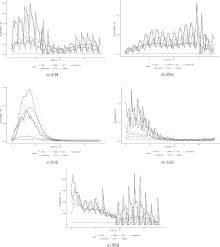
| 数据项 | 描述 |
|---|---|
| 时间范围 | 2020/7/16-2022/4/26 |
| 地区数目 | 227 |
| 预测目标 | 每日新增确诊数 |
| 数据维度 | 13 |
| 数据集划分比例 | 8:2 |
"

"
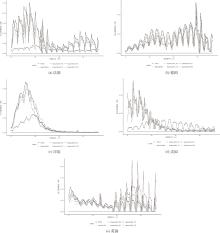
| 指标 | 模型 | 法国 | 德国 | 印度 | 美国 | 英国 | 平均值 |
|---|---|---|---|---|---|---|---|
| MAE | ARIMA | 856.32 | 914.55 | 603.51 | 1946.04 | 304.26 | 924.94 |
| LSTM | 1026.35 | 459.92 | 441.29 | 647.77 | 289.75 | 573.02 | |
| GRU | 1065.50 | 380.63 | 508.34 | 619.05 | 268.54 | 568.41 | |
| Seq2Seq | 732.27 | 787.64 | 591.37 | 1530.22 | 259.76 | 780.25 | |
| Random Forest | 1526.86 | 1477.81 | 752.53 | 2019.19 | 650.93 | 1285.46 | |
| SpacetimeNet | 467.41 | 348.15 | 96.49 | 738.55 | 347.14 | 399.55 | |
| RMSE | ARIMA | 1178.02 | 1194.49 | 1321.86 | 2972.45 | 783.40 | 1490.04 |
| LSTM | 1387.13 | 645.92 | 745.93 | 1457.84 | 473.10 | 941.98 | |
| GRU | 1437.16 | 550.58 | 753.49 | 1201.04 | 469.33 | 882.32 | |
| Seq2Seq | 1101.08 | 988.73 | 1094.56 | 2847.83 | 393.59 | 1285.16 | |
| Random Forest | 1965.28 | 1726.27 | 1111.74 | 3532.59 | 807.56 | 1828.69 | |
| SpacetimeNet | 779.48 | 481.00 | 181.85 | 1432.46 | 557.71 | 686.50 | |
| SMAPE | ARIMA | 0.51 | 0.64 | 1.20 | 1.08 | 0.77 | 0.84 |
| LSTM | 0.85 | 0.36 | 0.64 | 0.31 | 0.76 | 0.59 | |
| GRU | 0.89 | 0.32 | 0.66 | 0.31 | 0.74 | 0.58 | |
| Seq2Seq | 0.49 | 0.63 | 1.08 | 1.05 | 0.65 | 0.78 | |
| Random Forest | 1.60 | 1.73 | 1.38 | 0.95 | 1.48 | 1.43 | |
| SpacetimeNet | 0.35 | 0.31 | 0.15 | 0.43 | 0.73 | 0.40 |
"
| 模型 | ARIMA | LSTM | GRU | Seq2Seq | Random Forest | |
|---|---|---|---|---|---|---|
| 法国 | DM | -4.97 | -6.63 | -6.34 | -5.29 | -7.33 |
| p_value | 2.44E-06 | 1.34E-09 | 5.09E-09 | 6.20E-07 | 4.25E-11 | |
| 德国 | DM | -3.66 | -2.88 | -2.77 | -3.84 | -7.61 |
| p_value | 3.78E-04 | 4.76E-03 | 6.52E-03 | 2.03E-04 | 1.04E-11 | |
| 印度 | DM | -6.26 | -4.8 | -5.07 | -5.39 | -5.55 |
| p_value | 7.53E-09 | 4.91E-06 | 1.58E-06 | 4.05E-07 | 1.95E-07 | |
| 美国 | DM | -4.2 | -3.24 | -2.21 | -4.49 | -4.61 |
| p_value | 5.32E-05 | 1.56E-03 | 2.89E-02 | 1.74E-05 | 1.09E-05 | |
| 英国 | DM | -1.31 | -3.83 | -3.39 | -3.35 | -5.96 |
| p_value | 1.60E-02 | 2.08E-04 | 9.57E-04 | 1.08E-03 | 3.15E-08 |
"

"
| 指标 | 模型 | 法国 | 德国 | 印度 | 美国 | 英国 | 平均 |
|---|---|---|---|---|---|---|---|
| MAE | SpacetimeNet | 467.41 | 348.15 | 96.49 | 738.55 | 347.14 | 399.55 |
| SpacetimeNet_NS | 737.19 | 501.77 | 386.24 | 1093.27 | 354.72 | 614.64 | |
| SpacetimeNet_NT | 685.64 | 587.20 | 109.31 | 974.21 | 351.57 | 541.59 | |
| SpacetimeNet_NA | 1277.67 | 639.08 | 442.56 | 2300.85 | 652.09 | 1062.45 | |
| SpacetimeNet_NM | 1623.55 | 1541.13 | 738.31 | 2342.49 | 735.53 | 1396.20 | |
| RMSE | SpacetimeNet | 779.48 | 481.00 | 181.85 | 1432.46 | 557.71 | 686.50 |
| SpacetimeNet_NS | 1024.04 | 715.27 | 705.32 | 1945.12 | 543.25 | 986.60 | |
| SpacetimeNet_NT | 1033.90 | 818.59 | 186.71 | 1836.48 | 554.35 | 886.01 | |
| SpacetimeNet_NA | 1725.17 | 855.31 | 860.77 | 3431.05 | 1007.99 | 1576.06 | |
| SpacetimeNet_NM | 2044.24 | 1782.50 | 1279.31 | 3894.42 | 904.51 | 1981.00 | |
| SMAPE | SpacetimeNet | 0.35 | 0.31 | 0.15 | 0.43 | 0.73 | 0.40 |
| SpacetimeNet_NS | 0.58 | 0.38 | 0.44 | 0.53 | 0.76 | 0.53 | |
| SpacetimeNet_NT | 0.47 | 0.43 | 0.31 | 0.52 | 0.75 | 0.49 | |
| SpacetimeNet_NA | 1.07 | 0.48 | 0.61 | 1.09 | 0.84 | 0.82 | |
| SpacetimeNet_NM | 1.98 | 1.97 | 1.74 | 1.94 | 1.97 | 1.92 |
"
| 模型 | Spacetimenet_NS | Spacetimenet_NT | Spacetimenet_NA | Spacetimenet_NM | |
|---|---|---|---|---|---|
| 法国 | DM | -5.43 | -4.14 | -6.62 | -7.51 |
| p_value | 3.43E-07 | 6.80E-05 | 1.34E-09 | 1.65E-11 | |
| 德国 | DM | -3.30 | -1.09 | -1.53 | -8.83 |
| p_value | 1.27E-03 | 2.76E-02 | 1.28E-02 | 1.96E-14 | |
| 印度 | DM | -5.02 | -0.54 | -4.86 | -5.64 |
| p_value | 1.99E-06 | 5.87E-01 | 3.94E-06 | 1.32E-07 | |
| 美国 | DM | -2.73 | -1.57 | -5.09 | -5.22 |
| p_value | 7.20E-03 | 1.18E-03 | 1.49E-06 | 8.35E-07 | |
| 英国 | DM | -4.60 | -3.20 | -2.40 | -3.93 |
| p_value | 1.11E-05 | 1.78E-03 | 1.79E-02 | 1.48E-04 |
"
| [1] | Xiao C, Zhou J, Huang J, et al. C-watcher: A framework for early detection of high-risk neighborhoods ahead of COVID-19 outbreak[J/OL]. arXiv,2020, . |
| [2] | Kumar M, Gupta S, Kumar K, et al. Spreading of COVID-19 in India, Italy, Japan, Spain, UK, US: A prediction using ARIMA and LSTM model[J]. Digital Government: Research and Practice, 2020, 1(4): 1-9. |
| [3] | Achterberg M A, Prasse B, Ma L, et al. Comparing the accuracy of several network-based COVID-19 prediction algorithms[J]. International Journal of Forecasting, 2022, 38(2): 489-504. |
| [4] | Wang P, Zheng X, Li J, et al. Prediction of epidemic trends in COVID-19 with logistic model and machine learning technics[J]. Chaos, Solitons & Fractals, 2020, 139: 110058. |
| [5] | Wang X, Ma Y, Wang Y, et al. Traffic flow prediction via spatial temporal graph neural network[C]//Proceedings of The Web Conference 2020,Taipei,China, April 20-24, ACM, 2020: 1082-1092. |
| [6] | 黎维, 陶蔚, 周星宇, 等. 时空序列预测方法综述[J]. 计算机应用研究, 2020, 37(10): 2881-2888. |
| Li W, Tao W, Zhou X Y, et al. Survey of spatio-temporal sequence prediction methods[J]. Application Research of Computers, 2020, 37(10): 2881-2888. | |
| [7] | Lei S, Jiang F, Su W, et al. Clinical characteristics and outcomes of patients undergoing surgeries during the incubation period of COVID-19 infection[J]. EClinicalMedicine, 2020, 21: 100331. |
| [8] | Biswas K, Khaleque A, Sen P. Covid-19 spread: Reproduction of data and prediction using a SIR model on Euclidean network[J/OL]. arXiv, 2020,. |
| [9] | Mastakouri A A, Schölkopf B. Causal analysis of covid-19 spread in Germany[C]//Proceedings of the 34th International Conference on Neural Information Processing Systems, Vancouver, BC, Canada, December 6-12, ACM, 2020: 3153-3163. |
| [10] | Rauf H T, Lali M I U, Khan M A, et al.Retracted article: Time series forecasting of COVID-19 transmission in Asia Pacific countries using deep neural networks[J]. Personal and Ubiquitous Computing, 2023, 27(3): 733-750. |
| [11] | Nguyen K L P, Chen H W, Yang C T, et al. Implementation of a respiratory disease forecasting model using LSTM for central Taiwan [C]//Information Science and Applications, Singapore,December 19,2019, Springer, 2020: 441-450. |
| [12] | 陈兴志, 田宝单, 王代文, 等. 基于SEIR模型的COVID-19疫情防控效果评估和预测[J]. 应用数学和力学, 2021, 42(2): 199-211. |
| Chen X Z, Tian B D, Wang D W, et al. Evaluation and prediction of prevention and control effects of the COVID-19 epidemic based on the SEIR model[J]. Applied Mathematics and Mechanics, 2021, 42(2): 199-211. | |
| [13] | 鲍昕, 谭智一, 鲍秉坤, 等. 基于时空注意力机制的新冠肺炎疫情预测模型[J]. 北京航空航天大学学报, 2022, 48(8): 1495-1504. |
| Bao X, Tan Z Y, Bao B K, et al. Prediction model of COVID-19 based on spatiotemporal attention mechanism[J]. Journal of Beijing University of Aeronautics and Astronautics, 2022, 48(8): 1495-1504. | |
| [14] | Wang J. Spatial dynamics of an epidemic of severe acute respiratory syndrome in an urban area[J]. Bulletin of the World Health Organization, 2006, 84(12): 965-968. |
| [15] | 沈世敬, 崔晓鸣, 曹务春. 传染病预测模型的应用及研究进展[J]. 中华医院感染学杂志, 2023, 33(16): 2550-2554. |
| Shen S J, Cui X M, Cao W C. Application of prediction model for infectious diseases and progress of research[J]. Chinese Journal of Nosocomiology, 2023, 33(16): 2550-2554. | |
| [16] | 程雪军. 新冠肺炎疫情对我国农村经济的冲击与应对[J]. 金融理论与教学, 2022(1): 45-51. |
| Cheng X J. The impact of COVID-19 on rural economy in China and the countermeasures[J]. Finance Theory and Teaching, 2022(1): 45-51. | |
| [17] | 张晴. 关于新冠肺炎疫情的研究和预测[D]. 济南: 山东大学, 2021. |
| Zhang Q. Research and prediction of COVID-19[D]. Jinan: Shandong University, 2021. | |
| [18] | Kastner S, Ungerleider L G. Mechanisms of visual attention in the human cortex[J]. Annual Review of Neuroscience, 2000, 23: 315-341. |
| [19] | Liang Y, Ke S, Zhang J, et al. GeoMAN: Multi-level attention networks for geo-sensory time series prediction[C]//Proceedings of the Twenty-Seventh International Joint Conference on Artificial Intelligence. Stockholm, Sweden, July 13-19 , International Joint Conferences on Artificial Intelligence Organization, 2018: 3428-3434. |
| [20] | Mnih V, Heess N, Graves A, et al. Recurrent models of visual attention[C]//Proceedings of the 28th International Conference on Neural Information Processing Systems - Volume 2, Montreal, Canada, December 8 - 13, ACM, 2014: 2204-2212. |
| [21] | Bahdanau D, Cho K, Bengio Y. Neural machine translation by jointly learning to align and translate[J/OL]. arXiv, 2014, . |
| [22] | Vaswani A, Shazeer N, Parmar N, et al. Attention is all you need[C]//Proceedings of the 31st International Conference on Neural Information Processing Systems, Long Beach, December 4-9,ACM, 2017: 6000-6010. |
| [23] | Rachaniotis N, Dasaklis T K, Pappis C. Controlling infectious disease outbreaks: A deterministic allocation-scheduling model with multiple discrete resources[J]. Journal of Systems Science and Systems Engineering, 2017, 26(2): 219-239. |
| [24] | Liu M, Zhang Z, Zhang D. A dynamic allocation model for medical resources in the control of influenza diffusion[J]. Journal of Systems Science and Systems Engineering, 2015, 24(3): 276-292. |
| [25] | 葛洪磊, 刘南. 重大传染病疫情演化情境下应急物资配置决策建模分析: 以新冠肺炎疫情为例[J]. 管理工程学报, 2020, 34(3): 214-222. |
| Ge H L, Liu N. Modeling of emergency materials allocation decision-making problems based on the evolution scenarios of serious infectious disease: A case of COVID-19[J]. Journal of Industrial Engineering and Engineering Management, 2020, 34(3): 214-222. | |
| [26] | Rawls C G, Turnquist M A. Pre-positioning of emergency supplies for disaster response[J]. Transportation Research Part B: Methodological, 2010, 44(4): 521-534. |
| [27] | 闫森, 齐金平. 考虑需求不确定的多级应急物流设施选址研究[J]. 运筹与管理, 2022, 31(9): 7-13. |
| Yan S, Qi J P. Research on location selection of multi-level emergency logistics facilities under uncertain conditions[J]. Operations Research and Management Science, 2022, 31(9): 7-13. | |
| [28] | 张得志, 乔馨, 李双艳, 等. 考虑多重覆盖的应急设施多级协同布局鲁棒优化[J]. 控制与决策, 2022, 37(7): 1853-1861. |
| Zhang D Z, Qiao X, Li S Y, et al. Robust optimization of hierarchical cooperative layout of emergency facilities considering multiple coverage[J]. Control and Decision, 2022, 37(7): 1853-1861. | |
| [29] | Ekici A, Keskinocak P, Swann J L. Modeling influenza pandemic and planning food distribution[J]. Manufacturing & Service Operations Management, 2013, 16(1): 11-27. |
| [30] | 白雪. 面向重大疫情的区域应急物资需求预测与调度[J]. 物流科技, 2020, 43(8): 87-90. |
| Bai X. Demand forecast and dispatch of regional emergency supplies for major epidemic[J]. Logistics Sci-Tech, 2020, 43(8): 87-90. | |
| [31] | Büyüktahtakın İ E, des-Bordes E, Kıbış E Y. A new epidemics–logistics model: Insights into controlling the Ebola virus disease in West Africa[J]. European Journal of Operational Research, 2018, 265(3): 1046-1063. |
| [32] | 李清, 苏强. 新冠肺炎疫情演化情境下应急物资需求预测研究[J]. 华中师范大学学报(自然科学版), 2021, 55(4): 661-670. |
| Li Q, Su Q. Research on the medical allocation decisions in the context of COVID-19 epidemic evolution[J]. Journal of Central China Normal University (Natural Sciences), 2021, 55(4): 661-670. | |
| [33] | Dong E, Du H, Gardner L. An interactive web-based dashboard to track COVID-19 in real time[J]. The Lancet Infectious Diseases, 2020, 20(5): 533-534. |
| [34] | Gupta R, Pandey G, Chaudhary P, et al. Machine learning models for government to predict COVID-19 outbreak[J]. Digital Government: Research and Practice, 2020, 1(4): 1-6. |
| [35] | Hasell J, Mathieu E, Beltekian D, et al. A cross-country database of COVID-19 testing[J]. Scientific Data, 2020, 7: 345. |
| [36] | Diebold F X, Mariano R S. Comparing predictive accuracy[J]. Journal of Business & Economic Statistics, 1995, 13(3): 253-263. |
| [37] | 新华社. 抗击新冠肺炎疫情的中国行动[EB/OL].(2020-06-07)[2024-01-24].. |
| Xinhua News Agency Fighting Covid-19 China in action[EB/OL].(2020-06-07)[2024-01-24].. | |
| [38] | Sutskever I, Vinyals O, Le Q V. Sequence to sequence learning with neural networks[C]//Proceedings of the 27th International Conference on Neural Information Processing Systems, Cambridge, December 5-10, 2013,ACM, 2014: 3104–3112. |
| [39] | Breiman L. Random forests[J]. Machine Learning, 2001, 45: 5-32. |
| [1] | Yiying Li, Boqun Wang. Precision Intervention and Household Consumption during Public Health Emergencies: A Two-way Fixed Effects Model Analysis [J]. Chinese Journal of Management Science, 2025, 33(5): 225-235. |
| [2] | Fangju Jia,Kun Zhou,Lianshui Li. Stochastic Evolutionary Decision Analysis of Collaborative Prevention and Control Strategies for Public Health Emergencies [J]. Chinese Journal of Management Science, 2024, 32(3): 237-247. |
| [3] | Guirong Zhang,Zhixiang Dong,Ting Xia. Study on the Grid-based Early Warning Model for Online Rumors of Public Health Emergencies [J]. Chinese Journal of Management Science, 2024, 32(2): 298-306. |
| [4] | ZHU Hong-miao, YAN Xin, QI Jia-yin, JIN Zhen. Research on Communication Model and Intervention Strategy of COVID-19 Vaccination Consciousness Among Public [J]. Chinese Journal of Management Science, 2023, 31(8): 269-277. |
| [5] | WEN Feng-hua, SHEN Ti-yan, XING Jiang-bo, KOU Chen-huan. Urban Evidence-based Governance Mechanism of Public Health Emergencies [J]. Chinese Journal of Management Science, 2023, 31(1): 206-215. |
| Viewed | ||||||
|
Full text |
|
|||||
|
Abstract |
|
|||||
|
||
