
主管:中国科学院
主办:中国优选法统筹法与经济数学研究会
中国科学院科技战略咨询研究院
主办:中国优选法统筹法与经济数学研究会
中国科学院科技战略咨询研究院

Chinese Journal of Management Science ›› 2026, Vol. 34 ›› Issue (2): 103-119.doi: 10.16381/j.cnki.issn1003-207x.2023.1637
Previous Articles Next Articles
Wen Shi, Yujie Qu( ), Xiaoshuang Wang
Received:2023-10-07
Revised:2024-03-21
Online:2026-02-25
Published:2026-02-04
Contact:
Yujie Qu
E-mail:jsqyj3332@csu.edu.cn
CLC Number:
Wen Shi,Yujie Qu,Xiaoshuang Wang. Supervised Topic Modeling and Application Research on Product Recall Considering Textual Structural Features[J]. Chinese Journal of Management Science, 2026, 34(2): 103-119.
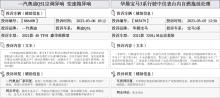
"

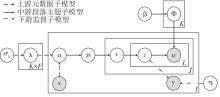
"
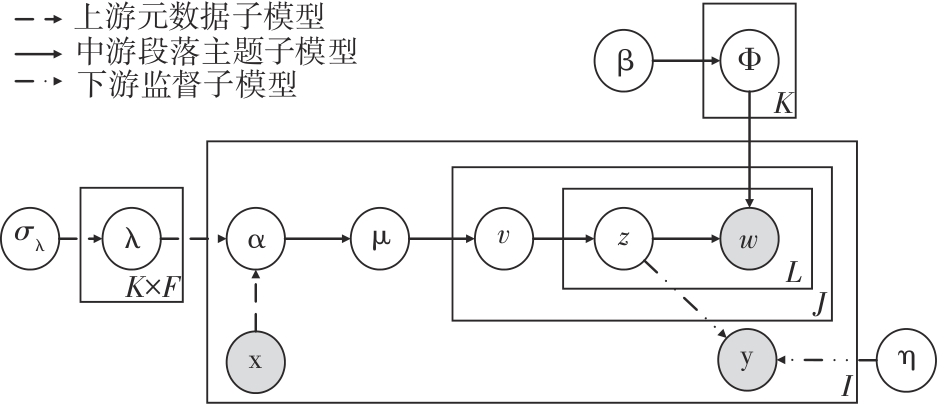

"
| 投诉信息 | 召回信息 | ||
|---|---|---|---|
| 投诉时间 | 召回公告时间 | 2020-11-27 | |
| 投诉品牌 | 汽车制造商 | ||
| 投诉车系 | 召回车型 | 昂科威 | |
| 投诉车型 | 型号及年款 | 20T 前驱领先型(2015-2018) | |
| 投诉内容 | 18年11月份买的车才开19000公里,制动系统软管破裂导致制动失灵差点出事,还好是行驶在县道上,要是在高速上可想而知,希望有关部门跟进,这是拿别人的生命在开玩笑。 | 缺陷情况 | 由于制动软管接头部位的密封性与整车制动压力不匹配,长期使用后,可能导致密封性能下降。极端情况下可能造成制动液渗漏,制动压力减少,影响车辆制动性能。 |
| 投诉来源 | https://www.12365auto.com/zlts/20200708/493385.shtml | 召回公告来源 | https://www.qiche365.org.cn/index/recall/bulletin/id/2303.html |
"
| 序号 | 汽车制造商 | 企业性质 | 投诉数量 | 涉及的MMY数量 | 投诉间隔时间(天) | 图片数量 |
|---|---|---|---|---|---|---|
| 1 | 上汽通用别克 | 合资 | 17465 | 72 | 0.031 | 15014 |
| 2 | 上汽通用雪佛兰 | 合资 | 13884 | 60 | 0.035 | 11222 |
| 3 | 一汽-大众 | 合资 | 13798 | 72 | 0.046 | 6821 |
| 4 | 长安福特 | 合资 | 13457 | 56 | 0.053 | 9114 |
| 5 | 东风标致 | 合资 | 11796 | 52 | 0.058 | 5609 |
| 6 | 东风日产 | 合资 | 9915 | 74 | 0.106 | 5368 |
| 7 | 上汽大众 | 合资 | 9408 | 76 | 0.073 | 5023 |
| 8 | 北京现代 | 合资 | 7112 | 66 | 0.168 | 4127 |
| 9 | 上汽斯柯达 | 合资 | 6759 | 42 | 0.161 | 2783 |
| 10 | 东风雪铁龙 | 合资 | 6726 | 55 | 0.167 | 2491 |
| 11 | 东风本田 | 合资 | 5639 | 37 | 0.332 | 4004 |
| 12 | 一汽-大众奥迪 | 合资 | 4408 | 51 | 0.334 | 2135 |
| 13 | 上汽通用五菱 | 合资 | 4274 | 56 | 0.345 | 3483 |
| 14 | 广汽本田 | 合资 | 4141 | 57 | 0.388 | 2447 |
| 15 | 东风悦达起亚 | 合资 | 3437 | 54 | 0.48 | 2313 |
| 16 | 长安汽车 | 自主 | 11905 | 98 | 0.08 | 9854 |
| 17 | 长城汽车 | 自主 | 6819 | 96 | 0.15 | 4236 |
| 18 | 奇瑞汽车 | 自主 | 5645 | 83 | 0.22 | 4399 |
| 19 | 上汽集团 | 自主 | 5376 | 70 | 0.277 | 2976 |
| 20 | 江淮汽车 | 自主 | 4132 | 85 | 0.395 | 2642 |
"
| 有召回的投诉 | 无召回的投诉 | |
|---|---|---|
| MMY数量 | 204 | 819 |
| 投诉数量(段落数) | 54731 | 109605 |
| MMY平均投诉量 | 268 | 133 |
| 总单词数 | 2922579 | 5511952 |
| 平均投诉单词数 | 53 | 50 |
| 投诉图片数量 | 31383 | 73325 |
"
| 辅助信息类型 | 辅助信息 | 描述 | 变量类型 | 取值范围 |
|---|---|---|---|---|
| 投诉页面 | 网友评论 | 网友是否对投诉进行评论 | 指示变量 | |
| 图片数量 | 投诉内容中包含的图片数量 | 离散变量 | ||
| 汽车制造商 | 汽车制造商(见 | 投诉的制造商指示变量,共20个字段 | 指示变量 | |
| MMY相关性质 | 投诉数量 | 文档中的投诉数量 | 离散变量 | |
| 平均投诉间隔时间 | 文档中相邻两条投诉的平均间隔时间 | 连续变量 | ||
| 历史召回次数 | 任一MMY发生过召回的次数 | 离散变量 |
"

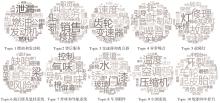
"

"
| 类型 | 主题 | 主题标签 | 关键缺陷词 | 均值 |
|---|---|---|---|---|
| 核心部件 | Topic 1 | 燃油和发动机 | 燃油、发动机、泄漏、燃料、气体、烧伤、汽缸、泵、密封、 水箱、量油尺、乳化、防冻液、电机、冷却 | 0.097 |
| Topic 3 | 变速器和离合器 | 齿轮、变速器、离合器、发动机、油门、抖动、怠速、踏板、共振、堵塞、顿挫、脱挡、换挡、声响、变速 | 0.107 | |
| Topic 4 | 异常噪音 | 噪音、异响、声音、制动、大声、车轮、转向、发动机、 减震器、金属、离合器、安全带、刺耳、轴承、摩擦 | 0.120 | |
| Topic 5 | 故障灯 | 故障、灯、转向、变速器、发动机、制动、修理、电池、 电脑、制动、点火、警报、传感器、停车、代码 | 0.123 | |
| Topic 6 | 前后桥及悬挂系统 | 悬架、梁、制动、断裂、碰撞、寿命、钢、性能、臂、钥匙、型号、事故、保险杠、设计、安装 | 0.081 | |
| Topic 10 | 轮胎和中控台 | 胎、车轮、开裂、起皮、脱落、胶、变形、部件、老化、 中控台、面板、仪表盘、磨损、气囊、压强 | 0.082 | |
| 车身附件及电器 | Topic 7 | 异味和导航系统 | 气味、臭味、导航、控制、屏幕、中央、味道、头晕、 空气、材料、健康、系统、地图、橡胶、升级、 | 0.071 |
| Topic 8 | 车身附件 | 门、水、锈、漆、玻璃、管道、排气、座椅、后备箱、 大灯、气囊、挡风玻璃、天窗、锁、雨刮器 | 0.098 | |
| Topic 9 | 空调系统 | 空调、压缩机、温度、凉、度、转向、排气口、冷藏、 风、排水量、功率、过滤、冷却、循环、扇 | 0.066 | |
| 服务 | Topic 2 | 售后服务 | 销售、服务、修理、问、职员、等待、联系、消费者、 态度、保修、测试、保险、经理、回答、部门 | 0.154 |
"
| 辅助信息 | λ估计值 | 辅助信息 | λ估计值 |
|---|---|---|---|
| 投诉页面 | 一汽-大众奥迪 | -0.059 | |
| 网友评论 | 0.426* | 上汽通用五菱 | 0.097 |
| 图片数量 | 0.440*** | 广汽本田 | 0.249** |
| 汽车制造商 | 东风悦达起亚 | 0.168 | |
| 上汽通用别克 | — | 长安汽车 | 0.131 |
| 上汽通用雪佛兰 | 0.066 | 长城汽车 | 0.143 |
| 一汽-大众 | -0.118 | 奇瑞汽车 | -0.004 |
| 长安福特 | 0.183* | 上汽集团 | -0.067 |
| 东风标致 | 0.105 | 江淮汽车 | -0.090 |
| 东风日产 | 0.282** | MMY相关性质 | |
| 上汽大众 | 0.264** | 投诉数量 | 2.552*** |
| 北京现代 | 0.185** | 平均投诉间隔时间 | 1.318*** |
| 上汽斯柯达 | -0.029 | 召回次数 | 0.267*** |
| 东风雪铁龙 | 0.320*** | 截距项 | 4.818*** |
| 东风本田 | 0.800*** |
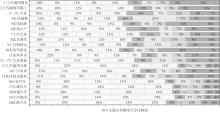
"

"
预测结果 实际情形 | 召回 | 不召回 |
|---|---|---|
| 召回 | True positive (TP) | False positive (FP) |
| 不召回 | False negative (FN) | True negative (TN) |
"
| 算法 | 模型 | 总体指标 | 分类指标 | ||||
|---|---|---|---|---|---|---|---|
| AUC(%) | Accuracy(%) | 预测分类 | F1 Score(%) | Precision(%) | Recall(%) | ||
| MsSTM | 82.74 | 81.56 | 召回 | 63.89 | 50.00 | 88.46 | |
| 不召回 | 87.62 | 96.84 | 80.00 | ||||
| NB | LDA | 63.05 | 58.83 | 召回 | 56.37 | 44.53 | 76.79 |
| 不召回 | 61.02 | 80.03 | 49.31 | ||||
| STM | 67.89 | 52.48 | 召回 | 41.74 | 26.97 | 92.31 | |
| 不召回 | 59.88 | 96.15 | 43.48 | ||||
| DT | LDA | 54.59 | 58.03 | 召回 | 41.73 | 40.20 | 43.38 |
| 不召回 | 67.20 | 68.68 | 65.79 | ||||
| STM | 69.03 | 73.76 | 召回 | 46.38 | 37.21 | 61.54 | |
| 不召回 | 82.63 | 89.80 | 76.52 | ||||
| RF | LDA | 57.76 | 64.19 | 召回 | 41.61 | 47.81 | 36.83 |
| 不召回 | 74.18 | 70.15 | 78.70 | ||||
| STM | 72.32 | 81.56 | 召回 | 53.57 | 50.00 | 57.69 | |
| 不召回 | 88.50 | 90.09 | 86.96 | ||||
| SVM | LDA | 62.12 | 63.30 | 召回 | 53.13 | 49.06 | 57.94 |
| 不召回 | 69.84 | 73.78 | 66.30 | ||||
| STM | 69.33 | 64.54 | 召回 | 44.44 | 31.25 | 76.92 | |
| 不召回 | 73.96 | 92.21 | 61.74 | ||||
| KNN | LDA | 56.49 | 57.95 | 召回 | 45.97 | 41.42 | 51.65 |
| 不召回 | 65.58 | 70.52 | 61.29 | ||||
| STM | 64.00 | 63.12 | 召回 | 39.53 | 28.33 | 65.38 | |
| 不召回 | 73.47 | 88.89 | 62.61 | ||||
| [1] | 孙莹, 杜建刚, 李文忠, 等. 产品召回中的负面情绪和感知风险对消费者购买意愿的影响——基于汽车产品召回的实证研究[J]. 管理评论, 2014, 26(2): 104-110. |
| Sun Y, Du J G, Li W Z, et al. Influence of the negative emotions and perceived risk of product recall on cosumer’s purchase intention—Empirical research based on automobile products recall[J]. Management Review, 2014, 26(2): 104-110. | |
| [2] | Shah R, Ball G P, Netessine S. Plant operations and product recalls in the automotive industry: An empirical investigation[J]. Management Science, 2017, 63(8): 2439-2459. |
| [3] | 市场监管总局. 市场监管总局关于2022年全国汽车和消费品召回情况的通告[EB/OL]. (2023-03-02) [2023-03-10]. . |
| [4] | Kalaignanam K, Kushwaha T, Eilert M. The impact of product recalls on future product reliability and future accidents: Evidence from the automobile industry[J]. Journal of Marketing, 2013, 77(2): 41-57. |
| [5] | Gao H, Xie J, Wang Q, et al. Should ad spending increase or decrease before a recall announcement? the marketing–finance interface in product-harm crisis management[J]. Journal of Marketing, 2015, 79(5): 80-99. |
| [6] | Fong T H Y, Sarkani S, Fossaceca J. Auto defect detection using customer reviews for product recall insurance analysis[J]. Frontiers in Applied Mathematics and Statistics, 2021, 7: 632847. |
| [7] | Aragon A, Huber U, Möller T, et al. Return to sender: Resolving the automotive-recall resurgence[EB/OL]. (2019-02-13) [2023-03-15]. . |
| [8] | Ball G, Siemsen E, Shah R. Do plant inspections predict future quality? the role of investigator experience[J]. Manufacturing & Service Operations Management, 2017, 19(4): 534-550. |
| [9] | Deloitte. Big data and analytics in the automotive industry[EB/OL]. (2023-01-06) [2023-03-05]. . |
| [10] | Shah R, Ball G P, Netessine S. Plant operations and product recalls in the automotive industry: An empirical investigation[J]. Management Science, 2016, 63(8): 2439-2459. |
| [11] | Wowak K D, Ball G P, Post C. The influence of female directors on product recall decisions[J]. Manufacturing & Service Operations Management, 2021, 23(4): 895-913. |
| [12] | Blogs P. Can cognitive predictive analytics prevent automobile recalls?[EB/OL]. (2017-06-08) [2023-03-05]. . |
| [13] | Fong T H Y, Sarkani S, Fossaceca J. Auto defect detection using customer reviews for product recall insurance analysis[J]. Frontiers in Applied Mathematics and Statistics, 2021, 7: 632847. |
| [14] | Zhang X, Niu S, Zhang D, et al. Predicting vehicle recalls with user-generated contents: A text mining approach[C]//Proceedings of Intelligence and Security Informatics, Ho Chi Minh City, Vietnam, May 19, Springer, 2015: 41-50. |
| [15] | Lentz S. How to meet the challenge of auto recalls[EB/OL]. (2020-09-10)[2023-03-05] . |
| [16] | 王光辉, 刘怡君, 迟钰雪. 舆论危机的异化极化效应研究[J]. 管理科学学报, 2017, 20(3): 149-161. |
| Wang G H, Liu Y J, Chi Y X. Alienation mechanism and polarization effect of public opinion crisis[J]. Journal of Management Sciences in China, 2017, 20(3): 149-161. | |
| [17] | 国家市场监督管理总局缺陷产品管理中心. 市场监管总局2018年上半年缺陷产品召回工作情况[J]. 中国质量与标准导报, 2018 (8): 10-11. |
| SAMR Defective Product Administrative Center. State administration for market regulation’s recall of defective products in the first half of 2018[J]. China Quality and Standards Review, 2018(8): 10-11. | |
| [18] | Colak A., Bray R. Why do automakers initiate recalls? A structural econometric game[R]. Working Paper, Clemson University, 2016. |
| [19] | Zheng L, He Z, He S. A novel probabilistic graphic model to detect product defects from social media data[J]. Decision Support Systems, 2020, 137: 113369. |
| [20] | Feng J, Li X, Zhang X. Online product reviews-triggered dynamic pricing: Theory and evidence[J]. Information Systems Research, 2019, 30(4): 1107-1123. |
| [21] | Chen J, Yang Y, Liu H. Mining bilateral reviews for online transaction prediction: A relational topic modeling approach[J]. Information Systems Research, 2021, 32(2): 541-560. |
| [22] | Liu J, Toubia O. A semantic approach for estimating consumer content preferences from online search queries[J]. Marketing Science, 2018, 37(6): 930-952. |
| [23] | Liu J, Toubia O, Hill S. Content-based model of web search behavior: An application to TV show search[J]. Management Science, 2021, 67(10): 6378-6398. |
| [24] | Mimno D M, McCallum A. Topic models conditioned on arbitrary features with Dirichlet-multinomial regression[C]//Proceedings of the Twenty-Fourth Conference on Uncertainty in Artificial Intelligence, Helsinki, Finland, July 9 - 12, ACM,2008: 411-418. |
| [25] | Law D, Gruss R, Abrahams A S. Automated defect discovery for dishwasher appliances from online consumer reviews[J]. Expert Systems with Applications, 2017, 67: 84-94. |
| [26] | Abrahams A S, Fan W, Wang G A, et al. An integrated text analytic framework for product defect discovery[J]. Production and Operations Management, 2015, 24(6): 975-990. |
| [27] | 蒋翠清, 王齐林, 刘士喜, 等. 中文社会媒体环境下半监督学习的汽车缺陷识别方法[J]. 中国管理科学, 2014, 22(S1): 677-685. |
| Jiang C Q, Wang Q L, Liu S X, et al. Semi-supervised learning for automobile defect identification in the context of Chinese social media[J]. Chinese Journal of Management Science, 2014, 22(S1): 677-685. | |
| [28] | 王余行, 党延忠, 徐照光. 针对论坛数据特点的汽车质量问题挖掘[J]. 中国管理科学, 2021, 29(9): 201-212. |
| Wang Y H, Dang Y Z, Xu Z G. Mining automobile quality problems based on the characteristics of forum data[J]. Chinese Journal of Management Science, 2021, 29(9): 201-212. | |
| [29] | Sun B, Mao H, Yin C. How to identify product defects and segment consumer groups on an online auto forum[J]. International Journal of Consumer Studies, 2022, 46(6): 2270-2287. |
| [30] | McGraw A P, Warren C, Kan C. Humorous complaining[J]. Journal of Consumer Research, 2015, 41(5): 1153-1171. |
| [31] | Yilmaz C, Varnali K, Kasnakoglu B T. How do firms benefit from customer complaints?[J]. Journal of Business Research, 2016, 69(2): 944-955. |
| [32] | Zhao X, Li Y, Flynn B B. The financial impact of product recall announcements in China[J]. International Journal of Production Economics, 2013, 142(1): 115-123. |
| [33] | Ball G P, Shah R, Donohue K. The decision to recall: A behavioral investigation in the medical device industry[J]. Journal of Operations Management, 2018, 62: 1-15. |
| [34] | Gao Y, Duan W, Rui H. Does social media accelerate product recalls?evidence from the pharmaceutical industry[J]. Information Systems Research, 2022, 33(3): 954-977. |
| [35] | Mao W, Dong Z, Lee H H. Before it’s too late: : Product recall delays and policy design[J]. Manufacturing & Service Operations Management, 2022, 24(4): 1926-1938. |
| [36] | Liu Y, Shankar V, Yun W. Crisis management strategies and the long-term effects of product recalls on firm value[J]. Journal of Marketing, 2017, 81(5): 30-48. |
| [37] | Lian L, Hu C, Zeng L. Modeling a probability prediction of automobile recall[C]//Proceedings of the 35th Chinese Control Conference (CCC), Chengdu, China, July 27-29, IEEE,2016: 3804-3808. |
| [38] | 曹丽娜, 唐锡晋. 基于主题模型的BBS话题演化趋势分析[J]. 管理科学学报, 2014, 17(11): 109-121. |
| Cao L N, Tang X J. Trends of BBS topics based on dynamic topic model[J]. Journal of Management Sciences in China, 2014, 17(11): 109-121. | |
| [39] | Blei D. M., Ng A. Y., Jordan M. I. Latent Dirichlet allocation[J]. Journal of Machine Learning Research, 2003, 3(4-5): 993-1022. |
| [40] | 韩亚楠, 刘建伟, 罗雄麟. 概率主题模型综述[J]. 计算机学报, 2021, 44(6): 1095-1139. |
| Han Y N, Liu J W, Luo X L. A survey on probabilistic topic model[J]. Chinese Journal of Computers, 2021, 44(6): 1095-1139. | |
| [41] | Blei D M, Lafferty J D. Dynamic topic models[C]//Proceedings of the 23rd International Conference on Machine Learning, Pittsburgh, Pennsylvania, June 25-29, ACM,2006: 113-120. |
| [42] | Wang X, McCallum A. Topics over time: A non-markov continuous-time model of topical trends[C]//Proceedings of the 12th ACM SIGKDD International Conference on Knowledge Discovery and Data Mining, Philadelphia PA, USA, August 20-23,ACM, 2006: 424-433. |
| [43] | Du L, Buntine W, Jin H. A segmented topic model based on the two-parameter Poisson-Dirichlet process[J]. Machine Learning, 2010, 81(1): 5-19. |
| [44] | Du L, Buntine W, Jin H, et al. Sequential latent dirichletallocation[J]. Knowledge and Information Systems, 2012, 31(3): 475-503. |
| [45] | Du L, Buntine W, Jin H. Modelling sequential text with an adaptive topic model[C]//Proceedings of the 2012 Joint Conference on Empirical Methods in Natural Language Processing and Computational Natural Language Learning, Jeju Island, Korea, July 12-14 ,ACL, 2012: 535-545. |
| [46] | Lin C, He Y. Joint sentiment/topic model for sentiment analysis[C]//Proceedings of the 18th ACM Conference on Information and Knowledge Management, Hong Kong, China, November 2-6, ACM, 2009: 375-384. |
| [47] | Mei Q, Ling X, Wondra M, et al. Topic sentiment mixture: Modeling facets and opinions in weblogs[C]//Proceedings of the 16th International Conference on World Wide Web, Alberta, Canada, May 8-12,ACM, 2007: 171-180. |
| [48] | 冯坤, 杨强, 常馨怡, 等. 基于在线评论和随机占优准则的生鲜电商顾客满意度测评[J]. 中国管理科学, 2021, 29(2): 205-216. |
| Feng K, Yang Q, Chang X Y, et al. Customer satisfaction evaluation method for fresh E-commerce based on online reviewsand stochastic dominance rules[J]. Chinese Journal of Management Science, 2021, 29(2): 205-216. | |
| [49] | 俞红海, 范思妤, 吴良钰, 等. 科创板注册制下的审核问询与IPO信息披露——基于LDA主题模型的文本分析[J]. 管理科学学报, 2022, 25(8): 45-62. |
| Yu H H, Fan S Y, Wu L Y, et al. Registration system review inquiry and IPO information disclosure on STAR market: Textual analysis based on LDA topic model[J]. Journal of Management Sciences in China, 2022, 25(8): 45-62. | |
| [50] | 何佳讯, 葛佳烨, 张凡. 中国学者管理学研究的世界贡献: 国际合作、前沿热点与贡献路径——基于世界千种管理学英文期刊论文(2013—2019年)的定量分析[J]. 管理世界, 2021, 37(9): 36-67. |
| He J X, Ge J Y, Zhang F. The world contribution of Chinese scholars to management research from the perspective of international collaborations, frontier hotspots and contribution approaches: A quantitative analysis based on a thousand of international English management journals[J]. Journal of Management World, 2021, 37(9): 36-67. | |
| [51] | Bao Y, Datta A. Simultaneously discovering and quantifying risk types from textual risk disclosures[J]. Management Science, 2014, 60(6): 1371-1391. |
| [52] | Pu J, Chen Y, Qiu L, et al. Does identity disclosure help or hurt user content generation? social presence, inhibition, and displacement effects[J]. Information Systems Research, 2020, 31(2): 297-322. |
| [53] | Guo Y, Barnes S J, Jia Q. Mining meaning from online ratings and reviews: Tourist satisfaction analysis using latent dirichlet allocation[J]. Tourism Management, 2017, 59: 467-483. |
| [54] | Tirunillai S, Tellis G J. Mining marketing meaning from online chatter: Strategic brand analysis of big data using latent dirichlet allocation[J]. Journal of Marketing Research, 2014, 51(4): 463-479. |
| [55] | Zhong N, Schweidel D A. Capturing changes in social media content: A multiple latent changepoint topic model[J]. Marketing Science, 2020, 39(4): 827-846. |
| [56] | Puranam D, Narayan V, Kadiyali V. The effect of calorie posting regulation on consumer opinion: A flexible latent dirichlet allocation model with informative priors[J]. Marketing Science, 2017, 36(5): 726-746. |
| [57] | Ansari A, Li Y, Zhang J Z. Probabilistic topic model for hybrid recommender systems: A stochastic variational Bayesian approach[J]. Marketing Science, 2018, 37(6): 987-1008. |
| [58] | Jacobs B J D, Donkers B, Fok D. Model-based purchase predictions for large assortments[J]. Marketing Science, 2016, 35(3): 389-404. |
| [59] | Büschken J, Allenby G M. Sentence-based text analysis for customer reviews[J]. Marketing Science, 2016, 35(6): 953-975. |
| [60] | Huang A H, Lehavy R, Zang A Y, et al. Analyst information discovery and interpretation roles: A topic modeling approach[J]. Management Science, 2018, 64(6): 2833-2855. |
| [61] | Büschken J, Allenby G M. Improving text analysis using sentence conjunctions and punctuation[J]. Marketing Science, 2020, 39(4): 727-742. |
| [62] | Mankad S, Han H”, Goh J, et al. Understanding online hotel reviews through automated text analysis[J]. Service Science, 2016, 8(2): 124-138. |
| [63] | Kim E, Ding M A, Wang X S, et al. Does topic consistency matter? A study of critic and user reviews in the movie industry[J]. Journal of Marketing, 2023, 87(3): 428-450. |
| [64] | Jacobi C, van Atteveldt W, Welbers K. Quantitative analysis of large amounts of journalistic texts using topic modelling[J]. Digital Journalism, 2016, 4(1): 89-106. |
| [65] | 张文, 王强, 杜宇航, 等. 在线商品评论有用性主题分析及预测研究[J]. 系统工程理论与实践, 2022, 42(10): 2757-2768. |
| Zhang W, Wang Q, Du Y H, et al. Online product reviews helpfulness prediction based on topic analysis[J]. Systems Engineering-Theory & Practice, 2022, 42(10): 2757-2768. | |
| [66] | Abrahams A S, Jiao J, Wang G A, et al. Vehicle defect discovery from social media[J]. Decision Support Systems, 2012, 54(1): 87-97. |
| [67] | Wang L, Gopal R, Shankar R, et al. On the brink: Predicting business failure with mobile location-based checkins[J]. Decision Support Systems, 2015, 76: 3-13. |
| [68] | Naumzik C, Feuerriegel S, Weinmann M. I will survive: Predicting business failures from customer ratings[J]. Marketing Science, 2021, 41(1): 188-207. |
| [1] | Zhongliang Zhang,Qinjun Fei,Yuyu Chen,Xinggang Luo. Researchon Multi-class Sentiment Classification Based on BERT and Dynamic Ensemble Selection [J]. Chinese Journal of Management Science, 2024, 32(6): 140-150. |
| [2] | ZHANG Jing, ZHOU Yi-xin, HU Han, BIAN Yi-wen. Identification of Usefulness for Online Reviews Based on Knowledge Adoption Model and Multilayer Perceptron Neural Network [J]. Chinese Journal of Management Science, 2022, 30(4): 264-274. |
| Viewed | ||||||
|
Full text |
|
|||||
|
Abstract |
|
|||||
|
||
