
主管:中国科学院
主办:中国优选法统筹法与经济数学研究会
中国科学院科技战略咨询研究院
主办:中国优选法统筹法与经济数学研究会
中国科学院科技战略咨询研究院

中国管理科学 ›› 2026, Vol. 34 ›› Issue (1): 268-281.doi: 10.16381/j.cnki.issn1003-207x.2023.2025cstr: 32146.14.j.cnki.issn1003-207x.2023.2025
刘昭阁1,4( ), 李向阳2, 朱晓寒3
收稿日期:2023-12-04
修回日期:2024-04-05
出版日期:2026-01-25
发布日期:2026-01-29
通讯作者:
刘昭阁
E-mail:zhaogeliu@xmu.edu.cn
基金资助:
Zhaoge Liu1,4(), Xiangyang Li2, Xiaohan Zhu3
Received:2023-12-04
Revised:2024-04-05
Online:2026-01-25
Published:2026-01-29
Contact:
Zhaoge Liu
E-mail:zhaogeliu@xmu.edu.cn
摘要:
城市暴雨极易诱发基础设施损毁、居民受困等大范围、小粒度、差异化的级联事件(urban rainstorm cascading events, URCE),灾害预防亟需全面精准地评估不同类型的URCE风险,但由于样本数据风险特征的不足,模型效果受到限制。本文考虑历史案例对URCE风险特征的全面描述,提出一种基于风险特征溯源的风险评估模型构建方法。该方法遵循由“果”寻“因”基本思路,以风险的情境描述为衔接,利用案例推理从历史案例中抽取风险特征,再采用机器学习方法学习风险特征与URCE风险类之间的关联关系,由此完成风险评估模型自适应构建。对武汉市6类典型URCE风险评估的用例结果表明:所提方法有助于通过基于案例的风险特征溯源解决风险评估模型构建的特征不完备问题,由此提升风险评估精度,在风险间区分性和小样本建模方面亦具有较好效果;与传统综合评价、灾损曲线等方法相比,所提方法在小粒度、复杂事件风险耦合场景下的风险评估模型构建中优势显著,更适应复杂风险的精准化管理目标。
中图分类号:
刘昭阁,李向阳,朱晓寒. 基于风险特征溯源的城市暴雨级联事件风险评估模型构建[J]. 中国管理科学, 2026, 34(1): 268-281.
Zhaoge Liu,Xiangyang Li,Xiaohan Zhu. Risk Assessment Model Construction of Urban Rainstorm Cascading Events Based on Risk Feature Tracing[J]. Chinese Journal of Management Science, 2026, 34(1): 268-281.
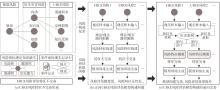
图1
URCE风险评估模型构建的特征不完备问题与逆向求解思路"
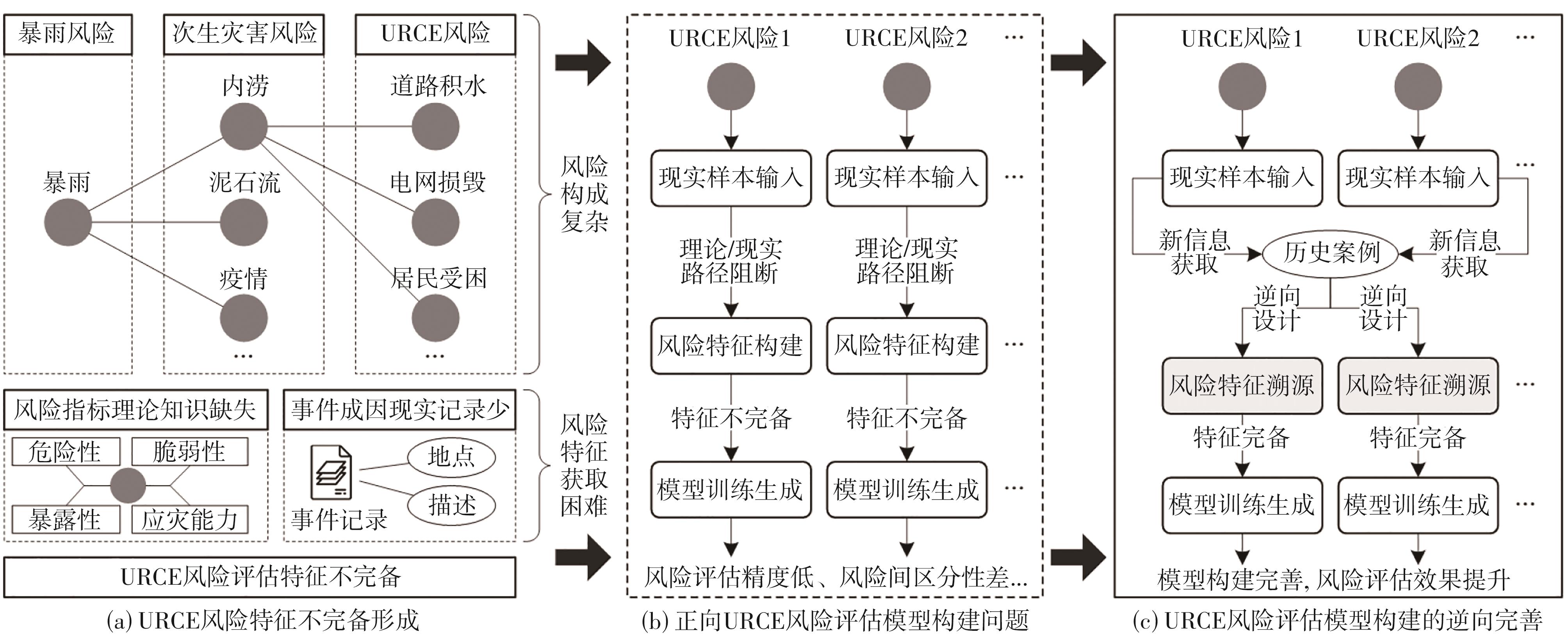
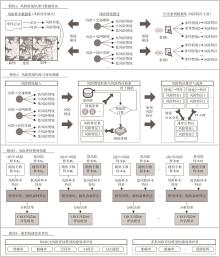
图2
基于风险特征溯源的URCE风险评估模型构建方法原理"


表1
用例分析区域的URCE风险情境识别结果"
| 风险类型 | 对象 | 风险等级 | 不同风险等级的情境结构化表达 |
|---|---|---|---|
| 内涝→交通瘫痪 | 路段 | 高等级 | 内涝深度: 0.5(米); 拥堵时长: 1.0(小时); 车辆人员受困: 1(是) |
| 中等级 | 内涝深度: 0.3(米); 拥堵时长: 0.5(小时); 车辆人员受困: 0(否) | ||
| 内涝→电网损毁 | 电网设施 | 高等级 | 影响用户: 3000(户); 断电时长: 2.0(小时); 影响其他关键基础设施: 1(是) |
| 中等级 | 影响用户: 1000(户); 断电时长: 1.0(小时); 影响其他关键基础设施: 0(否) | ||
| 内涝→居民受困 | 地理网格 | 高等级 | 内涝深度: 0.5(米); 受困人数: 25(人); 受困时长: 1.0(小时); 人员伤亡: 1(是) |
| 中等级 | 内涝深度: 0.3(米); 受困人数: 10(人); 受困时长: 0.5(小时); 人员伤亡: 0(否) | ||
| 泥石流→建筑损毁 | 建筑 | 高等级 | 结构损失率: 0.5; 内容损失率: 0.6; 人员伤亡: 1(有); 次生事件: 1(有) |
| 中等级 | 结构损失率: 0.2; 内容损失率: 0.3; 人员伤亡: 0(无); 次生事件: 0(无) | ||
| 泥石流→交通拥堵 | 路段 | 高等级 | 泥石流深度: 0.6(米); 拥堵时长: 1.0(小时); 车辆人员受困: 1(是) |
| 中等级 | 泥石流深度: 0.3(米); 拥堵时长: 0.5(小时); 车辆人员受困: 0(否) | ||
| 洪水→建筑损毁 | 建筑 | 高等级 | 结构损失率: 0.5; 内容损失率: 0.6; 人员伤亡: 1(有); 次生事件: 1(有) |
| 中等级 | 结构损失率: 0.2; 内容损失率: 0.3; 人员伤亡: 0(无); 次生事件: 0(无) |
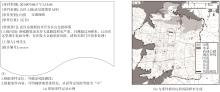
图3
基于URCE事件记录的风险样本生成示例"

表2
用例URCE风险样本分布"
| 风险类别 | 符号 | 风险等级 | 样本数 | 风险类别 | 符号 | 风险等级 | 样本数 |
|---|---|---|---|---|---|---|---|
| 内涝→交通瘫痪 | #a | 高 | 817 | 泥石流→建筑损毁 | #d | 高 | 149 |
| 中 | 1732 | 中 | 258 | ||||
| 内涝→电网损毁 | #b | 高 | 505 | 泥石流→交通拥堵 | #e | 高 | 153 |
| 中 | 1419 | 中 | 326 | ||||
| 内涝→居民受困 | #c | 高 | 453 | 洪水→建筑损毁 | #f | 高 | 344 |
| 中 | 1168 | 中 | 867 |
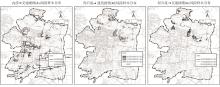
图4
用例区域(武汉东湖新技术开发区建成区)的典型URCE风险样本分布"
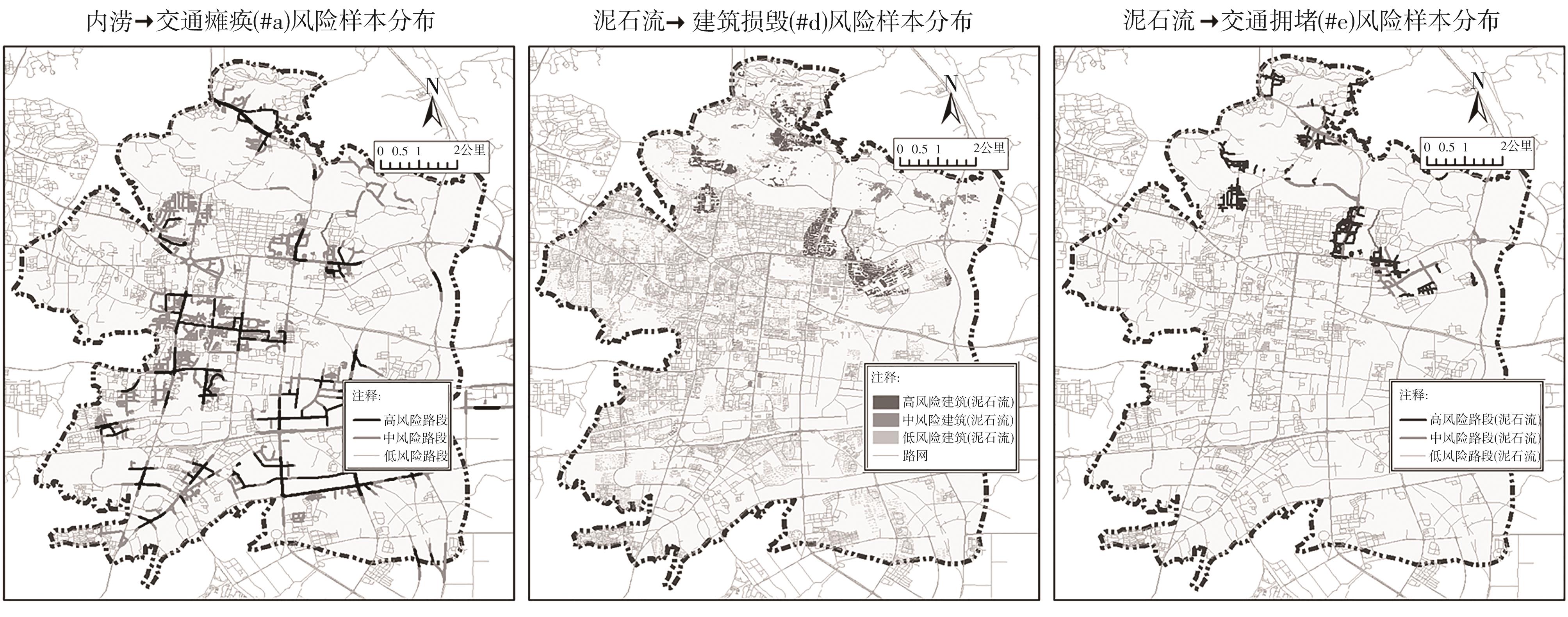
表3
用例区域的典型URCE风险特征溯源结果"
| “内涝→交通瘫痪”风险的高风险情境 | “泥石流→建筑损毁”风险的高风险情境 | ||||||
|---|---|---|---|---|---|---|---|
| 特征属性 | 属性程度 | 相似案例数 | 特征权重 | 特征属性 | 属性程度 | 相似案例数 | 特征权重 |
| 车流量 | 很大 | 10 | 0.156 | 距离山体 | 非常近 | 8 | 0.176 |
| 地势 | 极为低洼 | 8 | 0.145 | 山体坡度 | 较大 | 7 | 0.142 |
| 排水能力 | 差 | 8 | 0.128 | 建筑年龄 | 老旧 | 7 | 0.107 |
| 救援能力 | 不足 | 9 | 0.103 | 人口密度 | 很高 | 9 | 0.096 |
| 降雨量 | 非常大 | 11 | 0.094 | 建筑价值 | 很高 | 6 | 0.080 |
| 道路类型 | 主干道 | 7 | 0.081 | 降雨量 | 非常大 | 5 | 0.065 |
| 道路起伏 | 明显 | 6 | 0.070 | 山体土质 | 较疏松 | 4 | 0.064 |
| 路况 | 老旧 | 7 | 0.065 | 建筑高度 | 较低 | 3 | 0.049 |
表4
RF算法的网格搜索参数设置"
| 参数 | 最小值 | 最大值 | 步长 |
|---|---|---|---|
| 随机森林规模 | 5 | 200 | 5 |
| 决策树最大深度 | 5 | 20 | 1 |
表5
各类风险评估模型的网格搜索最优参数值"
| 参数 | 风险#a | 风险#b | 风险#c | 风险#d | 风险#e | 风险#f |
|---|---|---|---|---|---|---|
| 随机森林规模 | 165 | 155 | 180 | 65 | 50 | 125 |
| 决策树最大深度 | 17 | 15 | 17 | 13 | 12 | 16 |
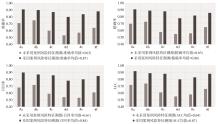
图5
用例URCE单一风险评估效果注1:F1得分结果与其他指标相一致,由于篇幅限制,未展示;如需具体数据,请联系作者获取。注2:在未采用案例风险特征溯源时,风险特征从风险样本(即各类事件记录)中直接获取。注3:风险符号(#a等)的含义可参见表1、表2。"
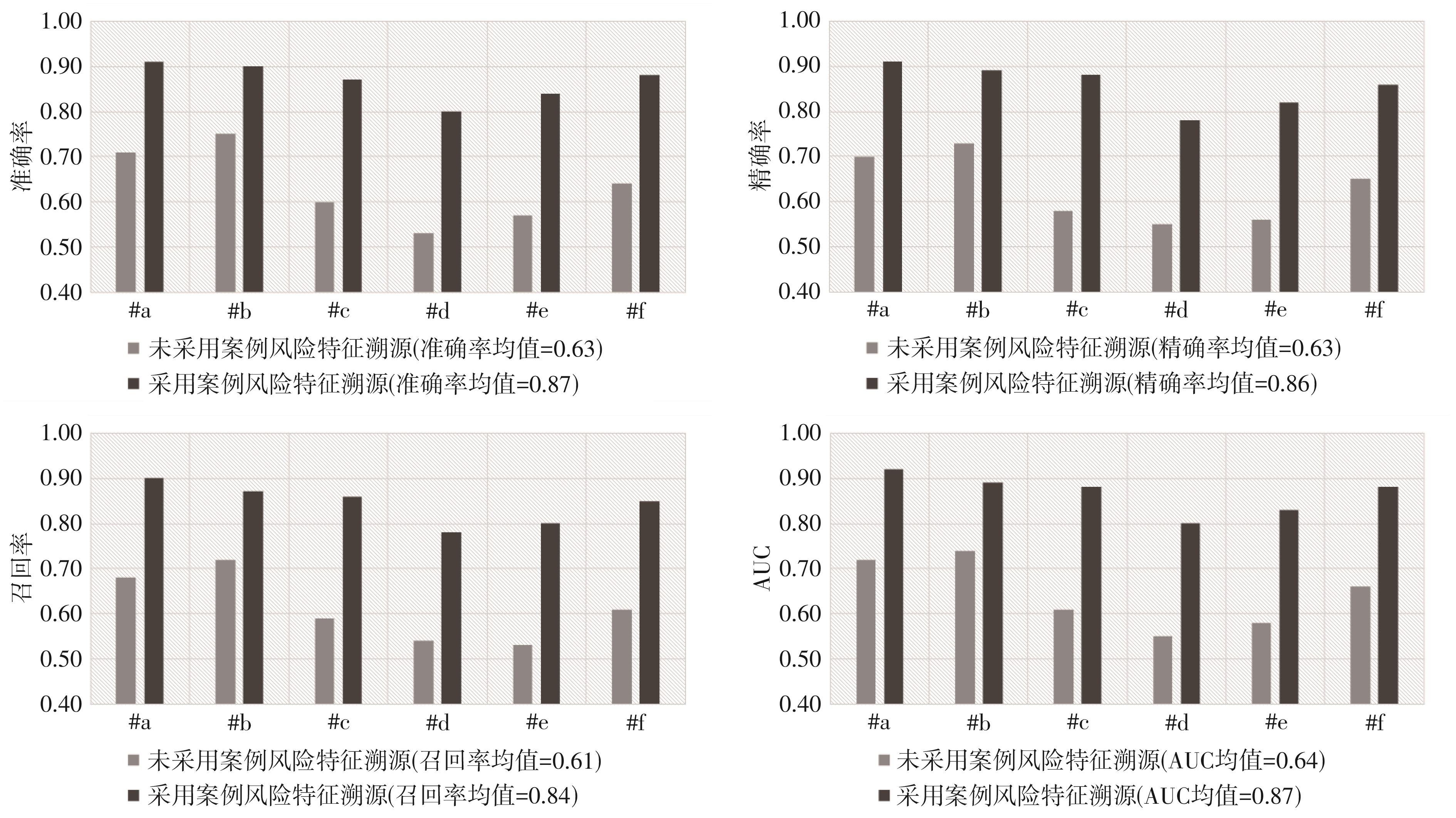
表6
采用案例风险特征溯源前后的风险评估混淆矩阵"
| URCE风险类 | 风险#a | 风险#b | 风险#c | 风险#d | 风险#e | 风险#f | |
|---|---|---|---|---|---|---|---|
| 风险#a | 0.71 | 0.17 | 0.00 | 0.02 | 0.10 | 0.00 | |
| 0.92 | 0.05 | 0.00 | 0.00 | 0.03 | 0.00 | ||
| 风险#b | 0.14 | 0.75 | 0.10 | 0.00 | 0.00 | 0.01 | |
| 0.04 | 0.90 | 0.03 | 0.00 | 0.00 | 0.03 | ||
| 风险#c | 0.02 | 0.00 | 0.60 | 0.22 | 0.06 | 0.10 | |
| 0.02 | 0.00 | 0.89 | 0.04 | 0.02 | 0.03 | ||
| 风险#d | 0.00 | 0.13 | 0.01 | 0.53 | 0.04 | 0.29 | |
| 0.01 | 0.07 | 0.00 | 0.81 | 0.00 | 0.11 | ||
| 风险#e | 0.20 | 0.01 | 0.05 | 0.16 | 0.57 | 0.01 | |
| 0.11 | 0.00 | 0.00 | 0.06 | 0.83 | 0.00 | ||
| 风险#f | 0.00 | 0.10 | 0.00 | 0.25 | 0.01 | 0.64 | |
| 0.00 | 0.05 | 0.00 | 0.06 | 0.00 | 0.89 | ||
| 情形1:未采用案例风险特征溯源 | 情形2:采用案例风险特征溯源 | ||||||
图6
不同样本量下的URCE风险评估效果注:其他指标(精确率、召回率、F1得分)的结果相似,由于篇幅限制,未展示;如需具体数据,请联系作者获取。"
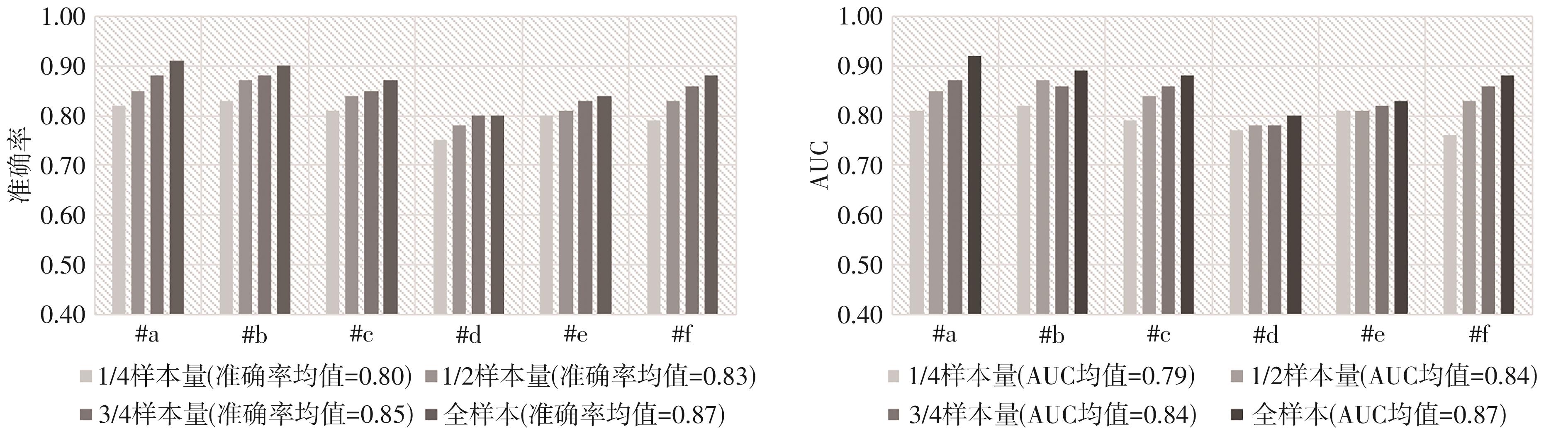
表7
不同方法应用下的URCE风险评估效果"
| 方法 | 指标 | #a | #b | #c | #d | #e | #f | 均值 |
|---|---|---|---|---|---|---|---|---|
| 基准方法(RF) | 准确率 | 0.71 | 0.75 | 0.60 | 0.53 | 0.57 | 0.64 | 0.63 |
| 精确率 | 0.70 | 0.73 | 0.58 | 0.55 | 0.56 | 0.65 | 0.63 | |
| 召回率 | 0.68 | 0.72 | 0.59 | 0.54 | 0.53 | 0.61 | 0.61 | |
| F1得分 | 0.69 | 0.72 | 0.58 | 0.54 | 0.54 | 0.63 | 0.62 | |
| AUC | 0.72 | 0.74 | 0.61 | 0.55 | 0.58 | 0.66 | 0.64 | |
| SMOTE | 准确率 | 0.75 | 0.78 | 0.61 | 0.52 | 0.60 | 0.67 | 0.66 |
| 精确率 | 0.73 | 0.75 | 0.60 | 0.51 | 0.61 | 0.65 | 0.64 | |
| 召回率 | 0.72 | 0.74 | 0.60 | 0.53 | 0.60 | 0.61 | 0.63 | |
| F1得分 | 0.72 | 0.74 | 0.60 | 0.52 | 0.60 | 0.63 | 0.64 | |
| AUC | 0.74 | 0.76 | 0.62 | 0.54 | 0.61 | 0.64 | 0.65 | |
| FastText | 准确率 | 0.78 | 0.80 | 0.65 | 0.58 | 0.60 | 0.68 | 0.68 |
| 精确率 | 0.75 | 0.77 | 0.64 | 0.59 | 0.61 | 0.65 | 0.67 | |
| 召回率 | 0.73 | 0.74 | 0.65 | 0.57 | 0.60 | 0.64 | 0.66 | |
| F1得分 | 0.74 | 0.75 | 0.64 | 0.58 | 0.60 | 0.64 | 0.66 | |
| AUC | 0.79 | 0.81 | 0.64 | 0.59 | 0.60 | 0.66 | 0.68 | |
| ERNIE | 准确率 | 0.80 | 0.83 | 0.75 | 0.68 | 0.69 | 0.72 | 0.75 |
| 精确率 | 0.81 | 0.80 | 0.76 | 0.65 | 0.64 | 0.71 | 0.73 | |
| 召回率 | 0.80 | 0.82 | 0.75 | 0.67 | 0.65 | 0.70 | 0.73 | |
| F1得分 | 0.80 | 0.81 | 0.75 | 0.66 | 0.64 | 0.70 | 0.73 | |
| AUC | 0.81 | 0.82 | 0.74 | 0.69 | 0.66 | 0.70 | 0.74 | |
| 本文方法 | 准确率 | 0.91 | 0.90 | 0.87 | 0.80 | 0.84 | 0.88 | 0.87 |
| 精确率 | 0.91 | 0.89 | 0.88 | 0.78 | 0.82 | 0.86 | 0.86 | |
| 召回率 | 0.90 | 0.87 | 0.86 | 0.78 | 0.80 | 0.85 | 0.84 | |
| F1得分 | 0.90 | 0.88 | 0.87 | 0.78 | 0.81 | 0.85 | 0.85 | |
| AUC | 0.92 | 0.89 | 0.88 | 0.80 | 0.83 | 0.88 | 0.87 |
| [1] | Qie Z, Rong L. A scenario modelling method for regional cascading disaster risk to support emergency decision making[J]. International Journal of Disaster Risk Reduction, 2022, 77: 103102. |
| [2] | 卢小丽, 于海峰. 基于知识元的突发事件风险分析[J]. 中国管理科学, 2014, 22(8): 108-114. |
| Lu X L, Yu H F. Emergency risk analysis based on knowledge element[J]. Chinese Journal of Management Science, 2014, 22(8): 108-114. | |
| [3] | 李锋, 王慧敏. 基于知识元的非常规突发洪水事件演化风险研究[J]. 系统工程理论与实践, 2016, 36(12): 3255-3264. |
| Li F, Wang H M. Research on unconventional flood emergency evolution risk analysis based on knowledge element[J]. Systems Engineering-Theory & Practice, 2016, 36(12): 3255-3264. | |
| [4] | 舒亮亮, 何小赛. 城市洪涝灾害风险评估研究进展[J]. 中国防汛抗旱, 2022, 32(S1): 127-132. |
| Shu L L, He X S. Research progress on risk assessment of urban flood disaster[J]. China Flood & Drought Management, 2022, 32(S1): 127-132. | |
| [5] | Tang P, Wen J, Shao S, et al. Developing and understanding cascading effects scenario of typhoons in coastal mega-cities from system perspectives for disaster risk reduction: A case study of Shenzhen, China[J]. International Journal of Disaster Risk Reduction,2023,92:103691. |
| [6] | 郭君, 赵思健, 黄崇福. 自然灾害概率风险的系统误差及校正研究[J]. 系统工程理论与实践, 2017, 37(2): 523-534. |
| Guo J, Zhao S J, Huang C F. A study on the systematic error and correction of the probabilistic risk of natural disaster[J]. Systems Engineering-Theory & Practice, 2017, 37(2): 523-534. | |
| [7] | 谢捷, 刘玮, 徐月顺, 等. 基于AHP-熵权法的西宁地区汛期暴雨灾害风险评估[J]. 自然灾害学报, 2022, 31(3): 60-74. |
| Xie J, Liu W, Xu Y S, et al. Rainstorm disaster risk assessment in Xining area in rainy season based on the AHP weight method and entropy weight method[J]. Journal of Natural Disasters, 2022, 31(3): 60-74. | |
| [8] | 周超, 方秀琴, 吴小君, 等. 基于三种机器学习算法的山洪灾害风险评价[J]. 地球信息科学学报, 2019, 21(11): 1679-1688. |
| Zhou C, Fang X Q, Wu X J, et al. Risk assessment of mountain torrents based on three machine learning algorithms[J]. Journal of Geo-Information Science, 2019, 21(11): 1679-1688. | |
| [9] | 刘奕, 钱静, 范维澄. 走向精准: 突发事件风险分析方法发展综述[J]. 中国安全科学学报, 2022, 32(9): 1-10. |
| Liu Y, Qian J, Fan W C. Rise of precision: A review of emergency risk analysis methodology[J]. China Safety Science Journal, 2022, 32(9): 1-10. | |
| [10] | Hou H, Yu S, Wang H, et al. Risk assessment and its visualization of power tower under typhoon disaster based on machine learning algorithms[J]. Energies, 2019, 12(2): 1-20. |
| [11] | Huang G, Wu G, Guo Y, et al. Risk assessment models of power transmission lines undergoing heavy ice at mountain zones based on numerical model and machine learning[J]. Journal of Cleaner Production, 2023, 415: 137623. |
| [12] | Yan L L, Pedraza-Martinez A J. Social media for disaster management: Operational value of the social conversation[J]. Production and Operations Management, 2019, 28(10): 2514-2532. |
| [13] | Li H, Han Y, Wang X, et al. Risk perception and resilience assessment of flood disasters based on social media big data[J]. International Journal of Disaster Risk Reduction, 2024, 101: 104249. |
| [14] | Raghuwanshi B S, Shukla S. Class-specific cost-sensitive boosting weighted ELM for class imbalance learning[J]. Memetic Computing, 2019, 11(3): 263-283. |
| [15] | Johnson J M, Khoshgoftaar T M. Survey on deep learning with class imbalance[J]. Journal of Big Data, 2019, 6(1): 1-49. |
| [16] | 李长升, 汪诗烨, 李延铭, 等. 人工智能的逆向工程——反向智能研究综述[J]. 软件学报, 2023, 34(2): 712-732. |
| Li C S, Wang S Y, Li Y M, et al. Survey on reverse-engineering artificial intelligence[J]. Journal of Software, 2023, 34(2): 712-732. | |
| [17] | Wang K, Yang Y, Reniers G, et al. Predicting the spatial distribution of direct economic losses from typhoon storm surge disasters using case-based reasoning[J]. International Journal of Disaster Risk Reduction, 2022, 68: 102704. |
| [18] | Du X, Li X, Zhang S, et al. High-accuracy estimation method of typhoon storm surge disaster loss under small sample conditions by information diffusion model coupled with machine learning models[J]. International Journal of Disaster Risk Reduction, 2022, 82: 103307. |
| [19] | 包云, 高歌, 李亚群, 等. 基于监测数据挖掘的高铁气象灾害风险评估方法研究[J]. 灾害学, 2022, 37(2): 44-48+53. |
| Bao Y, Gao G, Li Y Q, et al. Research on high-speed railway meteorological disaster risk analysis method based on monitoring data mining[J]. Journal of Catastrophology, 2022, 37(2): 44-48+53. | |
| [20] | 林沛延, 林陪晖, 王俊, 等. 基于机器学习方法的浙江省台风灾害风险评估和动态风险预报[J]. 自然灾害学报, 2023, 32(4): 13-24. |
| Lin P Y, Lin P H, Wang J, et al. Typhoon disaster risk assessment and dynamic risk forecasts in Zhejiang Province based on machine learning methods[J]. Journal of Natural Disasters, 2023, 32(4): 13-24. | |
| [21] | 刘艳辉, 方然可, 苏永超, 等. 基于机器学习的区域滑坡灾害预警模型研究[J]. 工程地质学报, 2021, 29(1): 116-124. |
| Liu Y H, Fang R K, Su Y C, et al. Machine learning based model for warning of regional landslide disasters[J]. Journal of Engineering Geology, 2021, 29(1): 116-124. | |
| [22] | Zhou Q B, Deng X C, Bian X Y, et al. Lightning disaster risk assessment of power distribution grid with Kmeans-SMOTE optimized BO-XGBoost and SHAP [J]. Electric Power Systems Research, 2026, 252: 112472. |
| [23] | Quiliche R, Santiago B, Baião F A, et al. A predictive assessment of households' risk against disasters caused by cold waves using machine learning[J]. International Journal of Disaster Risk Reduction, 2023, 98: 104109. |
| [24] | 刘昭阁, 李向阳, 于峰. 案例驱动的社区应急疏散准备规划启动时机识别[J]. 系统工程理论与实践, 2021, 41(3): 691-701. |
| Liu Z G, Li X Y, Yu F. Case-driven method for detecting the starting time of preparedness planning of community emergency evacuation[J]. Systems Engineering —Theory & Practice, 2021, 41(3): 691-701. | |
| [25] | Syed Mustapha S M F D. Case-based reasoning for identifying knowledge leader within online community[J]. Expert Systems with Applications, 2018, 97: 244-252. |
| [26] | 陈云峰, 于雪, 刘吉成, 等. 基于TSO-LS-SVM模型的电煤库存风险评价研究[J]. 中国管理科学, 2024, DOI: 10.16381/j.cnki.issn1003-207x.2023.1065 |
| Chen Y F, Yu X, Liu J C, et al. Research on electric coal inventory risk assessment based on TSO-LS-SVM model[J]. Chinese Journal of Management Science, 2024,DOI:10.16381/j.cnki.issn1003-207x.2023.1065 . | |
| [27] | 徐照, 李苏豪, 袁竞峰. 基于多属性分类的建筑物损伤案例推理方法研究[J]. 系统工程理论与实践, 2019, 39(2): 429-441. |
| Xu Z, Li S H, Yuan J F. Research on case-based reasoning of building defects in multi-attribute classification[J]. Systems Engineering —Theory & Practice, 2019, 39(2): 429-441. | |
| [28] | 姚鑫, 郭海湘, 顾明赟, 等. 基于案例推理的滑坡灾害应急相似案例智能生成研究[J]. 系统工程理论与实践, 2021, 41(6): 1570-1584. |
| Yao X, Guo H X, Gu M Y, et al. Intelligent generation of similar case of landslide disaster emergency based on case-based reasoning[J]. Systems Engineering—Theory & Practice, 2021, 41(6): 1570-1584. | |
| [29] | 刘天畅, 李向阳, 于峰. 案例驱动的CI系统应急能力不足评估方法[J]. 系统管理学报, 2017, 26(3): 464-472. |
| Liu T C, Li X Y, Yu F. Case-driven assessment method for emergency capability shortage of critical infrastructure system[J]. Journal of Systems & Management, 2017, 26(3): 464-472. | |
| [30] | Mee A, Homapour E, Chiclana F, et al. Sentiment analysis using TF–IDF weighting of UK MPs’ tweets on Brexit[J]. Knowledge-Based Systems, 2021, 228: 107238. |
| [31] | 陈希, 张怡斐, 孙亚亚, 等. 面向突发事件的应急献血者聚类与分配方法研究[J]. 中国管理科学, 2022, 30(12): 77-85. |
| Chen X, Zhang Y F, Sun Y Y, et al. Research on clustering and assignment of emergency blood donors for emergency[J]. Chinese Journal of Management Science, 2022, 30(12): 77-85. | |
| [32] | Mostafaei S, Ahmadi A, Shahrabi J. USWAVG-BS: Under-Sampled Weighted AVeraGed Borderline SMOTE to handle data intrinsic difficulties[J]. Expert Systems with Applications, 2023, 227: 120379. |
| [33] | Li Y, Goda K. Risk-based tsunami early warning using random forest[J]. Computers & Geosciences, 2023, 179: 105423. |
| [34] | 向尚, 邹凯, 蒋知义, 等. 基于随机森林的智慧城市信息安全风险预测[J]. 中国管理科学, 2016, 24(S1): 266-270. |
| Xiang S, Zou K, Jiang Z Y, et al. Risk prediction of smart city information security based on random forest[J]. Chinese Journal of Management Science, 2016, 24(S1): 266-270. | |
| [35] | Sun Z, Wang G, Li P, et al. An improved random forest based on the classification accuracy and correlation measurement of decision trees[J]. Expert Systems with Applications, 2024, 237: 121549. |
| [36] | Liu Z G, Li X Y, Zhu X H, et al. Towards rainstorm event identification: A transfer learning framework using citizen-report texts and multi-source spatial data[J]. International Journal of Disaster Risk Reduction, 2022, 83: 103427. |
| [37] | 姚潇, 李可, 余乐安. 非平衡样本下基于生成对抗网络过抽样技术的公司债券违约风险预测研究[J]. 系统工程理论与实践, 2022, 42(10): 2617-2634. |
| Yao X, Li K, Yu L A. Imbalanced corporate bond default modeling using generative adversarial networks oversampling techniques[J]. Systems Engineering-Theory & Practice, 2022, 42(10): 2617-2634. | |
| [38] | 董路安, 叶鑫. 基于改进教学式方法的可解释信用风险评价模型构建[J]. 中国管理科学, 2020, 28(9): 45-53. |
| Dong L A, Ye X. Interpretable credit risk assessment modeling based on improved pedagogical method[J]. Chinese Journal of Management Science, 2020, 28(9): 45-53. | |
| [39] | Zhou Q, Ye J, Yang G, et al. Lightning risk assessment of off shore wind farms by semi-supervised learning[J]. Engineering Applications of Artificial Intelligence, 2023, 126: 107050. |
| [40] | 刘昭阁, 李向阳, 朱晓寒. 融合风险特征和空间特征的城市暴雨级联事件风险评估模型构建[J]. 地球信息科学学报, 2024, 26(10): 2394-2406. |
| Liu Z G, Li X Y, Zhu X H. Construction of a risk assessment model for urban rainstorm cascading events integrating risk and spatial features[J]. Journal of Geo-Information Science, 2024, 26(10): 2394-2406. | |
| [41] | 陈国青, 吴刚, 顾远东, 等. 管理决策情境下大数据驱动的研究和应用挑战——范式转变与研究方向[J]. 管理科学学报, 2018, 21(7): 1-10. |
| Chen G Q, Wu G, Gu Y D, et al. The challenges for big data driven research and applications in the context of managerial decision-making: Paradigm shift and research directions[J]. Journal of Management Sciences in China, 2018, 21(7): 1-10. | |
| [42] | 方匡南, 李晶茂, 范新妍, 等. 基于多源域知识迁移学习的小微企业信用评分[J]. 系统工程理论与实践, 2023, 43(5): 1320-1332. |
| Fang K N, Li J M, Fan X Y, et al. Credit scoring of small and micro enterprises using multi-source information transfer learning[J]. Systems Engineering—Theory & Practice, 2023, 43(5): 1320-1332. | |
| [43] | 刘昭阁, 李向阳, 乔立民, 等. 多源数据环境下城市暴雨级联事件风险评估的迁移学习方法[J/OL]. 系统工程理论与实践, 2024.. |
| Liu Z G, Li X Y, Qiao L M, et al. Transfer learning method for risk assessment of urban rainstorm cascading events under multi-source data environment[J/OL]. Systems Engineering-Theory & Practice, 2024. . | |
| [44] | Gao C, Zhang B, Shao S, et al. Risk assessment and zoning of flood disaster in Wuchengxiyu Region, China[J]. Urban Climate, 2023, 49: 101562. |
| [45] | Liu Z G, Li X Y, Zhu X H. Joint risk assessment of the secondary disasters of rainstorms based on multisource spatial data in Wuhan, China[J]. Natural Hazards Review, 2020, 21(4): 04020033. |
| [46] | De Loor P, Bénard R, Chevaillier P. Real-time retrieval for case-based reasoning in interactive multiagent-based simulations[J]. Expert Systems with Applications, 2011, 38(5): 5145-5153. |
| [47] | Zhao B, He X, Ran S, et al. Spatial correlation learning based on graph neural network for medium-term wind power forecasting[J]. Energy, 2024, 296: 131164. |
| [1] | 陈希, 张文博, 张美霞, 郭青. 基于患者多源融合行为信息的智能化诊断决策方法[J]. 中国管理科学, 2024, 32(11): 214-221. |
| [2] | 吴双胜, 林杰, 黄冬宏, 张振宇. 基于异质信息相似度的被执行人财物隐匿类案提取与金额估算[J]. 中国管理科学, 2023, 31(6): 221-230. |
| [3] | 李鹏, 朱建军, 刘思峰. 基于案例推理的直觉模糊决策方法[J]. 中国管理科学, 2015, 23(7): 113-118. |
| [4] | 梁昌勇, 顾东晓, 程文娟, 杨昌辉, 顾佐佐. 含非连续性信息多属性案例中的决策知识发现方法[J]. 中国管理科学, 2014, 22(4): 83-91. |
| [5] | 吴登生. 基于广义模糊数的软件成本加权CBR估算研究[J]. 中国管理科学, 2013, 21(4): 178-186. |
| [6] | 路云, 吴应宇, 达庆利. 基于案例推理技术的企业经营决策支持模型设计[J]. 中国管理科学, 2005, (2): 81-87. |
| 阅读次数 | ||||||
|
全文 |
|
|||||
|
摘要 |
|
|||||
|
||
